Car Glass Film Design Ideas for a Stunning Makeover
Car glass film design is one of the easiest and most affordable ways to give your vehicle a stunning new look. Whether you want privacy, style, or UV protection, the right film can completely change how your car feels and looks. In this guide, we share the best car glass film design ideas, practical tips, and expert advice to help you make your ride stand out from the crowd.
Have you ever looked at a car rolling down the street and thought, “Wow, I wish my car looked like that”? You’re not alone. A lot of car owners want a fresh, bold look without spending a fortune. That’s where car glass film design comes in. It’s one of the simplest and most affordable ways to completely transform your vehicle’s appearance. Whether you’re into sleek, subtle styles or bold, eye-catching patterns, there’s a car glass film design out there for you. In this article, we’ll walk you through the best ideas, the different types of films available, and how to pick the perfect look for your ride.
Car glass film design has exploded in popularity over the last few years. People love it because it offers instant style without permanent changes. You can peel it off, swap it out, or try something totally new whenever you want. Plus, automotive window tinting does more than just look good. It blocks harmful UV rays, keeps your car cooler, and adds a layer of privacy. So whether you’re a car enthusiast or just someone who wants their daily driver to look amazing, car glass film design is worth exploring.
Key Takeaways
- Endless Style Options: From geometric patterns to gradient tints, car glass film design offers endless ways to personalize your vehicle.
- Protection Meets Style: Car glass film design isn’t just about looks — it also blocks UV rays and reduces heat inside your car.
- Easy to Install: Many car glass film design options are DIY-friendly and come with clear installation instructions.
- Budget-Friendly Transformation: A full car glass film design makeover costs a fraction of a paint job or custom wrap.
- Legal Matters Matter: Always check local laws before choosing your car glass film design, as tint darkness rules vary by region.
- Durability and Longevity: Quality car glass film design materials can last 5-10 years with proper care.
- Customization is Key: Working with a professional or using custom prints lets you create a truly unique car glass film design.
📑 Table of Contents
- Why Car Glass Film Design Matters
- Popular Car Glass Film Design Ideas
- Types of Car Glass Film for Design
- How to Choose the Right Car Glass Film Design
- Tips for Installing Car Glass Film
- Common Mistakes to Avoid with Car Glass Film Design
- Expert Insights on Car Glass Film Design
- Frequently Asked Questions
- Conclusion
Why Car Glass Film Design Matters
Let’s be honest. Your car is one of the biggest investments you’ll make. You want it to look good, feel good, and protect you on the road. Car glass film design checks all those boxes. It’s not just a cosmetic upgrade — it’s a smart investment. Here’s why it matters so much.
First, car glass film design gives your vehicle an instant personality. A plain white sedan and that same sedan with a beautifully tinted glass design look like two completely different cars. The transformation is dramatic, and it catches people’s attention everywhere you go.
Second, window films offer real practical benefits. They reduce glare while driving, which makes your trips safer. They block up to 99% of harmful UV rays, which protects your skin and keeps your interior from fading. And they reduce heat buildup inside your car, so you’re not melting in your seat during summer.
Third, automotive window styling is reversible. Unlike a paint job or a full wrap, you can change your mind and remove the film without any damage. This makes it a low-risk way to experiment with different looks and find what suits you best.
Who Should Consider Car Glass Film Design?
Honestly? Everyone. Here are some groups of people who benefit greatly from car glass film design:
- Car enthusiasts who want to stand out on the road
- Families looking for UV protection and privacy
- Commuters who deal with harsh sunlight daily
- Business owners who use company vehicles and want a branded look
- New car owners who want to customize their ride right away
No matter who you are, car glass film design has something to offer. It’s versatile, practical, and endlessly creative.
Popular Car Glass Film Design Ideas
Now let’s get to the fun part. What are the best car glass film design ideas out there right now? We’ve rounded up the most popular styles that car owners love. Each one has its own vibe, so you’re sure to find something that speaks to you.
Gradient Tint Design
The gradient tint design is a classic. It starts dark at the top of the window and gradually fades to light at the bottom. This creates a smooth, elegant transition that looks incredible on any car. It’s especially popular on sedans, SUVs, and luxury vehicles.
One of the best things about gradient tint is that it keeps your windows compliant with most tint darkness laws. The top section provides privacy and sun protection, while the bottom section still lets in plenty of light for visibility.
Geometric Pattern Design
If you want something bold and artistic, a geometric pattern design is hard to beat. Think sharp lines, triangles, hexagons, and repeating shapes across your windows. This style is all about making a statement. It turns your car into a rolling piece of art.
Geometric window films come in many colors and finishes. You can go with a matte black geometric pattern for a modern, edgy look. Or try a metallic silver design for something futuristic and sleek. The possibilities are truly endless with car glass film design.
Chrome and Mirror Finish Design
Want maximum style? Go for a chrome window tint or mirror finish design. These films reflect light beautifully and give your car a high-tech, premium look. They’re especially stunning on dark-colored vehicles.
Keep in mind that chrome and mirror finishes are usually darker. They offer great privacy and heat rejection, but they may not be legal everywhere. Always check your local window tint regulations before going with this bold option.
Matte Frosted Design
The matte frosted design is subtle yet stylish. It gives your windows a smooth, frosted glass look that looks elegant and professional. This design is perfect if you want privacy without going too dark.
Frosted film works great on side windows and rear windows. It’s also a popular choice for commercial vehicles and fleet cars because it gives a clean, branded appearance. You can even get custom frosted designs with logos or patterns printed on them.
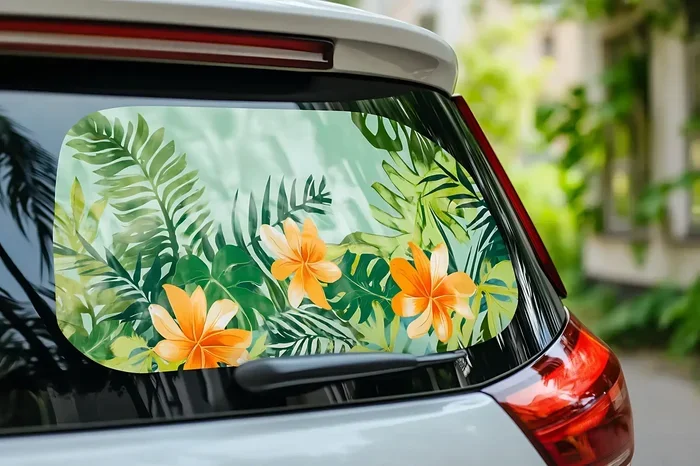
Custom Printed Design
This is where car glass film design really gets personal. Custom printed films let you put any image, pattern, or artwork on your windows. Some people use family photos, nature scenes, or abstract art. Others get their favorite quotes or brand logos printed on their car glass.
Custom printed designs are a fantastic way to express yourself. They turn your car into a unique reflection of your personality. Just make sure the design doesn’t obstruct your view or violate any automotive window tinting laws in your area.
Two-Tone and Split Design
A two-tone split design uses two different colors or tints on the same window. For example, the top half might be a dark charcoal while the bottom half is a light silver. This creates a dynamic, layered look that draws the eye.
Two-tone designs are becoming increasingly popular in the custom car graphics world. They add depth and dimension to your windows without being too overwhelming. It’s a great middle ground between subtle and bold.
Types of Car Glass Film for Design
Not all window films are the same. The type of film you choose affects how your design looks, how long it lasts, and how well it performs. Let’s break down the main types of car glass film design materials available.
| Film Type | Best For | Durability | Price Range |
|---|---|---|---|
| Dyed Film | Basic privacy and UV protection | 3-5 years | Budget-friendly |
| Metalized Film | Heat rejection and scratch resistance | 5-8 years | Mid-range |
| Carbon Film | Fade resistance and matte finish | 5-10 years | Mid to high |
| Ceramic Film | Maximum heat rejection and clarity | 10+ years | Premium |
| Printed/Custom Film | Unique designs and artwork | 5-7 years | Varies by design |
Each type has its strengths. Dyed film is the most affordable and works well for basic privacy. Metalized film reflects heat and is more durable. Carbon film offers a sleek matte look without the metallic shine. And ceramic film is the top tier — it blocks the most heat and doesn’t interfere with your phone or radio signals.
For decorative glass film purposes, printed or custom films are the go-to choice. They allow you to create unique patterns and designs that standard tinted films can’t match. If you want your car to truly stand out, a custom printed car window film design is the way to go.
How to Choose the Right Car Glass Film Design
With so many options, picking the perfect car glass film design can feel overwhelming. Don’t worry — we’ll help you narrow it down. Here’s what to consider before you make your choice.
Think About Your Goal
What do you want from your window tint design? Is it privacy? Style? UV protection? Heat reduction? Or all of the above? Knowing your main goal helps you pick the right film type and design. If privacy is your priority, go with a darker tint. If style is the main goal, explore geometric patterns or custom prints.
Consider Your Car’s Color and Style
The color and style of your car matter when choosing a car glass film design. A matte black film looks amazing on a black sports car but might feel too heavy on a white minivan. Think about your car’s existing color scheme and choose a film that complements it rather than clashes.
Check Local Laws and Regulations
This is super important. Every state and country has different rules about how dark your window tint can be and where it can be applied. For example, many places allow darker tint on rear windows but require the windshield to stay mostly clear. Violating these rules can lead to fines or even having your film removed. Always research your local tint darkness laws before purchasing.
Set a Budget
Car glass film design can range from very affordable to quite premium. Basic dyed films cost as little as $50-$100 per window, while custom printed designs can run several hundred dollars. Set a realistic budget before you shop, and remember that quality often comes at a price. Investing in a better film now saves you money on replacements later.
DIY or Professional Installation?
Some window film designs are easy enough to install yourself. Pre-cut kits come with instructions and work well for people with patience and a steady hand. However, if you want a flawless finish with no bubbles or wrinkles, professional installation is the better choice. Experts have the tools, experience, and clean environments needed for a perfect application.
Quick Tips for Choosing Your Design
- Start with a small design on one window before committing to a full set
- Order sample swatches to see how the film looks in real light
- Consider how the design looks both inside and outside the car
- Think about resale value — overly bold designs may not appeal to all buyers
- Ask for recommendations from friends or online car communities
Tips for Installing Car Glass Film
If you’re planning to install car glass film design yourself, there are a few things you need to know. Proper installation makes all the difference between a professional-looking finish and a bubbly mess.
First, clean your windows thoroughly. Any dust or grease will show under the film and ruin the look. Use a glass cleaner and a lint-free cloth. Make sure the window is completely dry before you start.
Second, work in a controlled environment. Dust, wind, and humidity can all cause problems during application. A garage or indoor space is ideal. If you must work outside, choose a calm, dry day with no wind.
Third, use the application solution that comes with your kit. Spray the solution generously on the window and on the film backing. This gives you time to slide the film into position and adjust it before it sticks.
Fourth, use a squeegee to push out air bubbles and excess liquid. Start from the center and work your way outward. Go slowly and be patient. Rushing this step is the number one cause of bubbles and wrinkles.
Fifth, let the film cure properly. Most films need 24-48 hours to fully bond to the glass. Avoid rolling down your windows or wiping the film during this time. The edges may look slightly cloudy at first — this is normal and will clear up as the film cures.
Common Installation Mistakes to Avoid
- Applying film in direct sunlight — it heats up too fast and sticks unevenly
- Not cutting the film to the right size — measure twice, cut once
- Using too little application solution — you need enough to slide the film freely
- Rushing the squeegee process — bubbles are hard to fix once the film sets
- Ignoring the edges — make sure the film is fully sealed at all edges
If you follow these tips and avoid common mistakes, your car glass film design will look fantastic. And if you’re not confident in your DIY skills, there’s no shame in hiring a professional. A good installer can make even the most complex design look perfect.
Common Mistakes to Avoid with Car Glass Film Design
Even with the best intentions, people make mistakes when choosing and using car glass film design. Here are the most common ones and how to avoid them.
Ignoring Legal Restrictions
This is the biggest mistake people make. Every region has different rules about window tint darkness and reflectivity. Some places don’t allow any tint on the windshield at all. Getting caught with illegal tint can result in fines, failed inspections, or even having the film removed. Always do your research first.
Choosing the Wrong Shade
It’s easy to pick a tint shade based on how it looks online. But the real-world view can be very different. Some films look great in photos but are too dark or too light in person. Always order samples or test a small area before committing to a full set of windows.
Skipping Quality for Price
Cheap films might save you money upfront, but they often fade, bubble, and peel within a year or two. Investing in a quality automotive window tinting product from a reputable brand pays off in the long run. Look for films that come with warranties and good customer reviews.
Forgetting About Maintenance
Once your car glass film design is installed, it needs proper care to stay looking great. Avoid using ammonia-based cleaners on tinted windows. Use a soft cloth and gentle cleaning solutions. Wait at least a month before cleaning your windows after installation to let the film fully cure.
Overdoing the Design
It’s tempting to go all-out with bold patterns and heavy coverage. But sometimes less is more. A well-designed car window film design should enhance your car, not overwhelm it. Think about balance and how the design works with your car’s overall look.
Expert Insights on Car Glass Film Design
We spoke with several automotive styling experts to get their take on the latest trends in car glass film design. Here’s what they had to say.
Mark D., Auto Styling Specialist: “The trend right now is customization. People don’t want cookie-cutter tints anymore. They want designs that reflect who they are. Custom printed films and geometric patterns are flying off the shelves.”
Sarah L., Window Film Installer: “Ceramic films are changing the game. They offer the best heat rejection without signal interference, and they come in beautiful shades that work perfectly for decorative glass film design.”
James T., Car Enthusiast and Blogger: “My biggest tip is to start small. Try a single window with a unique design before going all out. It lets you see how it looks in real life and gives you confidence to expand later.”
These experts agree on one thing: car glass film design is all about personal expression. There’s no right or wrong way to do it — only what feels right for you and your car.
Frequently Asked Questions
How long does car glass film design last?
The lifespan of car glass film design depends on the type of film and how well you maintain it. High-quality ceramic films can last 10 years or more. Standard dyed films typically last 3-5 years. Carbon and metalized films fall in the middle range at 5-8 years. Proper cleaning and avoiding harsh chemicals will help your film look great for as long as possible.
Is car glass film design legal everywhere?
No, window tint laws vary widely by location. Some areas allow very dark tints on all windows, while others restrict tint darkness to 50% or higher on side and rear windows. Windshield tint rules are especially strict in many places. Always check your local regulations before applying any automotive window styling film to your car.
Can I install car glass film design myself?
Yes, many car window film design kits are designed for DIY installation. They come with pre-cut pieces and detailed instructions. However, if you’ve never done it before, the learning curve can be steep. For the best results, especially with complex designs, professional installation is recommended.
Does car glass film design block UV rays?
Absolutely. Most quality window films block 99% of harmful UV rays. This protects your skin from sun damage and prevents your car’s interior from fading and cracking. Even if your primary goal is style, the UV protection is a valuable bonus of any car glass film design.
How much does a full car glass film design cost?
The cost varies depending on the film type, the design complexity, and whether you go with professional installation. A basic DIY tint kit for all windows might cost $100-$300. Professional installation with custom designs can range from $200-$1,000 or more. Custom printed designs tend to be at the higher end of the price range.
Can I remove car glass film design and replace it later?
Yes, one of the best things about car glass film design is that it’s completely reversible. Quality films can be removed without leaving residue or damaging the glass. This means you can change your design whenever you want, making it a flexible and low-risk way to keep your car looking fresh.
Conclusion
Car glass film design is one of the smartest and most creative ways to transform your vehicle. It’s affordable, reversible, and packed with benefits that go way beyond looks. From gradient tints and geometric patterns to custom printed artwork, the world of automotive window tinting offers something for every style and budget.
Whether you’re looking for better UV protection, reduced heat, enhanced privacy, or just a stunning new look, the right car glass film design delivers on all fronts. The key is to choose a design that matches your personality, pick a quality film material, and install it carefully — or let a professional handle it for you.
Don’t be afraid to experiment. Try a small design first, see how you feel about it, and then expand if you love it. The beauty of car glass film design is that you can always change it up. Your car is your canvas, and the possibilities are truly endless.
So go ahead, explore the options, find your perfect design, and give your car the stunning makeover it deserves. With the right car glass film design, you’ll turn heads wherever you go.