Can You Turbocharge and Supercharge a Car Right Now
Yes, you can turbocharge and supercharge a car — but it depends on your engine, budget, and goals. Forced induction can add serious horsepower, but it also demands the right supporting mods. Whether you choose a turbocharger kit or a supercharger installation, this guide walks you through everything you need to know before making the upgrade.
Can you turbocharge and supercharge a car? The short answer is yes. But the real question is whether your specific car is a good candidate for forced induction. Adding a turbo or supercharger transforms a regular engine into a power machine. However, it is not as simple as bolting on a kit and calling it a day.
Whether you want more horsepower gain on a daily driver or you are building a weekend warrior, forced induction opens up a world of possibilities. This guide breaks down everything you need to know. We will cover how each system works, what it costs, what mods you need, and whether the upgrade is worth your money.
If you have ever wondered what it takes to add a turbocharger kit or a supercharger installation to your car, you are in the right place. Let us dive in.
Key Takeaways
- Both turbochargers and superchargers force more air into the engine, which creates more power.
- A turbo uses exhaust gases, while a supercharger is driven by the engine belt.
- Not every engine can handle forced induction without upgrades to internals and fuel systems.
- Installation costs range from $2,000 to $7,000+ depending on the kit and car.
- You will need supporting mods like an intercooler, fuel system upgrade, and ECU remap.
- A turbo offers more top-end power, while a supercharger delivers instant low-end torque.
- Proper planning and professional installation can save you from costly engine damage.
📑 Table of Contents
- What Does It Mean to Turbocharge or Supercharge a Car?
- Turbocharger vs Supercharger: Key Differences
- Can You Add a Turbo or Supercharger to Any Engine?
- What You Need Before You Start
- The Installation Process: What to Expect
- Is It Worth It? Pros, Cons, and Realistic Expectations
- Common Mistakes People Make When Forced Inducing Their Car
- Expert Insights on Forced Induction
- Conclusion
What Does It Mean to Turbocharge or Supercharge a Car?
Both turbocharging and supercharging fall under the category of forced induction. That means you are forcing more air into the engine than it would normally pull in on its own. More air means you can burn more fuel. More fuel burned means more power. It is that simple.
A stock engine is designed to breathe a certain amount of air. When you add a compressor — either a turbine-driven turbo or a belt-driven supercharger — you push past those limits. The result is a big jump in horsepower gain. Some setups can double or even triple the original power output.
How Forced Induction Works
The engine needs three things to make power: air, fuel, and spark. A forced induction system focuses on the air side. By compressing the intake air, the turbo or supercharger packs more oxygen molecules into each cylinder. The engine control unit then adds more fuel to match. The spark plug ignites the richer mixture, and boom — more power.
Think of it like breathing through a straw versus breathing through a wide-open pipe. The wider pipe lets you pull in more air with each breath. A compressor does the same thing for your engine. It forces more air in so the engine can make more energy per cycle.
Why People Add Forced Induction
The biggest reason is horsepower gain. A naturally aspirated engine has a ceiling. Forced induction breaks through that ceiling. Even a small four-cylinder engine can produce serious power with the right setup. Here are some common reasons people choose this path:
- More power without replacing the whole engine.
- Better acceleration for passing and towing.
- Improved top-end speed on highways and tracks.
- More efficient use of a smaller engine.
- Fun factor — there is nothing like the surge of boost.
Turbocharger vs Supercharger: Key Differences
The debate between a turbo vs supercharger is one of the oldest arguments in the car world. Both systems achieve the same goal — more air into the engine — but they go about it very differently. Understanding these differences is key before you spend a single dollar.
How a Turbocharger Works
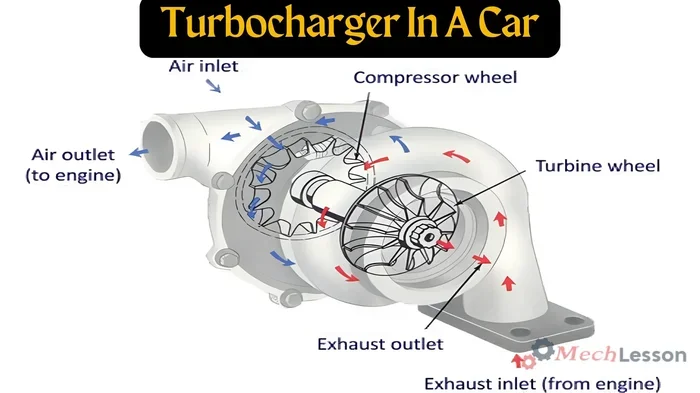
A turbocharger uses the engine’s exhaust gases to spin a turbine. That turbine is connected to a compressor on the intake side. As exhaust gases spin the turbine, the compressor pulls in and compresses fresh air. This compressed air then flows into the engine.
The main advantage of a turbo is efficiency. It uses energy that would otherwise be wasted in the exhaust. That means you get more power without the engine working harder to produce it. Turbos also tend to produce more top-end power, which makes them popular for highway driving and track use.
However, turbos come with a downside: lag. Since the turbine needs exhaust pressure to spool up, there is a slight delay before the boost hits. Modern turbocharger kits have reduced this lag significantly, but it is still present.
How a Supercharger Works
A supercharger is driven directly by the engine via a belt. As the engine turns, the supercharger spins and compresses intake air. Because it is connected to the crankshaft, the supercharger delivers power instantly. There is no lag.
This instant response makes superchargers great for street driving and low-end torque. You press the gas, and the power is right there. The three most common types are:
- Roots supercharger: Sits on top of the engine and pushes air in. It is simple and reliable but less efficient at high RPM.
- Centrifugal supercharger: Looks like a small turbo and spins at very high speeds. It offers great efficiency and a smooth power curve.
- Twin-screw supercharger: Uses two meshing rotors to compress air internally. It delivers strong low-end and mid-range torque.
Turbo vs Supercharger: Head-to-Head
| Feature | Turbocharger | Supercharger |
|---|---|---|
| Power Source | Exhaust gases | Engine belt |
| Response Time | Slight lag | Instant |
| Efficiency | Higher (uses waste energy) | Lower (draws engine power) |
| Top-End Power | Excellent | Good |
| Low-End Torque | Moderate | Excellent |
| Installation Complexity | Moderate to high | Moderate |
| Heat Generation | Higher (needs intercooler) | Moderate |
| Cost | Lower to mid-range | Mid to high-range |
Your choice between a turbo and a supercharger depends on your goals. If you want maximum efficiency and top-end power, go turbo. If you want immediate response and easier packaging, a supercharger might be the better pick.
Can You Add a Turbo or Supercharger to Any Engine?
This is where things get tricky. The answer to “can you turbocharge and supercharge a car” is not a simple yes for every vehicle. Some engines are built with forced induction in mind from the factory. Others are not so lucky.
Engines That Handle Forced Induction Well
Some engines are naturally better candidates for a turbocharger kit or supercharger. Factors that make an engine more compatible include:
- Cast-iron block — handles higher cylinder pressures better.
- Robust bottom end — strong crankshaft, connecting rods, and pistons.
- Aluminum heads with reinforced valve seats — can handle higher temperatures.
- Existing turbo or supercharger mounts — some engines have provisions built in.
Many modern engines, especially those from manufacturers like Ford, BMW, and GM, come in both naturally aspirated and forced-induction versions. If your car has a turbo-ready variant, the swap is much easier.
Engines That Need More Work
Older or budget engines may not handle forced induction without significant upgrades. Common weak points include:
- Cast aluminum blocks that crack under boost.
- Weak connecting rods that bend at high RPM.
- Thin cylinder walls that cannot handle increased pressure.
- Stock head gaskets that fail under boost pressure.
If your engine has these weaknesses, you will need to upgrade the engine internals before adding boost. That includes forged pistons, stronger connecting rods, and a quality head gasket. Skipping this step can lead to catastrophic engine failure.
Compression Ratio Matters
The compression ratio of your engine plays a huge role in how much boost you can safely run. A lower compression ratio (like 8.0:1) can handle more boost. A higher ratio (like 12.0:1) is more prone to detonation under boost. If you are adding forced induction to a high-compression engine, you may need to lower the compression first or use higher octane rating fuel.
What You Need Before You Start
Throwing a turbocharger kit or supercharger onto your engine without proper planning is a recipe for disaster. You need to think about the full picture. Here is what you should consider before starting any forced induction project.
Fuel System Upgrade
More air means you need more fuel. A fuel system upgrade is essential. This might include larger fuel injectors, a high-flow fuel pump, and upgraded fuel lines. Without enough fuel, your engine will run lean, which causes overheating and can melt pistons.
Intercooler Installation
Compressing air creates heat. Hot air is less dense and can cause knocking. An intercooler cools the compressed air before it enters the engine. This gives you denser, cooler air, which means more power and safer combustion. Every turbo setup should have an intercooler. Many supercharger setups benefit from one as well.
ECU Remap and Engine Tuning
Your engine control unit needs to know the new conditions. A professional ECU remap adjusts the fuel maps, ignition timing, and boost pressure to match your new setup. Without proper tuning, you risk lean conditions, misfires, or even engine damage. This is not something you should skip.
Exhaust System Changes
A turbo setup requires a downpipe and often a wastegate to manage boost pressure. The exhaust manifold may also need to be upgraded to handle the increased exhaust flow. A proper exhaust setup ensures the turbo spools correctly and the engine breathes freely.
Belt and Drive System
For supercharger installations, the belt drive system needs to handle the extra load. You may need an upgraded belt, tensioner, and pulleys. Make sure everything is rated for the extra stress.
The Installation Process: What to Expect
Installing a turbo kit or supercharger kit is a significant job. It is not a beginner-level project unless you have solid mechanical skills and a well-equipped garage. Here is what the process typically looks like.
Step-by-Step Overview
- Select the right kit for your specific make and model.
- Remove the stock intake and exhaust components that will interfere with the new setup.
- Install the compressor unit — this is the turbo or supercharger itself.
- Mount the intercooler and connect the piping.
- Install the wastegate (for turbo setups) to control boost pressure.
- Upgrade the fuel system with larger injectors and a high-flow pump.
- Wire in any new sensors — boost pressure sensor, coolant temperature sensor, and so on.
- Perform the ECU remap with a professional tuner.
- Test and dial in the system on a dynamometer or through careful street testing.
How Long Does It Take?
A professional supercharger installation can take anywhere from 8 to 20 hours. A turbo kit installation may take longer, especially if you are also upgrading the exhaust system and fuel system. The time varies based on the car and the complexity of the kit.
Should You DIY or Hire a Pro?
If you have experience with engine builds and access to proper tools, DIY is possible. However, engine tuning and fuel system work are best left to professionals. A mistake during tuning can cause serious engine damage. The cost of a professional install is worth the peace of mind.
Is It Worth It? Pros, Cons, and Realistic Expectations
Every modification has trade-offs. Here is an honest look at what you gain and what you give up when you add forced induction to your car.
The Pros
- Massive horsepower gain — often 50 to 200+ horsepower depending on the setup.
- Better acceleration and passing power on the highway.
- More fun to drive — the surge of boost is addictive.
- You keep your stock engine instead of swapping in a bigger one.
- Modern turbo systems are reliable when installed and tuned correctly.
The Cons
- Cost adds up fast. A quality kit plus installation and tuning can run $3,000 to $7,000 or more.
- Increased engine stress means more wear over time.
- Reduced fuel economy under hard driving — though some turbo setups can be more efficient at light loads.
- More heat generated in the engine bay, which can affect longevity if not managed.
- Insurance and warranty implications — check with your provider before starting any mod.
Realistic Power Expectations
A typical bolt-on modifications turbo kit on a stock engine can add 50 to 100 percent more horsepower. For example, a stock 200-horsepower four-cylinder might make 300 to 400 horsepower with a properly tuned turbo setup. Supercharger setups tend to produce similar gains, though they often peak at the lower end of that range.
Remember, these numbers depend on your base engine, the kit quality, and the tuning. Pushing too much boost on a stock engine is a fast track to engine failure. Always build the foundation before chasing big numbers.
Quick Tips for a Successful Forced Induction Build
- Start with a solid, healthy engine. Do not bolt a turbo onto an engine with existing problems.
- Invest in quality parts. Cheap kits save money upfront but can cost you more in the long run.
- Never skip the ECU tune. This is the single most important step.
- Monitor your temperatures. Keep an eye on coolant and oil temps during the first few drives.
- Use the right fuel. Higher octane rating fuel helps prevent knock under boost.
- Give yourself time. Rushing the install or tuning process leads to mistakes.
Common Mistakes People Make When Forced Inducing Their Car
Even experienced car enthusiasts make mistakes when adding a turbo or supercharger. Here are the most common ones to avoid.
Skipping the intercooler. Some people think they can run boost without one. They cannot. The air gets too hot, and detonation follows. An intercooler is not optional — it is essential.
Using the wrong fuel. Running low-octane fuel on a boosted engine is a quick way to cause engine damage. Always use the octane rating recommended for your setup.
Over-boosting a stock engine. It is tempting to turn the boost up as high as possible. But stock engines have limits. Respect those limits and upgrade the internals before pushing more boost.
Ignoring oil changes. A turbo engine runs hotter and produces more byproducts. You need to change the oil more frequently and use quality synthetic oil.
Cheap knock-off kits. A bargain turbo kit might seem like a deal, but poorly made parts fail. Stick with reputable brands and proven turbo kit designs.
Expert Insights on Forced Induction
Forced induction is one of the most rewarding upgrades you can make to a car — but only if you do it right. A professional tuner once told me that the biggest mistake he sees is people buying a kit and expecting it to bolt on like a factory part. It does not work that way. Every forced induction setup is a system. The compressor, fuel system, intercooler, exhaust, and tuning all work together. If one part is weak, the whole system suffers.
Another expert shared that engine internals are the biggest variable. A well-built bottom end can handle 400 to 600 horsepower on a turbo. A stock bottom end might barely handle 300. Know your engine’s limits before you push it.
One more tip from the pros: always log your data. Boost pressure, coolant temperature, oil temperature, and air-fuel ratio should all be monitored. A simple gauge kit can save you from a catastrophic failure.
Conclusion
Can you turbocharge and supercharge a car? Absolutely. Whether you choose a turbo kit or a supercharger installation, forced induction can transform your driving experience. The key is to approach the project with knowledge and patience.
Understand your engine’s limits. Invest in quality parts. Never skip the supporting mods — the intercooler, fuel system upgrade, and ECU remap are all critical. And if you are not 100 percent confident in your skills, hire a professional.
The world of forced induction is exciting and rewarding. With the right setup, you can unlock horsepower gains you never thought possible. Just remember: plan it right, build it right, and tune it right. Your engine — and your wallet — will thank you for it.
So go ahead. Start planning your forced induction project today. The road to more power starts with a single, well-informed decision.
Frequently Asked Questions
Is it cheaper to turbo or supercharge a car?
Generally, a turbo kit is less expensive than a supercharger kit of similar output. Turbos also tend to be more efficient since they use waste exhaust energy. However, the total cost depends on the kit brand, your car model, and the installation labor.
Can I turbocharge a naturally aspirated V6 or V8?
Yes, you can add a turbocharger kit to most naturally aspirated engines, including V6 and V8 configurations. However, you will need to evaluate the engine internals, fuel system, and cooling setup to ensure it can handle the additional boost safely.
How much horsepower can a turbo add?
A properly tuned turbo kit can add anywhere from 50 to 200+ horsepower depending on the base engine, boost level, and supporting modifications. Stock engines typically see gains in the 50 to 100 percent range.
Do I need to change my oil more often with forced induction?
Yes. A forced induction engine runs hotter and puts more stress on the oil. Most experts recommend switching to synthetic oil and changing it every 3,000 to 5,000 miles instead of the standard interval.
Can I daily drive a turbocharged car?
Absolutely. Many modern turbo cars are designed for daily driving. As long as the system is properly installed and tuned, a turbo or supercharger car can be just as reliable and comfortable as a stock vehicle.
What is the lifespan of a turbocharger?
A quality turbocharger can last 100,000 to 150,000 miles or more with proper maintenance. Regular oil changes, good driving habits, and allowing the turbo to cool down before shutting off the engine all contribute to a longer lifespan.