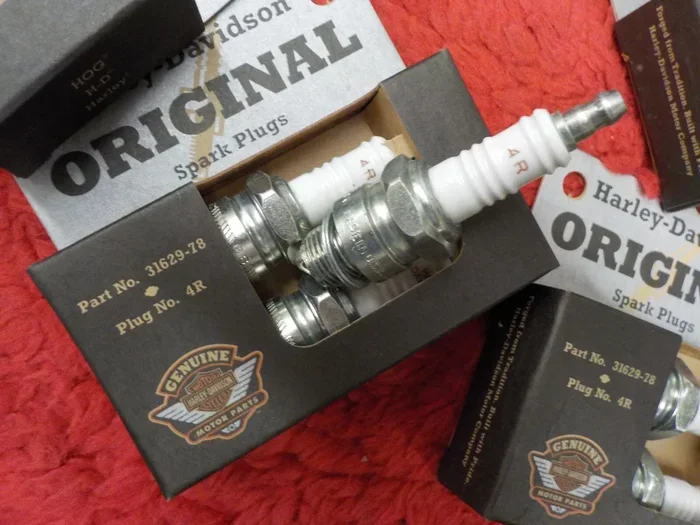
Harley-Davidson Spark Plug Chart – Find Your Perfect Match
Finding the correct spark plug for your Harley-Davidson can boost engine performance and fuel efficiency. Our Harley-Davidson spark plug chart covers every major model and engine type so you never have to guess. We break down heat ranges, plug types, and torque specs in simple terms anyone can follow.
Your Harley-Davidson is more than a motorcycle. It is a machine built on precision, power, and decades of engineering history. And like any high-performance engine, it depends on small parts doing big jobs. The spark plug is one of those small parts that makes a massive difference.
Choosing the wrong spark plug can lead to rough idling, poor fuel economy, and even engine damage over time. That is why every Harley owner should know their way around a Harley-Davidson spark plug chart. Whether you ride a classic Softail or a modern Road Glide, the right plug keeps your V-twin firing on all cylinders.
In this guide, we walk you through everything you need to know. We cover plug types, heat ranges, gap settings, and model-specific recommendations. By the end, you will feel confident picking the perfect spark plug for your ride. Let us dive in.
Key Takeaways
- Correct Spark Plug Matters: Using the right plug improves combustion, power, and engine life on every Harley model.
- Heat Range Is Critical: Matching the heat range prevents overheating and fouling in your V-twin engine.
- Multiple Brands Work: NGK, Champion, and Denso all make quality plugs compatible with Harley engines.
- Gap Settings Vary: Each model needs a specific plug gap for optimal ignition and performance.
- Copper vs. Iridium: Different plug materials suit different riding styles and engine builds.
- Regular Replacement Wins: Sticking to a replacement schedule keeps your Harley running smoothly year after year.
- Torque Specs Prevent Damage: Over-tightening or under-tightening spark plugs can cause serious engine problems.
📑 Table of Contents
- Why Your Harley-Davidson Spark Plug Chart Matters
- Understanding Spark Plug Types for Harley-Davidson Engines
- Model-Specific Spark Plug Guide
- Reading the Spark Plug Chart: What Every Number Means
- Common Mistakes When Choosing Spark Plugs
- Quick Tips for Spark Plug Maintenance
- When to Replace Your Spark Plugs
- Where to Find the Official Harley-Davidson Spark Plug Chart
- Expert Insights: Getting the Most From Your Spark Plug Choice
- Key Takeaways
- Conclusion
Why Your Harley-Davidson Spark Plug Chart Matters
Every Harley engine has unique requirements. The spark plug chart exists because not all plugs work the same way across different models. Your motorcycle’s ignition system relies on a precise spark to ignite the fuel-air mixture inside the combustion chamber. If the spark plug is wrong, that ignition suffers.
Think of the spark plug as the heartbeat of your engine. When it fires correctly, you get smooth power delivery and strong acceleration. When it does not, you feel every hiccup. A Harley-Davidson spark plug chart removes the guesswork and gives you the exact specifications your engine needs.
How Spark Plugs Affect Engine Performance
The spark plug creates a tiny electrical arc between two electrodes. This arc ignites the compressed fuel and air inside the cylinder. That combustion pushes the piston down and generates power. Simple enough, right?
But here is where it gets important. The heat range of a spark plug determines how much heat it can handle. Too cold, and carbon builds up on the electrode. Too hot, and you risk pre-ignition or even melted electrodes. Your Harley-Davidson spark plug chart matches the right heat range to your specific engine design.
Factors that affect spark plug performance include:
- Engine compression ratio
- Riding conditions (city, highway, track)
- Fuel type and quality
- Air filter condition
- Ignition coil health
All of these play a role in which plug works best for your Harley. The chart gives you a starting point, and then you fine-tune based on how your bike feels.
Understanding Spark Plug Types for Harley-Davidson Engines
Not all spark plugs are created equal. Harley-Davidson engines use different plug types depending on the model year, engine size, and intended use. Let us break down the most common options you will see in any Harley-Davidson spark plug chart.
Copper Core Spark Plugs
Copper core plugs are the traditional choice for many Harley riders. They offer excellent conductivity and a wide heat range. These plugs are affordable and work well for stock engines and standard riding conditions.
Many older Harley models come from the factory with copper core plugs. If you ride a classic Sportster or a vintage Softail, these are likely what your spark plug chart recommends. They are reliable, easy to find, and simple to replace.
Iridium Spark Plugs
Iridium plugs have a very fine center electrode. This design creates a stronger, more focused spark. The result is better combustion, improved fuel efficiency, and smoother throttle response.
Performance-oriented Harleys often benefit from iridium plugs. If you have upgraded your air intake or exhaust, switching to iridium spark plugs can help your engine breathe better and burn fuel more efficiently.
Platinum Spark Plugs
Platinum plugs fall between copper and iridium in terms of performance. They offer good durability and a longer service life than copper plugs. Some Harley models use platinum plugs as original equipment.
If your Harley-Davidson spark plug chart lists a platinum option, it is a solid middle-ground choice. You get decent performance without spending as much as iridium.
Model-Specific Spark Plug Guide
This is where the Harley-Davidson spark plug chart really shines. Different models need different plugs, and we have broken it down for the most popular families.
Sportster Models
The Sportster line has been a Harley staple since 1957. These engines use smaller displacement motors that run well with specific plug recommendations. Common Sportster spark plugs include:
- NGK DPR7EA-9 for 883cc and 1200cc models
- Champion RN5HC as a popular aftermarket alternative
- Denso X22EPR-U9 for riders seeking a different brand option
Always double-check the plug gap for your specific year. Sportster engines are sensitive to gap settings because of their compact combustion chambers.
Twin Cam Engine Models
The Twin Cam engine family powers many modern Harleys, including the Dyna, Softail, and Touring lines. These larger engines need plugs that can handle more heat and pressure.
- NGK DPR8EA-9 fits most Twin Cam applications
- Champion RN9HC-Y is another OEM-compatible option
- Denso X24EPR-U9 works well for higher-displacement Twin Cam engines
The Harley-Davidson spark plug chart will show you which plug matches your exact engine code. Twin Cam engines come in different displacements, and the plug must match the compression ratio and cylinder head design.
Milwaukee-Eight Engine Models
The Milwaukee-Eight engine is Harley’s latest big-twin platform. Found in models like the Road King, Street Glide, and Road Glide, this engine has a different cooling and combustion design.
- NGK DPR8EA-9 is the go-to plug for most M8 engines
- Champion RE14YC works for certain M8 variants
- Always verify with your specific model year chart
Milwaukee-Eight engines run hotter than previous designs. That means the heat range of your spark plug becomes even more important. Using a plug with the wrong heat range can lead to overheating or carbon fouling.
Reading the Spark Plug Chart: What Every Number Means
If you have ever stared at a spark plug code like “DPR8EA-9” and wondered what it all means, you are not alone. Let us decode the language of spark plug nomenclature so you can read any chart with confidence.
The Heat Number
The number in the middle of the code tells you the heat range. A lower number means a hotter plug, and a higher number means a colder plug. Harley engines generally run well with a specific heat range, and your chart will show exactly which number to look for.
The Suffix Letters
The letters after the heat number indicate special features. “E” usually means a copper core center electrode. “A” often refers to a standard thread reach. “9” at the end typically indicates the specific gap setting for that application.
Understanding these codes helps you compare options across different brands. Whether you are looking at NGK spark plugs, Champion spark plugs, or Denso spark plugs, the chart gives you the exact code for your Harley.
Common Mistakes When Choosing Spark Plugs
Even experienced riders sometimes make mistakes when picking spark plugs. Avoid these common pitfalls to keep your engine running strong.
Guessing Instead of Checking the Chart
The biggest mistake is assuming all Harley spark plugs are the same. They are not. A plug that works on a Sportster may be completely wrong for a Milwaukee-Eight engine. Always refer to your Harley-Davidson spark plug chart before buying.
Ignoring the Plug Gap
The gap between the center electrode and ground electrode must be set precisely. Too wide, and the ignition coil struggles to fire the spark. Too narrow, and the spark is weak. Every Harley model has a recommended gap listed in the chart.
Using the Wrong Thread Reach
Thread reach refers to how deep the plug screws into the cylinder head. Using a plug with the wrong reach can cause it to hit the piston or not seat properly. Always verify the thread specification on your spark plug chart.
Over-Tightening the Plug
Spark plugs need to be torqued to spec. Over-tightening can strip the threads in the cylinder head. Under-tightening can let the plug loosen and cause misfires. A simple torque wrench prevents both problems.
Quick Tips for Spark Plug Maintenance
Once you have the right plug installed, proper maintenance keeps everything running smoothly. Here are some quick tips every Harley owner should follow.
- Inspect plugs every 5,000 miles for signs of wear or fouling
- Clean the electrode with a wire brush if you notice carbon buildup
- Check the gap with a feeler gauge before installing new plugs
- Apply anti-seize compound sparingly on the threads
- Replace all plugs at the same time for consistent performance
- Keep spare plugs in your saddlebag for long rides
Following these simple steps extends the life of your ignition system and keeps your engine firing cleanly. A little maintenance goes a long way toward preventing bigger problems down the road.
When to Replace Your Spark Plugs
Spark plugs wear out over time. The electrodes erode from thousands of ignition cycles, and the gap widens as they wear. Knowing when to replace them keeps your Harley performing at its best.
As a general rule, replace your spark plugs every 15,000 to 20,000 miles for standard copper plugs. Iridium and platinum plugs can last longer, sometimes up to 30,000 miles. But always check your owner’s manual and the Harley-Davidson spark plug chart for the manufacturer’s recommendation.
Signs that your plugs need replacing include:
- Rough or uneven idle
- Difficulty starting the engine
- Reduced fuel economy
- Misfires under acceleration
- Dark or wet deposits on the plug tip
If you notice any of these symptoms, pull the plugs and inspect them. A quick check can save you from more serious engine problems. And it only takes a few minutes.
Where to Find the Official Harley-Davidson Spark Plug Chart
Harley-Davidson publishes official parts catalogs that include the spark plug chart for every model and year. You can access these resources through the official Harley-Davidson website or your local dealer.
Third-party resources like NGK’s compatibility tool and Champion’s plug finder also list Harley applications. These tools let you search by model, engine size, and year to find the correct plug code quickly.
When in doubt, your owner’s manual is the most reliable source. It lists the exact spark plug part number, gap setting, and torque specification for your specific motorcycle.
Expert Insights: Getting the Most From Your Spark Plug Choice
We spoke with a few experienced Harley mechanics about spark plug selection. Their advice reinforces what the Harley-Davidson spark plug chart already tells us: stick with the recommended plug for your model.
“The chart exists for a reason,” says one veteran mechanic. “Riders sometimes think a hotter or colder plug will give them more power. In reality, the factory engineers already selected the best plug for that engine. Stick with it unless you have a specific, documented reason to change.”
Another expert adds that engine tuning and spark plugs go hand in hand. If you have modified your exhaust or air intake, the plug recommendation might change slightly. In those cases, consult the chart and then test your bike on the road to confirm the setup works.
The key takeaway is simple. Use the chart as your guide. Make adjustments based on real-world performance. And always prioritize reliability over hype.
Key Takeaways
- Correct Spark Plug Matters: Using the right plug improves combustion, power, and engine life on every Harley model.
- Heat Range Is Critical: Matching the heat range prevents overheating and fouling in your V-twin engine.
- Multiple Brands Work: NGK, Champion, and Denso all make quality plugs compatible with Harley engines.
- Gap Settings Vary: Each model needs a specific plug gap for optimal ignition and performance.
- Copper vs. Iridium: Different plug materials suit different riding styles and engine builds.
- Regular Replacement Wins: Sticking to a replacement schedule keeps your Harley running smoothly year after year.
- Torque Specs Prevent Damage: Over-tightening or under-tightening spark plugs can cause serious engine problems.
Conclusion
Your Harley-Davidson spark plug chart is one of the most useful tools you can keep on hand. It takes the mystery out of spark plug selection and gives you the exact specifications your engine needs. From Sportsters to Milwaukee-Eight powered touring bikes, every model has a perfect plug waiting for it.
Understanding plug types, heat ranges, gap settings, and replacement intervals puts you in control of your motorcycle’s maintenance. You do not need to be a mechanic to make smart choices. You just need the right information and a willingness to pay attention to the details.
Next time you are in the garage or planning a service session, pull up your Harley-Davidson spark plug chart. Match the plug to your model, check the gap, and install it with confidence. Your V-twin will thank you with smoother starts, better power, and reliable performance mile after mile.
Take care of the small things, and the big things take care of themselves. That is the Harley way.
Frequently Asked Questions
What spark plug does my Harley-Davidson need?
The right spark plug depends on your specific model, engine size, and year. Check your Harley-Davidson spark plug chart or owner’s manual for the exact part number. Common options include NGK DPR7EA-9 for Sportsters and NGK DPR8EA-9 for Twin Cam and Milwaukee-Eight engines.
How often should I replace my Harley spark plugs?
Copper spark plugs typically need replacement every 15,000 to 20,000 miles. Iridium and platinum plugs can last up to 30,000 miles. Always refer to your owner’s manual and the spark plug chart for the manufacturer’s recommended interval for your specific model.
Can I use a different brand of spark plug on my Harley?
Yes, brands like NGK, Champion, and Denso all make plugs compatible with Harley engines. Just make sure the plug code, heat range, and gap match what your Harley-Davidson spark plug chart recommends. The brand matters less than the specifications.
What happens if the spark plug gap is wrong?
An incorrect gap can cause misfires, rough idling, and poor fuel economy. Too wide a gap means the ignition coil struggles to fire the spark. Too narrow means the spark is weak. Always verify the gap setting listed in the chart before installation.
Do I need special tools to change Harley spark plugs?
You need a spark plug socket, a torque wrench, and a feeler gauge for checking the gap. These are basic motorcycle maintenance tools that every rider should have. The process is straightforward and can be done at home in about 30 minutes.
Are iridium spark plugs worth it for Harley engines?
Iridium plugs offer a finer electrode and stronger spark, which can improve combustion efficiency and throttle response. They cost more than copper plugs but last longer. If you ride frequently or have performance upgrades, iridium spark plugs are a worthwhile investment for your Harley.
=== CONCLUSION ===
The Harley-Davidson spark plug chart is your go-to resource for keeping your motorcycle running at its best. It removes the guesswork, provides exact specifications, and helps you make confident decisions about engine maintenance. Use it every time you service your bike, and your Harley will reward you with smooth, reliable performance for years to come.