Does Tesla Have Two Charging Ports And Why It Matters
So, does Tesla have two charging ports? The short answer is no. Most Tesla vehicles use a single combined charging port called NACS, which works with multiple connector types through adapters. Understanding this one-port design helps Tesla owners charge faster, avoid confusion, and make smarter decisions about where and how to power up their electric vehicles.
Have you ever walked up to a Tesla and wondered about the charging port? Maybe you saw a Tesla owner plugging in at a station and noticed something that didn’t look quite right. Or perhaps you are shopping for an electric vehicle and have been asking yourself, does Tesla have two charging ports? This is a question that confuses a lot of people, especially those new to the Tesla world.
The truth might surprise you. Tesla vehicles do not have two separate charging ports. Instead, they use one smart, universal port that handles multiple charging standards. This design choice has big implications for how you charge your car every day. In this article, we will break down everything you need to know about Tesla’s charging port setup. We will cover which models use this design, why Tesla made this choice, and how it affects your charging routine.
Whether you already own a Tesla or are thinking about buying one, understanding the charging port situation is essential. It affects where you can charge, how fast you can charge, and what adapters you need to carry. Let us dive into the details and clear up any confusion once and for all.
Key Takeaways
- Tesla uses a single charging port: Nearly all Tesla models feature one combined port called NACS, not two separate ports.
- NACS stands for North American Charging Standard: This universal port accepts multiple connector types with simple adapters.
- Different Tesla models share the same port design: Whether you drive a Model 3, Model Y, Model S, or Model X, the charging port setup is similar.
- Adapters expand your charging options: Tesla includes J1772 and CCS adapters so you can charge at non-Tesla stations.
- The single-port design is intentional: Tesla chose this approach to simplify the charging experience and reduce clutter on the vehicle.
- Knowing your port setup prevents charging mistakes: Understanding what your Tesla port accepts saves time and frustration at charging stations.
- Tesla’s charging ecosystem is built around this one port: Superchargers, destination chargers, and home setups all work with the single NACS port.
📑 Table of Contents
- Understanding Tesla’s Single Charging Port Design
- Which Tesla Models Use This Charging Setup?
- Why Does Tesla Use a Single Port Instead of Two?
- How to Charge Your Tesla at Different Stations
- Common Charging Port Mistakes to Avoid
- What If Your Tesla Charging Port Has a Problem?
- The Future of Tesla Charging and the NACS Standard
- Final Thoughts on Tesla’s Charging Port Setup
Understanding Tesla’s Single Charging Port Design
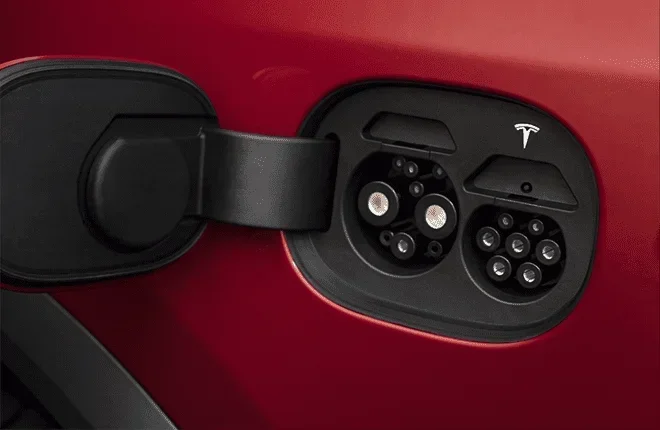
When we talk about Tesla’s charging system, we are really talking about one main thing: the NACS port. NACS stands for North American Charging Standard. This is the single, combined charging port that Tesla uses across its lineup. Instead of having two separate ports for different charging types, Tesla rolled everything into one neat connection point.
What Is the NACS Port?
The NACS port is Tesla’s proprietary connector. It is smaller and more compact than many other EV connectors on the market. This little port does a big job. It handles both AC and DC charging through the right cable or adapter. When you see a Tesla plugged into a Supercharger, that is the NACS port doing its thing. When you see a Tesla at a home charger, that is also the same port working with a J1772 adapter.
One of the biggest advantages of the NACS design is its simplicity. You do not need to hunt for two different ports on your car. Everything goes through the single opening on the rear of the vehicle, usually on the driver’s side. This makes the charging process cleaner and more intuitive.
How Does the Single Port Work With Different Chargers?
Here is where things get interesting. The single NACS port works with several different charging standards. You just need the right cable or adapter. Let us look at how this works in practice:
- Tesla Superchargers: These use the NACS connector directly. No adapter needed. Just plug in and charge.
- J1772 Stations: These are common at public charging locations and home setups. You need a J1772 adapter that comes with your Tesla.
- CCS (Combined Charging System) Stations: These are popular at many non-Tesla fast-charging networks. Tesla provides a CCS adapter for these stations.
- Home Wall Connectors: Tesla’s own Wall Connector uses the NACS cable directly for Level 2 home charging.
So while Tesla only has one physical port, the charging options are incredibly flexible. This single-port approach gives owners access to a wide range of charging infrastructure without needing multiple ports on the vehicle.
Which Tesla Models Use This Charging Setup?
Every current Tesla model uses the same single NACS charging port. This includes the Tesla Model 3, Tesla Model Y, Tesla Model S, and Tesla Model X. Whether you are looking at a sedan or an SUV, the port layout is essentially the same. This consistency makes life easier for Tesla owners who switch between models or share charging tips with friends.
Tesla Model 3 Charging Port Details
The Model 3 is Tesla’s most popular sedan, and it features the single NACS port on the driver’s side rear. The port door is sleek and flush with the body. When you open it, you see the charging inlet where you connect your cable. The Model 3 supports both Supercharging and home charging through this one port.
For owners who charge at home, the Model 3 works great with a Tesla Wall Connector or even a standard J1772 public charger using the included adapter. The Tesla Model 3 charging port is designed for easy daily use, whether you are topping up overnight or grabbing a quick charge during a road trip.
Tesla Model Y Charging Port Details
The Model Y shares the same charging port design as the Model 3. Since they share the same platform, the Tesla Model Y charging port setup is identical. One NACS port, one charging inlet, and the same adapter compatibility. This makes it simple for Model 3 and Model Y owners to share charging advice and equipment.
Tesla Model S and Model X Charging Port Details
The Model S and Model X are Tesla’s premium vehicles, and they also use the single NACS port. These larger vehicles benefit from the same simple charging approach. The port location is on the driver’s side, and the charging process is the same across all models. If you are considering a Tesla Model S charging port or Tesla Model X charging port setup, rest assured that it follows the same universal design.
Why Does Tesla Use a Single Port Instead of Two?
Now that we know Tesla uses one port, you might wonder why. Why not have two ports like some other electric vehicles? The answer comes down to design philosophy, user experience, and engineering efficiency.
Simplicity and User Experience
Tesla has always prioritized simplicity in its vehicle design. A single charging port means fewer things to think about. You do not need to figure out which port goes with which charger. You do not need to remember where two different ports are located on your car. Just open the door, grab the right cable or adapter, and plug in.
This simplicity extends to the charging experience itself. When you pull up to a Supercharger, the connection is straightforward. When you use a J1772 station at the grocery store, you grab your adapter and connect. One port, many options. That is the Tesla way.
Engineering and Design Efficiency
From an engineering standpoint, a single port is more efficient. It reduces the number of components on the vehicle. It simplifies the wiring and electrical systems. It also means fewer potential failure points. Tesla engineers designed the NACS port to be robust, reliable, and compact. Adding a second port would add weight, complexity, and cost without meaningful benefit.
The adapters that come with your Tesla do the heavy lifting. They handle the conversion between different charging standards so that the single port can communicate with any compatible charger. This is a clever solution that keeps the car design clean while maximizing charging flexibility.
Industry Trends and Tesla’s Leadership
Tesla’s single-port approach has actually influenced the broader EV industry. Other automakers have taken notice of how well NACS works. In fact, several major car brands have announced plans to adopt the NACS standard for their own vehicles. This trend shows that Tesla’s decision to use a single universal port was not just good design. It was forward-thinking leadership.
The Tesla charging standard is becoming a benchmark in the electric vehicle world. As more stations adopt NACS, the need for adapters will decrease, making the charging experience even smoother for everyone.
How to Charge Your Tesla at Different Stations
Knowing how to charge your Tesla at various stations is key to owning the vehicle. Since Tesla uses a single port, you need to understand which cables and adapters work where. Let us walk through the most common charging scenarios.
Supercharging on the Road
Tesla Superchargers are the fastest way to charge your car on long trips. These stations use the NACS connector directly. You simply pull up, plug in, and let the car charge. Superchargers can add hundreds of miles of range in under an hour. They are strategically placed along highways and in urban areas, making road trips convenient and stress-free.
One thing to keep in mind: Supercharger speeds can vary based on battery temperature, state of charge, and station availability. But overall, the experience is seamless because the connector and port are designed to work together perfectly.
Charging at Home
Home charging is where most Tesla owners spend the majority of their charging time. You have two main options:
- Tesla Wall Connector: This is Tesla’s dedicated home charger. It plugs into a 240-volt outlet and provides the fastest home charging speeds. The Wall Connector connects directly to your NACS port with no adapter needed.
- Standard Outlet (Mobile Connector): Tesla includes a Mobile Connector that lets you plug into a regular 120-volt or 240-volt outlet. This is slower but handy for overnight charging or emergency top-ups.
For most owners, the Wall Connector is the best choice. It provides about 30 to 44 miles of range per hour of charging, which is plenty for daily use.
Using Public Charging Networks
Public charging has expanded rapidly in recent years. When you need to charge away from home, you have several options:
- J1772 Stations: Found at shopping centers, parking garages, and workplaces. Use your J1772 adapter to connect. These provide Level 2 charging speeds.
- CCS Stations: Common at many fast-charging networks. Use your CCS adapter for DC fast charging. These are great when Superchargers are not nearby.
- Third-Party Networks: Charging networks like Electrify America and EVgo are increasingly adding NACS support, meaning you may soon be able to plug in without any adapter at all.
The beauty of the single NACS port is that you can handle all of these scenarios with one port and a small set of adapters. Keep your adapters in the trunk, and you are ready for anything.
Common Charging Port Mistakes to Avoid
Even though Tesla’s charging port is straightforward, there are a few common mistakes that owners make. Being aware of these can save you time, money, and frustration.
Forgetting to Bring the Right Adapter
Not every charging station uses the NACS connector. If you plan to use a J1772 or CCS station, make sure you have the correct adapter in your car. It is easy to forget, especially when you are traveling to a new area. A quick tip: keep a checklist on your phone or tag your adapters with a bright colored bag so you always remember to grab them.
Ignoring Port Door Maintenance
The charging port door on your Tesla is a moving part. Over time, it can become stiff or misaligned. Keep it clean and lubricated occasionally. If the door sticks or does not close properly, address it early before it becomes a bigger issue. A well-maintained port door ensures a secure connection every time you charge.
Assuming All Fast Chargers Are the Same
Not all fast chargers deliver the same power. Some CCS stations are slower than Tesla Superchargers. Some J1772 stations are level 1 and will take many hours to charge. Always check the charger specifications before you plug in, especially when you are in a hurry.
Leaving the Cable Under Strain
When you finish charging, do not yank the cable out by pulling on the cord. Always use the release mechanism on the connector. This protects both the port on your car and the charging cable. Small habits like this go a long way in keeping your charging setup working smoothly for years.
What If Your Tesla Charging Port Has a Problem?
Like any part of your vehicle, the charging port can sometimes develop issues. Knowing what to look for and how to address problems can keep you on the road with confidence.
Signs of a Charging Port Issue
Watch for these warning signs:
- The charging cable does not click into place securely.
- The port door is stuck or will not open.
- Charging stops unexpectedly or the connection keeps dropping.
- The car displays an error message related to the charging port.
- You notice physical damage, debris, or corrosion around the port.
What To Do When Something Goes Wrong
If you notice any of these issues, start with the basics. Check for debris in the port. Make sure the cable is fully inserted. Try a different charger if possible. Often, the issue is simple and easy to fix.
If the problem persists, contact Tesla Service. They can diagnose the issue remotely in many cases and guide you through next steps. In some situations, a service center visit may be needed. The good news is that the NACS port is a well-designed component, and serious issues are rare.
Prevention Tips
Keep the port clean and dry. Avoid driving through deep water with the port exposed. Periodically inspect the port for any buildup of dirt or ice. These simple habits can prevent most charging port problems before they start.
The Future of Tesla Charging and the NACS Standard
Tesla’s single-port design is not just a current solution. It is shaping the future of electric vehicle charging. The NACS standard is gaining traction across the industry, and this has exciting implications for all EV owners.
As more automakers adopt NACS, the number of compatible charging stations will grow. This means fewer adapters, faster charging, and a more unified charging experience for everyone. Tesla owners are already benefiting from this trend, and the momentum is only increasing.
In the coming years, we can expect even more integration between Tesla’s charging network and other EV brands. Supercharger stations may open up to non-Tesla vehicles, and more public chargers will feature NACS connectors built in. This evolution makes the single-port design even more valuable as a forward-thinking choice.
For current Tesla owners, this means your investment in the NACS system is future-proof. The charging ecosystem around this port will only get better and more convenient over time.
Final Thoughts on Tesla’s Charging Port Setup
So, does Tesla have two charging ports? The answer is a clear no. Tesla uses one smart, versatile port called NACS that handles multiple charging standards through adapters. This design keeps things simple, efficient, and future-ready. Whether you are charging at home, on a road trip, or at a public station, the single-port approach works beautifully.
Understanding your Tesla’s charging setup empowers you as an owner. You can charge confidently, plan trips effectively, and avoid common mistakes. The next time someone asks you about Tesla’s charging ports, you will know exactly what to tell them.
Embrace the simplicity of the single port. Keep your adapters handy, maintain your port door, and enjoy the seamless charging experience that Tesla has designed. It is one of the many thoughtful details that makes owning a Tesla a genuinely pleasant experience.
The Tesla charging port is more than just a connection point. It is a gateway to a vast and growing charging network. It represents Tesla’s commitment to making electric vehicle ownership as easy and convenient as possible. So plug in, charge up, and hit the road with confidence.
Frequently Asked Questions
Do all Tesla models have the same charging port?
Yes, all current Tesla models use the same single NACS charging port. Whether you drive a Model 3, Model Y, Model S, or Model X, the charging port design is identical. This consistency makes it easy for Tesla owners to share charging equipment and advice across different models.
Can I charge my Tesla at non-Tesla charging stations?
Absolutely. Tesla includes adapters that let you charge at J1772 and CCS stations. The J1772 adapter works for Level 2 public chargers, while the CCS adapter enables DC fast charging at non-Tesla networks. Just plug in the adapter, connect to your NACS port, and start charging.
Why does Tesla use a single port instead of two?
Tesla chose a single port design to keep things simple and efficient. One port means fewer components, less complexity, and a cleaner vehicle design. The included adapters handle all the different charging standards, so you do not need multiple ports on the car. This approach also aligns with Tesla’s goal of making EV ownership as effortless as possible.
What is the NACS charging standard?
NACS stands for North American Charging Standard. It is Tesla’s proprietary connector design that fits into the single charging port on all Tesla vehicles. NACS handles both AC and DC charging and has become an industry standard that other automakers are beginning to adopt for their own electric vehicles.
How fast can I charge my Tesla at a Supercharger?
Tesla Superchargers can add up to 200 miles of range in about 15 to 30 minutes, depending on your model and battery conditions. The NACS connector on your car connects directly to the Supercharger cable, making the process quick and straightforward. Charging speeds may vary based on temperature, battery level, and station demand.
Do I need to buy extra adapters for my Tesla?
Tesla includes a J1772 adapter and a CCS adapter with every new vehicle. For most owners, these two adapters cover all charging needs. However, if you frequently use specific third-party networks, you may want to check if additional adapters are available. Tesla also sells a Mobile Connector for home charging on standard outlets.
=== CONCLUSION ===
Does Tesla have two charging ports? The answer is definitively no. Tesla vehicles use one universal NACS port that works with multiple charging standards through simple adapters. This single-port design is a hallmark of Tesla’s commitment to simplicity, efficiency, and user-friendly engineering. From the Model 3 to the Model X, every Tesla shares this streamlined approach to charging.
By understanding how the NACS port works and keeping the right adapters on hand, you can charge your Tesla virtually anywhere. Superchargers, home chargers, J1772 stations, and CCS networks are all accessible through that one little port on the side of your car. It is a design that works beautifully and is built to last.
Take what you have learned here and apply it to your daily charging routine. Keep your adapters organized, maintain your port door, and stay informed about the growing NACS charging network. With this knowledge, you are set to enjoy the full Tesla charging experience with confidence and ease.