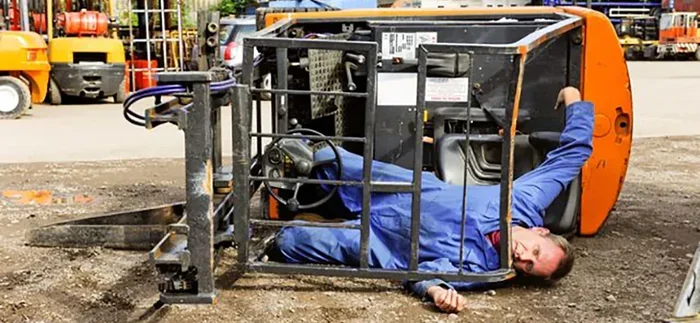
Should You Jump Clear of a Forklift If It Starts to Tip
Should You Jump Clear of a Forklift If It Starts to Tip? The short answer is no. Jumping from a tipping forklift is one of the most dangerous things an operator can do, and it has caused countless fatal injuries. Staying inside the operator cage with your seatbelt on dramatically increases your chances of survival during a rollover. This article breaks down the science, the myths, and the life-saving steps every forklift operator should know.
Every year, forklift accidents injure thousands of workers and claim dozens of lives. One of the most common questions in forklift safety training is this: should you jump clear of a forklift if it starts to tip? The answer might surprise you. Most people assume jumping away is the smart move. But that instinct could be the worst decision you ever make.
Forklift tip-overs are terrifying. The machine lurches, the load sways, and your heart races. In that moment, your body wants to flee. But jumping from a tipping forklift is a deadly misconception that has cost lives for decades. The data is clear. Staying inside the cage with your seatbelt fastened gives you the best chance of walking away.
This guide explains why jumping is so dangerous. It covers the physics behind forklift stability. It shares real-world examples and actionable tips. Whether you are a new operator or a seasoned warehouse worker, this article will change how you think about forklift tip-over safety. Let us break down the facts together.
Key Takeaways
- Never jump from a tipping forklift: Jumping exposes you to crush injuries from the falling cage and mast.
- Stay seated and hold on tight: The rollover protection structure (ROPS) is designed to keep you safe if you remain inside.
- Wear your seatbelt at all times: Seatbelts prevent you from being thrown during a tip-over or collision.
- Speed and load placement matter: Carrying loads too high or driving too fast greatly increases tip-over risk.
- OSHA requires proper training: Certified forklift training reduces accidents and saves lives.
- Know your stability triangle: Understanding how forklifts balance helps you operate them more safely.
- React correctly during a tip: Brace yourself, lean away from the fall direction, and grip the controls firmly.
📑 Table of Contents
- The Dangerous Myth of Jumping Clear
- What Actually Happens During a Forklift Tip-Over
- Why Staying in the Operator Cage Saves Lives
- How to Prevent Forklift Tip-Overs
- OSHA Regulations and Forklift Safety Standards
- What to Do If a Forklift Starts to Tip
- Expert Insights on Forklift Tip-Over Survival
- Common Mistakes Operators Make
- Key Takeaways
- Conclusion
The Dangerous Myth of Jumping Clear
Why This Myth Won’t Die
The idea of jumping clear comes from a natural survival instinct. When something feels dangerous, we want to get away fast. It is the same reflex that makes us jump back from a falling object. The problem is that a forklift tip-over does not work like a falling object. The machine falls in a rolling motion, and the operator’s cage moves with it.
Many workers have been taught this myth by word of mouth. “Just jump out if it starts to tip” sounds logical. But logic does not always match reality. Workplace safety experts have spent decades trying to correct this dangerous belief. The truth is that jumping from a moving or tipping forklift puts you directly in the path of the falling structure.
Consider this scenario. You are driving a forklift with a raised load. The ground is slightly uneven. The machine begins to tilt. Your first instinct is to leap. You jump forward. The forklift tips sideways. The mast and cage crush down right where you were standing seconds before. This exact situation has happened in warehouses and construction sites across the country.
The Fatal Flaw in the Instinct to Jump
When you jump from a tipping forklift, you lose all contact with the machine. The operator cage is your only protection during a rollover. Without it, you are completely exposed. The falling mast can strike you from above. The frame can roll over your body. The result is often catastrophic.
Forklift accidents involving jump attempts have a much higher fatality rate than tip-overs where the operator stayed seated. According to safety data from OSHA, the majority of forklift deaths involve rollovers. And in most of those cases, the operator was not wearing a seatbelt or tried to escape the machine.
The myth persists because it feels like the right thing to do. It is a human response. But understanding forklift operation safety means overriding that instinct with knowledge. Once you understand the mechanics, the decision to stay put becomes obvious.
What Actually Happens During a Forklift Tip-Over
The Stability Triangle Explained
Every forklift has a stability triangle. This is an imaginary triangle formed by the front two wheels and the pivot point of the rear axle. The forklift’s center of gravity must stay within this triangle for the machine to remain stable.
When you raise a load, the center of gravity shifts upward and forward. This makes the triangle smaller and less stable. Add speed, a sharp turn, or uneven ground, and the center of gravity can easily move outside the triangle. That is when a tip-over begins.
The key thing to understand is that forklifts do not fall straight down like a tree. They fall in an arc. The rear wheels stay planted while the front lifts and tilts. The operator cage rotates with the frame. If you are inside and strapped in, the cage absorbs the impact around you.
How Speed and Load Affect Stability
Speed is one of the biggest contributors to forklift tip-overs. The faster you drive, the more lateral force acts on the machine. Taking a turn at high speed with a raised load is one of the most common causes of rollover accidents.
Load height matters just as much. Carrying a load too high raises the center of gravity to a dangerous level. Even on flat ground, a high load combined with a sudden stop can cause a tip-over. Load center placement is also critical. If the load is unbalanced or extends too far forward, stability drops significantly.
Here are the main factors that increase tip-over risk:
- Raised loads while driving – this is the number one cause of forklift rollovers.
- Excessive speed – fast movements shift the center of gravity quickly.
- Sharp turns – especially on sloped or uneven surfaces.
- Uneven or slippery floors – wet or oily surfaces reduce traction.
- Overloaded forklifts – exceeding the rated capacity pushes the limits of stability.
- Worn or underinflated tires – poor tire condition affects balance and control.
Why Staying in the Operator Cage Saves Lives
The Rollover Protection Structure
Modern forklifts are built with a rollover protection structure, commonly called ROPS. This is the frame or cage above the operator seat. It is engineered to absorb impact and maintain a survival space around the operator during a tip-over.
The ROPS works only if you stay inside it. When you jump clear, you leave that protective zone entirely. The cage is designed to distribute the force of a rollover away from your body. It creates a buffer between you and the ground. That buffer can mean the difference between a scare and a fatality.
Think of it like a car. You would not jump out of a moving car during a skid. You stay inside, hold on, and let the safety systems do their job. A forklift cage works the same way. It is your best friend during a tip-over.
The Seat Belt Factor
A seatbelt is the second most important piece of forklift safety equipment after the ROPS. Without a seatbelt, you risk being thrown from the seat during a tip. Even a partial ejection can be fatal.
Some operators skip the seatbelt because it feels uncomfortable or because they think they can react fast enough. That is a deadly mistake. Tip-overs happen in seconds. There is no time to react, brace, or jump. The seatbelt keeps you locked in place so the ROPS can protect you.
Wearing a seatbelt also prevents a specific type of injury called an “under-ride” accident. This happens when an operator tries to jump clear and the falling mast or cage passes over their body. The seatbelt holds you down inside the protective zone where you belong.
Real-World Examples of Survival
There are documented cases where forklift operators survived severe rollovers because they stayed in the cage. In one warehouse incident, a forklift tipped at a loading dock with a full pallet raised. The operator was wearing a seatbelt and held onto the steering column. The cage deformed around him, but he suffered only minor bruising.
In another case, an operator jumped from a tipping forklift on a construction site. The mast struck him as he landed. He sustained life-threatening injuries. The investigation concluded that staying in the cage would have likely prevented serious harm.
These stories are not rare. They happen across industries. Every one of them reinforces the same message: do not jump clear of a forklift during a tip-over.
How to Prevent Forklift Tip-Overs
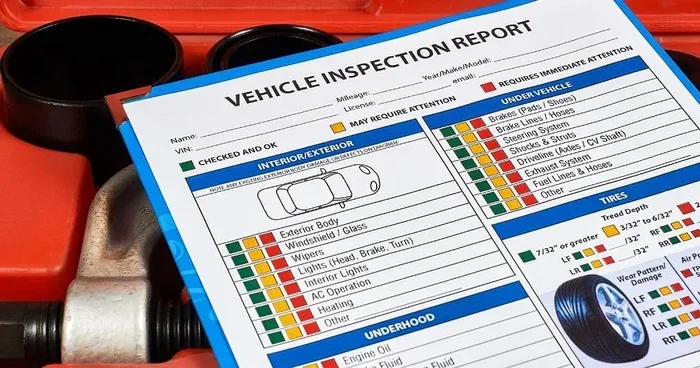
Pre-Operation Inspection Checklist
The best way to survive a tip-over is to prevent one from happening. A thorough equipment inspection before every shift is essential. Here is a quick checklist every operator should follow:
- Check the tires for wear, damage, or low pressure.
- Test the brakes – both service and parking brakes.
- Inspect the mast for leaks, cracks, or unusual movement.
- Verify the horn and lights are working.
- Check the fluid levels – hydraulic fluid, oil, and coolant.
- Test the steering for responsiveness and smoothness.
- Confirm the seatbelt is intact and retracts properly.
- Inspect the forks for cracks, bends, or excessive wear.
Taking five minutes for this inspection can prevent hours of downtime and, more importantly, serious injuries. A well-maintained forklift is a stable forklift.
Driving Best Practices
Safe driving habits are the backbone of workplace safety around forklifts. Here are the top practices every operator should follow:
- Keep loads low – always drive with the load tilted back and within 4 inches of the ground.
- Slow down on turns – reduce speed well before entering any curve or corner.
- Sound the horn at intersections and blind spots.
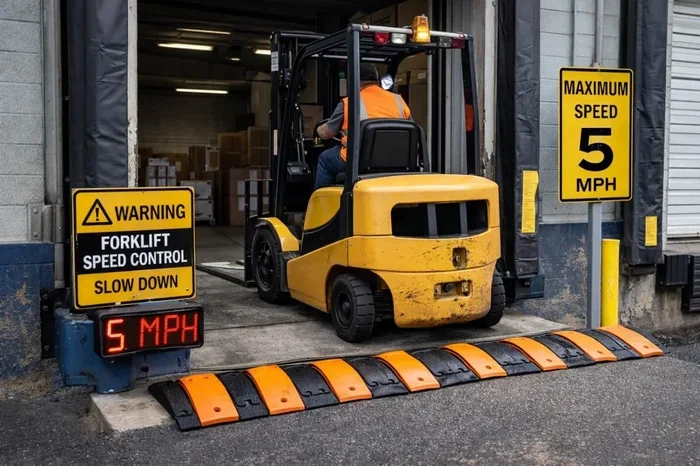
- Respect speed limits – most facilities set forklift speeds at 5 to 8 mph.
- Avoid sudden stops and starts – smooth movements keep the center of gravity stable.
- Drive with the load tilted backward – this shifts the center of gravity toward the rear wheels.
- Be extra cautious on ramps – never raise a load on an incline.
- Keep the cab clear of clutter – loose objects can shift and distract you.
These habits take time to build. That is why consistent forklift training is so important. New operators should practice under supervision until these behaviors become second nature.
Quick Tips for Operators
Here are some fast tips you can apply today:
- Always wear your seatbelt. No exceptions. Not even for short trips across the warehouse.
- Know your forklift’s rated capacity. Overloading is one of the fastest paths to a tip-over.
- Keep your view clear. If the load blocks your vision, travel in reverse or use a spotter.
- Watch for floor hazards. Puddles, oil spots, loose pallets, and uneven surfaces all increase risk.
- Take your time. Rushing is the enemy of safe forklift operation.
OSHA Regulations and Forklift Safety Standards
Training Requirements
OSHA has strict rules about forklift training and certification. Under OSHA Standard 1910.178, all forklift operators must complete both classroom and hands-on training before operating a powered industrial truck. Refresher training is required every three years or after an accident or near-miss.
The training covers a wide range of topics including forklift stability, load handling, surface conditions, and emergency procedures. A big part of the curriculum addresses the question: should you jump clear of a forklift if it starts to tip? The correct answer is drilled into every certified operator for good reason.
Common OSHA Violations
OSHA frequently cites employers for forklift-related violations. The most common ones include:
- Lack of proper operator training and certification.
- Failure to require seatbelt use.
- Operating forklifts in hazardous locations without proper precautions.
- Inadequate maintenance and inspection records.
- Allowing untrained personnel near forklift operating areas.
These violations are not just paperwork issues. They directly contribute to workplace injuries and fatalities. Employers who invest in proper safety protocol training see far fewer accidents and lower insurance costs.
The Role of Daily Safety Briefings
Many successful warehouses start each shift with a brief safety talk. These 5-minute meetings cover the day’s tasks, any known hazards, and reminders about powered industrial truck safety. They keep safety top of mind and create a culture where every worker feels responsible for staying safe.
During these briefings, supervisors can address specific concerns like wet floors, new equipment, or changes in the warehouse layout. This proactive approach catches potential problems before they turn into accidents.
What to Do If a Forklift Starts to Tip
Immediate Actions to Take
If you feel the forklift beginning to tip, your response in the next two seconds matters. Here is exactly what to do:
- Stay seated. Do not jump. Do not try to exit the machine.
- Grip the steering wheel firmly. Hold on tight to keep yourself stable in the seat.
- Lean away from the fall direction. If the forklift is tipping to the left, lean to the right.
- Brace your feet. Plant your feet flat on the floorboard and push forward to anchor yourself.
- Do not make any sudden movements. Avoid jerking the steering or slamming the brakes.
These steps are simple, but they work. The cage, the seatbelt, and your body position all work together to create a protective envelope during a rollover. Every second you remain inside that envelope, you are safer than if you had jumped.
Post-Incident Procedures
Once the forklift has stopped, do not attempt to exit until you are sure it is stable. If the machine is still tilting or shaking, wait for it to settle. Then carefully unbuckle your seatbelt and assess your condition.
Report the incident to your supervisor immediately. Even if you feel fine, some injuries like whiplash or internal bruising do not show symptoms right away. Document what happened so that the equipment inspection team can investigate the cause.
If anyone is injured, call for medical assistance right away. Do not move anyone who is unconscious or in pain. Secure the area so no other forklifts or workers can approach the scene.
Expert Insights on Forklift Tip-Over Survival
Safety professionals and industrial hygienists consistently emphasize the same message: staying in the cage is the best survival strategy. Dr. Susan Keown, a workplace safety researcher, has studied forklift accidents for over 20 years. She states that “the single most important factor in rollover survival is remaining inside the protective structure of the forklift.”
John Martinez, a certified forklift trainer with 15 years of experience, adds that “operators who have been through realistic rollover simulations almost always say they wish they had stayed in the seat. The fear of being crushed is overwhelming, but the data shows that jumping makes everything worse.”
These experts agree that forklift training should include hands-on rollover simulations whenever possible. When operators experience the controlled environment of a simulation, they build confidence in the “stay in the cage” approach. That confidence replaces the instinct to jump with the knowledge that staying put works.
Common Mistakes Operators Make
Even trained operators can make mistakes that increase their risk during a tip-over. Here are the most common errors:
- Removing the seatbelt because it feels uncomfortable. This is the number one deadly mistake.
- Carrying loads too high. A raised load changes the entire balance of the forklift.
- Speeding through corners. Lateral force is the enemy of forklift stability.
- Ignoring warning signs. If the forklift feels unstable or the steering feels heavy, stop immediately.
- Assuming the ground is flat. Even small dips or slopes can shift the center of gravity.
- Not knowing the forklift’s capacity. Every model has a different weight limit. Exceeding it is reckless.
Avoiding these mistakes starts with awareness. The more you know about forklift stability and center of gravity dynamics, the better equipped you are to operate safely every single day.
Key Takeaways
- Never jump from a tipping forklift: Jumping exposes you to crush injuries from the falling cage and mast.
- Stay seated and hold on tight: The rollover protection structure (ROPS) is designed to keep you safe if you remain inside.
- Wear your seatbelt at all times: Seatbelts prevent you from being thrown during a tip-over or collision.
- Speed and load placement matter: Carrying loads too high or driving too fast greatly increases tip-over risk.
- OSHA requires proper training: Certified forklift training reduces accidents and saves lives.
- Know your stability triangle: Understanding how forklifts balance helps you operate them more safely.
- React correctly during a tip: Brace yourself, lean away from the fall direction, and grip the controls firmly.
Conclusion
The question of whether you should jump clear of a forklift if it starts to tip has a definitive answer. Do not jump. Stay in the seat, hold on, and let the rollover protection structure do its job. This single decision has saved countless lives in warehouses, construction sites, and loading docks around the world.
Forklift safety is not just a set of rules. It is a mindset. Every operator who understands the physics of a tip-over, who wears their seatbelt, and who respects the machine’s limits is making the workplace safer for everyone. The next time you sit in that operator cage, remember what you have learned here. Stay seated. Stay belted. Stay alive.
The choice is yours in that critical moment. Make the right one. Should you jump clear of a forklift if it starts to tip? The answer will always be no. Your life depends on it.
Frequently Asked Questions
What is the most common cause of forklift tip-overs?
The most common cause is carrying a raised load while driving, especially during turns. When the load is elevated, the center of gravity shifts upward and forward, reducing the stability triangle. Adding speed or a sharp turn to that equation dramatically increases the risk of a rollover. Always keep loads low and drive slowly on turns.
Can a forklift operator survive a rollover if they jump out?
Surviving a rollover after jumping out is extremely rare and usually results in severe injury. The falling mast and cage can strike the operator as they land. The operator cage is specifically designed to create a protective space during a tip-over. Staying inside with your seatbelt on gives you the highest chance of survival.
How does OSHA view jumping from a tipping forklift?
OSHA explicitly advises operators to never jump from a tipping forklift. The agency’s training requirements include teaching operators to remain seated, hold on tightly, and lean away from the direction of the fall. OSHA considers jumping a violation of basic forklift safety protocols.
What should I do during my forklift pre-shift inspection?
Your pre-shift inspection should include checking tires, brakes, the mast, hydraulic system, lights, horn, and seatbelt. Verify that all safety devices are functioning properly. Document any issues and report them before operating the machine. A thorough inspection prevents many tip-over accidents before they start.
Does the type of forklift affect tip-over risk?
Yes, different forklift types have different stability characteristics. Counterbalance forklifts rely on a rear counterweight for stability. Reach trucks and order pickers have different balance points due to their pantograph mechanisms. Electric forklifts tend to have a lower center of gravity than diesel models. Regardless of type, the same safety rules apply: keep loads low, wear your seatbelt, and never jump during a tip.
How often should forklift operators receive refresher training?
OSHA requires refresher training every three years for all forklift operators. Additional training is needed after an accident, a near-miss, or if an operator is observed using unsafe practices. Regular refresher training keeps safety knowledge fresh and helps prevent the kind of split-second mistakes that lead to tip-over injuries.