How Many O2 Sensors Does a Nissan Altima Actually Have
Your Nissan Altima has between 2 and 4 O2 sensors depending on the engine type and model year. The 4-cylinder Altima typically uses 2 oxygen sensors, while the V6 version has 4 sensors monitoring exhaust flow. Understanding your sensor count helps with diagnostics, emissions testing, and maintaining peak engine performance.
If you own a Nissan Altima, you have probably heard about O2 sensors at some point. Maybe your check engine light came on, or a mechanic mentioned them during a service visit. Either way, it is natural to wonder how many of these sensors your car actually has. The answer is not as simple as a single number, because it depends on several factors. Your engine type, model year, and trim level all play a role. In this guide, we will break down everything you need to know about the O2 sensors in your Nissan Altima. We will cover exactly how many sensors your car has, where they are located, what they do, and when you need to replace them. By the end, you will feel confident talking about your Altima’s oxygen sensor setup with any mechanic.
The oxygen sensor in your Nissan Altima is one of the most important parts of the emissions system. It measures the amount of unburned oxygen in your exhaust gas. This information goes straight to your car’s engine control unit, also known as the ECU. The ECU then adjusts the air-fuel mixture to keep your engine running smoothly. Without working O2 sensors, your Altima would burn fuel inefficiently. You would notice poor performance, higher emissions, and wasted money at the pump. That is why understanding your sensor setup matters so much. Whether you are a DIY mechanic or just want to be an informed car owner, this guide has you covered.
Key Takeaways
- Most Nissan Altimas have 2 to 4 O2 sensors: The exact count depends on whether you have a 4-cylinder or V6 engine.
- Upstream and downstream sensors serve different purposes: One measures exhaust before the catalytic converter, the other measures it after.
- Failing sensors trigger the check engine light: Watch for symptoms like rough idle, poor fuel economy, and failed emissions tests.
- Replacement costs are reasonable: Expect to pay between $100 and $300 per sensor with parts and labor.
- Regular maintenance keeps sensors healthy: Using quality fuel and timely oil changes extends sensor life significantly.
- Hybrid Altimas add complexity: The hybrid system may interact with O2 sensors in unique ways, especially during fuel switching.
📑 Table of Contents
- What Does an O2 Sensor Do on a Nissan Altima?
- How Many O2 Sensors Does a Nissan Altima Actually Have?
- Where Are the O2 Sensors Located on a Nissan Altima?
- Signs Your Nissan Altima O2 Sensors Are Failing
- O2 Sensor Replacement: What to Expect
- Tips for Keeping Your O2 Sensors Healthy
- Common Mistakes People Make with O2 Sensors
- Expert Insights on Nissan Altima O2 Sensors
- Final Thoughts
What Does an O2 Sensor Do on a Nissan Altima?
Before we dive into the exact number of sensors, let us talk about what they actually do. The O2 sensor, short for oxygen sensor, sits in your exhaust system. It reads the oxygen levels in the exhaust gas as it leaves the engine. This data helps the ECU find the perfect air-fuel ratio. The ideal ratio for most gasoline engines is 14.7 parts air to 1 part fuel. When the sensor detects too much fuel, it tells the ECU to lean out the mixture. When it detects too little fuel, the ECU enriches the mixture. This constant adjustment happens hundreds of times per minute. It keeps your engine efficient and your emissions low.
Your Nissan Altima has at least two types of O2 sensors. The first is the upstream sensor. It sits before the catalytic converter. Its job is to monitor the exhaust gases leaving the engine. The second is the downstream sensor. It sits after the catalytic converter. It checks whether the converter is doing its job properly. Together, these sensors give the ECU a complete picture of your exhaust system. They help ensure your Altima passes emissions tests and runs clean. On V6 models, there are additional sensors on each bank of cylinders, which brings us to our next topic.
How Many O2 Sensors Does a Nissan Altima Actually Have?
This is the big question, and the answer depends on your specific Altima model. The number of O2 sensors varies based on the engine configuration. Let us look at the different setups you might find.
4-Cylinder Altima O2 Sensor Count
If your Nissan Altima has a 4-cylinder engine, you likely have 2 O2 sensors. This is true for most model years, including the popular 2013, 2015, 2017, and 2019 models. The 2.5-liter 4-cylinder engine is the most common setup in the Altima lineup. With a 4-cylinder engine, there is one exhaust manifold and one catalytic converter. That means one upstream sensor and one downstream sensor. This is the simplest setup and the easiest to maintain. The 2 sensors work together to monitor the exhaust from all four cylinders at once.
However, some newer Altima models with advanced emissions systems may include additional sensors. For example, certain 2019 and 2022 models have extra sensors for tighter emissions control. These are sometimes called auxiliary sensors. They help the ECU fine-tune the air-fuel ratio even more precisely. If you are unsure about your specific model, a quick diagnostic scan at any auto parts store will tell you exactly how many sensors are present.
V6 Altima O2 Sensor Count
If your Nissan Altima has a V6 engine, the answer changes. V6 Altimas typically have 4 O2 sensors. The 3.5-liter V6 engine, found in models like the Altima 3.5 SR and the older 2007 to 2012 V6 models, uses this setup. With a V6 engine, there are two exhaust banks. Each bank has its own set of cylinders. That means you need an upstream sensor and a downstream sensor for each bank. This gives you a total of 4 sensors. Two sit before the catalytic converter, and two sit after it.
The V6 setup is more complex, but it follows a logical pattern. Each bank of cylinders gets its own monitoring. This allows the ECU to adjust the fuel mixture for each bank independently. The result is smoother idle, better power delivery, and cleaner emissions. If you own a V6 Altima, it is especially important to keep all 4 sensors in good shape. A failing sensor on one bank can cause rough running and poor fuel economy.
Now, you might be wondering about the Altima Hybrid. The hybrid version adds another layer of complexity. The Altima Hybrid uses both a gasoline engine and an electric motor. The O2 sensors on the hybrid model work closely with the hybrid powertrain control module. They help determine when the system should switch between electric and gas power. If you want to learn more about how the hybrid system decides when to use gas, check out this guide on at what point does a hybrid switch to gas. Understanding this process helps you appreciate why your Altima’s sensors are so important.
Where Are the O2 Sensors Located on a Nissan Altima?
Knowing the sensor count is only half the battle. It helps to know where each sensor sits in your exhaust system. The location matters for replacement, diagnostics, and understanding how your car works.
Upstream Sensor Location
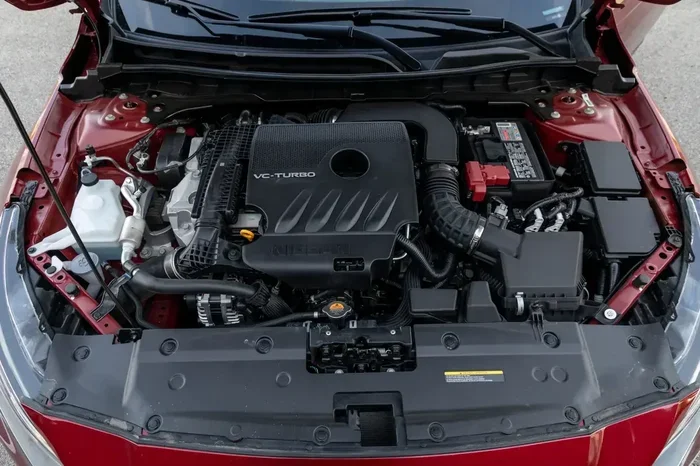
The upstream O2 sensor is the one closest to the engine. On a 4-cylinder Altima, you will find it mounted on the exhaust manifold or the exhaust pipe just after the manifold. It screws into the exhaust pipe with a special bolt-on or clamp-style connector. On the V6 Altima, there are two upstream sensors, one for each exhaust bank. They sit on either side of the engine, close to where the exhaust headers meet the pipes.
The upstream sensor gets extremely hot. It is exposed to raw exhaust gas temperatures that can exceed 1,000 degrees Fahrenheit. Over time, this heat takes a toll. The sensor element can wear out or get contaminated by oil and coolant. When this happens, the sensor sends inaccurate readings to the ECU. That is when you start seeing problems.
Downstream Sensor Location
The downstream O2 sensor sits after the catalytic converter. On a 4-cylinder Altima, there is one downstream sensor on the exhaust pipe behind the converter. On a V6 model, there are two downstream sensors, one for each converter bank. The downstream sensor reads the exhaust gas after it has passed through the catalytic converter. Its job is to monitor the converter’s efficiency. If the downstream sensor readings look similar to the upstream sensor, the converter is not working properly.
Getting to the downstream sensor can sometimes be tricky. It is usually located under the car, near the middle of the exhaust system. On some Altima models, you may need to remove a heat shield or access panel to reach it. Always make sure the car is cool before working on the exhaust system. The components can retain heat long after the engine is turned off.
Signs Your Nissan Altima O2 Sensors Are Failing
O2 sensors do not last forever. They wear out over time, especially in older Altimas with high mileage. Here are the most common signs that your sensors are going bad.
- Check Engine Light: This is the most obvious sign. A faulty O2 sensor will trigger a diagnostic trouble code. Common codes include P0130, P0133, P0136, and P0420. These codes point directly to oxygen sensor problems or catalytic converter issues.
- Poor Fuel Economy: If your Altima is burning more gas than usual, a bad O2 sensor might be the cause. When the sensor sends wrong readings, the ECU guesses the fuel mixture instead of calculating it precisely. This leads to a rich or lean condition that wastes fuel.
- Rough Idle: A failing sensor can cause your engine to idle unevenly. You might feel vibrations at a stoplight or notice the RPMs fluctuating. This happens because the air-fuel mixture is not balanced correctly.
- Failed Emissions Test: If your Altima does not pass an emissions inspection, the O2 sensors are often to blame. They play a direct role in controlling exhaust output. A bad sensor means the ECU cannot properly manage emissions.
- Rotten Egg Smell: A sulfur or rotten egg smell from the exhaust can indicate a failing sensor. This happens when the fuel mixture is too rich and unburned fuel makes it into the exhaust system.
- Sluggish Performance: You might notice hesitation when accelerating or a general lack of power. The ECU is essentially flying blind without accurate sensor data.
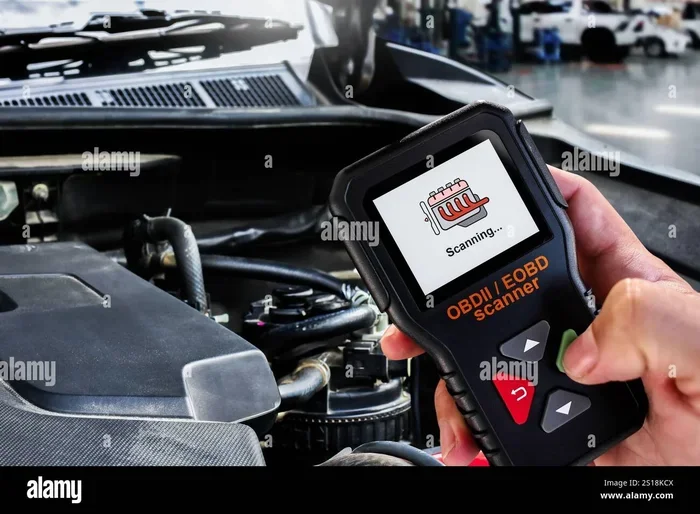
If you notice any of these symptoms, do not ignore them. A simple diagnostic scan at a repair shop or even at home with an OBD2 scanner can confirm whether your O2 sensors are the problem. The earlier you catch a failing sensor, the easier and cheaper the repair will be. Your Altima weighs around 3,200 to 3,400 pounds depending on the trim and engine, which is a significant amount of metal on the road. Keeping all systems, including the sensors, in top shape ensures safe and efficient driving. You can learn more about vehicle weight and its impact on car performance in our guide on what counts as heavy for a car.
O2 Sensor Replacement: What to Expect
When it is time to replace an O2 sensor on your Nissan Altima, you have two options. You can do it yourself or take it to a mechanic. Let us look at both paths.
DIY Replacement
If you are handy with tools, replacing an O2 sensor is a manageable DIY project. You will need an oxygen sensor socket, a ratchet, and an extension. The sensor is usually accessible from under the car. Here is a quick overview of the process:
- Locate the sensor you need to replace using a repair manual or online diagram for your specific Altima model year.
- Disconnect the electrical connector from the sensor. Use care not to damage the wiring.
- Spray penetrating oil on the sensor bolt if it is stuck. Let it sit for a few minutes.
- Use the oxygen sensor socket to unscrew the old sensor. Turn it counterclockwise.
- Thread the new sensor in by hand first to avoid cross-threading.
- Tighten it snugly with the socket and ratchet. Do not over-tighten.
- Reconnect the electrical connector.
- Clear any error codes with an OBD2 scanner.
- Start the car and check for proper operation.
The cost for a replacement O2 sensor ranges from $20 to $80 for the part itself. If you do it yourself, you save on labor. Most people can complete the job in 30 to 60 minutes per sensor.
Professional Replacement
If you prefer not to get under the car, a mechanic can handle the replacement for you. The labor cost typically runs between $50 and $150 per sensor. Parts and labor combined usually come to between $100 and $300 per sensor. For a 4-cylinder Altima with 2 sensors, you might pay $200 to $600 total. For a V6 Altima with 4 sensors, the cost could range from $400 to $1,200. These are rough estimates, and prices vary by region and shop.
When choosing a repair shop, look for one that uses OEM or high-quality aftermarket sensors. Cheap sensors from unknown brands may not last as long. They might also cause the check engine light to return quickly. If you are comparing repair options across different brands, it helps to understand what a local dealership carries in terms of parts availability. You can explore what a local Chevrolet dealership carries for comparison, as dealerships across brands follow similar parts stocking practices.
Tips for Keeping Your O2 Sensors Healthy
Prevention is always better than replacement. You can take simple steps to extend the life of your Nissan Altima’s O2 sensors and avoid premature failure.
- Use Quality Fuel: Cheap gasoline contains more contaminants. These can coat the sensor element and reduce its accuracy over time. Stick with reputable gas stations and top-tier fuel when possible.
- Change Your Oil on Schedule: Old engine oil can produce blow-by gases that contaminate the sensors. Regular oil changes keep the engine clean and protect the entire exhaust system.
- Fix Oil Leaks Promptly: Oil leaking onto the sensor or exhaust components can damage the O2 sensor. If you notice oil spots under your car or a burning oil smell, get it checked right away.
- Avoid Extended Idling: Sitting idle for long periods can cause carbon buildup in the exhaust system. This buildup can coat the sensor and reduce its responsiveness.
- Address Engine Problems Early: A misfiring engine or rich fuel condition puts extra stress on the O2 sensors. Fixing engine problems quickly prevents cascading damage to the sensors and other components.
- Use OEM Sensors for Replacement: Aftermarket sensors vary widely in quality. OEM sensors are designed specifically for your Altima and tend to last longer and perform better.
Following these simple tips can help your O2 sensors last 100,000 miles or more. Some drivers never need to replace their sensors if they maintain the car properly. The key is staying proactive with regular maintenance and not ignoring warning signs.
Common Mistakes People Make with O2 Sensors
There are a few common mistakes that Altima owners make when dealing with O2 sensors. Avoiding these can save you time, money, and frustration.
- Replacing Sensors Without a Diagnosis: A check engine light does not always mean a bad O2 sensor. Many other problems can trigger the same light. Always get a proper diagnostic scan before replacing parts.
- Buying the Wrong Sensor: Not all O2 sensors are the same. The sensor for a 4-cylinder Altima is different from the one for a V6. Make sure you get the correct part for your specific engine and model year.
- Ignoring the Downstream Sensor: People often focus on the upstream sensor and forget about the downstream one. Both are equally important for proper engine operation and emissions control.
- Over-Tightening the Sensor: O2 sensors are made of delicate materials. Over-tightening can crack the sensor body or damage the threads in the exhaust pipe. Hand-tighten first, then snug with a wrench.
- Using Anti-Seize on the Sensor Threads: Some mechanics apply anti-seize compound to the sensor threads. This is a bad idea for O2 sensors. The compound can contaminate the sensor element and cause inaccurate readings. Most O2 sensors come pre-coated with anti-seize from the factory.
By avoiding these mistakes, you ensure your O2 sensors work correctly and last as long as possible. A little knowledge goes a long way when it comes to car maintenance.
Expert Insights on Nissan Altima O2 Sensors
Experienced mechanics who work on Nissan Altimas regularly share some valuable insights about O2 sensors. Here is what the experts want you to know.
First, the upstream sensor wears out faster than the downstream sensor. It is exposed to the rawest exhaust gases and the highest temperatures. Many mechanics recommend replacing upstream sensors every 80,000 to 100,000 miles as preventive maintenance. The downstream sensor often lasts the life of the vehicle if the catalytic converter is working properly.
Second, O2 sensor problems often mimic other engine issues. A bad sensor can cause symptoms that look like spark plug problems, vacuum leaks, or fuel pump failures. This is why proper diagnosis is so important. A mechanic who skips the diagnostic scan might replace parts that are not needed.
Third, the Altima’s O2 sensor connectors can corrode over time. This is especially true in areas with road salt or harsh weather. Corroded connectors cause intermittent sensor failures that are hard to diagnose. If you live in a coastal or cold climate, inspect the connectors during routine maintenance.
Finally, do not be intimidated by O2 sensor replacement. It is one of the more straightforward repairs on a Nissan Altima. With the right tools and a little patience, most car owners can handle it themselves. And if you do need professional help, the cost is reasonable compared to many other car repairs.
Final Thoughts
So, how many O2 sensors does a Nissan Altima actually have? The answer is 2 for the 4-cylinder models and 4 for the V6 models. Some newer or hybrid models may have additional sensors for advanced emissions control. Regardless of the exact count, these sensors play a vital role in keeping your Altima running smoothly and efficiently.
Your O2 sensors work hard every time you drive. They monitor exhaust gases, help control the air-fuel mixture, and keep your emissions in check. Taking care of them through regular maintenance and prompt replacement when needed will pay off in better fuel economy, smoother performance, and a longer-lasting car. If you ever see that check engine light and suspect an O2 sensor issue, do not wait. Get it diagnosed and fixed quickly. A small repair today can prevent bigger problems tomorrow.
Now that you know exactly how many O2 sensors your Nissan Altima has and what they do, you are better equipped to take care of your car. Share this guide with a fellow Altima owner who might find it helpful. And remember, a little attention to your car’s sensors goes a long way toward keeping your ride reliable for years to come.
Frequently Asked Questions
Can I drive my Nissan Altima with a bad O2 sensor?
Yes, you can drive short distances with a failing O2 sensor, but it is not recommended. A bad sensor causes poor fuel economy, rough running, and higher emissions. Over time, it can also damage the catalytic converter, which is a much more expensive repair. Get it checked and replaced as soon as possible.
How much does it cost to replace all O2 sensors on a Nissan Altima?
For a 4-cylinder Altima with 2 sensors, total replacement costs typically range from $200 to $600. For a V6 Altima with 4 sensors, expect to pay between $400 and $1,200. These estimates include both parts and labor. OEM sensors cost more than aftermarket options but tend to last longer and perform better.
How often should I replace my Nissan Altima’s O2 sensors?
O2 sensors typically last between 60,000 and 100,000 miles. However, they can fail earlier due to contamination, oil leaks, or poor fuel quality. If you notice symptoms like poor fuel economy or a check engine light, have the sensors tested. Preventive replacement around the 80,000-mile mark is a good practice for older Altimas.
What happens if I don’t replace a failing O2 sensor on my Altima?
Ignoring a failing O2 sensor leads to several problems. Your engine runs rich or lean, which wastes fuel and increases emissions. You may experience rough idling, hesitation during acceleration, and power loss. The unburned fuel can also damage the catalytic converter over time, leading to a much more costly repair.
Are O2 sensors and MAF sensors the same thing?
No, they are different sensors that serve different purposes. The O2 sensor measures oxygen levels in the exhaust gas. The MAF sensor, or mass airflow sensor, measures the amount of air entering the engine. Both are important for the air-fuel mixture, but they monitor different parts of the intake and exhaust process.
Can I clean my O2 sensors instead of replacing them?
Cleaning O2 sensors is not recommended and rarely works. The sensor element is delicate and can be damaged by cleaning solvents or aggressive methods. If a sensor is contaminated or worn out, replacement is the only reliable fix. Preventive maintenance, such as using quality fuel and regular oil changes, helps keep sensors clean naturally.
=== CONCLUSION ===
Understanding how many O2 sensors your Nissan Altima has is an important part of being a responsible car owner. Whether your Altima has a 4-cylinder engine with 2 sensors or a V6 with 4 sensors, each one plays a critical role in engine performance and emissions control. Keep an eye out for warning signs of sensor failure, and do not ignore the check engine light. With proper care and timely replacements, your Altima’s O2 sensors will keep your car running strong for many miles to come. Stay proactive, stay informed, and enjoy the drive.