Are Celica and Supra the Same or Completely Different
The Toyota Celica and Supra are not the same car. They share a Toyota heritage and both belong to the Toyota sports car family, but they are built on different platforms, have distinct engines, and serve different driving purposes. The Celica is a compact coupe focused on agility, while the Supra is a powerful grand tourer built for speed and long-distance cruising. Understanding their differences helps car enthusiasts appreciate what makes each model special.
Key Takeaways
- Different Platforms: The Celica and Supra are built on entirely different Toyota chassis designs.
- Distinct Engines: The Supra features a much larger and more powerful engine than the Celica.
- Different Eras and Generations: Both cars evolved over decades, but their timelines and design philosophies differ significantly.
- Driving Experience: The Celica offers a nimble, lightweight feel, while the Supra delivers raw power and highway comfort.
- Collector Value: Both models hold strong value in the JDM community, especially the Supra MK4 and later Celica generations.
- Not Interchangeable Parts: Due to different platforms, most parts are not shared between the two models.
- Toyota Legacy: Both cars represent Toyota’s commitment to building exciting sports cars for enthusiasts worldwide.
📑 Table of Contents
- Are Celica and Supra the Same? Let’s Clear This Up
- What Is the Toyota Celica?
- What Is the Toyota Supra?
- Key Differences Between the Celica and Supra
- Performance and Engine Comparison
- Driving Experience and Daily Use
- Which One Should You Choose?
- The Legacy of Both Iconic Toyota Sports Cars
- Common Mistakes People Make When Comparing These Cars
- Quick Tips for Prospective Buyers
- Expert Insights
- Conclusion
Are Celica and Supra the Same? Let’s Clear This Up
If you have ever walked into a local Chevrolet dealership and seen rows of trucks and SUVs, you know that not every car in a brand’s lineup is the same. Toyota works the same way. The company has built everything from compact sedans to powerful Toyota sports cars. The Celica and the Supra are two of the most beloved models in Toyota’s history. But here is the big question: are Celica and Supra the same?
The short answer is no. These two cars are completely different machines. They were designed for different drivers, built on different platforms, and powered by different engines. That does not mean they do not share some DNA. Both are Toyota coupes with a rich racing heritage. Both have earned a special place in the hearts of JDM fans around the world. But their differences are what make each one unique and exciting in its own right.
In this article, we will break down everything you need to know. We will look at their histories, compare their engines, and explore what sets them apart. Whether you are a longtime fan or just starting to learn about these iconic Toyota sports cars, this guide will give you a clear picture of what makes each model special.
What Is the Toyota Celica?
The Toyota Celica is a compact Toyota coupe that first rolled onto the scene in 1970. The name “Celica” comes from the Latin word meaning “heavenly” or “celestial.” Toyota wanted a car that felt light, fast, and fun to drive. And for decades, the Celica delivered exactly that.
The Celica went through several generations. Each new version brought updates to the design, the Toyota drivetrain, and the overall driving experience. Early models were simple and affordable. They gave everyday drivers a taste of Toyota sports car culture without breaking the bank.
The Celica’s Design Philosophy
Toyota designed the Celica to be a lightweight sports coupe. It was not meant to be a luxury grand tourer. Instead, it focused on sharp handling, quick acceleration, and an engaging driving feel. The car was small, nimble, and easy to work on. For many JDM fans, the Celica represents the purest form of Toyota’s sporty DNA.
Over the years, Toyota offered different trim levels. The Celica ST was the base model, perfect for daily driving. The Celica GT added more features and a bit more power. Later generations introduced turbo versions that gave the car a serious performance boost. Each variant had its own character and appeal.
Celica Generations at a Glance
The Celica spanned many production years. Here is a quick look at the major generations:
- First Generation (1970-1977): The original Celica was a simple, stylish coupe with a focus on affordability and fun.
- Second and Third Generations (1977-1985): These models grew in size and added more engine options, including a turbocharged variant.
- Fourth Generation (1985-1989): This era introduced the famous retractable headlight design and sharper handling.
- Fifth and Sixth Generations (1989-2006): The Celica evolved into a more modern Toyota sports car with front-wheel drive and later all-wheel drive options.
What Is the Toyota Supra?
The Toyota Supra is a completely different animal. While the Celica was a compact and nimble coupe, the Supra was built to be a powerful grand tourer. It first appeared in 1978 as a derivative of the Celica, but it quickly grew into its own identity.
The Supra was always about performance. Toyota equipped it with larger engines, stronger Toyota drivetrain components, and a focus on straight-line speed and highway cruising comfort. Over the years, the Supra became one of the most famous Toyota sports cars ever built.
The Supra’s Design Philosophy
Toyota built the Supra for drivers who wanted power and presence. It was bigger, heavier, and more luxurious than the Celica. The interior offered more comfort features, and the exterior had a bold, muscular stance. The Supra was designed to eat up miles on the highway while delivering serious performance when you pushed the pedal.
The car became a symbol of JDM culture, especially after the fourth generation, known as the Supra MK4. This model featured the legendary Toyota inline engine and became a staple in Toyota sports cars history. Car enthusiasts around the world still celebrate the Supra MK4 as one of the greatest performance cars ever made.
Supra Generations and Key Highlights
The Supra also went through several generations over its Toyota production years:
- First Generation (1978-1981): Based on the Celica platform but with a larger engine and more luxury features.
- Second Generation (1981-1986): Introduced a more aerodynamic design and available turbocharging.
- Third Generation (1986-1993): A major redesign that set the stage for the legendary MK4.
- Fourth Generation – MK4 (1993-2002): The most famous Supra. Powered by the iconic Toyota inline engine, it became a global icon.
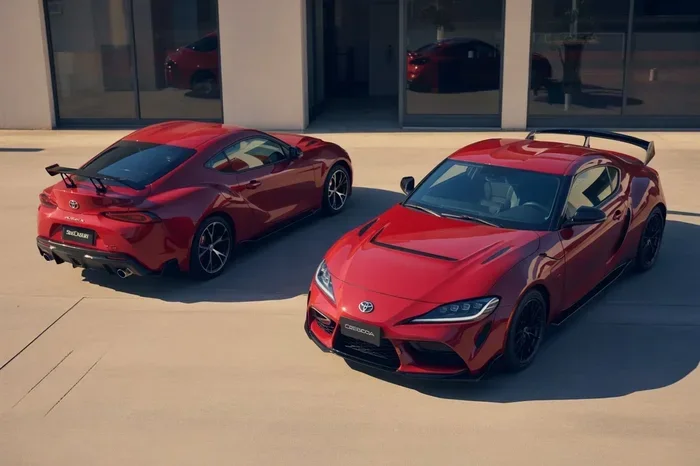
- Fifth Generation (2019-Present): A modern revival developed with BMW collaboration, bringing the Supra into the current era.
Key Differences Between the Celica and Supra
Now that you know what each car is, let us dive into the specific differences. These are the details that make the Celica vs Supra comparison so interesting.
Platform and Chassis
The most fundamental difference is the platform. The Celica was built on a compact Toyota platform designed for lightweight performance. The Supra used a larger, more rigid chassis built to handle more power and highway driving. These different Toyota platform designs mean the cars feel completely different on the road.
Because they are built on different structures, the Celica is lighter and more agile. The Supra is heavier and more stable at high speeds. Neither approach is better. They simply serve different purposes.
Size and Weight
The Celica is a compact car. It is shorter, narrower, and lighter than the Supra. This gives it an advantage in tight corners and quick direction changes. The Supra, on the other hand, is a full-size Toyota coupe with more cabin space and cargo room. If you want a car that can carry passengers comfortably on long trips, the Supra is the better choice.
Target Audience
Toyota aimed the Celica at young enthusiasts and daily drivers who wanted a sporty car without spending a fortune. The Supra targeted drivers who wanted serious performance and luxury features. The Supra was always positioned higher in Toyota’s lineup, both in price and in capability.
Performance and Engine Comparison
This is where the Celica vs Supra debate gets really exciting. The two cars were never meant to compete with each other directly. But comparing their performance numbers shows just how different they are.
Celica Engine Options
The Celica offered a range of engines throughout its life. Early models used smaller Toyota inline engines that were reliable and efficient. Later generations introduced turbocharged variants that boosted power significantly. The Celica turbo became a favorite among Toyota JDM fans who wanted a more affordable entry point into Toyota sports car performance.
Typical Celica engine displacements ranged from about 1.6 liters to 2.4 liters. Power outputs varied depending on the generation and trim level. Most Celica models produced between 140 and 240 horsepower. That is plenty for a lightweight, nimble coupe.
Supra Engine Options
The Supra is a different story entirely. The car was known for its massive Toyota inline engine. The most famous version is the 2JZ-GTE, a 3.0-liter twin-turbo engine that produced around 320 horsepower in its stock form. This engine became legendary in the Toyota JDM community and remains one of the most sought-after Toyota engines in the world.
The Supra’s larger engine displacement and forced induction gave it a massive advantage in straight-line performance. The car could accelerate from 0 to 60 mph in around 4 seconds in its later generations. That is significantly faster than most Celica models.
Performance Comparison Table
Here is a quick comparison of the two cars’ performance highlights:
| Feature | Toyota Celica | Toyota Supra |
|---|---|---|
| Engine Size | 1.6L to 2.4L | 2.0L to 3.0L |
| Horsepower Range | 140 to 240 hp | 200 to 320+ hp |
| Drivetrain | Front-wheel drive (most models) | Rear-wheel drive |
| 0-60 mph (approx.) | 7 to 9 seconds | 4 to 5 seconds |
| Top Speed | Around 140 mph | Around 155 mph or higher |
| Weight | Lighter (2,400-2,800 lbs) | Heavier (3,200-3,500 lbs) |
As you can see, the Supra is in a different league when it comes to raw power. But the Celica makes up for it with its lighter weight and sharper handling. A lighter car can often outperform a heavier one on twisty roads. That is why both cars have their loyal fan bases.
Driving Experience and Daily Use
How does it actually feel to drive these two cars? The experience is very different, and that matters a lot if you are considering owning one.
Celica Driving Feel
The Celica feels alive on back roads. Its lightweight chassis and responsive steering make it a joy to weave through traffic or carve up a mountain pass. The car communicates with the driver through every turn and brake input. For many enthusiasts, the Celica offers one of the most engaging driving experiences in the Toyota sports cars lineup.
Daily driving a Celica is also practical. The car is small enough to fit in tight parking spaces. Fuel economy is reasonable, especially with the smaller engine options. Maintenance costs are manageable because parts are widely available and the Toyota drivetrain is well-understood by mechanics.
Supra Driving Feel
The Supra feels like a luxury Toyota sports car. The ride is smooth and composed, even at high speeds. The cabin is quiet and comfortable, making it perfect for long road trips. When you push the throttle, the Toyota inline engine delivers a surge of power that is thrilling and addictive.
However, the Supra is not as easy to live with every day. It is larger and can be harder to park in urban areas. Fuel economy is lower due to the bigger engine. And maintenance costs can be higher, especially for the MK4 model with its twin-turbo setup.
Driving at Night and Visibility
If you are planning to take either of these Toyota sports cars out for a night drive, visibility matters. The Celica’s compact size and responsive headlights make it easy to navigate dark roads. The Supra’s larger profile gives you a commanding view of the road ahead. Either way, it is always a good idea to drive with high beams on when conditions allow, especially on unlit highways where these cars truly shine.
Which One Should You Choose?
Choosing between the Celica and the Supra depends on what you value most in a Toyota sports car. There is no wrong answer. Both are fantastic machines with their own strengths.
If you want a lightweight, agile, and affordable Toyota coupe for daily driving and weekend fun, the Celica is the way to go. It is easier to maintain, cheaper to insure, and more forgiving on gas. It is also a great entry point into the Toyota JDM world.
If you want raw power, luxury comfort, and a car that turns heads wherever you go, the Supra is the clear winner. The Supra MK4, in particular, is a legendary Toyota sports car with a massive following. Its Toyota inline engine and rear-wheel-drive setup make it a dream for performance enthusiasts.
Before you make a decision, consider your budget, your driving needs, and your long-term plans. Both cars have strong communities of fans and plenty of aftermarket support. You will not go wrong with either choice.
The Legacy of Both Iconic Toyota Sports Cars
The Celica and Supra have left an incredible mark on automotive history. Together, they represent Toyota’s dedication to building exciting, reliable, and fun Toyota sports cars. The Celica proved that you do not need a massive engine to have a great driving experience. The Supra proved that Toyota could compete with the best JDM manufacturers in the world.
Today, both cars continue to thrive in the enthusiast community. Classic Celicas and Supras are popular at car shows, in Toyota JDM clubs, and on online marketplaces. Their legacy lives on through new generations of fans who discover these iconic models every year.
Toyota has also evolved its lineup over the years. The company now offers hybrid Toyota sports cars and electric vehicles. But the spirit of the Celica and Supra lives on in every sporty Toyota that rolls off the assembly line. Whether you are looking at a classic or a modern Toyota sports car, these two models paved the way.
And here is an interesting fact: just as Toyota has expanded its lineup far beyond sports cars, so has the broader automotive market. For example, if you ever visit a local Chevrolet dealership, you will find a completely different world of vehicles. That diversity is what makes the car industry so exciting. Every brand brings something unique to the table, and Toyota’s contribution with the Celica and Supra is truly special.
Common Mistakes People Make When Comparing These Cars
When people discuss the Celica vs Supra debate, they often make a few common mistakes. Let us clear them up.
- Assuming they share parts: Because the Supra started as a Celica derivative, some people think they share components. In reality, after the first generation, the two cars used completely different Toyota platform designs and Toyota drivetrain setups.
- Comparing base models to top trims: A base Celica ST from the 1990s is not a fair comparison to a twin-turbo Supra MK4. Always compare similar trim levels and generations for a fair assessment.
- Ignoring the driving experience: Numbers on paper do not tell the whole story. The Celica and Supra feel completely different behind the wheel, and that matters more than horsepower alone.
Quick Tips for Prospective Buyers
- Check the Toyota production years: Make sure you know which generation you are buying. Later models often have better reliability and more features.
- Inspect the Toyota drivetrain: Whether it is a Celica or Supra, have a mechanic check the transmission, differential, and driveshaft before purchase.
- Look for rust: Both models are older and can suffer from corrosion, especially in cold climates.
- Research market value: Prices vary widely depending on condition, mileage, and rarity. Do your homework before negotiating.
- Join a community: There are many online forums and clubs dedicated to both the Celica and Supra. These communities are great sources of advice and support.
Expert Insights
According to Toyota JDM experts, the Celica and Supra represent two different philosophies within Toyota’s Toyota sports car lineup. The Celica embodies the “light and nimble” approach, while the Supra represents “power and presence.” Neither philosophy is wrong. They simply appeal to different types of drivers.
Many collectors agree that the Supra MK4 is the more valuable investment today. Its Toyota inline engine has become legendary, and demand continues to grow. However, later-generation Celicas, especially the GT-Four models, are also gaining value among enthusiasts who appreciate their rally-bred heritage.
One thing both cars have in common is reliability. Toyota built the Celica and Supra to last. With proper maintenance, both models can easily surpass 200,000 miles. In fact, many Toyota sports cars from this era are still on the road today, running strong and turning heads wherever they go.
Conclusion
So, are Celica and Supra the same? Absolutely not. They are two distinct Toyota sports cars with different platforms, different engines, and different purposes. The Celica is a compact, agile, and affordable Toyota coupe built for spirited daily driving. The Supra is a powerful grand tourer with a legendary Toyota inline engine and a reputation for raw performance.
Both cars have shaped Toyota JDM culture and inspired countless enthusiasts around the world. Their legacies continue to grow, and their place in automotive history is secure. Whether you are drawn to the Celica’s lightweight charm or the Supra’s thunderous power, you are choosing a piece of Toyota sports cars history.
Take the time to understand what each car offers. Test drive both if you can. And remember, the best car is the one that fits your lifestyle, your budget, and your passion for driving. The Celica and Supra both deliver that in their own incredible way.
Frequently Asked Questions
Is the Toyota Supra just a bigger Celica?
Not exactly. The Supra did start as a version of the Celica in the late 1970s, but it evolved into a completely separate model. After the first generation, the Supra used its own Toyota platform, a different Toyota drivetrain, and much larger engines. They share some heritage but are very different cars.
Can you swap parts between a Celica and a Supra?
In most cases, no. Because they are built on different Toyota platform designs and have different engine sizes, most parts are not interchangeable. Some early first-generation Supra parts may fit a Celica, but this is rare and not recommended for performance upgrades.
Which is faster, the Celica or the Supra?
The Supra is significantly faster in terms of straight-line speed. The Supra MK4 with its twin-turbo Toyota inline engine can outperform most Celica models easily. However, the Celica can feel faster on twisty roads due to its lighter weight and sharper handling.
Are both the Celica and Supra good daily drivers?
Yes, both can be great daily drivers, but they suit different lifestyles. The Celica is easier to live with day to day because it is smaller, lighter, and more fuel-efficient. The Supra offers more comfort and luxury but costs more to fuel and maintain.
Why is the Supra MK4 so famous?
The Supra MK4 is famous because of its incredible Toyota inline engine, the 2JZ-GTE. This engine is known for its durability and massive tuning potential. It became a cultural icon through movies, car shows, and Toyota JDM communities worldwide.
Are Celicas and Supras good investments today?
Both models hold their value well, especially in the Toyota JDM market. The Supra MK4 has seen the biggest price increases in recent years. Later-generation Celicas, particularly the GT-Four, are also gaining collector interest. Proper maintenance and low mileage are key to preserving value.
=== INTERNAL LINKS ===
When exploring the world of Toyota sports cars, it is always helpful to understand the broader automotive landscape. For instance, if you are shopping for a vehicle, you might visit a local Chevrolet dealership to see how different brands approach their lineup. Similarly, if you are planning long road trips in a Toyota sports car, you may want to learn about whether hybrid cars are good for long distance driving to understand how modern Toyota technology compares to these classic models. And for those who love taking their Toyota sports cars out at night, check out these high beam driving tips to stay safe on dark roads.