Alto Car Air Pressure How to Keep Tires Properly Inflated
Keeping your alto car air pressure at the right level is one of the easiest ways to stay safe on the road and save money on fuel. Underinflated or overinflated tires can cause poor handling, uneven tire wear, and higher running costs. In this guide, you will learn exactly how to check, inflate, and maintain your Suzuki Alto tires the right way every single time.
Your Suzuki Alto is a small, efficient car that deserves the right care. One of the simplest yet most overlooked parts of that care is alto car air pressure. Tires are the only part of your car that touches the road, so keeping them properly inflated matters more than most people realize.
If you have ever noticed your car pulling to one side, heard a strange noise while driving, or seen your fuel bill creep up for no clear reason, your tire pressure might be the culprit. This guide will walk you through everything you need to know about tire pressure for your Alto. We will cover how to check it, how to inflate your tires correctly, and why this small habit can make a big difference in your daily driving.
Whether you are a new Alto owner or have been driving one for years, this article will give you practical, actionable steps you can follow right away. Let us dive in and make sure your tires are in great shape.
Key Takeaways
- Correct tire pressure improves safety: Proper alto car air pressure gives you better grip, shorter braking distances, and more stable handling on all road types.
- It saves you money on fuel: Tires inflated to the recommended PSI reduce rolling resistance, which means your Suzuki Alto uses less gas.
- Regular checks extend tire life: Maintaining the right tire inflation prevents uneven wear and helps your tires last thousands of miles longer.
- Check your tire pressure at least once a month: Tires naturally lose air over time, so consistent monitoring is essential for proper tire maintenance.
- Use a reliable tire pressure gauge: A good gauge takes the guesswork out of measuring alto car air pressure and helps you avoid costly mistakes.
- Temperature changes affect tire pressure: Cold weather can lower your PSI, so seasonal adjustments are a smart part of your tire care routine.
📑 Table of Contents
- Why Alto Car Air Pressure Matters So Much
- What Is the Recommended Tire Pressure for Your Suzuki Alto
- How to Check Your Alto Tire Pressure the Right Way
- How to Inflate Your Alto Tires Correctly
- The Role of Tire Pressure Monitoring Systems
- Common Alto Tire Pressure Mistakes to Avoid
- Benefits of Regular Tire Pressure Maintenance
- Expert Insights on Alto Tire Care
- Key Takeaways
- Conclusion
Why Alto Car Air Pressure Matters So Much
Tire pressure might seem like a small detail, but it affects nearly every part of how your car performs. When your tire inflation is off, even by a little, the consequences add up fast. Understanding why alto car air pressure matters is the first step toward better driving.
Safety on the Road
Your tires are the link between your car and the road. When they are not at the right recommended tire pressure, your handling suffers. Underinflated tires flex too much, which can lead to overheating and even blowouts at high speeds. Overinflated tires, on the other hand, have a smaller contact patch, which means less grip on wet or uneven surfaces.
Proper driving safety starts with your tires. A well-inflated tire gives you shorter braking distances, better cornering stability, and more predictable steering. These are not small benefits. They can be the difference between a safe stop and an accident.
Fuel Efficiency and Cost Savings
Did you know that underinflated tires can reduce your fuel economy by up to three percent? That might not sound like much, but over weeks and months, it adds up. When your tires have the right tire pressure, your Suzuki Alto rolls more easily. Less resistance means your engine does less work, which means you use less fuel.
For a small car like the Alto, every bit of fuel efficiency counts. Keeping your tire pressure at the correct level is one of the simplest ways to save money at the pump without changing how you drive.
Tire Lifespan and Even Wear
Tires are not cheap. A set of new tires can be a significant expense. One of the fastest ways to wear them out prematurely is by driving on incorrect tire inflation. Underinflated tires wear out more quickly on the outer edges of the tread. Overinflated tires wear down the center of the tread faster.
When you maintain the right alto car air pressure, your tires wear evenly across the entire surface. This means you get more miles out of every set of tires. It also means you do not have to replace them as often, which saves you both money and hassle.
What Is the Recommended Tire Pressure for Your Suzuki Alto
Every Suzuki Alto model has a specific tire pressure recommendation. This number is not a guess. Suzuki engineers tested the car thoroughly to find the ideal tire inflation level for the best balance of comfort, safety, and performance.
Where to Find the Recommended PSI
You do not need to guess what your Alto needs. The recommended tire pressure is listed in a few easy-to-find places:
- Driver’s side door jamb: Open your driver’s door and look at the frame or the door itself. There is usually a sticker or metal plate with the tire pressure details.
- Owner’s manual: Your Suzuki Alto manual has a dedicated section on tire maintenance. Check the index for “tire pressure.”
- Fuel filler cap area: Some Alto models have the recommended tire pressure printed near the fuel cap.
The pressure is measured in PSI, which stands for pounds per square inch. Most Suzuki Alto models recommend a tire pressure somewhere between 29 and 36 PSI. However, you should always check your specific model and year to be sure.
Understanding PSI and Tire Pressure Ratings
PSI is the unit used to measure how much air is inside your tire. Think of it like the air pressure in a balloon. Too little air, and the tire feels soft and squishy. Too much air, and the tire feels hard and rigid. The recommended tire pressure for your Alto is the sweet spot where the tire performs best.
Your Alto may have two different PSI numbers listed. One is for normal driving conditions. The other is for when the car is fully loaded with passengers and cargo. Always check the number that matches how you are using your car.
How to Check Your Alto Tire Pressure the Right Way
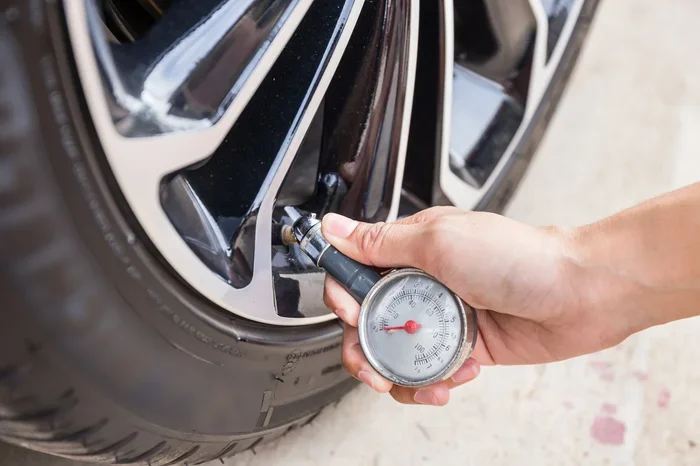
Checking your alto car air pressure is quick and easy. You do not need to be a mechanic. With a basic tire pressure gauge and a few minutes of your time, you can make sure your tires are at the correct level.
Step-by-Step Tire Pressure Check
Follow these steps to get an accurate reading every time:
- Check your tires when they are cold. Drive less than a mile before checking, or wait at least three hours after driving. Hot tires give higher readings that are not accurate.
- Remove the valve stem cap. This small cap sits on top of the tire’s valve stem. Twist it off and set it aside.
- Press the tire pressure gauge firmly onto the valve stem. Make sure there is no air hissing out. A good seal gives you a correct reading.
- Read the gauge. Note the PSI number shown on the gauge. Compare it to the recommended tire pressure for your Alto.
- Replace the valve stem cap. This small cap protects the valve from dirt and moisture, which can cause tire pressure loss over time.
Using a Tire Pressure Gauge
A tire pressure gauge is the most important tool for checking your tire inflation. You can buy a simple analog gauge for just a few dollars. Digital gauges are also available and give very precise readings. Either type works well as long as it is in good condition.
Gas station air pumps often have built-in gauges, but they are not always accurate. A personal tire pressure gauge you keep in your glove box is far more reliable. It also lets you check your tire pressure anytime, anywhere, without relying on a gas station.
Quick Tips for Accurate Readings
- Always check all four tires, not just one.
- Check your spare tire pressure too. A flat spare is useless when you need it most.
- Do not rely on how the tire looks. Tires can lose a lot of air before they look low.
- Check your tire pressure at the same time each month to build a consistent habit.
How to Inflate Your Alto Tires Correctly
If your tire pressure is below the recommended level, you need to add air. If it is too high, you need to let some out. Both situations are easy to fix with the right approach.
Adding Air to Underinflated Tires
Underinflated tires are the most common problem. They happen naturally as air slowly escapes through the valve and the tire rubber itself. Here is how to fix them:
- Go to a gas station with an air pump or use a portable tire inflator.
- Remove the valve stem cap and attach the air hose firmly to the valve.
- Add air in short bursts. Check the tire pressure with your gauge after each burst.
- Stop adding air as soon as you reach the recommended PSI. It is easy to overinflate.
- Replace the valve stem cap when you are done.
Releasing Air from Overinflated Tires
Overinflated tires are less common but still a problem. If your alto car air pressure is too high, you can release some air by pressing the small pin inside the valve stem with a small tool or the back of a pen cap. Let out a little air at a time and recheck with your tire pressure gauge until you hit the correct PSI.
When to Visit a Tire Shop
If you notice your tires are losing air quickly, there may be a leak. A slow leak can come from a damaged valve stem, a small puncture in the tire, or a poor seal between the rim and the tire. A tire shop can find and fix these issues quickly. Do not ignore a tire that keeps losing air. It is a safety risk and wastes your money.
The Role of Tire Pressure Monitoring Systems
Many newer Suzuki Alto models come with a tire pressure monitoring system, also known as a TPMS. This system uses sensors inside each tire to track the tire pressure in real time. If the pressure drops too low or rises too high, a warning light appears on your dashboard.
What the TPMS Light Means
A TPMS warning light shaped like a horseshoe with an exclamation point means your tire pressure is outside the safe range. When this light comes on, do not ignore it. Pull over safely and check your tires with a tire pressure gauge. The TPMS is a helpful backup, but it should not replace regular manual checks.
Limitations of TPMS
While a tire pressure monitoring system is a great feature, it has limitations. The system usually only alerts you when the pressure is significantly low, often 25 percent below the recommended level. By the time the light comes on, your tires may already be underinflated enough to affect your handling and fuel economy. This is why regular manual checks with a tire pressure gauge remain important.
Common Alto Tire Pressure Mistakes to Avoid
Even careful drivers can make mistakes when it comes to tire maintenance. Here are some of the most common errors and how to avoid them.
Checking Tires When They Are Hot
This is the number one mistake people make. When you have been driving, your tires heat up and the air inside expands. The reading will be higher than the actual cold tire pressure. Always check your tires when they are cool for the most accurate result.
Relying on Visual Inspection Alone
A tire can lose half of its air and still look normal to the naked eye. Do not trust what you see. Use a proper tire pressure gauge every time. This is the only way to know for sure what your alto car air pressure really is.
Forgetting the Spare Tire
Your spare tire sits in the trunk and rarely gets used. But when you need it, you need it to be ready. Check your spare tire’s tire pressure at least twice a year. A flat spare tire turns a simple fix into a big problem.
Ignoring Seasonal Changes
Air pressure inside your tires changes with temperature. Cold weather causes the air to contract, which lowers your tire pressure. Hot weather causes the air to expand, which raises it. As a rule of thumb, your tire pressure drops about one PSI for every 10 degrees Fahrenheit drop in temperature. Adjust your tire inflation with the seasons to stay safe and efficient.
Benefits of Regular Tire Pressure Maintenance
Making tire maintenance a regular habit brings many benefits that go beyond just keeping your tires inflated. Here is what you gain when you stay on top of your alto car air pressure.
- Better fuel economy: Properly inflated tires reduce rolling resistance, which means your Alto uses less fuel on every trip.
- Longer tire life: Even tire wear means you replace your tires less often, saving you hundreds of dollars over the life of the car.
- Improved handling: Your Alto handles better and more predictably when the tires have the right amount of air.
- Safer rides: Correct tire inflation reduces the risk of blowouts, flats, and loss of control.
- Lower emissions: A car that uses less fuel produces fewer harmful emissions, which is better for the environment.
- Smoother ride: Properly inflated tires absorb road bumps better, giving you a more comfortable drive every day.
Expert Insights on Alto Tire Care
Experienced mechanics and tire specialists agree on one thing: tire pressure is the single most important part of tire maintenance. A well-known tire expert once said that checking your tire pressure once a month can extend the life of your tires by up to 25 percent. That is a remarkable return on just a few minutes of your time.
Another expert tip is to keep a tire pressure gauge in your car at all times. You never know when you will need it. Whether you are at home, at a gas station, or on a road trip, having your own gauge means you are always in control of your tire inflation.
Some drivers also ask about tire pressure sensors and whether they need replacement. Most TPMS sensors last the life of the tire, but they can fail. If your TPMS light stays on even after you have checked and corrected your tire pressure, the sensor itself may need replacing. A tire shop can test and replace the sensor quickly.
Key Takeaways
- Correct tire pressure improves safety: Proper alto car air pressure gives you better grip, shorter braking distances, and more stable handling on all road types.
- It saves you money on fuel: Tires inflated to the recommended PSI reduce rolling resistance, which means your Suzuki Alto uses less gas.
- Regular checks extend tire life: Maintaining the right tire inflation prevents uneven wear and helps your tires last thousands of miles longer.
- Check your tire pressure at least once a month: Tires naturally lose air over time, so consistent monitoring is essential for proper tire maintenance.
- Use a reliable tire pressure gauge: A good gauge takes the guesswork out of measuring alto car air pressure and helps you avoid costly mistakes.
- Temperature changes affect tire pressure: Cold weather can lower your PSI, so seasonal adjustments are a smart part of your tire care routine.
Conclusion
Taking care of your alto car air pressure is one of the simplest and most effective things you can do for your Suzuki Alto. It takes just a few minutes each month, and the benefits are enormous. You get better fuel economy, safer handling, longer-lasting tires, and lower running costs.
Make it a habit to check your tire pressure at least once a month. Keep a tire pressure gauge in your glove box. Refer to the recommended PSI for your specific Alto model. And never ignore warning signs like a TPMS light or a tire that keeps losing air.
Your Alto is a reliable, efficient little car. Give it the tire maintenance it deserves, and it will reward you with safe, smooth, and economical rides for years to come. Start today. Your tires and your wallet will thank you.
Frequently Asked Questions
What is the recommended tire pressure for a Suzuki Alto?
The recommended alto car air pressure varies by model and year, but most Suzuki Alto tires need between 29 and 36 PSI. Check the sticker on your driver’s side door jamb or your owner’s manual for the exact number for your car.
How often should I check my Alto’s tire pressure?
You should check your tire pressure at least once a month. Tires naturally lose about one PSI per month, so regular checks help you catch low pressure early. Also check before long trips or when the weather changes significantly.
Can I use the gas station air pump to inflate my tires?
Yes, gas station air pumps work well for inflating your tires. However, their built-in gauges are not always accurate. It is best to use your own tire pressure gauge to verify the tire inflation level before and after adding air.
What happens if I drive on underinflated tires?
Driving on underinflated tires reduces your fuel economy, causes uneven tire wear on the outer edges of the tread, and increases the risk of blowouts. It also makes your car handle poorly, especially on wet roads. Always keep your tire pressure at the recommended level.
Does cold weather affect alto car air pressure?
Yes, cold weather lowers your tire pressure because the air inside the tire contracts. For every 10 degrees Fahrenheit drop in temperature, your PSI can decrease by about one. Check your tire inflation more often during winter and add air as needed.
Is a TPMS light the same as checking tire pressure manually?
No, a tire pressure monitoring system light is a backup alert, not a replacement for manual checks. The TPMS usually only warns you when the pressure is significantly low. Regular manual checks with a tire pressure gauge help you catch small pressure changes before they become problems.