1 Star On Car In India What It Means And Why It Matters
A 1 star rating on a car in India means the vehicle offers very little protection during a crash. The Global NCAP and Bharat NCAP test cars sold in India, and a 1 star result signals serious safety concerns. Understanding these ratings helps you protect your family and make smarter buying decisions. Always check the safety score before purchasing any vehicle in India.
Key Takeaways
- 1 star means minimal safety: A 1 star rating on car in India indicates poor crash test performance and limited occupant protection.
- Global NCAP and Bharat NCAP are the main rating bodies: These organizations conduct crash tests and assign safety scores to vehicles sold in India.
- Low-rated cars lack essential safety features: Vehicles with 1 star ratings often miss out on airbags, ABS, and strong body structures.
- Safety ratings affect insurance and resale value: Cars with better ratings tend to have lower insurance premiums and higher resale demand.
- You can make a safer choice: Always check the NCAP rating and safety features before buying a car in India.
- Government regulations are improving: India is moving toward mandatory safety standards, making higher-rated vehicles more common.
- Your family’s safety depends on informed choices: Understanding what 1 star means empowers you to pick a safer car.
📑 Table of Contents
- What Does 1 Star On Car In India Actually Mean
- Why Safety Ratings Matter For Indian Buyers
- Common Safety Features Missing In 1 Star Cars
- How India’s Safety Standards Have Evolved
- Comparing 1 Star Cars With Higher Rated Cars
- What To Do If You Own A 1 Star Car
- How To Choose A Safer Car In India
- The Future Of Car Safety In India
- Conclusion
What Does 1 Star On Car In India Actually Mean
When you see a 1 star rating on a car in India, it tells a clear story. That car performed poorly in crash tests conducted by safety organizations. It means the vehicle offers very little protection to its occupants during a collision.
Imagine driving your family in a car and something goes wrong on the road. You want that car to protect you. A 1 star vehicle simply cannot do that. The structure crumbles too easily. The safety features are either missing or ineffective. This is not just a number on a report. It is a real risk to real lives.
The rating comes from organizations like Global NCAP and Bharat NCAP. These groups crash test vehicles under controlled conditions. They measure how well the car protects passengers. They also check if the car has basic safety equipment. A 1 star result means the car failed in many of these areas.
In India, the number of cars sold with low safety ratings has been a growing concern. Many affordable cars received 1 star or 0 star ratings in early tests. This shocked safety advocates and buyers alike. People assumed their cars were safe. But the data told a different story.
Understanding what 1 star means is the first step toward making a better choice. It helps you see beyond the price tag and the shiny exterior. Safety should always come first when you buy a car.
How Crash Tests Work In India
Crash tests are not just about smashing a car into a wall. They follow strict protocols. These protocols are designed to mimic real-world accidents. Let us look at how the testing process works in India.
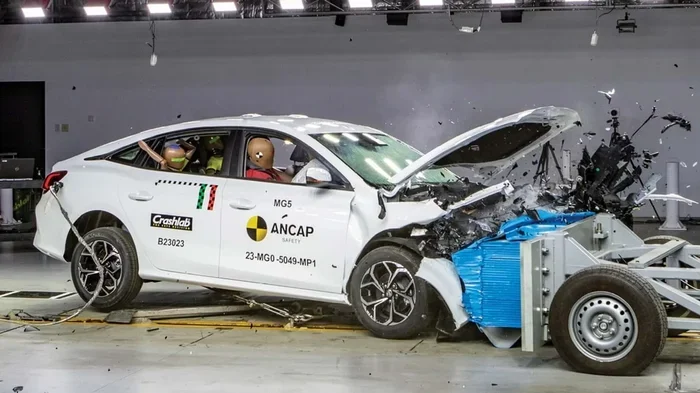
First, the car is driven at a specific speed into a barrier. The speed is usually around 56 km/h. This represents a common real-world collision scenario. Sensors inside the car measure what happens to the dummy passengers. These sensors track things like acceleration, force, and movement.
The dummy represents a real human body. It has sensors in the head, chest, legs, and neck. After the crash, experts analyze the data. They check how much the dummy moved. They check if the car’s structure held up. They also check if the airbags deployed correctly.
There are two main types of tests. The frontal offset test hits the front corner of the car. The side impact test hits the side of the car. Some tests also check pedestrian safety. They measure how the car’s front design affects pedestrians during a collision.
The results give the car a star rating. Zero stars means the worst performance. Five stars means excellent protection. A 1 star rating on car in India falls at the bottom of this scale. It means the car offers very little safety for its occupants.
Why Safety Ratings Matter For Indian Buyers
You might wonder why a safety rating should matter to you. After all, you have driven your car for years without an accident. But accidents are unpredictable. You cannot control what happens on the road. You can only control how well your car protects you.
Safety ratings matter because they give you honest information. Car manufacturers sometimes highlight features that look good. They show off fancy infotainment systems or stylish designs. But they may skip the safety basics. A safety rating cuts through all that marketing noise. It tells you the truth about crash protection.
In India, many buyers focus on price. They want the cheapest car with the most features. This is understandable. Cars are expensive. But saving a few thousand rupees should not mean risking your life. A 1 star rating on car in India is a warning sign. It tells you that the car may not protect you in a serious crash.
Insurance companies also look at safety ratings. Cars with better ratings often get lower insurance premiums. This is because they are less likely to result in expensive claims. Resale value is another factor. Buyers increasingly check safety ratings. A car with a good rating sells faster and at a better price.
Think of the safety rating as a health checkup for your car. Just like you go for regular health checkups, you should check your car’s safety score. It is one of the most important things you can do before buying a vehicle.
The Role Of Global NCAP In Indian Car Safety
Global NCAP stands for Global New Car Assessment Program. It is an independent organization. It tests cars sold in different markets around the world. In India, Global NCAP has become a very important name.
Global NCAP started testing Indian cars around 2014. The results were eye-opening. Many popular cars received 0 star or 1 star ratings. These were cars that millions of Indians were buying every day. The organization shared these results with the public. This created a lot of awareness about car safety in India.
Global NCAP tests are not paid for by car manufacturers. This makes them independent and trustworthy. The organization uses the same testing standards worldwide. This means you can compare cars from different brands fairly.
When a car gets a 1 star rating on car in India from Global NCAP, it gets attention. The news spreads quickly. Buyers start asking questions. Manufacturers face pressure to improve their cars. This has led to real changes in the Indian automotive industry.
Some manufacturers have improved their cars after receiving low ratings. They added more airbags. They strengthened the body structure. They invested in better safety features. This shows that safety ratings have a real impact on the market.
Common Safety Features Missing In 1 Star Cars
A 1 star car in India usually lacks basic safety equipment. Let us look at the features that are commonly missing. Understanding these features helps you evaluate any car better.
Airbags: Many 1 star cars come with only two airbags. Some even have none at all. Front airbags protect the driver and front passenger. But side airbags and curtain airbags protect everyone in the car. A car with only two airbags leaves passengers vulnerable in side crashes.
ABS Or Anti-Lock Braking System: ABS prevents your wheels from locking during hard braking. It lets you steer while braking hard. Without ABS, your car might skid and you could lose control. Many 1 star cars do not have ABS across all variants.
Electronic Stability Control: ESC helps you maintain control during sharp turns or sudden swerves. It detects when the car is losing grip. It then applies brakes to individual wheels. This feature is often missing in low-rated cars. It is one of the most important safety systems in modern vehicles.
Strong Body Structure: The car’s body needs to be strong enough to protect passengers during a crash. A 1 star car often has a weak body. It crumples too easily. This means the passenger cabin collapses. The space around the occupants gets smaller. This increases the risk of serious injury.
Seatbelt Reminders: Simple but effective. A seatbelt reminder reminds the driver to buckle up. Many 1 star cars lack even this basic feature. It shows how little attention is paid to safety in these vehicles.
Rear Seatbelt Reminders: Not just the driver but also rear passengers need to wear seatbelts. Cars with 1 star ratings often lack reminders for rear passengers too.
What A 1 Star Rating Means For Your Family
Let us put this in real terms. If your car has a 1 star rating, here is what could happen in a crash. The car’s body might collapse significantly. The airbags might not deploy or might deploy with too much force. The seatbelts might not hold properly.
In a frontal crash, the dummy representing the driver would likely experience very high forces. These forces would be dangerous for a real person. The head might hit the steering wheel or dashboard. The chest might experience too much compression. The legs might get crushed by the dashboard or pedals.
For children in the back seat, the risk is even higher. They might not have proper restraints. The car’s structure might not protect them at all. This is why a 1 star rating on car in India should worry every parent.
It is not just about surviving a crash. It is about how badly you get hurt. A 5 star car reduces the risk of serious injury. A 1 star car increases it. The difference can be life and death.
How India’s Safety Standards Have Evolved
India has come a long way in car safety. But there is still a long road ahead. Let us look at how the situation has changed over the years.
In the early 2010s, most cars sold in India had very few safety features. Buyers did not ask about safety. They asked about price, color, and features. Car manufacturers focused on what buyers wanted. Safety was an afterthought.
Then Global NCAP started testing Indian cars. The results forced everyone to pay attention. The government also started taking notice. The Ministry of Road Transport and Highways began working on new safety regulations.
In 2019, the Indian government announced mandatory safety norms. From October 2021, all new cars had to have ABS and airbags. This was a big step forward. It meant no new car could be sold without these basic safety features.
However, the story does not end there. Many cars already on the road before these norms do not have these features. Used cars with 1 star ratings are still being sold. Buyers of used cars need to be especially careful.
The Bharat NCAP program is also evolving. It will have its own testing standards. These standards will be tailored for Indian roads and driving conditions. The goal is to make Indian cars safer for everyone.
What Buyers Should Look For Today
When buying a car in India today, here is what you should check:
- NCAP Rating: Always look for the Global NCAP or Bharat NCAP rating. A 4 or 5 star rating is ideal. Avoid 1 star cars.
- Number Of Airbags: More airbags mean better protection. Look for cars with at least 4 to 6 airbags.
- ABS And ESC: These should be standard across all variants. Not just the top-end version.
- Body Structure: Research how the car performs in crash tests. A strong body structure is non-negotiable.
- Safety Features Across All Variants: Do not settle for a base variant that lacks safety features.
- Rear Safety Features: Check if the car has rear seatbelt reminders and rear airbags.
Comparing 1 Star Cars With Higher Rated Cars
The difference between a 1 star car and a 5 star car is huge. Let us compare them directly. This will help you understand why the rating matters so much.
| Feature | 1 Star Car | 5 Star Car |
|---|---|---|
| Crash Protection | Very poor. Body collapses easily. | Excellent. Cabin stays intact. |
| Airbags | 2 or none | 6 to 10 or more |
| ABS | Often missing | Standard |
| ESC | Usually absent | Standard |
| Body Structure | Weak. High intrusion in crash. | Strong. Minimal intrusion. |
| Pedestrian Safety | Poor. Sharp front design. | Good. Soft front design. |
| Seatbelt Reminders | Often missing | Standard for all seats |
| Real-World Injury Risk | High risk of serious injury | Low risk of serious injury |
The table above shows a clear picture. A 1 star car on car in India is not just a little less safe. It is dramatically less safe. The gap between a 1 star and a 5 star car is not small. It is the difference between walking away from a crash and being seriously injured.
Some popular cars in India have improved their ratings over time. They went from 1 star to 4 or 5 stars. This shows that manufacturers can make safer cars. It also shows that consumer demand drives change. When buyers start caring about safety, manufacturers respond.
Real-World Impact Of Safety Ratings
Safety ratings are not just about numbers and dummies. They have real-world impact. Every year, thousands of people die in car crashes in India. Many of these deaths could be prevented with better safety equipment.
Studies from around the world show that 5 star cars have much lower fatality rates. A 1 star car increases the risk of death in a crash by several times. This is not a small difference. It is a matter of life and death.
Think about your daily commute. You might drive on busy highways or crowded city streets. The risk of an accident is always there. A 1 star car gives you very little protection when that risk becomes a reality. A 5 star car gives you a real chance of walking away.
Families with children need to be especially careful. Children are more vulnerable in crashes. A car with good safety ratings protects them much better. It is one of the most important things you can do for your family’s wellbeing.
What To Do If You Own A 1 Star Car
If you already own a car with a 1 star rating, do not panic. There are things you can do to improve your safety. Here are some practical tips.
Always Wear Your Seatbelt: This is the single most important safety action. A seatbelt can save your life in a crash. Make sure everyone in the car wears one. No exceptions.
Drive Defensively: A 1 star car needs extra care on the road. Keep a safe distance from other vehicles. Avoid sudden maneuvers. Stay alert at all times. Defensive driving can prevent many accidents.
Maintain Your Car Well: Regular maintenance keeps your car safer. Check your brakes regularly. Make sure your tires are in good condition. A well-maintained car handles better in emergencies.
Consider Upgrades: Some safety upgrades are possible. You can add better brake pads. You can install additional airbags if the car allows. Check with a trusted mechanic about what upgrades are available for your model.
Plan Your Routes Carefully: Avoid high-risk roads when possible. Stick to well-maintained highways. Avoid driving at night on unfamiliar roads. Smart route planning reduces your risk.
Teach Your Family About Safety: Make sure everyone in your family knows the importance of safety. Teach children to always wear seatbelts. Teach them to stay calm in emergencies. Knowledge is a powerful safety tool.
The best long-term solution is to plan for a safer car. When it is time to replace your current vehicle, choose one with a higher safety rating. A 1 star rating on car in India should be a reason to upgrade, not a reason to ignore.
How To Choose A Safer Car In India
Buying a car is a big decision. It is one of the biggest purchases most Indian families make. You should not rush this decision. Take your time. Do your research. Make sure the car you choose is safe for your family.
Start by checking the NCAP rating. This should be your first step. Look for cars with 4 or 5 star ratings. These cars have been tested and proven to protect their occupants well.
Next, look at the safety features. Count the number of airbags. Check if ABS and ESC are standard. Look for features like rear parking sensors, rear camera, and child safety locks. These features add layers of protection.
Read expert reviews. Many automotive websites in India test and review cars. They often discuss safety features in detail. Pay attention to what the experts say about crash protection and build quality.
Visit the showroom and ask questions. Ask the dealer about the car’s safety features. Ask about the NCAP rating. A good dealer will be happy to answer. A dealer who avoids safety questions is a red flag.
Remember, a slightly higher price for a safer car is worth it. Your family’s safety is priceless. Do not compromise on safety to save a few thousand rupees. A 1 star rating on car in India is a warning. Do not ignore it.
Quick Tips For Safer Car Buying
- Always check the Global NCAP or Bharat NCAP rating before buying.
- Choose a car with at least 4 airbags.
- Make sure ABS and ESC are standard across all variants.
- Avoid cars that have received 1 star or 0 star ratings.
- Read crash test reports carefully before making a decision.
- Test drive the car and notice how it handles.
- Check the car’s build quality by pressing on different panels.
- Ask about warranty and after-sales safety service.
- Consider the total cost of ownership, including insurance.
- Talk to existing owners about their experience with safety features.
The Future Of Car Safety In India
The future looks promising for car safety in India. The government is working on stricter regulations. The Bharat NCAP program is being developed. Consumer awareness about safety is growing every year.
More car manufacturers are investing in safety. They understand that Indian buyers are becoming more informed. They want cars that protect their families. This shift in consumer demand is driving real change in the industry.
Electric vehicles are also entering the Indian market. Many of these EVs come with advanced safety features. They are designed with modern safety standards in mind. This could raise the overall safety bar for all cars in India.
Technology is also playing a big role. Features like automatic emergency braking and lane keeping assist are becoming available in Indian cars. These technologies can prevent accidents before they happen. They go beyond crash protection and focus on crash avoidance.
The goal is clear. Every car sold in India should be safe. Every family should be protected. The journey from 1 star to 5 star is not just about ratings. It is about saving lives. It is about making sure that every trip you take is a safe one.
A 1 star rating on car in India was a wake-up call. It forced the industry and consumers to pay attention to safety. The changes we have seen so far are encouraging. But there is still much work to be done. Every buyer who checks the safety rating makes the roads safer for everyone.
Conclusion
A 1 star rating on car in India is a serious warning. It means the car offers very little protection in a crash. It means basic safety features are missing. It puts your life and your family’s lives at risk. Understanding what this rating means is the first step toward making a safer choice.
Always check the NCAP rating before buying any car. Look for 4 or 5 star ratings. Check the safety features carefully. Do not compromise on safety for price or style. Your family deserves a car that will protect them when it matters most.
The Indian automotive industry is changing. Cars are getting safer every year. But the responsibility also lies with buyers like you. When you choose a safer car, you are not just protecting yourself. You are setting an example for others. You are sending a message that safety matters.
Do not ignore a 1 star rating. Use it as a reason to look for better options. Your awareness and your choices can save lives. Make the smart choice. Choose safety. Choose a car that deserves more than 1 star.
Frequently Asked Questions
What does 1 star rating on a car mean in India?
A 1 star rating means the car performed very poorly in crash tests. It offers minimal protection to occupants during a collision. The vehicle likely lacks essential safety features like multiple airbags and strong body structure. This rating is a serious warning for potential buyers in India.
Which organizations rate car safety in India?
The two main organizations are Global NCAP and Bharat NCAP. Global NCAP is an international body that tests cars sold in India. Bharat NCAP is the Indian-specific program that will set local safety standards. Both organizations conduct crash tests and assign star ratings based on performance.
Can a 1 star rated car be made safer?
While you cannot change the car’s crash test rating, you can take steps to improve safety. Always wear seatbelts, drive defensively, and maintain the car well. Some safety upgrades like better brake pads may be possible. However, the best solution is to choose a car with a higher safety rating when replacing your vehicle.
Are 1 star cars illegal to sell in India?
No, 1 star cars are not illegal. However, the Indian government has introduced mandatory safety norms requiring ABS and airbags in new cars. Older models and used cars with 1 star ratings can still be sold. Buyers should always check the safety rating before purchasing any vehicle.
How is the NCAP star rating calculated?
The rating is based on crash test performance. Sensors measure how much the dummy passengers move during a crash. The car’s body structure, airbag performance, and safety features are all evaluated. Points are awarded for protection of adults, children, and pedestrians. The total score determines the star rating from 0 to 5.
What should I look for when buying a safe car in India?
Check the NCAP rating first. Look for cars with 4 or 5 stars. Ensure the car has multiple airbags, ABS, and ESC. Read crash test reports and expert reviews. Ask the dealer about safety features across all variants. Never compromise on safety when choosing a family car.
=== KEY TAKEAWAYS ===
Key Takeaways
- 1 star means minimal safety: A 1 star rating on car in India indicates poor crash test performance and limited occupant protection.
- Global NCAP and Bharat NCAP are the main rating bodies: These organizations conduct crash tests and assign safety scores to vehicles sold in India.
- Low-rated cars lack essential safety features: Vehicles with 1 star ratings often miss out on airbags, ABS, and strong body structures.
- Safety ratings affect insurance and resale value: Cars with better ratings tend to have lower insurance premiums and higher resale demand.
- You can make a safer choice: Always check the NCAP rating and safety features before buying a car in India.
- Government regulations are improving: India is moving toward mandatory safety standards, making higher-rated vehicles more common.
- Your family’s safety depends on informed choices: Understanding what 1 star means empowers you to pick a safer car.