Must Have Car Air Conditioning Tools For Every Garage
Every garage needs the right car air conditioning tools to diagnose, repair, and maintain vehicle cooling systems effectively. From manifold gauge sets to AC recovery machines, having the proper equipment saves time, money, and frustration. Whether you are a weekend DIYer or a professional mechanic, these tools are essential for keeping cars cool and comfortable all year round.
There is nothing worse than a broken air conditioner on a hot summer day. Whether it is your personal car or a customer’s vehicle, a failing AC system is more than just an inconvenience. It is a safety and comfort issue. That is why every garage, big or small, needs the right car air conditioning tools on hand. Having the proper equipment means you can diagnose problems fast, make accurate repairs, and get vehicles back on the road quickly.
If you are new to automotive work or just looking to upgrade your setup, this guide covers everything you need. We will walk through the essential tools, the specialty equipment, and how to choose the right set for your garage. By the end, you will know exactly what to buy and why each tool matters. Let us dive in.
Key Takeaways
- Manifold gauge sets are the foundation: Every garage needs a quality set to read AC pressures accurately.
- AC recovery machines keep you compliant: They safely remove old refrigerant before any repair or recharge.
- Leak detectors save hours of guesswork: Electronic and UV dye options make finding leaks fast and reliable.
- Refrigerant scales prevent overfilling: Precision matters when adding new refrigerant to any system.
- Vacuum pumps remove moisture and air: A proper vacuum is critical before recharging any AC system.
- Investing in quality tools pays off: Reliable equipment reduces comebacks and builds customer trust.
- Maintenance extends tool life: Clean and store your car air conditioning tools properly for long-term use.
📑 Table of Contents
- Why Every Garage Needs Car Air Conditioning Tools
- Essential Car Air Conditioning Tools for Every Garage
- AC Recharge and Recovery Equipment
- Specialty Tools for Advanced AC Repairs
- Comparison: Entry-Level vs Professional AC Tool Sets
- How to Choose the Right Car Air Conditioning Tools for Your Garage
- Maintaining Your Car Air Conditioning Tools
- Final Thoughts
Why Every Garage Needs Car Air Conditioning Tools
The Growing Demand for AC Repairs
Car air conditioning systems are complex. They involve compressors, condensers, evaporators, hoses, seals, and refrigerant. Over time, wear and tear causes leaks, blockages, and compressor failures. In hot climates, AC problems spike during summer months. Garages that are prepared with the right tools can handle these jobs confidently. Those without proper equipment either turn customers away or make costly mistakes.
According to industry data, AC-related service calls make up a significant portion of automotive repair visits. Drivers expect their cooling systems to work perfectly, especially during peak heat. A garage that can offer fast, accurate AC service builds trust and repeat business. The right car air conditioning tools are not a luxury. They are a necessity for any serious automotive shop.
What Happens Without the Right Tools
Imagine trying to recharge a system without a refrigerant scale. Or hunting for a leak without a proper detector. Without the correct tools, repairs take longer. Accuracy suffers. And customers get frustrated. Using improvised methods or outdated equipment leads to overfilling, underfilling, or contaminating the system. These mistakes can turn a simple fix into an expensive rebuild.
On top of that, handling refrigerant improperly violates environmental regulations. The EPA and similar agencies require proper recovery and recycling equipment. Skipping this not only risks fines but also harms the environment. Every garage should invest in quality car air conditioning tools to stay compliant, efficient, and competitive.
Essential Car Air Conditioning Tools for Every Garage
Manifold Gauge Set
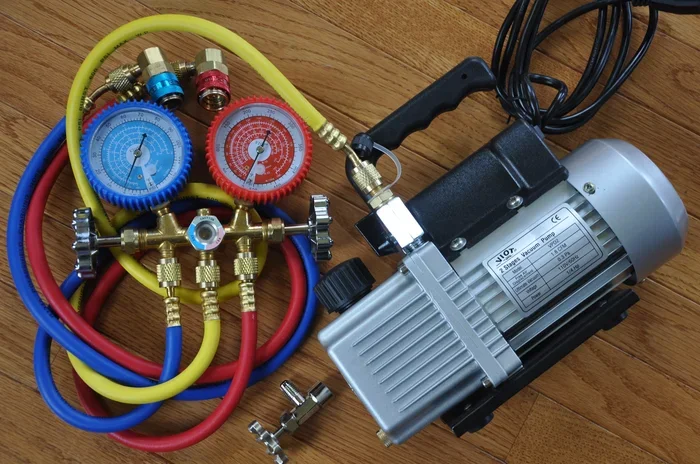
The manifold gauge set is the single most important tool in any AC setup. It connects to the service ports and measures high-side and low-side pressures. These readings tell you whether the system is charged correctly, has a blockage, or has a failing compressor. A quality set comes with color-coded hoses and easy-to-read gauges.
For most garages, a 4-gauge set is ideal. It includes valves for both high and low pressure, plus additional ports for newer vehicles. Always choose a set compatible with multiple refrigerant types, including R-134a and R-1234yf. This ensures your manifold gauge set works across different makes and models.
AC Leak Detector
Finding leaks is one of the most common challenges in automotive AC repair. A dedicated AC leak detector makes this process much faster. Electronic detectors sniff out refrigerant gas and alert you to the exact location of a leak. UV dye detectors work similarly but require you to first inject fluorescent dye into the system.
Some advanced detectors combine both electronic and UV capabilities. This gives you flexibility when diagnosing different types of leaks. For any garage doing regular car AC service, a reliable leak detector is non-negotiable. It saves hours of searching and prevents misdiagnosis.
Refrigerant Scale
When you add refrigerant to a system, precision matters. An AC recharge kit without a scale is like baking without measuring cups. You risk overfilling or underfilling, both of which cause poor performance. A refrigerant scale measures the exact weight of refrigerant being added, ensuring accuracy every time.
Look for a digital scale with a clear display and easy tare function. This makes the process quick and foolproof. For garages handling high volumes of DIY car AC repair jobs, a durable scale is a worthwhile investment. It protects both the system and your reputation.
AC Recharge and Recovery Equipment
AC Recovery Machine
Before any repair or recharge, you must remove the old refrigerant. An AC recovery machine does this safely and efficiently. It pulls the refrigerant out of the system and stores it in a sealed tank. This is not just good practice. It is the law in most regions.
Recovery machines come in different sizes and capacities. Smaller units are perfect for mobile technicians. Larger, heavier-duty models suit high-volume shops. When choosing a machine, consider how many vehicles you service daily. A reliable AC recovery machine keeps your workflow smooth and your compliance status intact.
AC Recharge Kit
An AC recharge kit is a convenient all-in-one solution for topping off or fully recharging a system. Most kits include a can of refrigerant, a hose, and a gauge. Some advanced kits come with a built-in compressor engagement tool and leak sealant.
These kits are great for quick service jobs. However, they should not replace a full recovery and recharge process for major repairs. Always use a refrigerant scale alongside your kit to measure the exact amount added. This prevents overcharging and protects the AC compressor from damage.
Vacuum Pump
After recovering old refrigerant and repairing leaks, you need to remove moisture and air from the system. This is where a vacuum pump comes in. It pulls a deep vacuum on the system, which boils off any trapped moisture. A proper vacuum holds for at least 30 minutes, confirming the system is dry and leak-free.
Two-stage vacuum pumps are the best choice for professional garages. They reach lower pressures and evacuate moisture more effectively than single-stage models. Pair your vacuum pump with a quality micron gauge for accurate readings. This combination is essential for any thorough car cooling system service.
Specialty Tools for Advanced AC Repairs
AC System Flush Kit
When a system has been contaminated or has debris inside, a flush is necessary. An AC system flush kit pushes a cleaning solvent through the lines, condenser, and evaporator. This removes contaminants before you reinstall new components or add fresh refrigerant.
Flushing is especially important after a compressor failure. Metal debris from a burned compressor can damage a new one if not fully removed. A good flush kit protects your work and extends the life of the repaired system. For any garage serious about automotive AC repair, this tool deserves a spot on the shelf.
Thermal Expansion Valve Tool
The thermal expansion valve, or TXV, regulates refrigerant flow into the evaporator. When it fails, the AC system blows warm air or freezes up. Replacing a TXV requires a specialized tool to properly seat and secure the valve. Without the right tool, you risk damaging the valve or the evaporator core.
This is a more advanced tool, but it is invaluable for complex repairs. If your garage handles a lot of car air conditioning tools service work, consider adding a TXV tool to your inventory. It makes a big difference in repair quality and efficiency.
AC Compressor Engagement Tool
Testing or bench-testing an AC compressor requires a way to engage the clutch safely. An AC compressor engagement tool provides a direct connection to the compressor clutch. This lets you spin the compressor by hand and check for smooth operation, noise, or binding.
Some versions also include a built-in AC pressure gauge for reading system pressures during testing. This tool is especially useful when diagnosing whether a compressor is faulty or whether the issue lies elsewhere in the system. It is a small investment that pays for itself in accurate diagnostics.
Comparison: Entry-Level vs Professional AC Tool Sets
| Feature | Entry-Level Set | Professional Set |
|---|---|---|
| Manifold Gauge Set | Basic 2-gauge | 4-gauge or digital |
| AC Recovery Machine | Not included | Built-in or separate unit |
| Refrigerant Scale | Basic analog | Digital with memory |
| Leak Detector | Basic electronic | UV and electronic combo |
| Vacuum Pump | Single-stage | Two-stage with micron gauge |
| AC Recharge Kit | Basic hose and can | Complete with scale and sealant |
| Price Range | $150 – $400 | $800 – $3,000+ |
| Best For | Hobbyists and light use | Professional shops and high volume |
The right choice depends on your volume and needs. If you are a hobbyist doing occasional DIY car AC repair, an entry-level set covers most jobs. Professional shops benefit from the accuracy, durability, and speed of a full professional set. Either way, prioritize quality over price. Cheap tools lead to inaccurate readings and repeat repairs.
How to Choose the Right Car Air Conditioning Tools for Your Garage
Consider Your Skill Level
If you are just starting out, begin with the essentials. A manifold gauge set, AC leak detector, and refrigerant scale will handle the majority of jobs. As you gain experience, add specialty tools like a vacuum pump or AC system flush kit. Building your collection gradually keeps costs manageable and ensures you only buy what you need.Budget vs Quality
It is tempting to buy the cheapest option available. But with car air conditioning tools, quality matters. Cheap gauges may give inaccurate readings. Low-quality hoses may not hold pressure or may introduce contaminants. Invest in reputable brands known for durability and accuracy. The upfront cost is higher, but the long-term savings in repeat repairs and comebacks are worth it.
Compatibility Matters
Modern vehicles use different refrigerant types. R-134a has been the standard for years, but R-1234yf is now common in newer models. Make sure your AC recharge kit, hoses, and gauges are compatible with both. Using the wrong equipment can contaminate the system and cause expensive damage. Always check compatibility before purchasing any car air conditioning tools.
Storage and Portability
How you store your tools matters just as much as which tools you buy. A sturdy carrying case protects equipment from damage and keeps everything organized. If you work on-site or make house calls, choose portable options that are easy to transport. Proper storage extends the life of your tools and keeps them ready for the next job.
Maintaining Your Car Air Conditioning Tools
Your investment in quality car air conditioning tools deserves proper care. After each use, clean hoses and gauges to remove refrigerant residue. Store tools in a dry, temperature-controlled environment. Moisture and heat can damage sensitive components like gauges and seals.
Check hoses for cracks or leaks regularly. Replace worn seals and O-rings before they cause problems. Calibrate your refrigerant scale and AC pressure gauge annually to ensure accuracy. Following a simple maintenance routine keeps your tools performing at their best for years. It also ensures every repair you make meets the highest standards.
Another important tip is to always flush hoses after working with different refrigerant types. Cross-contamination can ruin a system and create safety hazards. Take a few extra minutes to clean your tools properly. Your future self and your customers will thank you.
Final Thoughts
Having the right car air conditioning tools transforms how you work on vehicle cooling systems. From the basic manifold gauge set to advanced AC recovery machines, each tool plays a vital role in accurate diagnosis and reliable repairs. Whether you are a hobbyist building a home garage or a professional shop expanding your capabilities, the right equipment makes all the difference.
Start with the essentials, invest in quality, and build your collection over time. Maintain your tools properly, and they will serve you well for many years. The goal is simple. Get the job done right the first time, every time. With the right car air conditioning tools in your garage, that goal is entirely within reach.
Frequently Asked Questions
What are the most important car air conditioning tools for a beginner?
A manifold gauge set, AC leak detector, and refrigerant scale are the three most important starting tools. These three cover the majority of common AC jobs. You can add a vacuum pump and AC recharge kit as you grow more comfortable with the work.
Can I use any refrigerant with my car air conditioning tools?
No. Always check compatibility before using any refrigerant. Older vehicles typically use R-134a, while newer models may require R-1234yf. Using the wrong refrigerant can damage the system and violate environmental regulations. Make sure your tools and hoses are rated for the specific refrigerant type.
How often should I calibrate my AC gauges and scales?
Annual calibration is recommended for professional use. Even for home garages, checking calibration once a year ensures accurate readings. Inaccurate gauges can lead to overfilling or underfilling, which harms the AC compressor and reduces cooling performance.
Is an AC recovery machine required for DIY repairs?
In most areas, yes. Environmental regulations require proper recovery of old refrigerant before any system work. Using an AC recovery machine keeps you compliant and prevents harmful refrigerant from entering the atmosphere. It is a legal requirement in many regions, not just a best practice.
What is the difference between a single-stage and two-stage vacuum pump?
A single-stage pump reaches moderate vacuum levels and works fine for basic tasks. A two-stage pump reaches much lower pressures and removes moisture more effectively. For professional automotive AC repair, a two-stage pump is the better choice. It provides deeper, more reliable vacuums for thorough system drying.
How do I know if my AC system needs a full flush?
If you are replacing a compressor, or if the system has been open for an extended time, a flush is recommended. Signs like strange noises, poor cooling, or recurring blockages also indicate contamination. An AC system flush kit removes debris and old oil, protecting new components from damage.
=== CONCLUSION ===
Equipping your garage with the right car air conditioning tools is one of the smartest investments you can make. From the essential manifold gauge set and AC leak detector to advanced equipment like AC recovery machines and vacuum pumps, each tool serves a critical purpose. These tools enable accurate diagnostics, efficient repairs, and reliable results every time.
Start with the basics, build your collection thoughtfully, and maintain your equipment properly. Whether you handle DIY car AC repair projects or run a full-service shop, having the right tools on hand sets you apart. Invest in quality, stay compliant with regulations, and always prioritize precision. Your garage and your customers will benefit from the difference that proper car air conditioning tools make.