Can You Limit the Speed of a Forklift and Stay Safe
Yes, you can limit the speed of a forklift using built-in governors, aftermarket speed limiters, and smart technology. Controlling forklift speed is one of the most effective ways to reduce workplace injuries, protect pedestrians, and improve load stability. Whether you manage a busy warehouse or a small distribution center, understanding forklift speed control helps you create a safer environment for everyone on the floor.
Forklifts are powerful machines. They move heavy loads across warehouses, docks, and construction sites every single day. But with that power comes real danger. One of the biggest questions operators and safety managers ask is whether you can limit the speed of a forklift. The short answer is yes. And doing so can save lives.
Every year, thousands of workplace injuries involve forklifts. Many of these incidents happen because machines travel too fast for the conditions. Slippery floors, tight corners, and crowded aisles all make high speeds risky. The good news is that modern technology gives managers real tools to control forklift speed. From simple throttle limiters to advanced GPS-based systems, options exist for every type of operation.
This guide breaks down everything you need to know about limiting forklift speed. We will cover how speed control systems work, what OSHA says, and practical steps you can take today. By the end, you will have a clear picture of how to keep your workplace safer while still getting the job done efficiently.
Key Takeaways
- Speed limiters are effective: Both built-in and aftermarket devices can cap forklift speed and reduce accidents.
- OSHA has guidelines: While no single federal speed limit exists, OSHA expects safe operating speeds based on conditions.
- Pedestrian safety improves: Slower forklifts give workers more time to react and avoid collisions.
- Load stability increases: Reducing speed lowers the risk of tip-overs, especially when carrying elevated loads.
- Technology helps: Modern systems like speed alarms and proximity sensors make speed management easier than ever.
- Training matters: Even with speed limiters, proper forklift training ensures operators understand why speed control matters.
📑 Table of Contents
Why Controlling Forklift Speed Is So Important
Speed is one of the leading factors in forklift accidents. When a machine moves too fast, the operator has less time to react. Braking distances increase. Load stability drops. And the chances of a serious injury go up fast.
The Physics of Forklift Movement
Forklifts have a high center of gravity. This makes them naturally less stable than cars. When you add speed into the mix, the physics become even more challenging. A fast turn can shift the load and cause a tip-over. Even at moderate speeds, sudden stops can send cargo sliding off the forks.
Here is something many people do not realize. A forklift weighs several thousand pounds. That mass means it takes much longer to stop than you might expect. At higher speeds, the stopping distance grows quickly. Wet or oily floors make it even worse.
How Speed Affects Load Stability
When a forklift moves, the load on the forks becomes part of the moving system. Speed creates momentum. Momentum creates force. And force can destabilize even a properly balanced load.
- Low speed: The load stays stable. The operator has full control.
- Moderate speed: Small bumps or turns are manageable with care.
- High speed: Even minor obstacles can cause the load to shift or the forklift to tip.
Limiting speed keeps the forklift in the safe zone. It gives operators a wider margin for error. This is especially important when carrying tall or unevenly distributed loads.
How Speed Limiters and Governors Work
You can limit the speed of a forklift using different types of devices. Each one works in a slightly different way. Understanding these systems helps you choose the right solution for your operation.
Built-In Engine Governors
Many modern forklifts come with factory-installed governors. These are mechanical or electronic systems built into the engine control unit. They cap the maximum speed the machine can reach. Some allow managers to adjust the limit based on the operating environment.
For example, a forklift used inside a warehouse might have a lower speed limit than one used on a loading dock. Built-in governors are reliable because they are integrated into the machine from the start. They do not require extra maintenance or installation.
Aftermarket Speed Limiter Devices
Not all forklifts have built-in governors. Older models or machines from certain manufacturers might lack this feature. In those cases, aftermarket speed limiters offer a practical solution.
These devices connect to the forklift’s throttle or engine system. They intercept the operator’s input and cap the speed at a pre-set level. Some devices include programmable settings. This allows different speed limits for different zones within a facility.
Popular aftermarket options include:
- Mechanical throttle limiters: Simple, affordable, and easy to install.
- Electronic speed controllers: More precise and often programmable.
- Wireless speed management systems: Allow central control over multiple forklifts from one dashboard.
Smart Technology and GPS-Based Systems
The latest advancement in forklift speed control is smart technology. GPS-based systems track the forklift’s location and speed in real time. They can automatically slow the machine down in specific zones. For example, a system might reduce speed when the forklift enters a pedestrian area or approaches a blind corner.
These systems often include features like:
- Speed alarms: Audio alerts when the forklift exceeds a safe speed.
- Zone-based speed limits: Automatic adjustments based on location.
- Data logging: Records of speed, location, and operator behavior for safety reviews.
- Proximity detection: Sensors that warn the operator of nearby obstacles or people.
While these systems cost more than basic limiters, they offer unmatched control. They also provide valuable data that helps managers identify risky patterns and improve overall safety.
OSHA Guidelines for Forklift Speed
Many people wonder what OSHA says about forklift speed. The answer is not as straightforward as you might expect.
What OSHA Actually Requires
OSHA does not set a single, universal speed limit for forklifts. Instead, the agency requires that forklifts be operated at a safe speed at all times. This means the speed must be appropriate for the conditions. Factors OSHA considers include:
- Floor surface quality: Wet, oily, or uneven surfaces require slower speeds.
- Aisle width: Narrow aisles demand more caution and lower speeds.
- Pedestrian traffic: Areas with foot traffic need reduced speed.
- Load type and weight: Heavier or taller loads may require slower movement.
- Visibility conditions: Poor lighting or blind spots call for reduced speed.
OSHA standard 29 CFR 1910.178 covers powered industrial truck operations. It states that operators must drive at a safe and prudent speed. The key phrase is “safe and prudent.” This gives employers the responsibility to determine appropriate speed limits for their specific environments.
Creating Your Own Speed Policy
Because OSHA does not give a specific number, many companies set their own internal speed limits. A common practice is to cap forklift speed at 5 to 8 miles per hour inside the warehouse. Outside or on loading docks, the limit might be 10 to 15 miles per hour. Some facilities use even lower limits in high-risk areas like pedestrian walkways or intersections.
The best approach is to conduct a thorough risk assessment. Identify the areas where speed creates the most danger. Set clear, enforceable limits. Then communicate those limits to every operator on the team.
The Hidden Dangers of Speeding Forklifts
It is easy to think of forklift accidents as rare events. But the reality is different. Speeding forklifts create a wide range of hazards that affect the entire workplace.
Tip-Over Accidents
Tip-overs are the most deadly type of forklift accident. Speed is a major contributing factor. When a forklift moves too fast, especially while turning, the center of gravity shifts. The machine can tip sideways or forward. Operators who are thrown from the cab during a tip-over face the highest risk of fatal injury.
Limiting speed is one of the most effective ways to prevent tip-overs. It keeps the machine within its stable operating range and gives operators time to slow down before dangerous turns.
Pedestrian Collisions
Forklifts share workspace with people. In a busy warehouse, pedestrians walk between aisles, cross loading areas, and work near operating zones. A forklift moving at high speed gives people little time to move out of the way.
Even at low speeds, a forklift can cause serious injury. But high speeds dramatically increase the severity of collisions. A forklift traveling at 10 miles per hour hits with far more force than one moving at 3 miles per hour. Speed limiters help keep these interactions safer for everyone.
Load Spills and Damage
Fast forklift movement can cause loads to shift or fall off the forks. This creates hazards for anyone nearby. Spilled materials can block walkways, damage other equipment, or cause secondary accidents. In industries like food processing or pharmaceuticals, load spills can lead to costly waste and contamination.
Controlling speed keeps loads where they belong. It reduces damage to goods, equipment, and the facility itself.
Practical Tips for Managing Forklift Speed
Setting up speed limits is only part of the equation. You also need practical strategies to make sure those limits are followed every day.
1. Install Speed Limiters on Every Forklift
The most direct way to limit forklift speed is to install a limiter on every machine in your fleet. Whether you choose built-in governors or aftermarket devices, the goal is the same. Prevent the forklift from going faster than the safe speed for each zone.
Start by identifying the highest-risk areas in your facility. Set lower speed limits for those zones. Then configure the limiters accordingly. This creates a layered safety approach that adapts to different parts of your operation.
2. Use Visual Speed Reminders
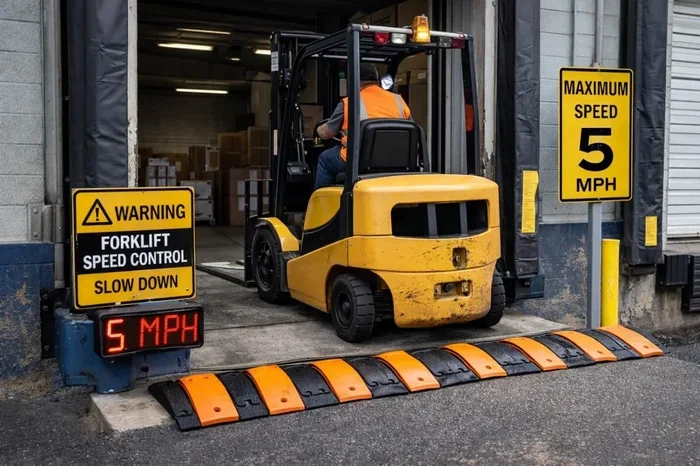
Sometimes a simple sign makes a big difference. Place speed limit signs at the entrance to every aisle, intersection, and zone. Use bright colors and large text. Make the limits impossible to miss.
Some facilities use floor markings or speed display boards. These visual cues reinforce the speed policy without requiring constant supervision.
3. Implement Speed Alarms
Speed alarms sound when a forklift exceeds the set limit. The audible alert reminds the operator to slow down. It also draws attention from nearby workers, creating a shared awareness of unsafe behavior.
Advanced systems can send alerts to a central monitor. This allows supervisors to track speeding incidents in real time and address them immediately.
4. Train Operators on Why Speed Matters
Training goes a long way in changing behavior. When operators understand the physics of forklift movement, they are more likely to respect speed limits. Use real-world examples and accident statistics to make the case.
Good forklift training should cover:
- The relationship between speed and stopping distance.
- How load height and speed affect stability.
- Why pedestrian areas require extra caution.
- The legal and financial consequences of speeding accidents.
5. Conduct Regular Safety Audits
Speed management is not a one-time setup. It requires ongoing attention. Conduct regular safety audits to check that speed limiters are working properly. Review incident reports to identify patterns. Update speed policies as your facility changes or new equipment is added.
Involve operators in the process. They see the conditions every day and can provide valuable insights into where speed limits should be adjusted.
Making Speed Limits Part of Your Safety Culture
Technology and policies only work when they are supported by a strong safety culture. If operators feel that speed limits are just red tape, they will find ways to work around them. But when everyone understands that speed limits save lives, compliance becomes natural.
Lead from the Top
Management sets the tone. When leaders prioritize safety over speed, the entire organization follows. Make it clear that no delivery deadline or production target is worth a preventable injury. Celebrate safe driving behaviors and recognize operators who consistently follow the rules.
Encourage Open Communication
Create a culture where operators feel comfortable reporting unsafe conditions or speeds. Maybe a particular aisle is always slippery. Maybe a blind corner makes a certain zone dangerous. When workers can speak up, you can address problems before they lead to accidents.
Review and Improve Continuously
Workplace safety is a journey, not a destination. Regularly review your speed management strategy. Look for new technologies or best practices. Update your policies based on data and feedback. The goal is continuous improvement in both safety and efficiency.
Limiting forklift speed is not about slowing down your operation. It is about making your operation sustainable. A safer workplace means fewer injuries, lower insurance costs, less equipment damage, and higher morale. Everyone wins when speed is managed wisely.
Start with one simple step today. Evaluate the forklifts in your fleet. Check whether they have speed limiters. If not, explore your options. Then sit down with your team and set clear, reasonable speed limits for every area of your facility. Small changes lead to big results over time.
The question was simple: can you limit the speed of a forklift? Now you know the answer is a confident yes. You also know how to do it effectively. The next step is up to you. Make speed control a priority, and you will build a safer, more productive workplace for years to come.
Frequently Asked Questions
What is the safest speed for a forklift in a warehouse?
Most safety experts recommend keeping forklift speeds between 3 and 8 miles per hour inside a warehouse. The exact limit depends on your floor conditions, aisle width, and pedestrian traffic. Always follow your facility’s specific speed policy and adjust for changing conditions like wet floors or poor visibility.
Can you add a speed limiter to an older forklift?
Yes, aftermarket speed limiters work well on older forklift models. Mechanical throttle limiters are the most affordable option. Electronic controllers offer more precision. Wireless fleet management systems provide the most advanced control but cost more to install.
Does OSHA have a specific forklift speed limit?
OSHA does not set a single speed limit for forklifts. Instead, the agency requires operators to drive at a safe and prudent speed based on conditions. Employers are responsible for establishing and enforcing their own speed policies that reflect their specific workplace hazards.
Do forklift speed limiters reduce productivity?
Not necessarily. While forklifts may move slightly slower, the overall workflow improves. Fewer accidents mean less downtime. Reduced damage to goods and equipment saves money. And a safer environment boosts operator confidence and morale, which supports long-term productivity.
Can speed limiters be adjusted for different zones?
Yes, many modern speed management systems allow zone-based speed limits. The forklift automatically slows down when it enters a pedestrian area, intersection, or other high-risk zone. This smart approach balances safety with operational efficiency across different parts of your facility.
What should I do if an operator keeps speeding?
First, review the operator’s training. They may not fully understand the risks. Second, check that the speed limiter is working correctly. Third, address the behavior directly with clear consequences. Consistent enforcement of speed policies is essential for maintaining a safe workplace.
=== CONCLUSION ===
The answer to whether you can limit the speed of a forklift is a clear yes. Whether you use built-in governors, aftermarket devices, or advanced GPS-based systems, speed control is both possible and practical. The benefits are significant. Fewer accidents, better load stability, improved pedestrian safety, and lower operating costs all come from managing forklift speed effectively.
OSHA expects safe operation, and the tools to achieve that are more accessible than ever. From simple throttle limiters to smart zone-based systems, every operation can find a solution that fits its needs and budget.
Take action today. Assess your current forklift fleet, review your speed policies, and invest in the right speed control technology. Your workers, your bottom line, and your peace of mind will all benefit. Limiting forklift speed is not a restriction. It is a commitment to safety.