How Haval Ensures Driver and Passenger Safety Always
Haval prioritizes safety through advanced driver assistance systems, reinforced body structures, and smart restraint technologies. The brand combines crash test excellence with everyday active safety features that protect everyone on board. From collision avoidance to multi-stage airbags, Haval builds vehicles designed to keep you and your family safe on every journey.
When you think about what matters most in a car, safety should always come first. How Haval ensures driver and passenger safety is a question worth exploring. The Chinese automaker has built a strong reputation for putting protection at the center of every vehicle they design. From smart technology to tough body structures, Haval leaves no stone unturned.
Every year, millions of families choose Haval SUVs and sedans. They trust the brand because they know their loved ones will be protected on the road. Haval safety features go far beyond what most drivers expect at this price point. The company invests heavily in research, testing, and innovation to make sure every car meets high standards.
In this article, we will break down exactly how Haval keeps both drivers and passengers safe. We will look at the technology, the engineering, and the real-world testing that makes these vehicles stand out. Whether you already own a Haval or are thinking about buying one, you will find valuable insights here. Let us dive into the world of Haval safety.
Key Takeaways
- Advanced Driver Assistance Systems: Haval vehicles come packed with features like automatic emergency braking, lane departure warning, and adaptive cruise control.
- Reinforced Body Structure: The safety cage design and crumple zones absorb impact energy to protect occupants during a collision.
- Multi-Stage Airbag Technology: Haval uses smart airbags that deploy with the right force based on crash severity and occupant position.
- Global Safety Ratings: Haval vehicles consistently perform well in international crash tests from organizations like ANCAP and C-NCAP.
- Active Safety Features: Electronic stability control, traction management, and brake assist help prevent accidents before they happen.
- Regular Maintenance Matters: Keeping your Haval well-maintained ensures all safety systems work at their best when you need them most.
📑 Table of Contents
- Advanced Driver Assistance Systems in Haval Vehicles
- Reinforced Body Structure and Safety Cage Design
- Airbag and Restraint Systems That Protect Everyone
- Active Safety Technologies That Prevent Accidents
- Haval Safety Ratings and Global Crash Testing
- Keeping Your Haval Safe Through Regular Maintenance
- The Future of Haval Safety Innovation
- Conclusion
Advanced Driver Assistance Systems in Haval Vehicles
Haval driver assistance technology has evolved rapidly over the past few years. These systems use sensors, cameras, and software to help drivers stay aware of their surroundings. The goal is simple: prevent accidents before they happen. Many of these features now come standard even in mid-range Haval models.
Collision Avoidance and Automatic Emergency Braking
One of the most important safety tools in a modern car is the ability to detect danger and react quickly. Haval vehicles use forward-facing sensors to monitor the road ahead. If the system detects an imminent collision, it can alert the driver and even apply the brakes automatically.
This feature is especially helpful in heavy traffic. You might be focused on your phone or daydreaming, but the car is still watching the road. Automatic emergency braking has been proven to reduce rear-end collisions significantly. Haval integrates this system seamlessly so it does not feel intrusive or annoying.
Here are some key points about this feature:
- Sensors detect vehicles, pedestrians, and cyclists in the path.
- The system gives audio and visual warnings before braking.
- It works at both low city speeds and higher highway speeds.
- The technology reduces the severity of crashes even when it cannot prevent them entirely.
Lane Departure Warning and Lane Keeping Assist
Drifting out of your lane is one of the most common causes of accidents. Haval addresses this with lane departure warning and lane keeping assist. The camera mounted near the rearview mirror reads road markings in real time.
If the system senses the vehicle is moving out of its lane without a turn signal, it alerts the driver. In more advanced setups, the car gently steers itself back into the lane. This is a huge help on long highway drives when fatigue sets in. Haval lane assist works quietly in the background, making your drive safer without demanding constant attention.
Adaptive Cruise Control
Traditional cruise control maintains a set speed. Adaptive cruise control does much more. It adjusts your speed based on the vehicle ahead of you. If the car in front slows down, your Haval slows down too. When the road clears, it accelerates back to your preset speed.
This feature reduces the stress of long drives and helps maintain a safe following distance. Haval’s adaptive cruise control uses radar and camera data to make smooth, accurate adjustments. It is one of those features that makes you wonder how you ever drove without it.
Quick Tip
Always keep your camera and sensors clean for the best performance from driver assistance features. Dirt and debris can reduce accuracy.
Reinforced Body Structure and Safety Cage Design
Technology can only do so much. At the end of the day, the physical structure of the car is what protects you in a serious crash. Haval engineers use advanced high-strength steel and ultra-high-strength steel in the body construction. This creates what is often called a safety cage around the passenger compartment.
Crumple Zones and Impact Absorption
The concept of crumple zones is simple but brilliant. Certain parts of the car are designed to absorb and dissipate crash energy. The front, rear, and sides of the vehicle are engineered to deform in a controlled way during a collision. This absorbs the force that would otherwise be transferred to the occupants.
Haval carefully designs these crumple zones using computer simulations and real-world crash testing. The goal is to direct energy away from the passenger cabin. Impact absorption technology ensures that the cabin remains as intact as possible, giving everyone inside the best chance of walking away from an accident.
Here is what makes Haval’s structural design stand out:
- High-tensile steel makes up a large percentage of the body frame.
- Hot-pressed ultra-high-strength steel is used in critical load-bearing areas.
- The B-pillar and roof rails are reinforced to resist rollover forces.
- Engineers use multi-path load distribution to spread impact forces evenly.
Rollover Protection
SUVs have a higher center of gravity, which means rollover risk is a real concern. Haval addresses this with a combination of electronic stability control, wide track widths, and reinforced roof structures. The body is designed to maintain its integrity even in extreme rollover scenarios. This gives drivers confidence, especially when navigating winding roads or carrying heavy loads.
Airbag and Restraint Systems That Protect Everyone
Seatbelts and airbags are the last line of defense in a crash. Haval takes restraint systems very seriously. The company has developed a comprehensive approach that goes beyond just deploying a standard front airbag.
Multi-Stage Airbag Technology
Not all crashes are the same. A low-speed fender bender needs a different response than a high-speed frontal impact. Haval uses multi-stage airbags that adjust the force of deployment based on crash severity. Sensors in the system measure the intensity of the collision and deploy the airbag with the appropriate force.
This is important because deploying an airbag too aggressively can cause injuries even in a minor crash. Haval’s smart airbag system reduces this risk. The system also considers factors like seat position, occupant weight, and whether the seatbelt is fastened.
Side and Curtain Airbags
Side impacts and rollovers pose unique dangers. Haval vehicles are equipped with side airbags and curtain airbags that cover the windows. The curtain airbags deploy along the length of the window to protect the heads of both front and rear passengers. In a side collision, this can make a life-saving difference.
The table below compares the airbag coverage across different Haval models:
- Haval H6: Front, side, and curtain airbags for all rows.
- Haval Jolion: Front and side airbags with curtain protection.
- Haval Big Dog: Full set including front knee airbags for the driver.
- Haval F7: Six to seven airbags depending on trim level.
Seatbelt Pre-Tensioners and Load Limiters
Haval seatbelts are not just simple straps. They include pre-tensioners that tighten the belt instantly during a crash. This removes slack and positions the occupant correctly. Load limiters then manage the force applied to the chest, reducing the risk of rib injuries. Together, these features work with the airbags to create a complete restraint system.
Common Mistake
Many drivers adjust their seat too far from the steering wheel or dashboard. This reduces the effectiveness of airbags and seatbelts. Always sit at a safe distance and wear your seatbelt properly every single time.
Active Safety Technologies That Prevent Accidents
While passive safety features protect you during a crash, active safety features help you avoid crashes altogether. Haval integrates a wide range of active safety systems into its vehicles. These technologies work continuously to keep you in control.
Electronic Stability Control and Traction Management
Electronic stability control (ESC) is one of the most important safety innovations in modern driving. When the system detects that the vehicle is starting to skid or lose traction, it applies individual brakes and reduces engine power to help you regain control. Haval makes ESC standard across its entire lineup.
Traction management works hand in hand with ESC. On wet, icy, or uneven surfaces, the system distributes power to the wheels with the best grip. This is especially useful for Haval SUVs that may be driven in varying weather conditions. Haval traction control helps you maintain confidence whether you are driving on rain-soaked highways or muddy trails.
Brake Assist and Hill Start Assist
Brake assist detects when a driver is applying the brakes in an emergency. It automatically provides maximum braking force to shorten stopping distance. This can be the difference between a close call and a serious accident.
Hill start assist prevents the vehicle from rolling backward when starting on an incline. The system holds the brakes for a few seconds after you release the pedal, giving you time to move your foot to the accelerator. These small features add up to a much safer driving experience, especially in hilly or mountainous areas.
Blind Spot Monitoring and Rear Cross Traffic Alert
Changing lanes on a busy highway can be risky. Blind spot monitoring uses sensors to detect vehicles in your blind spots. A warning light on the side mirror alerts you if it is not safe to change lanes. Some Haval models also provide audible alerts if you activate the turn signal while a vehicle is detected.
Rear cross traffic alert is equally valuable when reversing out of parking spaces. The system warns you of approaching vehicles or pedestrians from the sides. This is a feature that parents and city drivers especially appreciate. Haval blind spot monitoring and rear cross traffic alert work together to cover your blind spots in multiple directions.
Expert Insight
Automotive safety experts agree that the combination of active and passive safety features creates the best overall protection. Haval’s approach of equipping both types of systems as standard rather than optional is a strong indicator of the brand’s commitment to safety.
Haval Safety Ratings and Global Crash Testing
All the technology in the world means nothing if it does not perform in real crash scenarios. Haval subjects its vehicles to rigorous testing both internally and through independent organizations. The results speak for themselves.
ANCAP and C-NCAP Performance
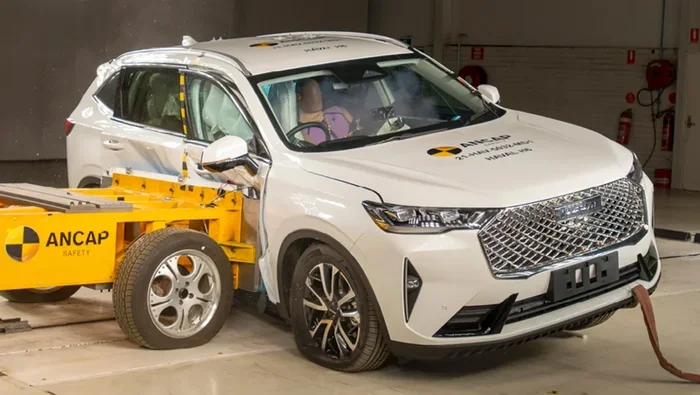
The Australasian New Car Assessment Program (ANCAP) and China New Car Assessment Program (C-NCAP) are two of the most respected crash testing bodies in the world. Haval vehicles have consistently earned high ratings from both organizations. Many models have received five-star ratings, which is the highest possible score.
These tests evaluate frontal impact, side impact, pole impact, and pedestrian protection. Haval vehicles perform well across all categories. The fact that the brand achieves top scores in multiple testing regimes shows the consistency and quality of its safety engineering.
Real-World Safety Data
Beyond controlled crash tests, real-world data also supports Haval’s safety credentials. Insurance claim data and accident reports from various markets show that Haval vehicles tend to protect their occupants well in collisions. The combination of strong structure, effective airbags, and active safety features translates into real-world benefits for drivers and passengers.
Some key findings from safety data include:
- Lower injury rates in frontal collisions compared to class averages.
- Strong cabin integrity even in moderate to severe impacts.
- Effective pedestrian protection due to carefully designed front ends.
- Good performance in side-impact scenarios thanks to side airbags and structural reinforcement.
Quick Tip
When shopping for a new car, always check independent safety ratings from ANCAP, Euro NCAP, or C-NCAP. These ratings give you an unbiased view of how well a vehicle protects its occupants.
Keeping Your Haval Safe Through Regular Maintenance
Owning a safe vehicle is not just about what it has when you buy it. Regular maintenance plays a crucial role in keeping all safety systems functioning properly. A well-maintained Haval is a safer Haval.
Essential Safety-Related Maintenance Tasks
Some maintenance tasks directly impact your vehicle’s ability to protect you in an emergency. Here are the most important ones:
- Brake Pad and Rotor Inspection: Worn brakes increase stopping distance significantly. Have your brake pads checked every 10,000 to 15,000 miles and replace them when needed.
- Tire Maintenance: Properly inflated tires with good tread depth are essential for traction and handling. Check tire pressure monthly and rotate tires every 5,000 to 7,500 miles.
- Camera and Sensor Cleaning: Driver assistance features rely on cameras and sensors. Keep them clean and free of obstructions for reliable performance.
- Airbag System Diagnostics: If your dashboard shows an airbag warning light, have it checked immediately. A malfunctioning airbag system may not deploy when needed.
- Belt and Seat Inspection: Check that seatbelts retract properly and lock during sudden stops. Replace any belt that shows signs of fraying or damage.
Software Updates and System Recalibration
Modern Haval vehicles rely on software to run many safety features. Manufacturers occasionally release updates that improve system performance or add new capabilities. Keeping your vehicle’s software up to date ensures that all safety systems operate at their best. Visit your authorized Haval dealer for software updates and system recalibration when needed.
Common Mistake
Many owners ignore warning lights on the dashboard. A blinking or steady warning light related to brakes, airbags, or stability control should never be ignored. Address these issues promptly to maintain the full safety capability of your vehicle.
The Future of Haval Safety Innovation
Haval continues to invest in safety research and development. The company is exploring new technologies that will take protection to the next level. From vehicle-to-everything communication to advanced driver monitoring, the future looks bright for Haval safety.
Some emerging technologies that Haval is working on include:
- Driver Monitoring Systems: Cameras that track driver alertness and warn of drowsiness or distraction.
- Vehicle-to-Vehicle Communication: Technology that allows cars to share data about road conditions and potential hazards.
- Enhanced Pedestrian Detection: AI-powered systems that can identify pedestrians more accurately, especially at night.
- Advanced Night Vision: Infrared systems that help drivers see obstacles beyond the range of headlights.
These innovations show that Haval is committed to staying at the forefront of automotive safety. The company understands that safety is not a static goal but an ongoing journey of improvement.
Conclusion
How Haval ensures driver and passenger safety is a story of careful engineering, advanced technology, and rigorous testing. From smart driver assistance systems to reinforced body structures, every aspect of a Haval vehicle is designed with protection in mind. The brand’s commitment to safety is evident in its global crash test ratings, the quality of its restraint systems, and the breadth of active safety features it offers.
Whether you are driving through city traffic or cruising on the highway, Haval has you covered. The combination of passive and active safety features creates a comprehensive protection system that works in real-world conditions. And with regular maintenance, you can keep all these systems working at their best for years to come.
If safety is a top priority for you and your family, Haval deserves serious consideration. The brand proves that you do not need to spend a fortune to get excellent protection. Haval safety is built into every vehicle from the ground up, and that commitment shows in every drive you take.
Frequently Asked Questions
What safety features come standard in Haval vehicles?
Most Haval models come standard with automatic emergency braking, lane departure warning, electronic stability control, and multiple airbags. The exact features vary by model and trim level, but even base versions include a strong suite of safety equipment. Always check the specific model specifications for the full list.
How does Haval’s safety cage protect passengers during a crash?
Haval uses high-strength and ultra-high-strength steel to create a rigid safety cage around the passenger compartment. During a crash, the crumple zones absorb and dissipate impact energy while the cabin remains intact. This design minimizes the forces transferred to occupants and significantly reduces the risk of serious injury.
Are Haval SUVs safe for families with children?
Yes, Haval SUVs are designed with family safety in mind. They offer multiple airbags, ISOFIX child seat anchors, and excellent crash test ratings. The spacious interiors also make it easy to install and secure child safety seats properly. Many models have earned top safety ratings that make them strong choices for families.
How often should I service the safety systems on my Haval?
You should follow the maintenance schedule outlined in your owner’s manual. Brake inspections, tire checks, and sensor cleaning should be done regularly. Airbag system diagnostics should be performed whenever a warning light appears. Staying on top of maintenance ensures all safety features work reliably when you need them most.
What should I do if my airbag warning light stays on?
An illuminated airbag warning light means there may be a malfunction in the system. Do not ignore it. Visit your authorized Haval service center as soon as possible. A professional technician can run diagnostics and repair any issues. Driving with a non-functioning airbag system puts you at greater risk in a collision.
How does Haval compare to other SUV brands in terms of safety?
Haval competes very well with other SUV brands in the same price range. The brand consistently earns high safety ratings from ANCAP and C-NCAP. Its standard safety equipment and strong body construction often exceed what competitors offer at similar price points. This makes Haval a compelling choice for safety-conscious buyers.