Bike Rack Car Roof Options How To Choose The Right One
Choosing the right bike rack car roof setup can transform your road trips and make transporting bikes a breeze. This guide covers every type of roof bike carrier, key buying factors, and step-by-step installation tips. You will learn how to match your vehicle, bike count, and budget to the perfect bike rack car roof system.
Planning a cycling trip and wondering how to haul your bikes safely? A bike rack car roof setup is one of the most popular and practical solutions for bike enthusiasts. Whether you drive a sedan, SUV, or minivan, a roof-mounted carrier can free up your trunk space and keep your bikes secure on the road.
But with so many options on the market, picking the right one can feel overwhelming. That is exactly why we put together this complete guide. We will walk you through every type of roof bike carrier, explain what to look for, and share tips that make the whole process simple.
By the end of this article, you will know exactly which bike rack car roof system fits your car, your bikes, and your budget. Let us dive in and make your next cycling adventure a whole lot easier.
Key Takeaways
- Roof bike carriers keep your trunk free and are ideal for multiple bikes or oversized frames.
- Hard mount systems offer superior security and aerodynamics compared to soft rack alternatives.
- Your car’s crossbar compatibility is the first thing to check before buying any roof bike rack.
- Weight capacity and bike count matter most when choosing between 2-bike and 4-bike carriers.
- Proper installation and load distribution prevent damage to both your car and your bikes.
- Budget options start around $100, while premium systems can cost $400 or more.
- Regular maintenance keeps your roof rack safe and extends its lifespan significantly.
📑 Table of Contents
Why Choose a Bike Rack Car Roof System
A roof-mounted bike carrier offers several real advantages over other rack types. Many drivers prefer a roof rack bike carrier because it keeps the rear of the car completely open. This means easy access to the trunk for luggage, camping gear, or anything else you are hauling.
Another big benefit is ground clearance. Unlike hitch-mounted or trunk-mounted racks, a roof bike carrier sits high above the ground. This reduces the risk of scraping on speed bumps, driveways, or rough roads. It also keeps your bikes away from road spray and mud.
For families or group trips, a roof mounted bike rack can carry more bikes than most other systems. Many carriers handle three or four bikes without blocking access to the rear of the vehicle. This makes them ideal for road trips with friends or family who all ride.
When a Roof Rack Makes the Most Sense
Not every situation calls for a bike carrier for car on the roof. Here are the scenarios where it shines the most:
- You have multiple bikes to transport. Most roof systems carry three or more bikes easily.
- Your car has a sunroof or rear cargo area you want to keep clear.
- You frequently travel long distances. Roof racks are designed for highway driving and stability.
- You own bikes with unusual frame shapes. Roof carriers often accommodate tandems, fat bikes, and carbon frames better than trunk mounts.
- You already have crossbars installed. This makes adding a roof bike carrier quick and affordable.
On the flip side, if you only need to carry one or two bikes and your car has a spacious trunk, a trunk bike rack or hitch bike rack might be simpler. But for serious bike haulers, the roof option is hard to beat.
Types of Roof Bike Racks Available
Not all roof rack crossbars and carriers are the same. Understanding the different types helps you narrow down your choices quickly. Here is a breakdown of the most common bike rack car roof options you will find.
Hard Mount Roof Bike Carriers
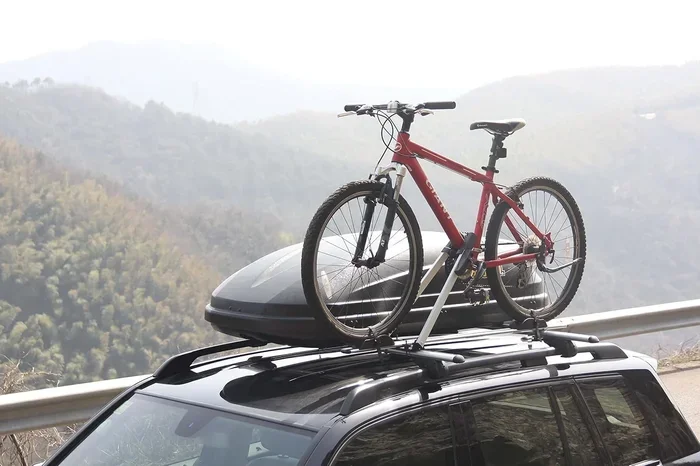
Hard mount carriers use a rigid frame that attaches directly to your car’s roof rack crossbars. These are the most popular type of roof bike carrier for a reason. They feel solid, look sleek, and offer excellent stability at highway speeds.
Most hard mount systems use fork-mounted clamps that grip the front wheel of each bike. The rear wheel rests on a tray or cradle. This design keeps bikes secure and reduces sway during driving. Brands like Thule, Yakima, and Kuat all offer excellent hard mount roof rack bike carrier options.
The main downside is price. Quality hard mount carriers typically cost between $200 and $500. They also require roof rack crossbars already installed on your car. If your vehicle does not have crossbars, you will need to add them first.
Soft Rack Bike Systems
A soft rack bike system is the budget-friendly alternative to hard mount carriers. Instead of a rigid frame, soft racks use padded straps that wrap around the bike frame and secure it to your roof rack crossbars. They are lightweight, easy to store, and much cheaper.
Soft racks typically cost between $50 and $150. They work well for occasional use and lighter bikes. However, they offer less security than hard mount systems. The straps can loosen over time, and the bikes may shift more during driving.
Soft racks also take longer to load and unload. Each bike needs individual strap adjustments. If you are loading bikes after a long day of riding, this can be frustrating. Still, for casual riders on a tight budget, a soft rack bike system gets the job done.
Platform-Style Roof Carriers
Platform-style carriers use a flat tray or platform where the bike rests. Instead of clamping the front fork, these systems often use a wheel cradle that holds the bike by the wheels. This makes loading and unloading faster and easier.
Platform carriers are great for bikes with unusual frame designs. Carbon frames, full-suspension mountain bikes, and women-specific frames all work well on platforms. The trade-off is that platform carriers tend to be heavier and bulkier than fork-mount systems.
They also cost a bit more. A quality platform bike carrier for car roof setup can run $300 to $600. But if ease of use is your top priority, the extra cost is often worth it.
How to Choose the Right Bike Rack Car Roof
Choosing the right bike rack car roof comes down to a few key factors. Let us break them down so you can make a confident decision.
Check Your Car’s Compatibility First
This is the single most important step. Not every bike carrier for car roof works with every vehicle. You need to know whether your car has factory roof rack crossbars, raised rails, or flush-mounted points.
- Factory crossbars: Most SUVs and wagons come with crossbars already. These are the easiest to work with.
- Raised side rails: Some cars have raised rails along the roof. You can use adapter bars to attach a carrier.
- Flush or bare roof: If your car has no rails or crossbars, you will need a base rack system first.
Check your car’s owner manual or the manufacturer’s website for compatible roof rack adapter options. Many bike rack car roof brands sell car-specific fit kits that make installation a breeze.
Consider Your Bike Count and Types
How many bikes do you need to carry? This directly affects the type of carrier you should buy.
- 1 to 2 bikes: A compact carrier with a single bar works fine. These are lighter and more aerodynamic.
- 3 to 4 bikes: You will need a wider carrier with multiple arms. Look for models with a tilting feature so you can still access the rear door.
- Mixed bike types: If you carry road bikes and mountain bikes together, make sure the carrier accommodates different wheel sizes and frame shapes.
Also think about bike weight. A roof rack weight limit usually ranges from 100 to 165 pounds total. Spread that across three or four bikes, and each bike gets roughly 30 to 40 pounds of support. For most standard bikes, this is plenty. But if you carry heavy e-bikes, check the weight rating carefully.
Think About Aerodynamics and Noise
An aerodynamic bike rack can make a real difference in fuel efficiency and driving comfort. Box-shaped crossbars create more drag than rounded or wind-tunnel-tested designs. Over long trips, this can affect your gas mileage slightly.
Noise is another factor many people overlook. A poorly designed roof bike carrier can create significant wind noise at highway speeds. Look for carriers with fairings or covers that smooth airflow. Some premium models are nearly silent on the road.
Set a Budget and Compare Features
Price is always a consideration. Here is a quick comparison of what you can expect at different price points.
| Price Range | Type | Bike Capacity | Key Features |
|---|---|---|---|
| $50 – $150 | Soft Rack | 1 – 3 bikes | Lightweight, straps, budget-friendly |
| $150 – $350 | Hard Mount Fork Clamp | 2 – 4 bikes | Secure, stable, tilt feature on some models |
| $350 – $600 | Platform Carrier | 3 – 4 bikes | Easy loading, wheel cradle, premium build |
| $600+ | Premium Complete System | 4+ bikes | Low noise, aerodynamic, tool-free setup |
This comparison should help you see where you fit. A mid-range hard mount carrier offers the best balance of cost, security, and features for most drivers.
Quick Tips for Choosing the Right Carrier
- Measure your car’s roof width before buying. Not all carriers fit every crossbar spacing.
- Check the tilt mechanism if you need rear door access with bikes installed.
- Look for tool-free installation. You do not want to fumble with wrenches at the trailhead.
- Read reviews from other drivers with the same car model. Fit and compatibility details matter.
- Consider a lock system. A roof rack bike carrier with a lock keeps your bikes safe from theft.
Installation Tips for Roof Bike Racks
Installing a bike rack car roof system is easier than most people think. With the right approach, you can have it done in under 30 minutes. Here is a step-by-step guide that makes the process smooth and stress-free.
Step 1: Gather Your Tools and Parts
Before you start, lay out all the components. Most roof mounted bike rack kits include the carrier arms, bolts or clamps, lock pins, and an instruction manual. You will also need a socket wrench or Allen key set. Some systems include the tools, so check the box first.
Step 2: Attach the Base to Your Crossbars
If your carrier uses a base bar that sits on top of the crossbars, place it centered on the roof. Tighten the clamps or bolts securely. Make sure the base is level and does not shift when you push on it. This is the foundation of your entire setup, so take your time here.
Step 3: Mount the Bike Arms or Platform
Attach the individual bike arms to the base. Most systems click or lock into place with a simple mechanism. If your carrier has a tilting feature, test it now to make sure the arms swing back far enough for rear door access.
Step 4: Load the Bikes Carefully
Place the first bike on the carrier and secure it using the fork clamp or wheel cradle. Tighten firmly but do not overtighten, as this can damage the bike frame. Repeat for each additional bike, spacing them evenly for balanced weight distribution.
Step 5: Do a Final Safety Check
Before driving, give each bike a gentle shake. It should feel solid with no movement. Check that all straps, clamps, and pins are tight. Also verify that the total load does not exceed your car’s roof rack weight limit. This final check gives you peace of mind for the entire trip.
Common Mistakes During Installation
- Skipping the instruction manual. Every carrier is slightly different. Reading the manual prevents fit issues.
- Overtightening bolts. This can strip threads or crack the carrier frame.
- Ignoring the rear door clearance. If the carrier does not tilt, you may not be able to open the back hatch.
- Uneven bike spacing. This causes imbalance and can lead to swaying at highway speeds.
Common Mistakes to Avoid With Roof Bike Racks
Even experienced drivers make mistakes when setting up a bike rack car roof. Knowing the common pitfalls helps you avoid them.
Ignoring Wind Drag and Fuel Costs
A roof bike carrier increases wind resistance. This can reduce your fuel efficiency by 1 to 5 miles per gallon depending on the model and speed. If you drive long distances frequently, choose an aerodynamic bike rack with a smooth profile. The fuel savings over time can offset the higher upfront cost.
Overloading the Roof
Every car has a maximum roof weight capacity. This includes the weight of the carrier, the bikes, and any accessories like cargo baskets. Exceeding this limit can damage the roof, compromise handling, and create a safety hazard. Check your car’s manual for the exact number and stay well under the limit.
Forgetting to Remove Bikes Before Low Clearances
This sounds obvious, but it happens more than you would think. A roof mounted bike rack adds significant height to your vehicle. Drive carefully in parking garages, low bridges, and drive-through car washes. A moment of carelessness can lead to expensive damage.
Neglecting Regular Maintenance
Your roof rack bike carrier takes a beating from road debris, UV rays, and weather. Inspect it before every trip. Check for loose bolts, worn straps, and rust on metal parts. A quick five-minute check can prevent a carrier failure on the highway.
Expert Insights on Roof Bike Carriers
We spoke with automotive and cycling experts to get their top advice on choosing and using a bike rack car roof system. Here is what the professionals had to say.
Expert Insight 1: Invest in Quality Crossbars
Many people focus on the carrier and forget about the crossbars. According to cycling gear experts, the roof rack crossbars are just as important as the carrier itself. High-quality crossbars distribute weight evenly, reduce noise, and provide a more stable platform. Brands like Yakima and Thule offer crossbar systems that integrate seamlessly with their carriers.
Expert Insight 2: Test Fit Before Your First Trip
Do not wait for your first road trip to install the carrier for the first time. Set it up at home, load your bikes, and take a short test drive. This lets you check for stability, noise, and clearance issues before you are far from home. It also gives you time to adjust the setup if needed.
Expert Insight 3: Consider a Rooftop Cargo System for Versatility
If you frequently carry bikes and other gear, consider a cargo carrier roof system that combines a bike rack with a cargo box or basket. These modular systems let you swap accessories based on your needs. They are more expensive but offer incredible versatility for outdoor enthusiasts.
Expert Insight 4: Lock It Up
Theft of roof-mounted bikes is more common than people realize. Experts strongly recommend using a carrier with a built-in lock and always locking your bikes to the carrier. A simple cable lock through the wheels adds an extra layer of protection, especially when you stop at rest areas or gas stations.
Key Takeaways
- Roof bike carriers keep your trunk free and are ideal for multiple bikes or oversized frames.
- Hard mount systems offer superior security and aerodynamics compared to soft rack alternatives.
- Your car’s crossbar compatibility is the first thing to check before buying any roof bike rack.
- Weight capacity and bike count matter most when choosing between 2-bike and 4-bike carriers.
- Proper installation and load distribution prevent damage to both your car and your bikes.
- Budget options start around $100, while premium systems can cost $400 or more.
- Regular maintenance keeps your roof rack safe and extends its lifespan significantly.
Conclusion
Choosing the right bike rack car roof does not have to be complicated. Start by understanding your car’s compatibility, then decide how many bikes you need to carry. From there, pick the type of carrier that fits your budget and riding style. Whether you choose a hard mount, soft rack, or platform system, the right setup makes every trip safer and more enjoyable.
Take your time, do your research, and follow the installation tips in this guide. A well-chosen and properly installed roof bike carrier will serve you for years of adventures. Your bikes will ride securely, your car will stay protected, and your road trips will feel that much better.
Now that you have all the information, it is time to make a choice. Pick the bike rack car roof system that fits your life, load up your bikes, and hit the road with confidence.
Frequently Asked Questions
What is the best bike rack car roof for a sedan?
For sedans, a lightweight hard mount carrier with a tilting feature works best. It keeps the bikes secure without blocking rear door access. Look for models specifically designed for lower-profile roofs and check the fit kit compatibility before buying.
How much does a roof bike rack cost on average?
Prices range from about $50 for soft rack systems to over $600 for premium complete setups. Most quality hard mount carriers fall between $200 and $400. The right budget depends on your bike count, car type, and how often you use it.
Can I install a bike rack car roof myself?
Yes, most roof bike carriers are designed for DIY installation. The process typically takes 20 to 45 minutes with basic tools. If your car needs a base rack system first, the installation may take a bit longer but is still manageable at home.
How many bikes can a roof rack carry?
Most roof bike carriers carry two to four bikes. Some heavy-duty models can handle five or more. The exact capacity depends on the carrier design, your car’s roof strength, and the weight of your bikes. Always check the manufacturer’s rated limit.
Does a roof bike rack affect fuel economy?
Yes, any roof mounted bike rack increases aerodynamic drag, which can reduce fuel economy by 1 to 5 mpg. Choosing an aerodynamic carrier design and removing the rack when not in use helps minimize the impact on your gas mileage.
What should I look for in a roof rack bike carrier?
Focus on compatibility with your car’s crossbars, the number of bikes you need to carry, ease of installation, and whether it includes a lock. Also consider the carrier’s weight, noise level at highway speeds, and whether it allows rear door access.
=== META TITLE ===
Best Bike Rack Car Roof Options & How To Choose
=== URL SLUG ===
/bike-rack-car-roof-options
=== SEO TITLE ===
Bike Rack Car Roof Options How To Choose The Right One