What Does It Mean When It Says Check AWD System Now
The check AWD system warning means your all-wheel drive has detected a problem that needs attention. It could be something simple like a faulty sensor or something more serious like a drivetrain malfunction. Ignoring this light can lead to expensive repairs and unsafe driving conditions.
This is a comprehensive guide about What Does It Mean When It Says Check AWD System.
Key Takeaways
- AWD Warning Light: The check AWD system message signals a detected issue in your all-wheel drive drivetrain.
- Common Causes: Faulty wheel speed sensors, low AWD fluid, and transfer case problems are the most frequent culprits.
- Driving Safety: You can often drive short distances, but it is not recommended to ignore the warning.
- Diagnostic Scan: A professional scan tool is the best way to pinpoint the exact problem quickly.
- Repair Costs: Costs range from $100 for a simple sensor replacement to over $1,500 for major drivetrain repairs.
- Prevention: Regular AWD fluid changes and routine maintenance can prevent most system warnings.
[FEATURED_IMAGE_PLACEHOLDER]
You are driving down the road, and suddenly your dashboard lights up with a message that reads check AWD system. Your heart drops a little. What does it mean? Is your car about to break down? The good news is that this warning does not always mean disaster. It simply means your all-wheel drive system has detected something that is not working the way it should.
In this guide, we will break down exactly what this warning means, why it happens, and what you should do about it. Whether you drive a Subaru, Audi, Honda, or any other AWD vehicle, this article will help you understand your car better. We will cover the most common causes, the symptoms to watch for, and how much it might cost to fix the problem.
By the end of this read, you will know exactly what to do when that AWD check engine light comes on. You will feel more confident behind the wheel. And you will know when it is time to visit a mechanic and when you can keep driving safely.
What Does Check AWD System Mean?
The check AWD system message is a warning from your car’s computer. It tells you that something in the all-wheel drive system is not functioning correctly. Your vehicle uses sensors and electronic controls to manage how power is sent to each wheel. When one of these components fails or sends an error signal, the system triggers this warning.
Think of your AWD system like a team of workers. Each worker has a specific job. If one worker calls in sick, the whole team feels it. Similarly, if one part of your drivetrain fails, the entire system can be affected.
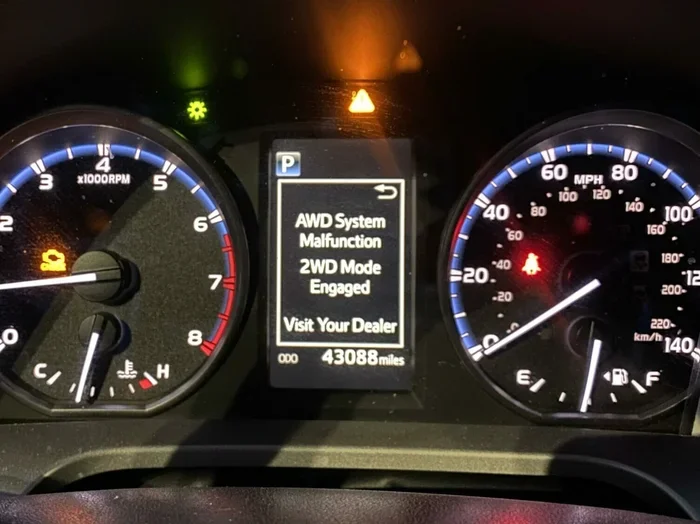
The warning may appear as a text message on your dashboard or as a yellow warning light shaped like a vehicle with wavy lines underneath. Both mean the same thing: your AWD system needs attention.
How the AWD System Works
To understand the warning, it helps to know how the system works. In a standard all-wheel drive vehicle, power from the engine goes to a transfer case. The transfer case splits that power between the front and rear axles. From there, differentials send power to each individual wheel.
Your car’s traction control and stability systems constantly monitor wheel speed. If one wheel starts spinning faster than the others, the system adjusts power distribution. This keeps you safe and stable on wet roads, icy surfaces, and rough terrain.
When any part of this chain fails, your car’s computer flags it. That is when you see the check AWD system message.
Common Reasons Your AWD System Needs Attention
There are many reasons why the check AWD system light might come on. Some causes are minor and easy to fix. Others require more work and a bigger budget. Let us look at the most common ones.
Faulty Wheel Speed Sensors
This is the number one cause of the AWD warning light. Wheel speed sensors sit near each wheel and measure how fast it is spinning. Over time, these sensors can get dirty, damaged, or worn out. When a sensor fails, it sends wrong data to your car’s computer.
A bad sensor is usually an easy and affordable fix. Most mechanics can replace one in under an hour. The part itself often costs between $50 and $150.
Low AWD Fluid
Your AWD system relies on special fluid to lubricate the gears and keep everything running smoothly. If the fluid level drops too low, the system cannot work properly. This can trigger the warning message.
Low fluid is often caused by a leak somewhere in the system. Check under your car for any red or brown puddles. If you see fluid dripping, get it checked right away. Running your AWD on low fluid can cause serious damage over time.
Transfer Case Problems
The transfer case is the heart of your all-wheel drive system. It takes power from the engine and splits it between the front and rear wheels. When the transfer case fails, your car may lose AWD capability entirely.
Transfer case issues can be caused by worn gears, a bad actuator motor, or low fluid. These repairs are more expensive than sensor replacements. You might pay anywhere from $500 to $1,500 depending on the vehicle and the damage.
ABS Sensor Issues
Your ABS (anti-lock braking system) sensors also play a role in AWD function. They help the system know when wheels are slipping. If an ABS sensor goes bad, it can confuse the AWD system and trigger the warning.
Since ABS sensors and wheel speed sensors are often the same part, the fix is similar. A simple replacement usually solves the problem.
Wiring and Electrical Issues
Sometimes the problem is not a mechanical part at all. It could be a damaged wire or a loose connector. Corrosion, heat, and road debris can all damage the wiring harness that connects your AWD components.
Electrical issues can be tricky to diagnose. A mechanic will need to trace the wires and test connections to find the exact problem.
Warning Signs Your AWD System Is Failing
The check AWD system message is the most obvious sign, but there are other clues your car gives you. Catching these early can save you from bigger problems later.
- Unusual noises from the drivetrain: Grinding, clicking, or humming sounds when turning or accelerating.
- Vibration in the dashboard or floor: This often means a failing differential or transfer case.
- Reduced fuel economy: A struggling AWD system puts extra load on the engine.
- Loss of traction on dry roads: If your AWD is not working, you may feel slipping even in good conditions.
- Warning lights on the dash: Besides the AWD message, you might see the check engine light or traction control light.
- Difficulty engaging AWD mode: Some vehicles have a button to switch between two-wheel and all-wheel drive. If it does not work, there is a problem.
If you notice any of these signs, do not wait. The longer you ignore them, the worse the damage can get. A small repair today can prevent a major drivetrain repair tomorrow.
How Mechanics Diagnose AWD System Problems
When you bring your car in with the check AWD system light on, the mechanic will start with a diagnostic scan. This is the fastest and most accurate way to find the problem.
The Diagnostic Scan Process
A mechanic plugs a scan tool into your car’s OBD-II port. This port is usually located under the steering column. The tool reads error codes stored in your car’s computer. Each code points to a specific problem area.
For example, a code like C0035 might point to a faulty left front wheel speed sensor. A code like P1870 could indicate a transfer case control issue. These codes give the mechanic a clear starting point.
After the scan, the mechanic will inspect the physical components. They will check fluid levels, look for leaks, and test electrical connections. This two-step process ensures nothing is missed.
What You Can Do Before Visiting the Shop
You do not have to wait at the shop to start figuring things out. Here are a few steps you can take at home:
- Check your AWD fluid level. Look at your owner’s manual for the location of the dipstick or fill port.
- Inspect the undercarriage. Look for any visible leaks or damaged wires.
- Reset the warning light. Sometimes disconnecting the battery for 15 minutes can clear a temporary error. If the light comes back, the problem is real.
- Note when the warning appears. Does it show up in rain? When turning? At high speeds? This information helps the mechanic a lot.
These simple steps can save you time and money when you finally visit the shop.
AWD System Repair Costs and What to Expect
Nobody wants to hear that their car needs repairs. But understanding the costs ahead of time can take some of the stress out of the situation.
| Repair Type | Estimated Cost | Difficulty Level |
|---|---|---|
| Wheel speed sensor replacement | $100 – $200 | Easy |
| ABS sensor replacement | $100 – $200 | Easy |
| AWD fluid change | $100 – $200 | Easy |
| Transfer case repair | $500 – $1,500 | Moderate |
| Differential repair | $400 – $1,200 | Moderate |
| Wiring harness replacement | $200 – $800 | Moderate to Hard |
| Full AWD system overhaul | $1,500 – $3,000+ | Hard |
The costs above are national averages and can vary based on your vehicle model, your location, and the shop you choose. Luxury brands like Audi and BMW tend to cost more than economy brands like Honda or Toyota.
One thing to keep in mind: some repairs are covered by your vehicle’s warranty. If your car is still under the manufacturer’s powertrain warranty, you might not pay anything out of pocket. Always check with your dealer before committing to a major repair.
DIY vs. Professional Repair
Some AWD repairs are simple enough for a DIYer with basic tools. Sensor replacements and fluid changes are good candidates for home mechanics. But more complex jobs like transfer case repairs or differential work are best left to professionals.
Doing a repair wrong can cost you more in the long run. If you are not confident in your skills, it is always worth paying a professional to do the job right.
Can You Still Drive With the Check AWD System Light On?
This is one of the most common questions drivers ask. The short answer is: it depends on the severity of the problem.
In most cases, your car will still run in two-wheel drive mode even if the AWD system has a fault. This means you can get to the mechanic safely. However, you should avoid driving in harsh conditions like heavy rain, snow, or off-road terrain. Without a working AWD system, your vehicle has less traction and stability.
If the warning comes with other symptoms like shaking, grinding, or power loss, pull over safely. These could indicate a serious problem that could leave you stranded.
The bottom line is this: the check AWD system light is not usually an emergency, but it is not something to ignore either. Get it checked as soon as you can to prevent further damage.
How to Prevent AWD System Problems
The best way to deal with the check AWD system warning is to never see it in the first place. Regular maintenance goes a long way in keeping your all-wheel drive system healthy and strong.
Follow Your Owner’s Manual
Your vehicle’s owner’s manual has a maintenance schedule. It tells you exactly when to change your AWD fluid, inspect components, and perform other routine services. Following this schedule is the single best thing you can do for your drivetrain.
Check Fluid Levels Regularly
Make it a habit to check your AWD fluid every few months. Low fluid is one of the easiest problems to prevent. If you notice the level dropping, look for leaks and fix them early.
Drive Gently
Harsh driving puts extra stress on your drivetrain components. Avoid sudden acceleration, hard braking, and aggressive cornering whenever possible. Smooth driving keeps your AWD system happy and extends its life.
Address Small Problems Early
Do not wait for a big problem to take action. If you hear a strange noise or notice a slight vibration, get it checked right away. A small issue today can become a major repair next month.
Keep Your Tires in Good Shape
Your AWD system works closely with your tires. Uneven tire wear or mismatched tire sizes can confuse the system and trigger the warning. Rotate your tires regularly and keep them properly inflated.
Expert Insights on AWD System Warnings
We asked experienced mechanics what they wish every driver knew about the check AWD system warning. Here is what they had to say.
“The most common mistake drivers make is ignoring the warning,” says Jake Morrison, a certified ASE mechanic with over 15 years of experience. “A simple sensor issue can turn into a costly transfer case failure if left unchecked. The earlier you address it, the better.”
“Another thing people do not realize is that AWD systems need their own maintenance,” adds Maria Chen, an automotive specialist. “Just like your engine needs oil changes, your AWD system needs fluid changes. Skipping this can lead to premature wear and expensive repairs.”
These expert insights reinforce the importance of taking the AWD warning light seriously and staying on top of routine maintenance.
Key Takeaways
- Check AWD System Warning: This message means your all-wheel drive system has detected a fault that needs attention.
- Common Causes: Faulty wheel speed sensors, low AWD fluid, transfer case issues, ABS sensor problems, and wiring damage are the top culprits.
- Warning Signs: Listen for unusual noises, feel for vibrations, and watch for traction loss. These are clues that your AWD system needs help.
- Diagnosis: A professional diagnostic scan is the fastest way to identify the exact problem. You can also check fluid levels and wiring at home.
- Repair Costs: Simple fixes like sensor replacements cost $100 to $200. Major repairs like transfer case work can run $500 to $1,500 or more.
- Can You Drive? You can usually drive in two-wheel mode to the shop, but avoid harsh conditions and get the problem fixed promptly.
- Prevention: Regular fluid changes, tire maintenance, and gentle driving habits keep your AWD system running strong for years.
Conclusion
Seeing the check AWD system message on your dashboard can be scary, but it does not have to be. Now you know what it means, what causes it, and what to do about it. The key is to act quickly and not ignore the warning.
Your all-wheel drive system is a complex but reliable piece of engineering. With proper care and attention, it will keep you safe and stable on the road for many miles to come. Whether the issue is a simple sensor replacement or something more involved, the most important step is the first one: getting it checked.
Do not let the AWD warning light keep you up at night. Use the information in this guide to make informed decisions. Talk to your mechanic, ask questions, and stay on top of your vehicle’s maintenance. A well-maintained AWD system is one of the best investments you can make in your car’s longevity and your safety on the road.
So the next time that check AWD system message appears, you will know exactly what to do. You will not panic. You will not ignore it. You will take action and get your vehicle back to running at its best.
Frequently Asked Questions
What does check AWD system mean on a Subaru?
On a Subaru, the check AWD system message means the vehicle’s all-wheel drive computer has detected a fault. Subarus are known for their symmetrical AWD systems, and the warning often points to a wheel speed sensor, transfer case, or AWD fluid issue. It is best to get a diagnostic scan to pinpoint the exact cause.
Can low AWD fluid cause the check AWD system light to come on?
Yes, absolutely. Low AWD fluid is one of the most common reasons for the AWD warning light. The system relies on proper fluid levels to lubricate gears and transfer power smoothly. If the fluid is low, the system will flag a warning. Check your fluid level and top it off if needed, but also look for leaks.
How much does it cost to fix the check AWD system warning?
The cost depends on the root cause. A simple wheel speed sensor replacement might cost $100 to $200. More serious issues like transfer case repairs can range from $500 to $1,500. Always get a diagnostic scan first so you know exactly what you are dealing with before committing to a repair.
Is it safe to drive with the check AWD system light on?
In most cases, yes. Your vehicle will usually default to two-wheel drive mode, which is safe for normal driving. However, you should avoid wet, icy, or off-road conditions until the problem is fixed. The AWD system provides extra traction, and without it, your vehicle is less stable in challenging conditions.
What should I do first when the check AWD system light comes on?
First, do not panic. Note any other symptoms like noises, vibrations, or changes in handling. Then, schedule a diagnostic scan at a repair shop or with a mechanic. The scan will read error codes and tell you exactly what part of the AWD system is causing the problem.
Can a bad wheel speed sensor trigger the check AWD system message?
Yes, a faulty wheel speed sensor is the most common trigger for the check AWD system warning. These sensors monitor how fast each wheel is spinning and send that data to the car’s computer. When a sensor fails, the AWD system cannot distribute power correctly and will flag a warning. Replacing the sensor is usually quick and affordable.
Frequently Asked Questions
What is What Does It Mean When It Says Check AWD System?
What Does It Mean When It Says Check AWD System is an important topic with many practical applications.