What Is Car Paint Protection Film Everything You Should Know
Car Paint Protection Film is a transparent, durable layer applied directly to your vehicle’s surface to guard against scratches, chips, and environmental damage. Also known as clear bra or PPF, this thin urethane film acts as a sacrificial shield that absorbs impacts before they reach your car’s original paint. Whether you drive a daily commuter or a luxury vehicle, car paint protection film offers serious defense without changing your ride’s look.
If you have ever parked your car under a tree and come back to find a bird dropping etching into the clear coat, you already understand why car paint protection film matters. Your vehicle’s paint faces threats every single day. UV rays, road debris, acid rain, parking lot dings — the list goes on. Over time, these small insults add up and diminish your car’s appearance and value.
That is exactly where paint protection film comes in. It is a thin, virtually invisible layer of polyurethane that bonds to your vehicle’s surface. Think of it as armor for your car. You get all the style and shine of your original paint, but with a strong defense layer underneath. In this guide, we will cover everything you need to know about car paint protection film, from how it works to whether it is worth the investment.
Key Takeaways
- What It Is: A clear, durable urethane film that protects your car’s paint from scratches, chips, and environmental damage.
- How It Works: The film absorbs impacts and uses self-healing technology to repair minor scratches on its own.
- Key Benefits: Preserves resale value, maintains factory paint, and saves money on paint correction and repairs.
- Types Available: Options range from standard clear films to premium self-healing and hydrophobic formulations.
- Professional Installation Matters: Proper application ensures longevity and avoids bubbles, peeling, or misalignment.
- Maintenance Is Simple: Regular washing and avoiding harsh chemicals keep the film performing for years.
📑 Table of Contents
- What Is Car Paint Protection Film?
- How Does Paint Protection Film Work?
- Benefits of Using Car Paint Protection Film
- Types of Car Paint Protection Film Available
- How to Choose the Right Car Paint Protection Film
- Installation Process and Maintenance Tips
- Is Car Paint Protection Film Worth It?
- Final Thoughts
What Is Car Paint Protection Film?
Car paint protection film, often shortened to PPF, is a clear thermoplastic urethane film applied directly to a vehicle’s painted surfaces. It is also commonly called a clear bra or automotive film. The film is typically between 4 and 8 mils thick, which is about as thick as a credit card. Despite its thin profile, it is remarkably strong and resilient.
The primary purpose of vehicle wrap style protection is to shield the factory paint from physical and environmental damage. Unlike a ceramic coating, which sits on top of the paint, PPF goes a step further by physically absorbing impacts. It takes the hit so your paint does not have to.
Modern automotive paint protection films are engineered with advanced polymers that offer clarity, flexibility, and long-term durability. They do not yellow easily, they do not peel, and they maintain their transparency for years. This makes them one of the most effective ways to preserve a vehicle’s original finish.
How Car PPF Differs from Other Protective Solutions
It is easy to confuse car paint protection film with other protective products. Here is how it stands apart:
- Ceramic Coating: A liquid polymer that chemically bonds to the paint surface. It adds hydrophobic properties and gloss but does not prevent physical damage like rock chips or scratches.
- Paint Sealant: A synthetic product that creates a temporary barrier. It lasts a few months and offers minimal scratch protection.
- Wax: A natural or synthetic product that provides a glossy finish and short-term protection. It needs frequent reapplication.
- Car Paint Protection Film: A physical barrier that absorbs impact, resists scratches, and self-heals minor marks. It lasts several years with proper care.
As you can see, PPF installation offers a level of protection that no liquid product can match. It is the gold standard in automotive paint protection.
How Does Paint Protection Film Work?
Understanding how car paint protection film works helps you appreciate why it is so effective. The film is made from a multilayer polyurethane construction. Each layer serves a specific purpose in defending your vehicle.
The top layer is a clear coat that repels water, dirt, and UV rays. It also has a special property called self-healing. When a minor scratch appears on the surface, heat from sunlight or warm water causes the film to flex and close the scratch back up. This is one of the most impressive features of modern automotive film technology.
Beneath the clear coat sits a thick urethane core. This is the structural layer that absorbs physical impacts. When a small rock hits your hood at highway speeds, the film takes the force and distributes it across the surface. Your clear paint underneath remains untouched.
The bottom layer is an adhesive that bonds securely to the vehicle’s surface. This layer is engineered to hold the film firmly in place for years without damaging the original paint when it is eventually removed.
The Science Behind Self-Healing Technology
The self-healing feature of premium paint protection film relies on a property called shape memory. The polymer molecules in the film are designed to return to their original shape when heated. This means that light scratches from keys, car washes, or minor abrasion simply disappear after exposure to warmth.
For example, if someone accidentally scratches your door with their keys, the film may absorb that damage. A few hours in the sun, and the scratch fades away. This is a huge selling point for anyone who wants long-term paint protection without constant maintenance.
Benefits of Using Car Paint Protection Film
There are many reasons car owners choose to invest in PPF installation. Let us break down the most important benefits.
1. Preserves Your Vehicle’s Resale Value
A car with flawless, factory-original paint is worth significantly more than one with chips, scratches, and swirl marks. Car paint protection film keeps your paint looking new for years. When it is time to sell or trade in, you will notice the difference in market value.
2. Protects Against Rock Chips and Road Debris
Every time you drive, your vehicle encounters gravel, road debris, and flying stones. The front bumper, hood, and fenders take the brunt of this damage. Car PPF acts as a buffer that prevents these impacts from chipping or cracking your paint.
3. Shields Against Environmental Damage
Your car faces constant exposure to harmful elements:
- UV Rays: Sunlight fades and oxidizes paint over time. PPF blocks harmful UV radiation.
- Acid Rain: Acidic precipitation etches into unprotected paint. The film creates a barrier against this corrosion.
- Bird Droppings: These are highly acidic and can damage paint within hours. PPF takes the hit instead.
- Tree Sap: Sap is notoriously difficult to remove and can permanently stain paint. The film prevents direct contact.
- Bug Splatter: Insects contain acids that eat into clear coat. PPF makes cleanup easy and protects the surface.
4. Maintains the Original Factory Paint
One of the biggest advantages of automotive paint protection is that it preserves your car’s original factory finish. When you apply PPF, you are essentially locking in the paint as it came from the factory. This is especially important for luxury or classic vehicles where originality matters.
5. Reduces Maintenance Effort
With car paint protection film, your car stays cleaner longer. The top layer repels water and dirt, making washing easier. You also spend less time and money on paint correction services like polishing and compounding.
6. Invisible Protection
Unlike a vehicle wrap that changes the color or appearance of your car, PPF installation is completely invisible. The film is crystal clear and does not alter your car’s color, shine, or finish. You get protection without any visual compromise.
Types of Car Paint Protection Film Available
Not all automotive film products are the same. Manufacturers offer different grades and types to suit various budgets and needs. Understanding the options helps you make an informed decision.
Standard Clear PPF
This is the most basic form of car paint protection film. It offers solid protection against rock chips, minor scratches, and environmental contaminants. Standard PPF is affordable and widely available. It is a great option for daily drivers and vehicles that face moderate exposure to road hazards.
Self-Healing PPF
Premium paint protection film includes self-healing technology. The top layer can repair minor scratches when exposed to heat. This type of film is ideal for car enthusiasts who want the highest level of protection and aesthetics. Brands like XPEL, 3M, and SunTek offer popular self-healing options.
Hydrophobic PPF
Some automotive paint protection films come with a built-in hydrophobic layer. This means the film repels water, causing it to bead and roll off the surface. Hydrophobic PPF makes washing your car easier and helps maintain a clean appearance between washes.
Matte and Satin Finish PPF
For those who prefer a non-glossy look, matte finish car PPF is available. It gives your vehicle a sleek, flat appearance while still providing full protection. This option is popular among owners of matte-wrapped or matte-painted cars who want to preserve the unique finish.
| Type of Film | Best For | Self-Healing | Hydrophobic | Price Range |
|---|---|---|---|---|
| Standard Clear PPF | Daily drivers, budget-conscious owners | No | No | $$ |
| Self-Healing PPF | Enthusiasts, luxury vehicles | Yes | Some | $$$ |
| Hydrophobic PPF | Easy maintenance, rainy climates | Some | Yes | $$$ |
| Matte/Satin PPF | Matte-finish vehicles, unique look | Some | No | $$ |
How to Choose the Right Car Paint Protection Film
Choosing the right car paint protection film depends on several factors. Here is what you should consider before making a decision.
Assess Your Driving Environment
Where do you drive most often? If you commute on highways with lots of gravel and construction, you need a thicker, more durable film. If you mostly drive in the city on paved roads, a standard PPF may be sufficient. Consider the environmental hazards your vehicle faces daily.
Set a Realistic Budget
The cost of PPF installation varies widely. A full vehicle wrap with premium film can range from $2,000 to $10,000 or more. Partial coverage for high-impact areas like the front bumper, hood, and mirrors typically costs between $800 and $3,000. Set a budget that you are comfortable with and explore options within that range.
Choose a Reputable Brand
Not all automotive film products are created equal. Stick with well-known brands that offer warranties. XPEL, 3M, SunTek, and Llumar are trusted names in the industry. These brands invest in research and quality control, ensuring their films perform as advertised.
Decide on Full or Partial Coverage
You do not have to cover your entire vehicle. Many owners choose partial PPF installation for the most vulnerable areas. The front bumper, hood, fenders, and side mirrors are common targets for rock chips. This approach saves money while still providing meaningful protection.
Check the Warranty
A good warranty is a sign of a quality product. Look for car paint protection film that comes with a manufacturer’s warranty covering yellowing, peeling, and delamination. Some warranties last up to 10 years, giving you peace of mind that your investment is protected.
Installation Process and Maintenance Tips
Proper PPF installation is critical to achieving the best results. While some car owners attempt DIY application, professional installation is strongly recommended for a flawless finish.
What to Expect During Professional Installation
A professional PPF installation process typically follows these steps:
- Thorough Cleaning: The vehicle is washed and decontaminated to remove dirt, wax, and oils from the paint surface.
- Paint Correction (if needed): Any existing swirl marks or scratches are corrected before the film is applied. This ensures the best possible bond and appearance.
- Film Cutting: The PPF is pre-cut to match the exact contours of your vehicle using precision templates or computer cutting systems.
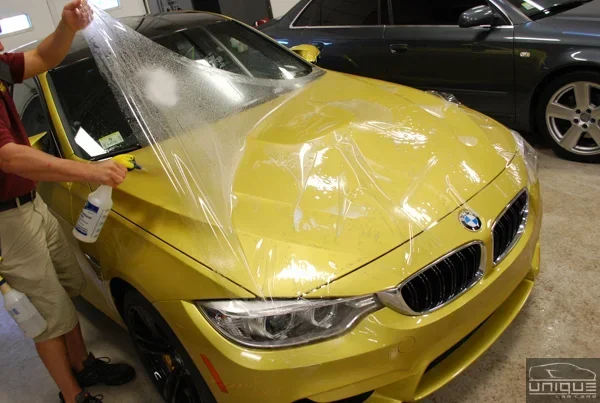
- Application: The film is carefully applied to each panel using a squeegee and heat gun. The installer removes air bubbles and ensures a smooth, tight fit.
- Curing: The film is allowed to cure for 24 to 48 hours. During this time, the adhesive bonds fully to the paint surface.
Quick Maintenance Tips for Your PPF
Taking care of your car paint protection film is simple. Follow these tips to keep it performing at its best:
- Wash regularly: Use a pH-neutral car wash soap and a soft microfiber mitt. Avoid harsh chemicals that can degrade the film.
- Avoid automatic car washes: Brushed roll-over car washes can cause premature wear and lifting at the edges of the film.
- Use a PPF-safe cleaner: Invest in a cleaner specifically formulated for automotive film. These products maintain the film’s clarity and hydrophobic properties.
- Avoid high-pressure washing directly at edges: High pressure can push water under the film and cause peeling.
- Park in shaded areas when possible: While the film blocks UV rays, excessive heat can accelerate wear over time.
- Inspect edges periodically: Check the edges of the film for lifting. Address small issues early before they become bigger problems.
Common Mistakes to Avoid
Even with the best car PPF, mistakes can happen. Here are common errors to watch out for:
- Skipping paint correction before installation: Applying PPF over existing swirl marks or scratches traps those imperfections under the film and makes them more visible.
- Choosing the cheapest option: Low-quality films yellow quickly, peel, and lose their self-healing properties. Investing in a reputable brand pays off in the long run.
- Ignoring edge care: The edges of the film are the most vulnerable areas. Poor edge sealing leads to lifting and moisture intrusion.
- Using abrasive cleaners: Harsh cleaning products break down the film’s protective layers and reduce its lifespan.
Is Car Paint Protection Film Worth It?
The short answer is yes. Car paint protection film is one of the most effective ways to preserve your vehicle’s appearance and value. The cost of PPF installation may seem significant upfront, but it pays for itself by preventing expensive paint repairs and maintaining your car’s showroom finish for years.
If you take pride in your vehicle, drive in harsh conditions, or own a car with a premium paint job, automotive paint protection is a smart investment. It gives you peace of mind every time you hit the road, knowing your paint is shielded from the elements and everyday hazards.
Think of it this way. A single paint repair for a rock chip can cost $150 or more. A full paint correction service can run $500 to $1,500. Compare that to the cost of PPF installation, and the value becomes clear. You are paying once to avoid repeated repair costs over the life of your vehicle.
Whether you choose a full coverage vehicle wrap of protection film or a targeted partial application, the results speak for themselves. Your car stays looking newer, longer, and you spend less time and money on maintenance and repairs.
Protecting your car’s paint is not just about aesthetics. It is about preserving the value of your investment. With the right car paint protection film and proper care, your vehicle will turn heads for years to come.
Final Thoughts
Car paint protection film is a game-changer for anyone who wants to keep their vehicle looking its best. It provides a physical barrier against the many threats your car faces every day, from road debris to environmental contaminants. The self-healing technology, UV protection, and hydrophobic properties of modern PPF installation make it the most comprehensive automotive paint protection solution available today.
Whether you are a daily commuter, a weekend cruiser, or a car enthusiast who wants to preserve that factory-fresh look, car paint protection film delivers real, measurable results. The key is to choose a quality product, have it professionally installed, and maintain it properly. Do that, and your vehicle’s paint will stay in excellent condition for many years to come.
Take the time to research your options, compare brands, and find a trusted installer. Your car deserves the best protection you can give it, and car paint protection film is the best you can give it.
Frequently Asked Questions
How long does car paint protection film last?
High-quality car paint protection film can last between 5 and 10 years, depending on the brand, type of film, and how well you maintain it. Premium self-healing films with proper care often last closer to the 10-year mark. Regular washing and avoiding harsh chemicals significantly extend the lifespan of your PPF.
Can I apply car paint protection film myself?
While DIY PPF installation kits are available, professional installation is strongly recommended. The process requires precision, patience, and specialized tools to avoid bubbles, wrinkles, and misalignment. A professional installer ensures the film bonds correctly and looks seamless, which is essential for both appearance and protection.
Does paint protection film change the color of my car?
No. Car paint protection film is completely transparent and does not alter your vehicle’s color or finish. It is designed to be invisible once applied, preserving the original look of your car while adding a strong layer of defense underneath the surface.
Is car paint protection film the same as a ceramic coating?
No, they are very different. A ceramic coating is a liquid that chemically bonds to the paint and adds hydrophobic and glossy properties. Car paint protection film is a physical, solid layer of urethane that absorbs impacts and prevents physical damage. Many car owners choose to use both together for maximum protection.
What areas of my car should I cover with PPF?
The most vulnerable areas include the front bumper, hood, fenders, side mirrors, and door edges. These areas face the most exposure to road debris, rocks, and environmental hazards. Many owners opt for partial PPF installation on these high-impact zones, while others choose full coverage for complete protection.
Does car paint protection film affect the resale value of my car?
Yes, it positively affects resale value. A vehicle with well-maintained automotive paint protection and flawless factory paint is far more attractive to buyers. It signals that the owner has taken excellent care of the vehicle, which can lead to a higher trade-in or resale price compared to a car with visible paint damage.