How Many Miles Per Gallon Does a Nissan Rogue Get Today
The Nissan Rogue delivers an impressive miles per gallon rating that makes it a top choice among compact SUVs. The gas-only Rogue gets around 32 mpg combined, while the Rogue Hybrid pushes that number even higher with up to 39 mpg combined. Whether you commute daily or hit the open road, understanding your Rogue’s fuel economy helps you save money and drive smarter.
This is a comprehensive guide about How Many Miles Per Gallon Does a Nissan Rogue Get?.
Key Takeaways
- The Nissan Rogue gas model achieves around 32 mpg combined, with 28 mpg in the city and 35 mpg on the highway.
- The Rogue Hybrid significantly improves fuel economy, delivering up to 39 mpg combined.
- Driving habits like smooth acceleration and maintaining steady speeds can boost your MPG by up to 20%.
- Regular maintenance such as tire rotations and air filter changes directly impacts fuel efficiency.
- The Rogue Hybrid’s electric motor handles low-speed driving, which reduces gas consumption in stop-and-go traffic.
- Comparing trims matters, as different Rogue versions have varying weight and aerodynamic features that affect MPG.
- Fuel costs over time can differ by hundreds of dollars annually between the gas and hybrid Rogue models.
[FEATURED_IMAGE_PLACEHOLDER]
Understanding Nissan Rogue Fuel Economy
When you buy a Nissan Rogue, one of the first questions that comes to mind is simple: how many miles per gallon does a Nissan Rogue get? It is a fair question. After all, fuel costs add up fast, and nobody wants to surprise themselves at the pump. The good news is that the Rogue has always been a strong performer in the fuel economy department, especially compared to other compact SUVs in its class.
The Nissan Rogue is a compact crossover SUV that balances practicality, comfort, and efficiency. It is one of the best-selling SUVs in America, and fuel economy plays a big role in that success. Nissan has worked hard over the years to make the Rogue more gas mileage friendly without sacrificing power or cargo space.
So what does the numbers actually look like? The base gas-powered Nissan Rogue produces a combined 32 miles per gallon. That includes roughly 28 mpg in city driving and 35 mpg on the highway. These numbers come from the EPA fuel economy rating, which is the standard measure used across all vehicles sold in the United States.
Now, if you are considering the Nissan Rogue Hybrid, the numbers get even better. The hybrid version uses a combination of a gas engine and an electric motor to squeeze every possible mile out of each gallon. The result is a combined 39 mpg rating, which is remarkable for an SUV of this size. That kind of efficiency is hard to find in the crossover segment.
Understanding these numbers matters because they directly affect your wallet. Over the course of a year, the difference between 32 mpg and 39 mpg can mean saving several hundred dollars on fuel. For many families, that is real money that can go toward other things. If you want to dig deeper into how hybrid vehicles perform long term, check out our article on are hybrids reliable after 100k miles, which covers durability and efficiency over time.
City vs Highway MPG for the Nissan Rogue
City Driving MPG
City driving is where most people spend a lot of their time. Stop-and-go traffic, short trips, and frequent braking all take a toll on fuel economy. The gas-powered Nissan Rogue gets approximately 28 mpg in city conditions. This is actually quite competitive for a compact SUV. Many rivals in the same class struggle to match or beat this number.
The Rogue Hybrid shines even brighter in city driving. Because the hybrid system uses the electric motor at low speeds, the Rogue Hybrid can achieve around 36 mpg in city driving. This is a significant improvement. If you have a long commute through busy city streets, the hybrid version makes a lot of sense.
Here is something interesting. When a hybrid vehicle starts and stops at traffic lights, the electric motor takes over. This means the gas engine does not need to work as hard. That is why city MPG numbers for hybrids are often so much better than their gas-only counterparts. To learn more about when hybrids switch between power sources, read our piece on at what point does a hybrid switch to gas.
Highway Driving MPG
Highway driving is where the Nissan Rogue really flexes its muscles. The gas model delivers around 35 mpg on the highway. This is thanks to the aerodynamics of the vehicle and the fact that steady speeds are easier on the engine than constant stopping and starting.
The Rogue Hybrid gets approximately 38 mpg on the highway. While the improvement over the gas model is smaller on the highway than in the city, it is still meaningful. Over a long road trip, those extra miles per gallon can translate into fewer fuel stops and lower costs.
If you frequently drive long distances, you might wonder how far you can go on a single tank. The Nissan Rogue has a fuel tank capacity of about 14.5 gallons. On the highway, that means a range of roughly 500 miles for the gas model. The hybrid pushes that number even further. Keep in mind that driving habits and road conditions play a role. If you are curious about how far you can push your fuel limits, our guide on can I drive 10 miles on empty offers useful insights on fuel range and safety.
Nissan Rogue Hybrid vs Gas: Which Gets Better MPG?
The decision between the gas and hybrid Nissan Rogue often comes down to fuel efficiency and budget. Both versions offer excellent value, but they serve slightly different needs. Let us break it down.
The gas-powered Nissan Rogue uses a 2.5-liter four-cylinder engine. It produces about 201 horsepower and is paired with a continuously variable transmission. This setup is proven and reliable. It delivers a solid 32 mpg combined rating. For most drivers, this is more than enough.
The Rogue Hybrid, on the other hand, combines a 2.5-liter engine with an electric motor. Together, they produce a combined 176 horsepower. But here is the key difference. The electric motor handles much of the low-speed work. This reduces the burden on the gas engine and dramatically improves fuel economy. The hybrid version achieves a combined 39 mpg, which is a 22% improvement over the gas model.
Let us look at a quick comparison:
- Nissan Rogue Gas (2024): 28 city / 35 highway / 32 combined mpg
- Nissan Rogue Hybrid (2024): 36 city / 38 highway / 39 combined mpg
- Difference: The hybrid saves approximately 7 mpg combined
- Annual Fuel Cost Estimate: Gas model around $1,900; hybrid around $1,550 (based on 15,000 miles/year)
The hybrid version costs more upfront, but the fuel savings can offset that difference over several years of ownership. If you plan to keep your vehicle for a long time, the hybrid is a smart investment. For those interested in long-term reliability, our article on are hybrids reliable after 100k miles provides detailed information on how hybrid systems hold up over time.
How to Improve Your Nissan Rogue MPG
Even if you already own a Nissan Rogue, there are simple steps you can take to get better miles per gallon. Small changes in how you drive and maintain your vehicle can add up to significant savings over time.
Drive Smoothly
Aggressive driving kills fuel economy. Rapid acceleration and hard braking waste gas. Instead, try to accelerate gently and maintain a steady speed. This alone can improve your MPG by up to 15 to 20 percent. It is one of the easiest and most effective changes you can make.
Keep Your Tires Properly Inflated
This sounds basic, but it makes a huge difference. Underinflated tires create more rolling resistance, which forces the engine to work harder. Check your tire pressure at least once a month. The recommended pressure for the Nissan Rogue is usually listed on a sticker inside the driver’s door frame.
Reduce Excess Weight
Extra weight in your vehicle means more fuel consumption. Remove items from your trunk or cargo area that you do not need. Every extra 100 pounds can reduce your MPG by about 1%. Keep your cargo space lean and your fuel economy will thank you.
Use Cruise Control on the Highway
Maintaining a constant speed on the highway is one of the best ways to maximize fuel efficiency. Cruise control helps you do this automatically. Just be sure to use it on flat, open roads rather than hilly terrain, where it may cause the engine to work harder.
Stay on Top of Maintenance
Regular oil changes, air filter replacements, and spark plug checks all contribute to better MPG. A well-maintained engine runs more efficiently and uses less fuel. Follow the maintenance schedule in your owner’s manual. It is a small investment that pays off over the life of the vehicle.
Nissan Rogue MPG Compared to Competitors
How does the Nissan Rogue stack up against other compact SUVs? Let us take a look at the competition.
| Vehicle | City MPG | Highway MPG | Combined MPG |
|---|---|---|---|
| Nissan Rogue Gas | 28 | 35 | 32 |
| Nissan Rogue Hybrid | 36 | 38 | 39 |
| Toyota RAV4 (Gas) | 28 | 35 | 30 |
| Toyota RAV4 Hybrid | 41 | 38 | 40 |
| Honda CR-V (Gas) | 28 | 34 | 30 |
| Honda CR-V Hybrid | 40 | 35 | 38 |
| Ford Escape (Gas) | 27 | 33 | 28 |
| Ford Escape Hybrid | 44 | 37 | 40 |
As you can see, the Nissan Rogue holds its own in the compact SUV segment. The gas model competes closely with the Toyota RAV4 and Honda CR-V. The Rogue Hybrid is right in the mix with the RAV4 Hybrid and CR-V Hybrid, though the Ford Escape Hybrid edges ahead slightly in combined MPG.
What makes the Rogue stand out is its balance of fuel economy, interior space, and affordability. It is not always the absolute leader in MPG, but it consistently ranks near the top. For many buyers, that balance is exactly what they are looking for.
Final Verdict: Is the Nissan Rogue Good on Gas?
The short answer is yes. The Nissan Rogue is a fuel-efficient compact SUV that delivers strong miles per gallon numbers across the board. The gas model offers a respectable 32 mpg combined, while the hybrid version pushes the envelope with 39 mpg combined. Both are excellent choices for different types of drivers.
If you do mostly city driving and want to maximize savings, the Rogue Hybrid is the clear winner. Its electric motor handles stop-and-go traffic beautifully, and the fuel savings add up quickly. If you prefer a simpler drivetrain with lower upfront cost, the gas-powered Rogue still delivers very competitive fuel economy for its class.
Remember that your actual MPG will vary based on driving conditions, habits, and vehicle maintenance. The EPA ratings are a great baseline, but real-world results can differ. By following the tips in this article, you can get closer to the best possible fuel economy from your Nissan Rogue.
At the end of the day, the Nissan Rogue remains one of the most sensible choices in the compact SUV segment. It offers a winning combination of reliability, comfort, cargo space, and fuel efficiency. Whether you choose the gas or hybrid version, you are getting a vehicle that will serve you well for years to come.
For those exploring other vehicle options or wondering about fuel range limits, check out our article on can I drive 10 miles on empty for practical guidance on fuel reserves and safety.
FAQs
What is the real-world MPG for a Nissan Rogue?
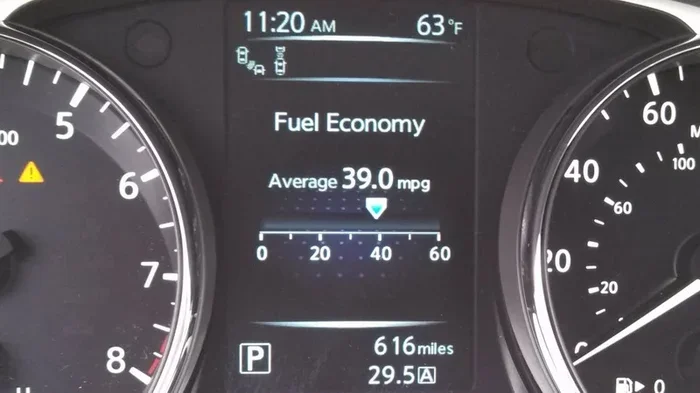
Real-world MPG for a Nissan Rogue typically ranges from 30 to 34 mpg combined for the gas model. The hybrid version usually delivers between 36 and 40 mpg combined. Your actual numbers will depend on driving style, road conditions, and vehicle maintenance. Many owners report getting slightly better highway MPG than the EPA estimates suggest.
Is the Nissan Rogue Hybrid worth the extra cost for better MPG?
Yes, for most drivers who keep their vehicle for several years, the Rogue Hybrid is worth the extra upfront cost. The fuel savings can offset the price difference over time, especially if you do a lot of city driving. The hybrid system also provides a smoother and quieter driving experience, which adds value beyond just fuel economy.
Does the Nissan Rogue trim level affect MPG?
Trim levels have a minimal effect on MPG within the same powertrain option. However, higher trims may carry slightly more weight due to additional features, which can reduce fuel economy by a small margin. The biggest factor in MPG is whether you choose the gas or hybrid powertrain, not the trim level.
How often should I service my Nissan Rogue to maintain good fuel economy?
Nissan recommends following the service schedule in your owner’s manual. Generally, this means an oil change every 5,000 to 7,500 miles, air filter replacement every 15,000 to 30,000 miles, and regular tire rotations every 5,000 miles. Staying on top of these maintenance tasks keeps your engine running efficiently and helps maintain optimal fuel economy.
Can cold weather affect the Nissan Rogue’s MPG?
Yes, cold weather can reduce MPG by 10 to 20 percent in some cases. Engines take longer to reach operating temperature in cold conditions, and heating the cabin uses engine heat that would otherwise help efficiency. The Rogue Hybrid is somewhat less affected by cold weather because the electric motor can handle some of the heating load through the heat pump system.
What is the fuel tank size of the Nissan Rogue?
The Nissan Rogue has a fuel tank capacity of approximately 14.5 gallons. With the gas model’s 35 mpg highway rating, this gives a theoretical highway range of about 507 miles on a full tank. The hybrid version extends this range even further. Always keep your tank at least a quarter full to avoid running low, and for more information on fuel range limits, check out our guide on can I drive 10 miles on empty.
Frequently Asked Questions
What is How Many Miles Per Gallon Does a Nissan Rogue Get??
How Many Miles Per Gallon Does a Nissan Rogue Get? is an important topic with many practical applications.