Can You Flat Tow a Toyota Corolla The Complete Guide
Yes, you can flat tow a Toyota Corolla, but the answer depends on your model year and drivetrain. This guide covers everything you need to know about flat towing a Corolla safely, from drivetrain requirements to essential equipment and step-by-step instructions.
Have you ever wondered whether you can flat tow a Toyota Corolla behind an RV or another vehicle? Maybe you are planning a road trip and want to bring your small car along for the easy driving once you reach your destination. Flat towing, also called “dinghy towing” or “four wheels down,” is a popular way to travel with a second vehicle without needing a trailer.
The short answer is that some Toyota Corolla models can be flat towed, but not all of them. The year, drivetrain, and transmission type all matter a lot. In this guide, we will walk you through everything you need to know. We will cover which Corollas can be towed, what equipment you need, the step-by-step process, and the mistakes that can cost you hundreds in repairs.
Whether you are a seasoned RVer or a first-timer planning a cross-country trip, this article will give you the confidence and knowledge to tow your Corolla safely. Let us dive in.
Key Takeaways
- Not all Corollas can be flat towed: Front-wheel drive models generally can, but all-wheel drive models need special precautions or cannot be towed four wheels down.
- Check your owner’s manual first: Toyota provides specific towing instructions for each model year, and ignoring them can void your warranty.
- You need the right equipment: A base plate, supplemental braking system, and proper hitch setup are essential for safe flat towing.
- Transmission damage is a real risk: Towing with the wrong gear or ignition position can destroy your Corolla’s transmission.
- Weight matters: The combined weight of your Corolla and towing setup must stay within safe limits. Overloading your vehicle is dangerous.
📑 Table of Contents
- What Is Flat Towing and Why Do People Do It?
- Can You Flat Tow a Toyota Corolla?
- What You Need to Know About the Corolla’s Drivetrain
- Step-by-Step Guide to Flat Towing a Toyota Corolla
- Essential Safety Equipment for Flat Towing
- Common Mistakes to Avoid When Flat Towing a Corolla
- How Much Does It Cost to Flat Tow a Toyota Corolla?
- Expert Tips for First-Time Flat Towers
- What to Do If Something Goes Wrong While Towing
- Final Thoughts on Flat Towing a Toyota Corolla
What Is Flat Towing and Why Do People Do It?
Flat towing means pulling a vehicle behind another vehicle with all four wheels on the ground. No dolly. No trailer. Just a car being dragged behind a truck or RV. This method is popular among RV owners because it lets them have a second vehicle at their destination without taking up extra space or adding significant wind drag.
The Toyota Corolla is one of the most popular cars in the world. It is reliable, fuel efficient, and easy to maintain. These qualities make it a great candidate for flat towing — but only if your specific model allows it. Flat towing a Corolla requires careful attention to the vehicle’s drivetrain, transmission, and towing specifications.
Flat Towing vs. Dolly Towing vs. Flatbed Towing
There are three main ways to tow a car. Understanding the differences helps you choose the right method for your Corolla.
- Flat towing (four wheels down): All four wheels touch the ground. This is the most convenient method because you do not need extra equipment like a dolly or trailer.
- Dolly towing (two wheels down): The front wheels sit on a small dolly while the rear wheels remain on the ground. This works for more vehicles but requires a tow dolly.
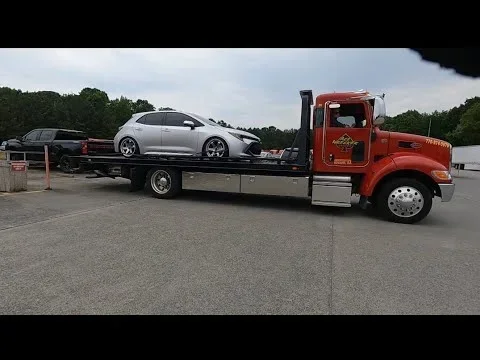
- Flatbed towing: The entire vehicle sits on a flatbed trailer. This is the safest method but requires a trailer and more space.
Flat towing is the most popular choice for Corolla owners because it is the simplest setup. But simplicity does not mean you can skip the important safety steps.
Can You Flat Tow a Toyota Corolla?
Here is where things get specific. The answer to whether you can flat tow a Toyota Corolla depends on several factors. Let us break it down by drivetrain type.
Front-Wheel Drive Corollas
Most Toyota Corollas are front-wheel drive. In general, front-wheel drive vehicles can be flat towed safely because the front wheels (which are also the driven wheels) roll freely when the transmission is in neutral. Toyota has approved many front-wheel drive Corolla models for flat towing.
However, you must always check the specific model year. Some newer Corollas have electronic systems that do not allow flat towing even if they are front-wheel drive. The owner’s manual is your best resource here. If the manual says flat towing is approved, you are good to go with the right equipment.
All-Wheel Drive Corollas
All-wheel drive Corollas present a bigger challenge. Towing an AWD vehicle with all four wheels on the ground can cause serious damage to the drivetrain. The wheels are all connected to the transmission and differential, and when they spin while the car is in neutral, internal components can grind and fail.
For AWD Corollas, your best options are:
- Use a flatbed trailer to lift all four wheels off the ground.
- Use a dolly for the front wheels and keep the rear wheels on the ground.
- Check if Toyota allows flat towing with a specific procedure (rare for AWD models).
Hybrid Corollas
Hybrid Corollas add another layer of complexity. The electric motor and regenerative braking systems can be affected by flat towing. Some hybrid models cannot be flat towed at all. Always consult the owner’s manual for your specific hybrid Corolla model before attempting any towing method.
What You Need to Know About the Corolla’s Drivetrain
Understanding your Corolla’s drivetrain is essential before you attempt to tow it. The drivetrain determines how power is delivered to the wheels, and this directly affects whether flat towing is safe.
Here are the key drivetrain types you will find in Toyota Corollas:
- Front-wheel drive (FWD): The most common Corolla configuration. Power goes to the front wheels only. Generally safe for flat towing when done correctly.
- All-wheel drive (AWD): Power goes to all four wheels. Flat towing on the ground is usually not recommended without precautions.
- Rear-wheel drive (RWD): Rare in modern Corollas but found in some older models. These can typically be flat towed but may require steering column lock disengagement.
Your vehicle owner’s manual will tell you the exact towing procedure for your model. Never guess when it comes to towing. Wrong assumptions can lead to thousands of dollars in transmission and drivetrain repairs.
Before you tow, you should also run basic car diagnostics to make sure your Corolla is in good working condition. Towing a vehicle with existing problems can make them worse.
Step-by-Step Guide to Flat Towing a Toyota Corolla
If your Corolla is approved for flat towing, follow these steps carefully. Each step exists for a reason and skipping any of them can cause damage or safety issues.
Step 1: Read the Owner’s Manual
This cannot be stressed enough. The owner’s manual contains the official towing instructions from Toyota. It tells you the correct gear position, ignition setting, speed limits, and distance restrictions. Every Corolla model is different, and the manual is the only source of truth.
Step 2: Gather Your Equipment
You will need the following equipment before you start:
- A compatible base plate that attaches to your Corolla’s front bumper
- A tow bar rated for your Corolla’s weight
- A supplemental braking system (more on this below)
- Safety cables as a backup in case the tow bar fails
- A towing mirror if your RV or tow vehicle blocks your rearview
Step 3: Install the Base Plate
The base plate bolts to the front of your Corolla and provides a secure attachment point for the tow bar. Installation varies by model, so follow the base plate manufacturer’s instructions carefully. Make sure all bolts are tightened to the correct torque specification.
Step 4: Attach the Tow Bar
Connect the tow bar to the base plate on your Corolla and to the hitch receiver on your tow vehicle. Ensure all connections are secure and the safety latch clicks into place. Give it a firm tug to test the connection before you start driving.
Step 5: Set the Correct Position
Follow the owner’s manual for the correct gear position. For most front-wheel drive Corollas, this means placing the transmission in neutral and turning the ignition to the accessory position (not off). This prevents the steering wheel from locking and allows the wheels to roll freely.
Step 6: Connect Safety Cables
Safety cables cross under the tow bar and connect to the tow vehicle. They serve as a backup if the tow bar disconnects. Never skip this step. It is a simple action that can prevent a serious accident.
Step 7: Check Brake Lights and Signals
Make sure the brake lights and turn signals on your Corolla work while being towed. Most tow bars come with a wiring harness that connects to your Corolla’s electrical system. Test all lights before you hit the road.
Essential Safety Equipment for Flat Towing
Flat towing a Toyota Corolla requires more than just a tow bar. Safety equipment protects both you and the vehicle being towed. Here is what you need:
Supplemental Braking System
This is arguably the most important piece of towing equipment. When your Corolla is being towed, it does not have its own engine running, which means the brakes do not have power assistance. A supplemental braking system activates the Corolla’s brakes when the tow vehicle slows down. This reduces stopping distance and prevents wear on the tow vehicle’s brakes.
Many states and provinces require a supplemental braking system when towing a vehicle behind an RV. Check your local laws before you travel.
Base Plate and Tow Bar
The base plate provides a permanent or semi-permanent attachment point on your Corolla. The tow bar connects the base plate to the tow vehicle. Always use equipment rated for your Corolla’s weight. A tow bar rated for at least 3,000 pounds will work for most Corolla models.
Safety Cables
Safety cables are your last line of defense. If the tow bar fails for any reason, the cables keep the towed vehicle connected to the tow vehicle. Cross the cables under the tow bar to prevent them from dragging on the ground.
Towing Mirrors
If your tow vehicle or RV blocks your view of the side and rear, you need extended towing mirrors. Visibility is critical for safe driving, especially when changing lanes and merging.
Common Mistakes to Avoid When Flat Towing a Corolla
Even experienced towers make mistakes. Here are the most common errors people make when flat towing a Toyota Corolla, and how to avoid them.
Skipping the Owner’s Manual
This is the number one mistake. Every Corolla model has specific towing instructions. What worked for your friend’s Corolla may not apply to yours. Always read the manual first.
Forgetting the Supplemental Brake
Without a supplemental braking system, your stopping distance doubles or even triples. This is extremely dangerous, especially at highway speeds. Do not skip this equipment, even if it adds cost.
Towing With the Wrong Gear Position
Putting the transmission in the wrong gear while towing can cause catastrophic damage. For most Corollas, you need the transmission in neutral with the ignition in the accessory position. Double-check this every single time before you tow.
Ignoring Speed and Distance Limits
Toyota often places limits on flat towing speed and distance. Common limits are 55 mph and 50 miles. Exceeding these limits can overheat the transmission and cause premature wear. Respect these limits for the longevity of your Corolla.
Not Checking Tire Pressure
Tires on the towed vehicle should be properly inflated before towing. Underinflated tires can overheat and fail while being towed. Check the tire pressure on your Corolla before every trip.
Using the Wrong Tow Bar
Not all tow bars are created equal. Use a tow bar specifically designed for flat towing and rated for your vehicle’s weight. A cheap or incompatible tow bar can detach while driving, causing a serious accident.
How Much Does It Cost to Flat Tow a Toyota Corolla?
The cost of flat towing a Corolla depends on what equipment you already own and what you need to buy. Here is a rough breakdown:
- Base plate: $200 to $500 (model-specific)
- Tow bar: $150 to $400
- Supplemental braking system: $100 to $300
- Safety cables: $20 to $50
- Towing mirror: $30 to $80
- Wiring harness: $30 to $60
Total equipment cost typically ranges from $500 to $1,200. This is a one-time investment that pays for itself if you plan to tow your Corolla regularly. If you do not want to buy the equipment, many RV parks and tow companies offer rental options.
Expert Tips for First-Time Flat Towers
If this is your first time flat towing a Toyota Corolla, these expert tips will save you headaches:
- Practice in an empty parking lot first. Get comfortable with the tow bar setup and handling before you hit the open road.
- Do a pre-trip inspection every time. Check all connections, tire pressure, brake lights, and fluid levels before each trip.
- Keep your speed under 55 mph. Higher speeds increase heat buildup in the transmission and reduce control.
- Take frequent breaks. Stop every two hours to check your connections and let the towed vehicle cool down.
- Carry a spare base plate bolt kit. Things can vibrate loose on long trips, and having a backup saves you from being stranded.
What to Do If Something Goes Wrong While Towing
Even with careful preparation, things can go wrong. Here is what to do in common towing emergencies:
- Tow bar disconnects: Pull over immediately. Check all connections before continuing. Never keep driving if the tow bar has detached.
- Brake lights not working: Stop and check the wiring harness connection. Driving without functioning brake lights is illegal and dangerous.
- Unusual noises from the towed vehicle: Pull over and inspect. Grinding or clicking sounds could indicate a transmission or drivetrain issue.
- Tire blowout on the towed vehicle: Slow down gradually and pull over. Do not slam on the brakes.
Being prepared for emergencies reduces stress and keeps everyone safe on the road. Consider keeping a basic towing emergency kit in your tow vehicle with tools, spare cables, and a flashlight.
Final Thoughts on Flat Towing a Toyota Corolla
Flat towing a Toyota Corolla is absolutely possible for many model years and drivetrain configurations. The key is knowing your specific vehicle, using the right equipment, and following the procedures outlined in the owner’s manual. Taking shortcuts or skipping steps can lead to expensive repairs and dangerous situations on the road.
Invest in quality equipment, practice before your trip, and always respect the limits set by Toyota. With the right preparation, you can enjoy the freedom of having your Corolla with you on every adventure. Safe travels and happy towing!
Frequently Asked Questions
Can all Toyota Corolla models be flat towed?
No, not all Corolla models can be flat towed. Front-wheel drive models from most years can be flat towed, but all-wheel drive and hybrid models often cannot. Always check your specific owner’s manual for the official towing guidance before attempting to flat tow your vehicle.
Do I need a supplemental braking system when flat towing a Corolla?
Yes, a supplemental braking system is highly recommended and often legally required. Without it, the towed Corolla’s brakes do not have power assistance, which dramatically increases stopping distance and creates a serious safety hazard on the road.
What is the maximum speed for flat towing a Toyota Corolla?
Most Toyota Corollas have a flat towing speed limit of 55 mph. Exceeding this speed can cause overheating and premature wear on the transmission. Always check your owner’s manual for the exact speed and distance limits for your specific model year.
Can I flat tow a Toyota Corolla with an automatic transmission?
Many automatic transmission Corollas can be flat towed, but you must follow the exact procedure in the owner’s manual. This typically involves placing the transmission in neutral and setting the ignition to the accessory position. Incorrect positioning can cause severe transmission damage.
What equipment do I need to flat tow a Toyota Corolla?
You will need a base plate, tow bar, supplemental braking system, safety cables, a wiring harness for brake lights, and towing mirrors if needed. Every piece of equipment serves a safety purpose, so do not skip any of them when setting up your flat towing rig.
Is flat towing the same as dinghy towing?
Yes, flat towing is also known as dinghy towing or four-down towing. All three terms refer to the same method: pulling a vehicle with all four wheels on the ground behind another vehicle. This is different from dolly towing or flatbed towing, where some or all wheels are off the ground.
=== META TITLE ===
Can You Flat Tow a Toyota Corolla? Complete Guide 2024
=== URL SLUG ===
/can-you-flat-tow-a-toyota-corolla/
=== SEO TITLE ===
Can You Flat Tow a Toyota Corolla The Complete Guide