Are Tesla Tires Run Flats or Do They Need Special Air
Are Tesla tires run flats? The short answer is no. Tesla vehicles do not come with run-flat tires. Instead, Tesla uses standard tires that rely on proper air pressure to function safely and perform at their best. If a Tesla tire loses air, it needs immediate attention, just like any other car.
Are Tesla tires run flats? This is one of the most common questions new Tesla owners ask. The answer might surprise you. Tesla vehicles do not use run-flat tires. They rely on standard tires filled with regular air to deliver performance, comfort, and safety on the road.
Understanding how Tesla tires work is essential for every owner. Whether you drive a Model 3, Model Y, Model S, or Model X, your tires play a huge role in your driving experience. They affect range, handling, comfort, and even safety. In this article, we will explore everything you need to know about Tesla tires, run-flat technology, and what to do when tire pressure drops.
We will cover how Tesla’s tire pressure monitoring system works, what happens when a tire goes flat, and how to maintain your tires properly. By the end, you will have a clear picture of Tesla tire care and why run-flat tires are not part of the Tesla equation.
Key Takeaways
- Tesla does not use run-flat tires: All Tesla models come equipped with standard tires that require proper air pressure to operate.
- TPMS alerts are critical: Tesla’s Tire Pressure Monitoring System warns drivers instantly when pressure drops below safe levels.
- Run-flat tires are not compatible: Installing run-flat tires on a Tesla can affect handling, ride comfort, and safety systems.
- Tesla offers roadside assistance: Tesla owners can get help with flat tires through the Tesla app and included roadside support.
- Regular maintenance matters: Proper tire rotation, pressure checks, and alignment extend tire life and improve range.
- Tesla does not include a spare tire: Most Tesla models come with a tire repair kit instead of a full-size spare.
📑 Table of Contents
What Are Run Flat Tires?
Before we answer the question “are Tesla tires run flats,” let us first understand what run-flat tires actually are. Run-flat tires are specially designed tires that allow a vehicle to keep driving even after a complete loss of air pressure. They have reinforced sidewalls that support the weight of the vehicle without air inside.
These tires are popular in certain luxury and sports cars. They offer the convenience of not needing a spare tire or immediate roadside assistance after a puncture. Drivers can continue to a nearby service station or repair shop safely.
How Run Flat Tires Work
Run-flat tires use one of two main technologies. The first is a reinforced sidewall design. The sidewall is much thicker and stronger than a standard tire. This allows it to carry the vehicle’s weight even when there is no air inside the tire.
The second technology uses a support ring inside the tire. This ring is made of rubber or a rigid material that holds the vehicle up when air pressure is lost. Both designs allow the driver to continue driving at reduced speeds, usually around 50 miles per hour, for a limited distance.
Pros and Cons of Run Flat Tires
Run-flat tires have clear advantages, but they also come with drawbacks. Here is a quick look at both sides.
- Pros: No need for a spare tire, continued driving after a puncture, improved safety from sudden blowouts, and more trunk space.
- Cons: Higher cost, stiffer ride quality, harder to repair once damaged, and limited availability compared to standard tires.
Despite these benefits, run-flat tires are not for every vehicle. Tesla has chosen a different path for its electric vehicles.
Do Tesla Vehicles Use Run Flat Tires?
The direct answer to “are Tesla tires run flats” is no. Tesla does not equip any of its vehicles with run-flat tires. Every Tesla model comes standard with conventional tires that require proper air pressure to function correctly.
Tesla works closely with tire manufacturers like Michelin, Continental, Pirelli, and others to develop custom tires for each model. These tires are designed specifically for the unique weight, torque, and performance characteristics of electric vehicles. They prioritize low rolling resistance, quiet ride, and long tread life.
Why Tesla Chooses Standard Tires Over Run Flats
There are several reasons Tesla prefers standard tires instead of run-flat tires. Let us break them down.
- Ride comfort: Run-flat tires have stiffer sidewalls, which can make the ride harsher. Tesla focuses on a smooth, comfortable driving experience, and standard tires help achieve that goal.
- Energy efficiency: Tesla tires are engineered for low rolling resistance. This means less energy is wasted as the tire rolls, which directly improves electric range. Run-flat tires tend to have higher rolling resistance, which would reduce range.
- Noise reduction: Electric vehicles are already very quiet. Run-flat tires can generate more road noise due to their stiff construction. Tesla wants a serene cabin experience.
- Cost savings: Standard tires are generally less expensive than run-flat tires. Tesla aims to keep ownership costs reasonable for its customers.
Tesla Tire Pressure Recommendations by Model
Each Tesla model has specific tire pressure requirements. Here is a general overview of recommended tire pressures.
| Model | Front Tire Pressure | Rear Tire Pressure |
|---|---|---|
| Model 3 | 32 PSI | 32 PSI |
| Model Y | 33 PSI | 33 PSI |
| Model S | 36 PSI | 36 PSI |
| Model X | 36 PSI | 36 PSI |
Always check your specific model’s owner manual or the tire pressure label on the driver’s door jamb for exact numbers. Keeping your Tesla tires at the correct pressure is vital for safety, performance, and range.
Tesla Tire Pressure Monitoring System
One of the most important safety features in a Tesla is the Tire Pressure Monitoring System, or TPMS. This system constantly checks the air pressure in all four tires and alerts the driver if pressure drops below a safe threshold.
How TPMS Works in Tesla Vehicles
Tesla’s TPMS uses sensors inside each tire to measure air pressure in real time. When the system detects that pressure has fallen significantly, it triggers a warning on the dashboard and the Tesla touchscreen. The alert will tell you which tire is low and how much pressure has been lost.
The system is highly accurate and responsive. It can detect even small pressure drops, which is important because underinflated tires can reduce range and increase the risk of a blowout. Tesla recommends checking tire pressure at least once a month and before long trips.
What to Do When TPMS Alerts You
If your Tesla displays a low tire pressure warning, do not ignore it. Here is what you should do step by step.
- Pull over safely: Find a safe location to stop as soon as possible.
- Check the affected tire: Use a tire pressure gauge to confirm the pressure level.
- Add air if needed: Use an air compressor or visit a gas station with an air pump.
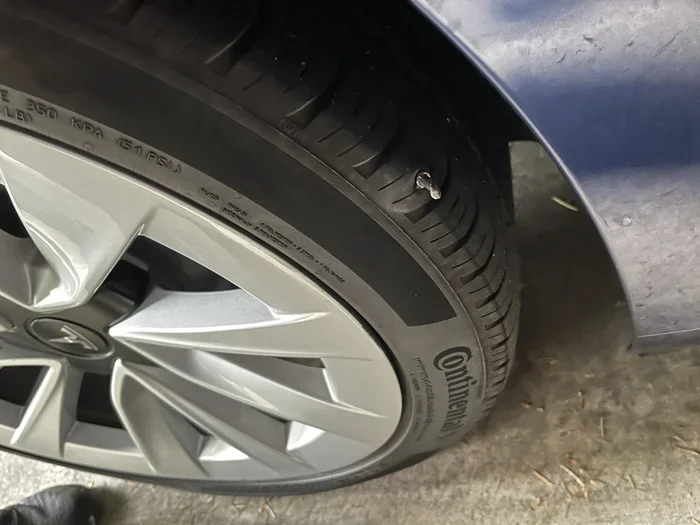
- Inspect for damage: Look for nails, screws, or other objects embedded in the tire.
- Reset the TPMS: After inflating the tire to the correct pressure, the warning should reset automatically. If it does not, you may need to reset it through the Tesla touchscreen.
Never drive on a significantly underinflated tire for an extended period. It can cause permanent tire damage and increase the risk of a dangerous blowout.
Quick Tips for Tesla Tire Pressure
- Check tire pressure when the tires are cold for the most accurate reading.
- Keep a portable tire pressure gauge in your Tesla trunk.
- Reset TPMS after adding air to any tire.
- Check pressure more frequently during temperature changes, as cold weather can reduce air pressure inside tires.
What Happens When a Tesla Tire Goes Flat?
Since Tesla tires are not run-flat tires, a complete loss of air pressure means the tire cannot support the vehicle safely. Understanding what to do in this situation is critical for every Tesla owner.
Immediate Steps After a Flat Tire
If you experience a flat tire while driving a Tesla, stay calm and follow these steps.
- Reduce speed gradually: Do not slam on the brakes. Slow down smoothly and signal your intention to pull over.
- Find a safe location: Pull over to a flat, stable surface away from traffic. Avoid soft shoulders or uneven ground.
- Turn on hazard lights: Alert other drivers that you are stopped on the road.
- Do not drive on the flat tire: Driving on a completely flat standard tire can damage the rim and the tire beyond repair. It can also be dangerous.
Tesla Roadside Assistance
Tesla provides roadside assistance to all owners through the Tesla app. If you get a flat tire, you can request help directly from the app. Tesla will arrange for a service vehicle to assist you. In many cases, they can bring a portable air compressor to reinflate a slightly low tire.
However, if the tire is severely damaged or cannot be repaired, Tesla will arrange for a tow to the nearest Tesla Service Center or a compatible tire shop. This service is included with your vehicle purchase for a certain period, and extended coverage is available through Tesla Protection Plans.
Why Tesla Does Not Include a Spare Tire
You might wonder why Tesla does not include a spare tire in the trunk. There are a few reasons for this decision.
- Weight savings: Removing the spare tire helps improve range, which is critical for electric vehicles.
- Space efficiency: The trunk space is better used for cargo.
- Tire repair kits: Tesla includes a tire repair kit with a sealant and compressor instead of a spare. This is lighter and takes up less space.
The tradeoff is that you are more dependent on roadside assistance or a DIY repair. However, Tesla’s roadside support is generally reliable and easy to access through the app.
Expert Insight: The Tire Industry Trend
Many automakers, not just Tesla, are moving away from spare tires. Run-flat tires were supposed to be the solution, but consumer feedback showed that ride comfort suffers significantly. Tesla’s approach of using standard tires with a repair kit and strong roadside assistance is a practical compromise that many drivers appreciate.
Tesla Tire Replacement and Maintenance
Proper tire maintenance is essential for Tesla owners. Since Tesla tires are standard tires and not run-flat tires, they require regular care to stay in good condition. Let us explore the key aspects of Tesla tire maintenance.
Tire Rotation Schedule
Tesla recommends rotating tires every 6,250 miles or whenever you notice uneven wear. Regular rotation helps ensure that all four tires wear evenly, which extends their lifespan and maintains balanced handling.
You can schedule a tire rotation through the Tesla app or visit a Tesla Service Center. Some independent tire shops can also perform Tesla tire rotations, but always confirm they are familiar with electric vehicles.
Tire Alignment
Proper wheel alignment is crucial for Tesla tires. Misaligned wheels can cause uneven tire wear, reduce range, and affect steering feel. Signs that your Tesla may need an alignment include the vehicle pulling to one side, uneven tire wear patterns, or a vibrating steering wheel.
Tesla recommends checking alignment at least once a year or after any significant impact, such as hitting a large pothole or curb.
Tire Wear and Replacement Indicators
Tesla tires have built-in wear indicators that show when the tread depth is too low. The legal minimum tread depth in most states is 2/32 of an inch, but Tesla recommends replacing tires when the tread reaches 4/32 of an inch for optimal performance, especially in wet conditions.
Use the penny test to check tread depth at home. Insert a penny into the tread groove with Lincoln’s head facing down. If you can see the top of Lincoln’s head, the tread is too worn and the tire needs replacement.
Can You Use Run Flat Tires on a Tesla?
Some owners wonder if they can upgrade to run-flat tires. While it is technically possible in some cases, Tesla does not recommend it. Run-flat tires can affect the accuracy of the TPMS, change the ride quality, and potentially interfere with regenerative braking performance. They also tend to be more expensive and harder to find.
Stick with the tires recommended by Tesla for the best overall experience. If you have specific needs, consult with a Tesla Service Advisor before making any tire changes.
Common Mistakes Tesla Owners Make with Tires
- Ignoring TPMS warnings: Dismissing low pressure alerts can lead to dangerous driving conditions and permanent tire damage.
- Overinflating tires: Some owners overinflate to improve range, but this reduces traction and causes uneven wear.
- Neglecting rotation: Skipping tire rotation leads to premature wear on front or rear tires.
- Using the wrong tire size: Always match the tire size specified for your Tesla model. Incorrect sizing affects speedometer accuracy and safety systems.
How to Handle a Low Tire Pressure Situation
Low tire pressure is one of the most common issues Tesla owners face. Because Tesla tires are not run-flat tires, driving on low pressure for too long can cause serious damage. Here is how to handle it properly.
Temporary Fixes
If you find yourself with low tire pressure and cannot get to a service station right away, here are some temporary solutions.
- Use the Tesla tire repair kit: The kit includes a sealant and a 12-volt compressor. The sealant can temporarily seal small punctures, and the compressor can reinflate the tire to a safe pressure level.
- Visit a gas station air pump: Most gas stations have free or low-cost air pumps. Check the pressure and add air until you reach the recommended PSI for your model.
- Request Tesla roadside assistance: Open the Tesla app, go to Service, and select Roadside Assistance. A service vehicle will come to your location.
When to Replace Instead of Repair
Not all tire damage can be repaired. You should replace the tire instead of repairing it in these situations.
- The puncture is larger than 1/4 inch in diameter.
- The damage is on the sidewall of the tire.
- The tire has been driven on while completely flat.
- The tire has significant uneven wear or is more than six years old.
Driving on a flat tire can destroy the internal structure of the tire. In such cases, repair is not safe, and replacement is the only option.
Maximizing Tesla Tire Life and Performance
Taking care of your Tesla tires not only keeps you safe but also helps maximize your vehicle’s range. Here are some proven strategies for getting the most out of your Tesla tires.
Maintain Proper Tire Pressure
This is the single most important thing you can do for your Tesla tires. Check pressure at least once a month and always before long trips. Properly inflated tires reduce rolling resistance, which directly improves electric range.
Avoid Aggressive Driving
Hard acceleration, sharp cornering, and aggressive braking all wear tires faster. Smooth, predictable driving not only extends tire life but also maximizes range and improves safety.
Keep Tires Clean
Regularly wash your tires to remove brake dust, road grime, and other debris. Use a tire cleaner and protectant to prevent UV damage and cracking. Clean tires also make it easier to spot potential damage early.
Store Your Tesla Properly
If you store your Tesla for an extended period, make sure the tires are properly inflated. Park on a flat surface and, if possible, use tire covers to protect against UV damage and temperature fluctuations.
Key Takeaways for Tesla Tire Care
- Tesla tires are standard tires, not run-flat tires.
- Keep tire pressure at the recommended PSI for your model.
- Use the Tesla tire repair kit for minor punctures.
- Rotate tires every 6,250 miles for even wear.
- Request roadside assistance through the Tesla app when needed.
- Replace tires when tread depth reaches 4/32 inch or less.
- Never drive on a completely flat standard tire for more than a short distance.
Conclusion
Are Tesla tires run flats? No, they are not. Tesla vehicles use standard tires that require proper air pressure to function safely and effectively. This design choice supports ride comfort, energy efficiency, and a quieter cabin experience. While run-flat tires offer the convenience of driving after a puncture, they do not align with Tesla’s focus on comfort, efficiency, and driver experience.
Understanding how Tesla tires work and how to care for them is essential for every owner. Monitor your tire pressure regularly, respond promptly to TPMS alerts, and follow the recommended maintenance schedule. With proper care, your Tesla tires will deliver excellent performance, safety, and longevity.
If you ever find yourself with a low or flat tire, remember that Tesla’s roadside assistance is just a tap away in the app. You are never truly alone on the road. Take the time to learn about your Tesla tires, keep the right tools on hand, and enjoy the confidence that comes with knowing your vehicle is well-maintained.
Proper tire care is one of the simplest and most impactful ways to get the most out of your Tesla. Stay informed, stay proactive, and let your Tesla tires do what they do best, which is getting you where you need to go safely and efficiently.
Frequently Asked Questions
Are Tesla tires run flats?
No, Tesla tires are not run-flat tires. All Tesla vehicles come equipped with standard tires that require proper air pressure to function. If a Tesla tire loses air, it cannot support the vehicle safely, and you should seek assistance or use the tire repair kit immediately.
What happens if a Tesla tire goes completely flat?
If a Tesla tire goes completely flat, you should not continue driving on it. Standard Tesla tires are not designed to run without air. Pull over safely, use the tire repair kit if the damage is minor, or contact Tesla roadside assistance for help. Driving on a flat standard tire can cause permanent damage to the rim and tire.
Can I install run-flat tires on my Tesla instead of standard tires?
While it is technically possible to install run-flat tires on some Tesla models, Tesla does not recommend it. Run-flat tires can affect TPMS accuracy, change ride quality, and reduce overall comfort. They may also interfere with regenerative braking and handling characteristics that Tesla engineers have carefully tuned.
Does Tesla include a spare tire?
No, Tesla does not include a spare tire in any of its vehicles. Instead, Tesla provides a tire repair kit that includes a sealant and a 12-volt compressor. This kit is designed to handle minor punctures and slow leaks. For more serious damage, Tesla roadside assistance can help arrange a tire replacement or towing service.
How often should I check my Tesla tire pressure?
Tesla recommends checking tire pressure at least once a month and before long trips. You can check the pressure on the Tesla touchscreen under the Vehicle menu. Keeping tires at the correct pressure improves safety, range, and tire longevity.
Why does Tesla not use run-flat tires?
Tesla chooses standard tires over run-flat tires for several reasons, including better ride comfort, improved energy efficiency, lower road noise, and cost savings. Standard tires are also easier to repair and replace compared to run-flat tires, which tend to be more expensive and less widely available.