Can You Jump-Start a Dead Hybrid Car – Complete Guide
Yes, you can jump-start a dead hybrid car, but the process differs from a regular gasoline vehicle. Hybrid cars use both a 12-volt auxiliary battery and a high-voltage hybrid battery. This guide walks you through the safe jump-start procedure, the tools you need, and when to call for roadside assistance. Knowing the right steps can save you time, money, and a lot of stress on the road.
There is nothing worse than turning your key or pressing the start button and hearing nothing. Your hybrid car sits there silent, and you wonder if it is ever going to start again. If you own a hybrid vehicle, you have probably asked yourself this question at least once. The good news is that you can jump-start a dead hybrid car. But the process is not exactly the same as what you would do with a traditional gasoline car. Let us walk through everything you need to know.
Hybrid cars are clever machines. They run on two separate battery systems. One is a standard 12-volt auxiliary battery that powers your lights, radio, and computer systems. The other is a high-voltage hybrid battery that drives the electric motor. When people say their hybrid car will not start, it is almost always the 12-volt battery that has gone dead. The high-voltage battery is usually fine. This distinction is the key to understanding how to help your car.
Jump-starting a hybrid car is safe if you follow the right steps. It is also something you can do yourself with basic tools. However, there are important safety rules you must follow. The orange cables on your hybrid pack carry thousands of volts. You should never touch those. But the 12-volt system? That is very similar to what you find in any other car. Let us dive into the details.
Key Takeaways
- Hybrid cars can be jump-started: The 12-volt auxiliary battery powers the electronics and can be boosted just like a regular car battery.
- Never touch the high-voltage battery: The orange-cabled hybrid battery carries dangerous voltage and should always be left alone.
- Use proper jump-start cables: Quality jump-start cables rated for hybrid vehicles make the process safer and easier.
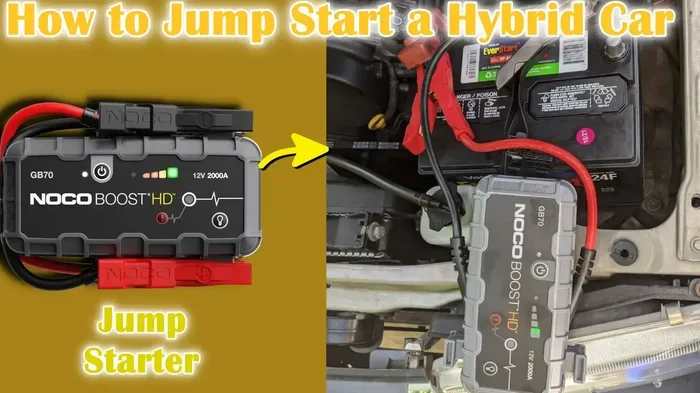
- A portable jump starter works great: Devices like the portable jump starter are compact, reliable, and perfect for hybrid owners.
- Follow the correct cable order: Connecting cables in the wrong sequence can damage the hybrid car electrical system.
- Prevention is key: Regular hybrid vehicle maintenance and smart battery habits reduce the chance of a dead battery.
📑 Table of Contents
What Happens When a Hybrid Car Battery Dies
Understanding the Two Battery Systems
Before you attempt any jump-start procedure, you need to understand what is happening inside your car. A hybrid vehicle has two completely separate electrical systems. The 12-volt auxiliary battery is a standard lead-acid battery, much like the one in a regular car. It provides power to start the car, run the infotainment system, and keep the hybrid car warning lights active on your dashboard.
The high-voltage hybrid battery is a completely different animal. It is typically a lithium-ion or nickel-metal hydride pack that stores energy for the electric motor. This battery operates at several hundred volts. It is what gives your hybrid its fuel efficiency and smooth electric driving. You will never need to service this battery yourself, and you should never attempt to jump it directly.
When the 12-volt battery dies, your car will not respond when you turn the key or press the start button. The dashboard lights may be dim or completely dark. You might hear a single click or nothing at all. The hybrid car electrical system relies on the 12-volt battery to wake up and communicate with the high-voltage battery. Without it, the car essentially goes into sleep mode.
Common Reasons a Hybrid 12-Volt Battery Dies
Several things can cause your 12-volt auxiliary battery to lose its charge. Here are the most common culprits:
- Leaving lights or accessories on: This is the number one cause of dead batteries in any car, including hybrids.
- Short trips and infrequent driving: Hybrids use regenerative braking to recharge the high-voltage pack, but the 12-volt battery relies on the alternator. If you only drive five minutes to the store, the 12-volt battery may never fully recharge.
- Extreme weather: Cold temperatures reduce battery capacity significantly. Hot weather can cause battery fluid to evaporate. Both extremes shorten battery life.
- Old battery: Most 12-volt car batteries last three to five years. If yours is older, it may simply need replacement.
- Parasitic drain: Some hybrid systems draw small amounts of power even when the car is off. Over several days of sitting, this can drain the battery completely.
How to Jump-Start a Dead Hybrid Car
Step-by-Step Jump-Start Procedure
Now that you understand the basics, let us get into the actual jump-start procedure. Follow these steps carefully and in the correct order. Safety always comes first.
- Turn off both vehicles. Make sure the car with the good battery and your hybrid are both turned off. Engage the parking brakes on both vehicles.
- Locate the 12-volt battery in your hybrid. In many hybrid models, the 12-volt battery is located under the rear seat, in the trunk, or under a cover near the engine bay. Check your owner’s manual to find the exact location.
- Identify the positive and negative terminals. The positive terminal is usually marked with a red cover or a “+” sign. The negative terminal is marked with a black cover or a “-” sign.
- Connect the red cable to the positive terminal of the dead battery. Attach one red clamp to the positive post on your hybrid’s 12-volt battery.
- Connect the other red clamp to the positive terminal of the good battery. Attach the other red clamp to the positive post of the working vehicle’s battery.
- Connect the black cable to the negative terminal of the good battery. Attach one black clamp to the negative post of the working vehicle.
- Connect the remaining black clamp to an unpainted metal surface on your hybrid. Do not connect this to the negative terminal of the dead battery if possible. Look for a bare bolt or metal bracket away from the battery and the high-voltage cables. This reduces the risk of sparking near the battery.
- Start the working vehicle first. Let it run for a few minutes to charge the dead battery.
- Try starting your hybrid car. Press the start button or turn the key. If it starts, let it run for at least 15 to 20 minutes to recharge the 12-volt battery.
- Disconnect the cables in reverse order. Remove the black clamp from your hybrid first, then from the good vehicle. Remove the red clamps last.
Using a Portable Jump Starter
A portable jump starter is one of the best tools a hybrid owner can keep in the trunk. These compact devices fit in your glove box or under a seat. They work just like a traditional jump box but do not require another vehicle. To use one, simply connect the red clamp to the positive terminal and the black clamp to a metal ground point on your car. Turn on the device and then start your hybrid. It is quick, clean, and incredibly convenient.
Expert Insight: Many hybrid owners keep a portable jump starter as their primary backup. These devices are especially useful because you do not need another car nearby. Look for a model rated for at least 1,000 peak amps. Some models even include USB ports to charge your phone, which adds extra value during a roadside emergency.
Tools You Need for Hybrid Car Jump-Starts
Essential Equipment
You do not need a lot of tools to jump-start a hybrid car. Here is what you should have on hand:
- Quality jump-start cables: Look for cables rated at least 400 to 600 amps. Heavy-gauge cables with well-insulated clamps are safer and more durable.
- Portable jump starter: A lithium-ion jump box is lightweight and easy to store. Choose one with a built-in flashlight and USB charging port.
- Rubber gloves and safety glasses: Even though you are working on the 12-volt system, protection is always a smart idea.
- Your owner’s manual: This is your best resource for locating the 12-volt battery and identifying the correct jump-start points.
What NOT to Use
There are a few things you should avoid when dealing with a dead hybrid battery:
- Never use a quick charger directly on the high-voltage battery. This can cause serious damage or injury.
- Do not attempt to push-start a hybrid. Many hybrid cars cannot be push-started because the electric motor needs the 12-volt battery to activate the system.
- Avoid cheap, thin cables. Poor-quality cables can overheat and fail during the jump-start process.
Common Mistakes to Avoid When Jump-Starting a Hybrid
Even with good intentions, people make mistakes that can cause damage or danger. Here are the most common errors to watch out for.
Connecting Cables in the Wrong Order
The order in which you connect the cables matters a lot. Always connect the positive cables first and the negative cable last. Reversing this order can cause sparks, short circuits, or damage to your hybrid car electrical system. The last cable you connect should always go to a ground point on your car, not directly to the negative terminal of the dead battery.
Touching the High-Voltage Components
This cannot be stressed enough. The high-voltage hybrid battery uses orange cables and connectors. These carry dangerous levels of electricity. Never attempt to disconnect, jump, or touch anything with orange cables or connectors. If you see orange, stay away. The 12-volt system uses standard black and red cables, and that is where all the jump-starting action happens.
Forgetting to Turn Off Both Vehicles
Connecting cables while either vehicle is running can cause voltage spikes. Always turn off both cars before making any connections. This protects the sensitive electronics in your hybrid car, including the DC-to-DC converter that steps down voltage from the high-voltage system to charge the 12-volt battery.
Ignoring Warning Signs
If your hybrid car will not start even after a successful jump, there may be a deeper problem. A clicking sound without the engine turning over could indicate a faulty starter. Dim dashboard lights that do not brighten after jumping could point to a failing alternator. Do not keep trying to jump the car over and over. Instead, seek hybrid car troubleshooting from a qualified mechanic.
When to Seek Professional Help
Most of the time, jump-starting a hybrid car is a straightforward process you can handle yourself. But there are situations where you should call in the experts. If you have tried jumping the car two or three times and it still will not start, the problem may go beyond a simple dead 12-volt battery. The hybrid battery itself, the DC-to-DC converter, or the starter motor could be failing.
You should also call for roadside assistance if you are uncomfortable working with car batteries. There is no shame in asking for help. Many insurance policies and car warranties include roadside assistance coverage. Keep this number saved in your phone for emergencies.
Another sign that you need professional help is if the battery keeps dying repeatedly. A healthy 12-volt battery should hold its charge for weeks, even months, if the car is not driven. If your hybrid battery dies again shortly after a jump, you likely have a parasitic drain or a battery that has reached the end of its life. A mechanic can test the battery and charging system to pinpoint the exact issue.
Preventing a Dead Hybrid Car Battery
Regular Hybrid Vehicle Maintenance
The best way to deal with a dead battery is to prevent it from happening in the first place. Regular hybrid vehicle maintenance goes a long way toward keeping your 12-volt battery healthy.
- Drive your car regularly: Even a short 15-minute drive helps the alternator recharge the 12-volt battery. If your hybrid sits unused for long periods, start it up at least once a week.
- Turn off accessories before shutting down: Make it a habit to turn off the headlights, radio, and any other electronics before you switch off the engine.
- Check battery terminals for corrosion: White or greenish buildup on the terminals can interfere with the electrical connection. Clean them with a baking soda and water solution if needed.
- Replace your battery on schedule: Most 12-volt batteries last three to five years. Mark your calendar for replacement around the three-year mark to avoid surprises.
Smart Habits for Hybrid Owners
Hybrid cars are designed to be efficient and low-maintenance, but they still need attention. Here are a few smart habits that every hybrid owner should adopt:
- Keep a portable jump starter in your trunk: This is the single best investment you can make for peace of mind.
- Monitor your battery health: Many modern hybrids have battery health indicators on the dashboard or in the infotainment system. Check these regularly.
- Understand your regenerative braking system: While regenerative braking recharges the high-voltage battery, it does not directly charge the 12-volt battery. The DC-to-DC converter handles that task, but only when the car is running.
- Keep emergency numbers handy: Save your roadside assistance number, a local tow truck, and your dealer’s service line in your phone.
Quick Tip: If you know your hybrid car will sit unused for more than a week, consider using a battery maintainer or trickle charger. These devices connect to the 12-volt battery and keep it at full charge without overcharging. They are inexpensive and can extend your battery life by years.
Comparing Jump-Start Methods for Hybrid Cars
Not all jump-start methods are created equal. Here is a quick comparison of the most common approaches for jump-starting a dead hybrid car.
| Method | Pros | Cons |
|---|---|---|
| Another vehicle with cables | Free if you have a helper; widely available | Requires two cars; cables can be bulky |
| Portable jump starter | Compact; works alone; USB charging | Costs $50-$150; needs periodic recharge |
| Roadside assistance service | Professional help; no equipment needed | Wait time; may not be covered by your plan |
| Battery maintainer (prevention) | Prevents dead batteries; extends battery life | Only useful for prevention, not emergencies |
As you can see, each method has its place. For everyday emergencies, a portable jump starter is hard to beat. For long-term prevention, a battery maintainer is the way to go. And for those moments when you are not prepared, roadside assistance has your back.
Conclusion
So, can you jump-start a dead hybrid car? Absolutely. The key is understanding that your hybrid has two battery systems, and the jump-start process only involves the 12-volt auxiliary battery. Follow the correct cable connection order, avoid the high-voltage components, and use the right tools. With a portable jump starter in your trunk and a few smart driving habits, you will be well-prepared for any dead battery situation.
Remember, hybrid car maintenance is simple when you stay proactive. Check your battery regularly, drive your car often enough to keep the 12-volt system charged, and replace your battery before it fails unexpectedly. These small efforts save you from the frustration and inconvenience of a car that will not start. Now you have the knowledge and the confidence to handle a dead hybrid battery like a pro. Keep this guide bookmarked, share it with fellow hybrid owners, and drive with peace of mind knowing you are prepared for whatever the road throws your way.
Frequently Asked Questions
Can you jump-start a Toyota Prius with a dead battery?
Yes, you can jump-start a Toyota Prius. The process is the same as for other hybrid cars. Locate the 12-volt battery, which is usually in the rear trunk area or under the hood, and follow the standard jump-start procedure using cables or a portable jump starter. Always refer to your Prius owner’s manual for the exact battery location and recommended jump-start points.
How long should I let my hybrid car run after a jump-start?
Let your hybrid car run for at least 15 to 20 minutes after a successful jump-start. This gives the alternator and the DC-to-DC converter time to recharge the 12-volt auxiliary battery. If you have a portable jump starter, you can drive the car normally, and the system will continue to charge the battery during driving.
Is it safe to jump-start a hybrid car in the rain?
Yes, it is generally safe to jump-start a hybrid car in the rain, as long as you take proper precautions. Keep the cables away from puddles, make sure your hands are dry, and never leave the cables exposed to wet conditions while connected. The 12-volt system is designed to handle normal weather conditions, but common sense and caution always help.
What happens if you accidentally touch the orange cables in a hybrid car?
The orange cables in a hybrid car carry high-voltage electricity from the hybrid battery pack. Touching them can cause severe electric shock or burns. Never attempt to disconnect, repair, or jump anything connected to the orange cables. If you notice damaged orange cables, contact a certified hybrid technician immediately.
Can a dead hybrid battery be recharged without replacing it?
In most cases, a dead 12-volt auxiliary battery can be recharged through a jump-start or by driving the car for an extended period. However, if the battery is old or physically damaged, it may not hold a charge and will need replacement. Hybrid battery replacement for the 12-volt system is straightforward and affordable compared to replacing the high-voltage hybrid battery pack.
How do I know if my hybrid battery is dying vs. just needing a jump-start?
If your hybrid car will not start at all and the dashboard is completely dark, it is likely a dead 12-volt battery that needs a jump-start. If the car starts but shows warning lights, reduced power, or poor fuel economy, the high-voltage hybrid battery may be failing. In that case, schedule a diagnostic test with a qualified mechanic who specializes in hybrid vehicles.
=== CONCLUSION ===
Jump-starting a dead hybrid car is a skill every hybrid owner should have. The process is safe, straightforward, and empowering when you know the steps. Remember to work with the 12-volt auxiliary battery, keep clear of the high-voltage system, and use quality tools like jump-start cables or a portable jump starter. With the right knowledge and a little preparation, you will handle any dead battery situation with confidence. Stay proactive with your hybrid vehicle maintenance, and your car will reward you with years of reliable, efficient driving.