Car Driver 4 Hard Parking Made Easy For Any Driver
Car driver 4 hard parking can feel overwhelming, but it doesn’t have to be. This guide breaks down every technique you need to park with confidence in tight or tricky spots. You’ll learn practical steps, common mistakes, and expert tips that work for any driver level. Whether you’re a beginner or just need a refresher, this article has you covered. Read on to turn your parking struggles into parking success.
Every driver has faced that moment. You’re circling a packed parking lot for the tenth time. Spots are tight. Spaces are awkward. And the thought of squeezing your car into a car driver 4 hard parking situation makes you want to just keep driving and find a different lot entirely.
Here’s the good news. Hard parking is a skill. And like any skill, it can be learned, practiced, and mastered. This guide is designed for every type of driver. Whether you’re brand new behind the wheel or you’ve been driving for years but still dread tight spots, you’ll find real, actionable advice here.
We’re going to walk through everything step by step. From understanding your vehicle to advanced maneuvering techniques. You’ll learn what works, what doesn’t, and how to build the confidence you need. No fluff. No filler. Just practical, proven strategies that make car driver 4 hard parking feel simple.
So grab a coffee, settle in, and let’s turn your parking anxiety into parking confidence. By the end of this guide, you’ll have the tools to handle any tight spot with ease and calm.
Key Takeaways
- Master the basics first: Understanding your vehicle’s dimensions and positioning is the foundation of all hard parking success.
- Use mirrors and cameras: Modern car driver 4 hard parking relies heavily on technology. Learn how to use every visual aid available.
- Practice makes permanent: Repeated practice in safe environments builds muscle memory and real confidence.
- Avoid common mistakes: Rushing, ignoring mirrors, and poor steering control are the top errors drivers make.
- Adjust your mindset: Patience and calm focus transform difficult parking into manageable tasks.
- Know your space: Reading parking spots accurately saves time and prevents damage to your vehicle and others.
- Start simple, go advanced: Build skills progressively from basic parallel parking to complex hard parking scenarios.
📑 Table of Contents
- Understanding Car Driver 4 Hard Parking Basics
- Essential Techniques for Car Driver 4 Hard Parking
- Common Mistakes in Hard Parking and How to Avoid Them
- Practice Drills to Build Your Parking Confidence
- Expert Tips for Handling the Toughest Parking Situations
- Quick Tips for Everyday Hard Parking Success
- Conclusion
Understanding Car Driver 4 Hard Parking Basics
Before you can master hard parking, you need to understand what it actually means. Car driver 4 hard parking refers to parking situations that are challenging. These include tight parallel spots, angled spaces with little room, reverse parking into constrained areas, and navigating crowded lots with obstacles everywhere.
The word “hard” doesn’t mean the parking is physically difficult for the car. It means the parking maneuver demands more skill, awareness, and precision than a standard open spot. The good thing? Once you understand the basics, these situations become much less scary.
Know Your Vehicle’s Dimensions
Every car is different. A compact sedan handles tight spaces differently than a full-size SUV. Before you attempt any car driver 4 hard parking maneuver, you need to know your vehicle’s length, width, and turning radius.
Here are simple ways to learn your car’s dimensions:
- Measure your car. Know the exact length and width. Write it down if needed.
- Practice in empty lots. Use cones or markers to simulate walls and other cars.
- Walk around your car. Get a feel for where the bumpers start and end.
- Use parking sensors. If your car has them, learn what the beeps mean at different distances.
Understanding your vehicle gives you a huge advantage. You’ll stop guessing and start knowing exactly how much room you have. That alone reduces parking stress by a large amount.
Why Hard Parking Matters for Every Driver
Some drivers think hard parking only matters in big cities. That’s not true. Even suburban and rural drivers face tight spots. Think about parking next to a pickup truck in a small lot. Or backing into a space between two large vehicles. Or navigating a crowded airport parking garage.
Car driver 4 hard parking skills matter because they give you options. When you can handle tight spaces, you don’t have to circle forever. You can park wherever a spot opens up. You save time. You reduce stress. And you avoid the frustration of driving past perfect spots because you’re afraid you won’t fit.
Essential Techniques for Car Driver 4 Hard Parking
Now let’s get into the meat of the guide. These are the core techniques that make car driver 4 hard parking manageable. Each one addresses a specific type of challenge you’ll face in real-world parking.
The Mirror Method
Your mirrors are your best friends when parking in tight spots. The mirror method involves using your side mirrors and rearview mirror to judge distance from all angles. Here’s how it works:
- Check all mirrors before you start. Know what’s around you.
- Slow down. Go slower than you think you need to.
- Use one mirror at a time. Focus on the mirror that shows the tightest gap.
- Make small adjustments. Tiny steering changes are better than big turns.
- Stop and reassess. If you feel unsure, step out and check before continuing.
This method works wonders for car driver 4 hard parking in parallel spots and tight garages. The key is patience. Small moves add up to a perfect position.
The Reverse Into Spot Technique
Many drivers prefer to pull forward into a spot. But for car driver 4 hard parking, reversing into a space is often easier and safer. When you reverse in, you have better visibility when leaving. You also have more control over your steering at low speeds.
Here’s the basic process:
- Drive past the spot and stop when your rear bumper is aligned with the car beside you.
- Turn your steering wheel toward the spot.
- Reverse slowly while checking all mirrors and over your shoulder.
- Straighten the wheels as the car enters the space.
- Make small adjustments to center yourself in the spot.
This technique takes practice, but once you get it, you’ll never go back to forward-only parking. It’s one of the most valuable skills for any driver facing car driver 4 hard parking situations regularly.
The Angle Approach
Angled parking spots are common in modern lots and garages. The angle approach means entering the spot at a diagonal rather than straight on. This gives you more room to maneuver and reduces the need for sharp turns.
When using the angle approach for car driver 4 hard parking, keep these tips in mind:
- Slow down as you approach the spot.
- Turn the wheel early to start your angle.
- Use your passenger side mirror to judge the nearest boundary.
- Stop frequently to check your position.
- Adjust by moving forward or backward in small increments.
The angle approach is especially helpful when the spot is between two cars that are parked close to the lines. It gives you a wider entry path and more room to correct mistakes.
Using Technology to Your Advantage
Modern cars come packed with parking technology. Rearview cameras, parking sensors, 360-degree camera systems, and even automated parking assist are now standard in many vehicles. These tools are incredibly helpful for car driver 4 hard parking.
But technology is a tool, not a replacement for skill. Here’s how to use it wisely:
- Learn your camera’s blind spots. Cameras don’t show everything.
- Trust but verify. Use sensors as a guide, but always look over your shoulder too.
- Practice with the tech off first. Then turn it on once you understand the space.
- Keep cameras clean. A dirty camera defeats the purpose entirely.
Technology makes hard parking easier, but your own awareness and skill are still the most important factors in successful car driver 4 hard parking.
Common Mistakes in Hard Parking and How to Avoid Them
Everyone makes mistakes when parking. The key is learning from them. Here are the most common errors drivers make during car driver 4 hard parking and how to fix them.
Rushing the Maneuver
Speed is the enemy of good parking. When you rush, you lose precision. You make bigger steering corrections. You have less time to react to unexpected obstacles. The fix is simple: slow down. Take your time. Remember that no parking spot is worth risking a dent or a scrape.
Ignoring Your Mirrors
Many drivers rely only on their front window to judge parking situations. That’s a mistake. Your side mirrors show you the gaps on both sides of your car. Your rearview mirror shows you what’s behind you. Ignoring any of these during car driver 4 hard parking is like trying to navigate blindfolded.
Poor Wheel Positioning
Where your wheels are pointed matters more than most drivers realize. If your wheels aren’t turned correctly before you start reversing, the whole maneuver can go wrong. Always plan your wheel position before you move. A small steering error early on becomes a big problem later.
Not Checking for Obstacles
Before you start any car driver 4 hard parking maneuver, look for everything. Curbstones, poles, shopping carts, other cars, low walls, speed bumps. Walk around your car if you need to. A few extra seconds of checking can save you hundreds of dollars in damage.
Overcorrecting the Steering
When drivers panic in tight spots, they tend to jerk the steering wheel. This overcorrection sends the car in the wrong direction fast. The solution is to make tiny steering inputs. Think of your steering wheel as a precision tool, not a joystick. Small turns produce smooth, controlled movements.
Practice Drills to Build Your Parking Confidence
Reading about parking techniques is helpful. But real improvement comes from practice. Here are some drills you can do to build your car driver 4 hard parking skills in a safe, low-pressure environment.
The Cone Drill
Set up cones or cardboard boxes in an empty parking lot. Create a space that’s slightly smaller than your car. Practice entering and exiting the space from different angles. This drill teaches you your car’s exact dimensions and how it moves in tight quarters.
Start with generous spacing and slowly reduce the gap as your skills improve. Within a few sessions, you’ll notice a huge difference in your confidence and ability.
The Reverse Parking Loop
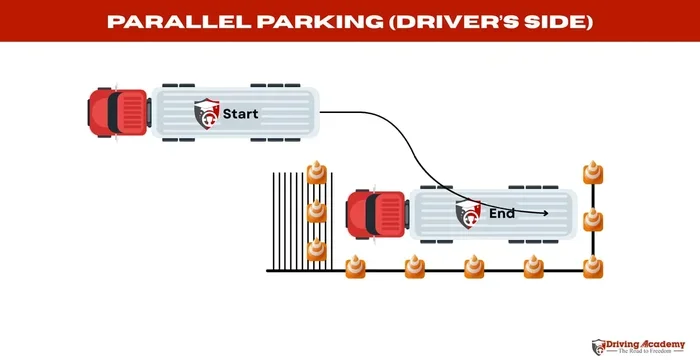
Set up four cones in a rectangle to represent a parking spot. Practice reversing into the rectangle from different approach angles. This drill is one of the best ways to practice car driver 4 hard parking because it forces you to rely on mirrors and spatial awareness.
Do this drill at least once a week. Consistency matters more than duration. Even 15 minutes of focused practice per session builds real skill over time.
The Garage Simulation
If you have a garage or a large empty structure, use it. Park your car between two objects that simulate walls. Practice opening your doors fully to make sure you won’t hit anything. This is especially useful for drivers who park in tight garages every day.
The garage simulation also helps you understand how your car’s mirrors fold and whether they fit within the space. These small details make a big difference in real car driver 4 hard parking scenarios.
Expert Tips for Handling the Toughest Parking Situations
Even experienced drivers face parking situations that make them pause. Here are expert-level tips that separate good parkers from great ones.
Read the Space Before You Move
Before you turn into any spot, take a moment to assess it. Look at the cars on either side. Are they parked straight or at an angle? Is there a curb? Are there any poles or pillars? The more information you gather before you move, the smoother your car driver 4 hard parking maneuver will be.
Use the Passenger Side for Better Visibility
When parallel parking on the driver’s side of the road, consider using your passenger side to check the gap. Open your passenger window and look out. This gives you a much better view of the rear corner of the car beside you. It’s a trick that many driving instructors use and it works incredibly well for car driver 4 hard parking in tight parallel spots.
Remember the Three-Point Turn Rule
If your first attempt doesn’t work, don’t force it. Pull forward, straighten your wheels, and try again. Forcing a parking maneuver leads to mistakes. The three-point turn rule gives you a structured way to retry without getting stuck or making things worse.
Park Facing Out
When possible, reverse into a spot so you can pull forward when leaving. This is especially helpful in crowded lots where you need to merge back into traffic quickly. Parking facing out gives you better visibility when you leave, which is a huge safety benefit.
Stay Calm and Breathe
This might sound simple, but it’s the most important tip of all. Stress and anxiety make your movements jerky and imprecise. When you feel yourself getting tense during car driver 4 hard parking, take a deep breath. Roll down the window. Listen to your surroundings. A calm mind makes better decisions than a panicked one.
Quick Tips for Everyday Hard Parking Success
Here are some quick, easy tips you can use every time you park in a challenging spot:
- Always check your blind spots. Adjust your mirrors before you start the car every time.
- Use your turn signals. Let other drivers know what you’re doing. It reduces confusion and improves safety.
- Practice the two-second rule. Give yourself two seconds between each steering adjustment.
- Keep a parking cushion. Leave a few inches of space on each side when possible.
- Watch for pedestrians. Hard parking spots are often near walkways and crosswalks.
- Keep your phone away. Full attention on parking prevents accidents and mistakes.
- Learn from every experience. After each difficult parking attempt, think about what worked and what didn’t.
These small habits add up quickly. Within a few weeks of consistent practice, you’ll notice that car driver 4 hard parking feels less stressful and more natural.
Conclusion
Car driver 4 hard parking doesn’t have to be a source of stress or frustration. With the right techniques, consistent practice, and a calm mindset, any driver can handle the toughest parking situations. Start with the basics, build your confidence through drills, and use every tool your vehicle offers.
Remember that every expert was once a beginner. The difference is that they kept practicing. You can do the same. Take what you’ve learned from this guide, head out to an empty lot, and put it into action. Your parking skills will improve faster than you think.
The road to mastering car driver 4 hard parking is a journey. But it’s a journey that pays off every single time you pull into a tight spot with confidence and ease. Keep practicing, stay patient, and enjoy the drive.
Frequently Asked Questions
What does car driver 4 hard parking mean?
Car driver 4 hard parking refers to parking situations that require more skill and precision than standard spots. These include tight parallel spaces, crowded garages, and spots with limited room on all sides. It applies to any driver who faces challenging parking environments regularly.
How can I get better at parking in tight spaces?
The best way to improve is through consistent practice in safe environments. Use cones to simulate tight spots in an empty lot. Focus on slow, small steering movements. Over time, your spatial awareness and confidence will grow significantly.
Is reverse parking really better than forward parking?
In most car driver 4 hard parking situations, reverse parking gives you better control and visibility when leaving the spot. It’s especially helpful in tight garages and crowded lots. However, forward parking is sometimes safer depending on the layout, so use your judgment.
What should I do if I’m too nervous to park in a tight spot?
Start by parking in less challenging spots and gradually work up to tighter spaces. Take your time and don’t let other drivers rush you. Deep breathing and a calm approach make a huge difference in your ability to handle difficult parking situations.
Are parking sensors and cameras enough for hard parking?
Parking technology is a great tool, but it should supplement your own skills, not replace them. Sensors and cameras have blind spots. Always use them alongside your mirrors, visual checks, and good judgment for the best results in car driver 4 hard parking.
How long does it take to master hard parking skills?
It varies by driver, but most people notice significant improvement within a few weeks of regular practice. The key is consistency. Even short practice sessions of 10 to 15 minutes, done a few times a week, build real parking confidence quickly.