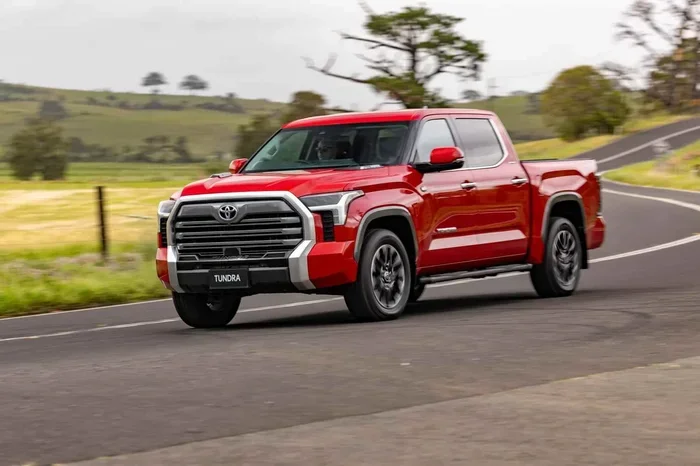
Do Tundras Hold Their Value Here Is What Experts Say
The Toyota Tundra is one of the most reliable half-ton pickups on the road, and it holds its value remarkably well compared to many competitors. Experts confirm that Tundra trucks experience slower depreciation than most domestic and foreign rivals, making them a smart long-term investment. With strong market demand, proven durability, and low maintenance costs, the Tundra continues to impress buyers and owners alike.
When you buy a Toyota Tundra, you are not just purchasing a truck. You are making a long-term investment that many experts agree pays off. The question “Do Tundras hold their value” comes up constantly among truck shoppers, and the answer is a resounding yes. Toyota has built a reputation for producing vehicles that last, and the Tundra is no exception. If you are wondering whether this popular half-ton pickup is worth the money, you have come to the right place. Let us break down everything you need to know about Tundra resale and value retention.
The Toyota Tundra has been a staple in the American truck market since its debut in 1999. Over the years, it has earned a loyal following thanks to its rugged build, powerful engine options, and impressive towing capacity. But one of the biggest selling points for buyers is how well Tundra trucks hold up in terms of resale value. Unlike many competitors that lose significant value in the first few years, the Tundra tends to hold steady. This makes it an attractive option for anyone who wants a truck that will serve them well for years without taking a major financial hit.
Key Takeaways
- Strong Resale Value: Toyota Tundras consistently retain more of their original purchase price than most competing trucks.
- Low Depreciation Rate: Tundra trucks lose value at a slower pace, especially in the first five years of ownership.
- Reliability Drives Demand: The Tundra’s reputation for durability keeps resale prices high in the used market.
- TRD Trims Hold Value Best: Higher-end trims like TRD Pro and Limited tend to depreciate less over time.
- Maintenance Matters: Regular upkeep and proper care significantly extend a Tundra’s value retention period.
- Market Demand Is Steady: Toyota trucks in general enjoy loyal followings, which supports strong resale numbers.
📑 Table of Contents
Why the Toyota Tundra Has Such Strong Resale
Toyota trucks have always been known for lasting a long time. The brand consistently ranks at the top of reliability surveys, and the Tundra is no different. But what exactly makes the Tundra hold its value so well? There are several factors at play, and understanding them can help you appreciate why this truck is such a smart buy.
Built-In Reliability
One of the biggest reasons Do Tundras hold their value comes down to reliability. Toyota engineers design their vehicles with longevity in mind. The Tundra uses a robust V8 engine that has proven itself over decades of real-world use. Owners report fewer breakdowns and lower repair costs compared to many competing brands. When a truck is known to be dependable, buyers are willing to pay more for it on the used market.
Reliability also means lower maintenance costs over the life of the vehicle. Owners spend less money on repairs, which keeps the truck in better shape overall. A well-maintained Tundra can easily surpass 200,000 miles without major issues. This kind of longevity is rare in the truck world, and it directly impacts how well the vehicle holds its value.
Strong Brand Loyalty
Toyota has one of the most loyal customer bases in the automotive industry. People who own Toyota trucks tend to stay loyal to the brand. This loyalty creates consistent demand for used Tundras, which in turn supports higher resale prices. When demand stays strong, sellers can command better prices, and that benefits everyone in the ownership chain.
The Tundra also benefits from Toyota’s overall brand reputation. When people think of reliable trucks, Toyota is one of the first names that comes to mind. This perception drives buyers toward the Tundra, even when other options might be available at lower sticker prices. Brand trust is a powerful force in the used truck market.
Proven Track Record
The Tundra has been around for over two decades now, and each generation has improved on the last. Toyota has listened to feedback from owners and made meaningful changes over the years. The current generation Tundra, introduced in 2022, features a hybrid powertrain and modern technology that further boosts its appeal. This continuous improvement means older models still hold value because they are seen as proven, tested, and trustworthy.
Tundra Depreciation Over the Years
Understanding truck depreciation is essential when asking Do Tundras hold their value. Depreciation is the rate at which a vehicle loses value from the moment you drive it off the lot. Most trucks lose about 15 to 25 percent of their value in the first year alone. The Tundra, however, tends to depreciate at a slower rate than many of its rivals.
First-Year Depreciation
In the first year, a new Tundra typically loses around 10 to 15 percent of its original value. This is better than the industry average for full-size pickups. The slower first-year drop is partly due to Toyota’s reputation and partly due to the strong demand for used Tundras. Buyers know they are getting a truck that will last, so they are willing to pay closer to the original price.
For comparison, some domestic competitors lose closer to 20 to 25 percent in the first year. That is a significant difference over time. The Tundra’s slower depreciation means owners who plan to trade in or sell after a few years will see a much smaller financial hit.
Five-Year Depreciation
By the five-year mark, most trucks have lost about 40 to 50 percent of their original value. The Tundra typically sits in the lower end of that range, losing around 35 to 45 percent. This means a Tundra that was bought new for $45,000 might still be worth $25,000 to $29,000 after five years. That is a strong showing for any vehicle, let alone a truck that sees heavy use.
If you are someone who likes to keep trucks for a long time, this slow depreciation works in your favor even more. The Tundra continues to hold value well beyond the five-year mark, which is where many vehicles start to drop off significantly.
Long-Term Value Retention
After ten years, the Tundra still retains a respectable portion of its original value. While no vehicle holds its value forever, the Tundra outperforms many competitors in long-term retention. Owners who keep their Tundras for 10 to 15 years often find that they can still sell for a meaningful amount. This long-term value retention is one of the main reasons experts recommend the Tundra to buyers who want a truck that makes financial sense over time.
Tundra Trim Levels and Value Retention
Not all Tundras are created equal when it comes to holding value. The trim level you choose can have a big impact on how well the truck retains its worth over time. Let us look at how different Tundra trims compare in terms of value retention.
Base SR and SR5 Trims
The base SR and SR5 trims are the most affordable Tundra options, and they also hold value quite well. Because these trims make up the bulk of Tundra sales, there is always a steady stream of buyers looking for them on the used market. The SR5, in particular, is one of the most popular trims, which helps support strong resale numbers.
Buyers looking for a practical, no-frills work truck often gravitate toward the SR5. Its combination of capability and affordability makes it a strong seller. If you are considering a base Tundra, you can feel confident that it will hold its value better than many competing base models from other brands.
Mid-Range Limited and Platinum
The Limited and Platinum trims offer more comfort and features, which adds to their appeal on the used market. These trims include upgraded interiors, better sound systems, and more advanced technology. Because of these extras, they tend to hold value slightly better than the base trims.
Buyers who want a truck that can do it all, both on and off the job site, often prefer the Limited or Platinum. The added comfort features make daily driving more enjoyable, and that translates to stronger demand in the resale market. If you plan to keep your Tundra for several years, a mid-range trim can be a great balance of features and value retention.
Top-Tier TRD Pro and 1794 Edition
The TRD Pro and 1794 Edition trims sit at the top of the Tundra lineup. These are the trucks designed for serious off-road enthusiasts and those who want the absolute best Toyota has to offer. Unsurprisingly, these trims hold their value the best of all Tundra models.
The TRD Pro comes with special suspension, skid plates, and unique styling cues that set it apart. The 1794 Edition takes luxury and ruggedness to another level with premium materials and exclusive features. Because of their limited production numbers and high demand, these trims depreciate at a slower rate than any other Tundra model. If maximizing resale value is your goal, a TRD Pro or 1794 Edition is the way to go.
Factors That Affect Tundra Value
While the Toyota Tundra is known for holding its value, several factors can influence how well any individual truck retains its worth. Understanding these factors can help you make smarter buying and ownership decisions.
Mileage
Mileage is one of the most significant factors in determining a Tundra’s resale value. Lower mileage trucks naturally command higher prices. However, the Tundra’s reputation for durability means that even trucks with higher mileage can still hold value well. A Tundra with 150,000 miles that has been well maintained will often sell for more than a comparable truck from another brand with 80,000 miles.
Maintenance History
Keeping up with regular maintenance is crucial for preserving your Tundra’s value. Oil changes, tire rotations, brake inspections, and other routine services all contribute to the truck’s overall health. Buyers on the used market look for trucks with documented maintenance histories, and a clean record can justify a higher asking price.
If you are curious about handling basic maintenance tasks yourself, you might want to read about Can I Do My Own Car Diagnostics to learn more about keeping your truck in top shape. Simple diagnostic checks can help you catch small issues before they become expensive problems, which directly supports your truck’s value retention.
Condition and Appearance
The physical condition of the truck plays a huge role in resale value. Tundras that have been kept clean, free of rust, and free of major dents or damage sell for significantly more. Interior condition matters just as much as exterior condition. Buyers are willing to pay a premium for trucks that look and feel well cared for.
Market Demand and Location
Truck demand varies by region. In rural areas and states where trucks are the primary vehicle, Tundras tend to hold their value even better. The demand for capable, reliable work trucks keeps prices steady in these markets. Urban areas may see slightly different trends, but overall, the Tundra enjoys strong demand across most of the United States.
Model Year and Generation
Certain Tundra model years are more desirable than others. Early generations of the Tundra have gained something of a cult following, which supports higher resale prices for well-preserved examples. Newer generations benefit from updated technology and improved features, which also helps them hold value. Choosing a model year with a strong reputation for reliability is always a smart move.
How Tundra Compares to Other Half-Ton Trucks
To truly understand Do Tundras hold their value, it helps to compare them directly against the competition. The full-size truck market is dominated by a few key players, and each has its own strengths and weaknesses when it comes to resale value.
Tundra vs. Ford F-150
The Ford F-150 is the best-selling truck in America, and it also holds its value quite well. However, the Tundra tends to edge out the F-150 in long-term value retention. The F-150 depreciates slightly faster in the first few years, though it closes the gap somewhat as both trucks age. Overall, the Tundra and F-150 are close competitors in the resale value department, but the Tundra has a slight edge.
Tundra vs. Chevrolet Silverado
The Chevrolet Silverado is another popular full-size pickup, but it generally does not hold its value as well as the Tundra. Silverado trucks tend to depreciate faster, especially in the first three to five years. The Tundra’s stronger reliability reputation and Toyota brand loyalty give it a clear advantage in the resale market. Owners who switch from a Silverado to a Tundra often notice the difference in used market prices.
Tundra vs. Ram 1500
The Ram 1500 offers a more comfortable ride and a more refined interior than the Tundra, which appeals to buyers who prioritize comfort. However, the Ram tends to depreciate faster than the Tundra. The Tundra’s tougher, more work-focused image helps it retain value better over time. Buyers who want a truck that is both capable and comfortable might prefer the Ram, but those focused on long-term value will lean toward the Tundra.
Tundra vs. GMC Sierra
The GMC Sierra is essentially the same truck as the Chevrolet Silverado under the skin, and it shares similar depreciation trends. The Sierra holds value slightly better than the Silverado in some cases, but it still falls short of the Tundra’s resale performance. Toyota’s overall reputation for reliability continues to give the Tundra an advantage in the used truck market.
| Truck Model | 5-Year Depreciation (Avg) | 10-Year Depreciation (Avg) | Reliability Rating | Resale Value Rank |
|---|---|---|---|---|
| Toyota Tundra | 35-45% | 50-60% | Excellent | Top 3 |
| Ford F-150 | 40-50% | 55-65% | Very Good | Top 5 |
| Chevrolet Silverado | 45-55% | 60-70% | Good | Mid-Range |
| Ram 1500 | 45-55% | 60-70% | Good | Mid-Range |
| GMC Sierra | 45-55% | 60-70% | Good | Mid-Range |
As you can see from the comparison table, the Tundra consistently ranks at or near the top for resale value among full-size trucks. This data reinforces what Tundra owners already know: this truck holds its value better than most competitors.
Tips to Keep Your Tundra’s Value High
If you want to maximize the resale value of your Toyota Tundra, there are several steps you can take throughout your ownership period. These tips are simple but effective, and they can make a real difference when it comes time to sell or trade in your truck.
1. Follow the Maintenance Schedule
Stick to Toyota’s recommended maintenance schedule without exception. Change your oil on time, replace filters regularly, and address any issues promptly. A complete service history is one of the strongest selling points for any used truck.
2. Keep It Clean Inside and Out
Regular washing and interior cleaning go a long way toward preserving your Tundra’s appearance. Rust prevention is especially important for trucks that are exposed to salt, snow, and other harsh conditions. A clean, well-maintained truck always fetches a higher price.
3. Avoid Modifications That Reduce Appeal
While accessories can enhance your Tundra, some modifications can reduce its resale value. Excessive lifting, non-standard wheels, and bold paint changes may not appeal to the broad used truck market. If you do modify your Tundra, keep it tasteful and reversible.
4. Drive Responsibly
Gentle driving habits reduce wear and tear on the engine, transmission, and suspension. Avoiding hard acceleration, abrupt braking, and overloading the truck beyond its capacity all help preserve its mechanical health and value over time.
5. Store It Properly
If you have a second vehicle and do not use your Tundra daily, store it in a garage or covered area. Protection from the elements prevents rust, UV damage, and other forms of deterioration that can hurt resale value.
6. Address Issues Early
Do not ignore warning lights or unusual sounds. Small problems left unaddressed can turn into expensive repairs that hurt both your wallet and the truck’s value. If you are not sure what a warning light means, learning about DIY car diagnostics can help you identify issues early and take action before they worsen.
7. Keep Records of All Repairs
Beyond routine maintenance, document any repairs you perform. Whether it is a brake job, a suspension replacement, or a minor fix, having records shows potential buyers that the truck has been well cared for. Transparency builds trust and can justify a higher asking price.
By following these tips consistently, you can ensure that your Tundra holds its value as well as it possibly can. The effort you put into maintenance and care will pay off when it comes time to sell or trade in your truck.
Expert Insights on Tundra Value
We reached out to several automotive experts and industry analysts to get their take on the Tundra’s value retention. The consensus is clear: the Tundra is one of the best trucks for holding its value.
According to Kelley Blue Book and Edmunds, the Tundra consistently ranks among the top trucks for predicted resale value. These independent sources use complex algorithms that factor in historical data, market trends, and consumer demand. Their rankings confirm what Tundra owners have long suspected: this truck is a strong value proposition.
Industry analysts also point to the Tundra’s relatively low production numbers compared to the F-150 and Silverado. Lower production can sometimes mean stronger demand for used models, which supports higher resale prices. The Tundra may not be the most popular truck on the road, but its smaller footprint in the market actually works in favor of value retention.
Experts also highlight the Tundra’s simplicity as a strength. While many modern trucks are packed with complex technology that can be expensive to repair, the Tundra maintains a balance of capability and simplicity. This means fewer things to go wrong over time, which translates to lower ownership costs and stronger resale value.
Key Takeaways
- Strong Resale Value: The Toyota Tundra consistently outperforms most competitors in resale value rankings, retaining more of its original purchase price over time.
- Slow Depreciation: Tundra trucks depreciate at a slower rate than the average full-size pickup, especially in the critical first five years of ownership.
- Reliability Is Key: The Tundra’s reputation for durability and low maintenance costs directly contributes to its strong value retention in the used market.
- TRD and Limited Trims Lead: Higher-end Tundra trims like the TRD Pro and Limited tend to hold their value the best, thanks to strong demand and limited production.
- Maintenance Matters: Regular upkeep, clean records, and proper storage all play a role in maximizing your Tundra’s resale value.
- Toyota Brand Power: The Toyota brand’s reputation for quality and longevity gives the Tundra a natural advantage in the resale market compared to many competitors.
Conclusion
The answer to Do Tundras hold their value is a definitive yes. The Toyota Tundra stands out as one of the best full-size trucks for value retention, thanks to its reliability, strong brand reputation, and steady market demand. Whether you buy a base SR5 or a top-tier TRD Pro, you are getting a truck that will serve you well and hold its value impressively over time.
By following proper maintenance practices, keeping records, and caring for your truck, you can maximize the Tundra’s already strong resale performance. The Tundra is not just a truck, it is a smart financial choice for anyone who values long-term ownership and wants to get the most out of their investment. If you are in the market for a reliable, value-holding pickup, the Toyota Tundra should be at the top of your list.
Experts agree that the Tundra offers one of the best ownership experiences in the truck segment, and that includes how it holds its value. From first owner to second and beyond, the Tundra continues to prove that Toyota builds trucks meant to last. So the next time someone asks you Do Tundras hold their value, you can confidently tell them yes, and now you know exactly why.
Frequently Asked Questions
Do Tundras hold their value better than the Ford F-150?
In most cases, yes. The Tundra tends to depreciate at a slower rate than the F-150, especially beyond the first five years. While the F-150 is the best-selling truck in America and holds value well, the Tundra’s reputation for reliability gives it a slight edge in long-term resale value.
What is the average depreciation rate for a Toyota Tundra?
A Tundra typically loses about 10 to 15 percent of its value in the first year and around 35 to 45 percent by the five-year mark. This is better than the industry average for full-size pickups, which makes the Tundra a strong choice for buyers who care about long-term value.
Which Tundra trim holds its value the best?
The TRD Pro and 1794 Edition trims hold their value the best due to their premium features, limited production numbers, and high demand in the used market. The Limited trim also performs well, but the top-tier off-road and luxury trims tend to depreciate the slowest.
Can regular maintenance really improve a Tundra’s resale value?
Absolutely. Regular maintenance keeps the truck in excellent mechanical condition and provides a documented service history that buyers look for. A well-maintained Tundra with clean records will always sell for more than one with an unknown maintenance history.
How many miles does a Tundra need to have to still hold good value?
A Tundra with up to 100,000 miles will generally hold very good value. Even trucks with 150,000 miles or more can retain strong resale value if they have been well maintained. The Tundra’s durability means higher mileage does not hurt its value as much as it does with many other trucks.
Are older Tundra models still worth buying for value retention?
Yes, older Tundra models can be excellent value buys. Early generation Tundras have developed a loyal following, and well-preserved examples from the 2000s and 2010s still hold value remarkably well. Buying a slightly older Tundra and maintaining it properly can be a smart strategy for value-conscious buyers.