Does Hyundai Warranty Transfer to a Brand New Owner
Yes, Hyundai warranty can transfer to a new owner under specific conditions. The Hyundai warranty transfer process is straightforward but requires proper documentation and timely action. Understanding your vehicle warranty coverage ensures you get the most out of your ownership experience.
Buying a used Hyundai vehicle is exciting. You get a reliable car at a great price. But one question always pops up: does the warranty come with it? The answer is yes, but with some important conditions. Understanding how Hyundai warranty transfer works can save you time, money, and headaches down the road.
Whether you are buying from a dealer or a private seller, knowing your rights as a new car owner is crucial. This guide breaks down everything you need to know about Hyundai warranty transfer. We cover the types of warranties, the transfer process, what is covered, and common mistakes to avoid. Let us dive in.
Key Takeaways
- Hyundai warranties are transferable: Most factory warranties can pass to a new owner within the coverage period.
- Documentation is essential: You need the original warranty certificate, bill of sale, and proper registration.
- Not all warranties transfer the same way: Bumper-to-bumper and powertrain warranties have different transfer rules.
- Aftermarket modifications can void your warranty: Unapproved changes may cause claim denials during transfer.
- Timing matters: Transfer the warranty promptly after purchase to avoid complications.
- Certified pre-owned Hyundai vehicles come with benefits: They often include extended warranty coverage that also transfers.
- Contact your Hyundai service center early: They guide you through the exact transfer process for your region.
📑 Table of Contents
- Understanding Hyundai Warranty Basics
- Does Hyundai Warranty Transfer to a New Owner?
- How to Transfer Hyundai Warranty to a New Owner
- What Is Covered Under a Transferred Hyundai Warranty?
- Common Mistakes That Void Hyundai Warranty
- Tips for New Hyundai Owners After Warranty Transfer
- Hyundai Warranty Transfer for Certified Pre-Owned Vehicles
- Frequently Asked Questions
- Final Thoughts
Understanding Hyundai Warranty Basics
Before we talk about transfer, let us understand what Hyundai warranty actually covers. Most people assume all warranties are the same. They are not. Hyundai offers several types of coverage, and each has its own rules.
What Does Hyundai Factory Warranty Include?
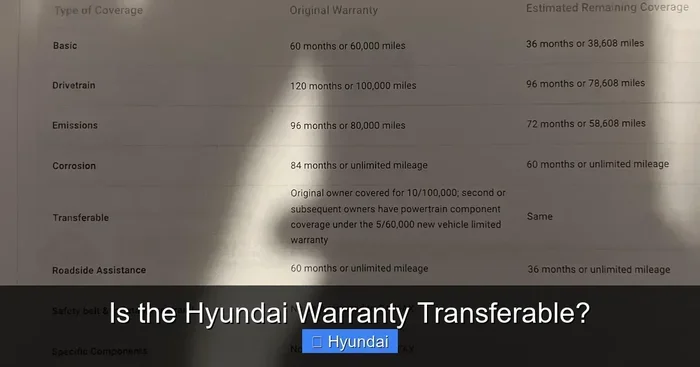
Hyundai provides a limited warranty package that typically includes multiple layers of coverage. The most common ones are the bumper-to-bumper warranty and the powertrain warranty. The bumper-to-bumper plan covers most parts and systems on your vehicle. It includes electronics, air conditioning, infotainment, and more. The powertrain warranty focuses on the engine, transmission, and drivetrain components.
Hyundai also offers roadside assistance and corrosion protection under certain plans. The duration of each coverage type varies by model and year. For example, newer Hyundai models may come with longer powertrain coverage than older ones. Always check the specific terms for your vehicle.
How Long Does Hyundai Warranty Last?
Standard Hyundai factory warranties typically cover the vehicle for three years or 36,000 miles for bumper-to-bumper coverage. The powertrain warranty often extends to five years or 60,000 miles. Some newer programs may offer even longer terms. These timelines start from the original purchase date, not the transfer date.
This means if you buy a used car that is two years old, you have only one year of bumper-to-bumper coverage left. The powertrain coverage might still have three years remaining. Understanding these timelines is the first step in a successful Hyundai warranty transfer.
Does Hyundai Warranty Transfer to a New Owner?
The short answer is yes. Hyundai factory warranties are generally transferable to new owners. However, the transfer is not automatic. You must follow specific steps and meet certain requirements. Let us look at how this works in detail.
Transferable vs. Non-Transferable Warranties
Most Hyundai limited warranties are transferable. This includes both the bumper-to-bumper and powertrain plans. The coverage passes to the new owner with the vehicle. The remaining time and mileage on the warranty stay intact. So if the original owner had two years left on the powertrain warranty, the new owner gets those two years.
However, some warranties or add-ons may not be transferable. Extended warranties purchased through third parties sometimes have different rules. Always read the fine print. If you are unsure, contact a Hyundai service center directly. They can confirm what transfers and what does not.
Conditions for a Successful Transfer
Not every transfer goes through automatically. There are conditions you must meet. The vehicle must be registered in the new owner’s name. All maintenance records should be up to date. The vehicle should not have any outstanding recalls or unresolved issues. Missing any of these conditions can delay or block the transfer.
Additionally, the warranty documentation must be present. You cannot transfer a warranty without the original paperwork. This includes the warranty certificate, purchase invoice, and service records. Keep all these documents safe and organized.
How to Transfer Hyundai Warranty to a New Owner
The transfer process is simpler than most people think. It does involve a few steps, but none of them are complicated. Here is a clear roadmap to follow.
Step 1: Gather All Necessary Documents
Start by collecting every relevant document. You need the original warranty certificate, the vehicle purchase agreement, and the bill of sale. Service records from authorized Hyundai service centers are also important. These records prove the vehicle was maintained properly.
If you are the original owner, gather your identification documents too. The new owner will need their ID as well. Both parties should have copies of everything ready before starting the process.
Step 2: Complete the Ownership Transfer
The ownership transfer must happen first. This means registering the vehicle in the new owner’s name at the local DMV or transport authority. Once the title is in the new owner’s name, you can proceed with the warranty transfer.
Do not skip this step. Many warranty transfer requests get rejected because the title transfer was incomplete. Make sure the vehicle registration reflects the new ownership before you contact Hyundai.
Step 3: Notify Hyundai or the Authorized Dealer
Contact the nearest Hyundai service center or the authorized dealer where the vehicle was originally purchased. Inform them about the ownership change. They will provide you with the necessary transfer forms.
Fill out these forms completely and accurately. Any missing information can cause delays. Submit the forms along with all supporting documents. Some centers allow online submission, while others require an in-person visit.
Step 4: Wait for Confirmation
After submission, Hyundai will review the transfer request. This process usually takes a few business days. Once approved, the new owner receives confirmation of the transferred warranty. The coverage terms remain exactly the same as they were before the transfer.
Keep the confirmation document in a safe place. You will need it if you ever file a car warranty claim. It serves as proof that the warranty is active and valid under the new ownership.
What Is Covered Under a Transferred Hyundai Warranty?
Not everything gets covered equally after a transfer. Understanding what is included helps set realistic expectations. Here is a breakdown of typical coverage under a transferred warranty.
Powertrain Coverage After Transfer
The powertrain warranty covers the engine, transmission, and drivetrain. These are the most expensive components to repair. After a successful transfer, the new owner gets the same powertrain protection. If the engine fails within the coverage period, Hyundai covers the repair costs.
This is one of the biggest benefits of buying a Hyundai vehicle with remaining warranty. Powertrain repairs can cost thousands of dollars. Having this coverage provides real peace of mind.
Bumper-to-Bumper Coverage After Transfer
Bumper-to-bumper coverage is broader. It includes almost every system in the vehicle. Air conditioning, electrical components, infotainment systems, and safety features all fall under this plan. After transfer, the new owner enjoys the same level of coverage.
However, wear and tear items are usually excluded. Brake pads, wiper blades, and tires are considered normal maintenance. These are not covered under bumper-to-bumper warranty. The new owner should budget for these regular upkeep costs.
Roadside Assistance and Other Benefits
Some Hyundai warranty packages include roadside assistance. This covers towing, flat tire changes, and lockout services. After a transfer, these benefits typically pass to the new owner as well. Check the specific terms of your warranty plan to confirm.
If your vehicle is a heavier model, keep in mind that certain accessories might need attention separately. For instance, adding a 12V DC to 220V AC car power inverter for powering electronics on the go is a popular upgrade. However, such aftermarket additions may not be covered under the factory warranty. Always check with your dealer before installing any aftermarket parts.
Common Mistakes That Void Hyundai Warranty
Many new owners unknowingly void their transferred warranty. Avoiding these mistakes protects your coverage and your wallet.
Skipping Regular Maintenance
Hyundai requires regular maintenance to keep the warranty valid. Skipping oil changes or scheduled services can lead to claim denials. Always follow the maintenance schedule outlined in the owner’s manual. Keep all service receipts and records. These prove you cared for the vehicle properly.
Making Unapproved Aftermarket Modifications
Customizing your car is fun. But some modifications can void your warranty. Installing non-Hyundai parts without approval is a common mistake. If a modification causes a problem, Hyundai may deny the claim entirely.
Before making any changes, consult with your dealer. They can tell you which modifications are safe and which are risky. For example, adding a power inverter or electrical accessory should be done through authorized channels. This ensures your vehicle warranty coverage remains intact.
Ignoring Recall Notices
Hyundai issues recalls for safety and performance issues. Ignoring a recall notice can void your warranty. Always check for open recalls on your vehicle. Address them promptly at an authorized service center.
Tips for New Hyundai Owners After Warranty Transfer
Once your warranty is successfully transferred, you are not done. There are smart steps you can take to maximize the value of your coverage.
Register the Warranty in Your Name
Some Hyundai programs allow you to register the warranty under your name online. This creates a digital record that is easy to access. It also helps when you need to file a claim. Check the Hyundai website or ask your dealer about registration options.
Keep All Records Organized
Organize every document related to your vehicle. This includes the warranty certificate, service records, receipts for repairs, and the transfer confirmation. Store them digitally and physically. When you need to prove coverage, having everything in order makes the process smooth.
If you are comparing different vehicles, remember that weight and specifications vary. A car that is too heavy for its class may have different maintenance needs. Understanding your vehicle’s specifications helps you plan for upkeep and stay within warranty guidelines.
Know Your Coverage End Date
Mark the warranty expiration date on your calendar. Do not wait until the last week to address any issues. If something goes wrong near the end of coverage, you want time to resolve it. Being proactive saves you from costly surprises.
Consider an Extended Warranty if Needed
If you plan to keep your Hyundai for a long time, consider an extended warranty. These plans extend coverage beyond the original factory warranty period. They are especially useful for vehicles with higher mileage. Compare different plans and choose one that fits your budget and needs.
Keep in mind that extended warranties from third parties may have different transfer rules. Always check if the extended warranty is transferable before purchasing. This ensures your investment is protected even if you sell the car later.
Hyundai Warranty Transfer for Certified Pre-Owned Vehicles
Certified pre-owned Hyundai vehicles come with additional benefits. These vehicles undergo thorough inspections before being sold. They often come with extended warranty coverage that is already transferable.
Buying certified pre-owned gives you more confidence. The warranty has been verified and documented. You know exactly what is covered and for how long. This is often a better option than buying a regular used vehicle with uncertain warranty status.
If you are in the market for a new-to-you Hyundai, look for certified pre-owned options. They offer the best balance of value and protection. The Hyundai warranty transfer process is also simpler for these vehicles because all paperwork is already in order.
Frequently Asked Questions
Can I transfer my Hyundai warranty if I sell my car privately?
Yes, Hyundai warranties are transferable even for private sales. You need to complete the ownership transfer at the DMV first. Then gather all warranty documents, the bill of sale, and service records. Submit these to an authorized Hyundai dealer or service center to initiate the transfer process.
Does Hyundai warranty transfer cost any money?
In most cases, the warranty transfer itself is free. Hyundai does not charge a fee for transferring factory warranty coverage. However, if you use a third-party service to handle the transfer, they may charge a service fee. Always check with your local Hyundai dealer for the most accurate information.
What happens if I lose my Hyundai warranty certificate?
Do not panic if you lose your warranty certificate. Contact the Hyundai service center or dealer where the vehicle was originally purchased. They can issue a replacement document. Keep your service records and purchase invoice as backup proof of warranty coverage during the replacement process.
Are aftermarket accessories covered under a transferred Hyundai warranty?
Factory-installed accessories are generally covered. However, aftermarket accessories added after purchase may not be covered. If an aftermarket part causes a problem, Hyundai may deny the claim. Always check with your dealer before installing any non-Hyundai accessories to understand how it affects your warranty.
How long does the Hyundai warranty transfer process take?
The process typically takes a few business days to a couple of weeks. The review time depends on your local Hyundai service center and the completeness of your documentation. Submitting all required forms and documents upfront helps speed up the process significantly.
Can I transfer an extended Hyundai warranty to a new owner?
It depends on the terms of the extended warranty plan. Some extended warranties are transferable, while others are not. Check the original contract or contact the warranty provider directly. If you are buying a used Hyundai with an extended warranty, verify its transferability before completing the purchase.
Final Thoughts
The Hyundai warranty transfer process is manageable when you know what to expect. Whether you are selling your vehicle or buying a used one, understanding the transfer rules protects your investment. Always keep your documentation organized and follow each step carefully.
Hyundai offers strong factory warranty coverage that adds real value to their vehicles. This coverage does not disappear when ownership changes. With the right approach, the new owner enjoys the same protection as the original buyer. Take the time to understand your specific warranty terms. Reach out to your local Hyundai service center with any questions. A little effort today saves you from big problems tomorrow.
Whether you drive a compact sedan or a larger SUV, knowing your warranty rights gives you confidence. Buy smart, maintain properly, and enjoy the road ahead with your Hyundai warranty fully intact and transferred to your name.