Exactly How Many Porsche 959 Cars Were Actually Made
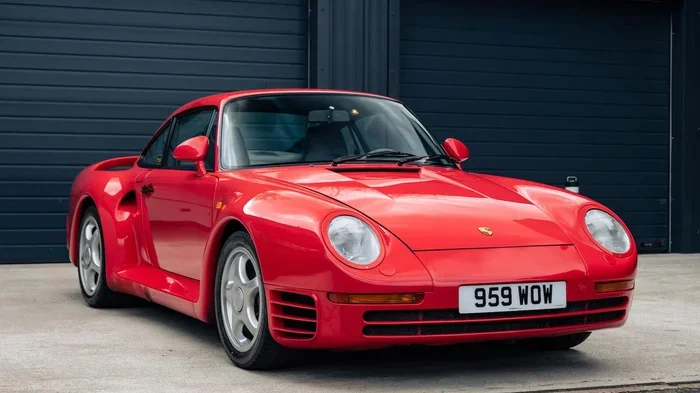
The Porsche 959 is one of the most exclusive sports cars ever built, but exactly how many Porsche 959 were made? Only 337 units were produced, making it a rare 1980s supercar. This guide reveals the official production numbers, the reasons behind the low output, and why the Porsche 959 remains a legendary collector car.
The Porsche 959 is a name that instantly sparks excitement among car enthusiasts. It represents the peak of 1980s sports car engineering. Yet, many people wonder exactly how many Porsche 959 were made. The answer might surprise you. Only a tiny fraction of these incredible machines ever reached buyers. In this article, we will break down the exact production numbers and tell the full story of this rare exotic car.
Understanding the production numbers gives you a clear picture of its exclusivity. The Porsche 959 was never meant for the masses. It was a limited edition masterpiece built by hand in Stuttgart. This guide covers everything from the official figures to the reasons behind the low output. You will also learn what makes the car so special and why it remains a highly sought-after classic car today.
Key Takeaways
- Production Number: Exactly 337 Porsche 959 units were built, making it one of the rarest sports cars of the 1980s.
- Short Production Run: The factory produced these machines only from 1987 to 1988, with no further additions.
- Racing Roots: The car grew from Porsche’s Group B rally program and featured advanced racing technology.
- Revolutionary Tech: It introduced all-wheel drive, twin-turbo boosting, and a lightweight carbon-kevlar body to the road.
- High Value Today: A Porsche 959 now commands over $2 million at auction, reflecting its extreme rarity.
- Collector Favorite: The exotic car remains a dream for enthusiasts who seek a piece of automotive history.
- Cultural Impact: The 959 proved that a rear-engine sports car could be both a daily driver and a track weapon.
📑 Table of Contents
The Exact Production Numbers of the Porsche 959
The question of how many Porsche 959 were made has a precise answer. Porsche officially produced 337 units of the 959. These cars were built over a very short window. The production run started in 1987 and ended in 1988. That means the factory spent less than two years creating these machines. The low total units make the 959 one of the rarest sports cars from that era.
Official Production Figures
Porsche released the official numbers after the car ceased production. The total count stands at 337 road cars. This figure includes all variants that left the factory. Some sources might mention a slightly different number, but 337 is the widely accepted figure. The production numbers are confirmed by Porsche archives and classic car registries. Each unit received a unique chassis number, making verification straightforward.
The factory built these cars in a small series. Unlike mass-market models, the assembly line for the 959 was not continuous. Workers hand-assembled many components. This meticulous process contributed to the low output. The result is a rare car that commands immense respect among collectors.
Why the Numbers Vary in Different Sources
You might find different counts when researching the Porsche 959. Some websites list 337, while others mention 340 or 345. The variation comes from how cars are counted. Did you include prototypes? The factory built several pre-production prototypes. Some were used for testing and never received customer delivery. Other counts include cars that were damaged or scrapped early. The official production number refers only to completed road cars that were sold to customers.
Another reason for the discrepancy is the inclusion of racing variants. Porsche developed a 959 for Group B rally homologation. Those cars were built to meet racing regulations, not for public sale. They are part of the 959 family but not part of the standard production run. When you ask how many Porsche 959 were made for the road, the answer is 337.
A Brief History of the Porsche 959
The story of the Porsche 959 begins in the early 1980s. Porsche wanted to create a car that showcased its latest technology. The project aimed to prove that a rear-engine sports car could be both fast and reliable. The engineers drew inspiration from the 911 Turbo and the company’s racing program. They wanted to build an iconic vehicle that would set new standards for performance.
From Group B Rally to Road Car
The Porsche 959 started as a prototype for the Group B rally era. Porsche needed a homologation special to compete in the demanding rally raids. The car had to be built in small numbers to qualify for racing. This requirement naturally limited the total production. The rally version featured a lightweight body and aggressive tuning. It dominated events like the Paris-Dakar rally, proving the concept was sound.
Once the rally program ended, Porsche decided to transform the machine into a road car. The company wanted to share its advanced technology with wealthy enthusiasts. The road version kept the twin-turbo engine and all-wheel drive system. It added luxury features and comfort for daily driving. The result was a 1980s supercar that felt futuristic even by today’s standards.
The Launch and Initial Reception
Porsche unveiled the 959 at the 1983 Frankfurt Motor Show. The response was overwhelmingly positive. Car enthusiasts were amazed by its performance and build quality. The car promised a top speed of over 190 mph. It could accelerate from 0 to 60 mph in under 3.5 seconds. For a car built in the 1980s, these numbers were breathtaking. The 959 immediately gained a reputation as a technological marvel.
However, the car came with a very high price tag. When it finally went on sale, it cost over $200,000. Only a select group of buyers could afford it. This limited the demand, which in turn kept the production numbers low. The combination of high cost and complex engineering meant that Porsche could not simply ramp up output.
What Made the Porsche 959 So Special
The Porsche 959 was not just another fast car. It introduced several innovations that became standard in later supercars. The engineering team at Porsche pushed the boundaries of what was possible. Every system in the car was designed for maximum performance. Let us look at the key features that made the 959 so extraordinary.
Revolutionary All-Wheel Drive System
One of the most advanced features of the 959 was its all-wheel drive system. In the 1980s, most high-performance cars used rear-wheel drive. Porsche introduced a computer-controlled system that distributed power to all four wheels. The system could adjust torque distribution on the fly. This gave the car incredible grip and stability, especially in wet conditions. The all-wheel drive setup became a hallmark of the Porsche 959 and influenced future models.
Twin-Turbo Performance and Specs
The heart of the 959 was a twin-turbo flat-six engine. The engine displaced 2.8 liters and produced an impressive 444 horsepower. It pushed the car to a top speed of 197 mph. The twin-turbo setup eliminated turbo lag, a common problem in early turbocharged cars. The engine was paired with a 6-speed manual gearbox. This combination delivered smooth, relentless acceleration. The performance figures were unmatched for a road car at the time.
The car also featured a lightweight body construction. Porsche used a mix of aluminum and Kevlar for the panels. This reduced weight without sacrificing structural rigidity. The result was a car that felt nimble and responsive. The German engineering behind the 959 was truly ahead of its time.
Luxury and Daily Drivability
Despite its racing pedigree, the Porsche 959 was designed to be a comfortable daily driver. It offered power seats, air conditioning, and a modern sound system. The interior was trimmed with high-quality materials. This made the car suitable for long road trips. The 959 proved that a sports car did not have to be harsh to be fast. It was a true exotic car that could do it all.
Why So Few Porsche 959s Were Built
The low production numbers of the Porsche 959 are not a mystery. Several factors combined to limit the total units to 337. Understanding these reasons helps explain why the car remains so rare today. The financial challenges, regulatory hurdles, and market realities all played a role.
Financial Challenges at Porsche
Building the 959 was an expensive endeavor. Porsche invested heavily in research and development. The company was not a massive conglomerate at the time. It needed every dollar of profit from its models. The 959 was sold at a loss. The high cost of hand-building the car meant that Porsche could not produce it in large numbers. The company simply could not afford to scale up production.
The financial situation became even more difficult in the late 1980s. Porsche faced a period of financial uncertainty. The company needed to focus on more profitable models. The 911 and the Boxster brought in steady revenue. The exotic 959 was a niche product that did not generate enough volume to justify continued production. The decision to stop building the 959 after 337 units was a business necessity.
Regulatory Hurdles and Market Realities
The Porsche 959 also faced regulatory challenges in key markets. The United States had strict emissions and safety regulations. The 959 did not initially meet all the requirements for street legal registration. This limited the number of cars that could be officially imported. Some enthusiasts had to navigate complex legal processes to bring their 959s to America. The regulatory hurdles added to the complexity and cost of the car.
The market for a 1980s supercar was also very small. Only a handful of buyers had the desire and financial means to purchase a car priced over $200,000. The demand was never high enough to support a larger production run. The 959 remained a rare car by design and by market necessity.
| Model | Years Produced | Total Units | Top Speed | Engine |
|---|---|---|---|---|
| Porsche 959 | 1987–1988 | 337 | 197 mph | 2.8L Twin-Turbo Flat-6 |
| Ferrari 288 GTO | 1984–1987 | 272 | 189 mph | 2.8L Twin-Turbo V8 |
| Lamborghini Countach 5000QV | 1985–1990 | 676 | 202 mph | 5.2L V12 |
| BMW M1 | 1978–1981 | 456 | 160 mph | 3.5L Inline-6 |
The comparison table shows that the Porsche 959 sits in an elite group of rare 1980s supercars. Its production number is lower than most of its rivals, which adds to its mystique. The 959 is the third rarest car in this comparison, behind the Ferrari 288 GTO and the BMW M1. This rarity is a key factor in its current value.
Quick Tips: How to Verify a Porsche 959’s Production Number
- Check the chassis number. The 959 production sequence starts with the chassis number that matches the factory records.
- Request a Porsche Classic Center certificate. This document confirms the car’s authenticity and production details.
- Look for the original build sheet. It lists the exact date and options for that specific unit.
- Consult the Porsche registry. Enthusiast clubs maintain detailed databases of every 959 ever built.
- Beware of modified cars. Some 959s have been altered significantly, which can make verification harder.
The Porsche 959’s Legacy and Modern Value
Today, the Porsche 959 is more than just a car. It is a symbol of automotive innovation and exclusivity. The legacy of the 959 continues to grow with each passing year. Collectors around the world dream of owning one of these rare machines.
Collector Demand and Recent Sales
The demand for the Porsche 959 has never been higher. The car consistently appears at the top of collector car wish lists. Recent auction results show that prices have climbed dramatically. A well-preserved Porsche 959 can now sell for over $2 million. Some examples have fetched even higher prices at exclusive auctions. The car’s value has appreciated steadily since it left the factory.
The limited supply of 337 units ensures that prices will likely continue to rise. Every year, fewer examples remain in good condition. The 959 is not just a fast car; it is a piece of history. Owning one is a statement of passion and prestige.
Expert Insights on Owning a Porsche 959
Expert Insight: “The Porsche 959 is the ultimate expression of 1980s German engineering. It is not just a car you drive; it is a car you preserve. The all-wheel drive system and twin-turbo engine were decades ahead of their time. Today, it represents the pinnacle of the classic car hobby.”
Collectors often mention the daily drivability of the 959 as a major advantage. Unlike some ultra-rare cars that are kept in climate-controlled garages, the 959 can be enjoyed on the road. Its comfort features and reliable mechanicals make it surprisingly practical. This blend of performance and usability is a big part of its enduring appeal.
Common Mistakes Buyers Make When Purchasing a Porsche 959
- Skipping a pre-purchase inspection. The 959 has complex systems. A specialist must check the twin-turbo setup and the all-wheel drive components.
- Ignoring service history. A complete service record is essential. Missing documentation can hide major issues.
- Overlooking rust and corrosion. Even though the body is lightweight, the chassis can develop rust if not properly maintained.
- Assuming all 959s are the same. There are subtle differences between early and late production models. The options and features vary.
- Underestimating maintenance costs. Parts for the 959 are rare and expensive. Budget for specialized servicing.
Common Myths About Porsche 959 Production
There are many stories surrounding the production of the Porsche 959. Some of these tales are simply not true. Let us separate fact from fiction and clarify the real story behind the numbers.
Debunking the ‘Lost Cars’ Myth
One popular myth claims that several Porsche 959s were lost in a fire or destroyed during transport. There is no evidence to support this story. Every single unit that was built is accounted for. The Porsche factory records and the registry confirm the existence of all 337 cars. Some cars were indeed damaged or scrapped over the decades, but they were replaced by survivors or documented in historical records. The total number has not changed.
Quick Tips: Separating Fact from Fiction
- Always rely on Porsche factory records and the official Porsche Classic Center for production data.
- Be skeptical of sensational stories that lack documentation. The 959 community is well-documented.
- Join a Porsche 959 club. Enthusiasts share accurate information and can help verify claims.
- Remember that the official production number is 337 road cars. Any other number likely includes prototypes or non-road cars.
Final Thoughts on the Porsche 959
The Porsche 959 stands as a testament to what happens when engineering passion meets visionary design. The exact number of cars built is 337, a figure that cements its place in automotive history. This rare 1980s supercar pushed the boundaries of speed, technology, and luxury. It proved that a sports car could be both a track weapon and a comfortable daily driver.
Understanding how many Porsche 959 were made gives you a deeper appreciation for its exclusivity. The low production run was not a flaw; it was a deliberate choice. Porsche built exactly the number of cars it could perfect and sell without compromising its standards. The result is a machine that remains highly coveted more than three decades later.
If you ever have the chance to see a Porsche 959 in person, take it. The sight of its sleek body and the sound of its twin-turbo engine are unforgettable. The car represents the golden age of German sports car manufacturing. It is a true icon that continues to inspire car lovers around the world. The Porsche 959 will always be a rare and remarkable piece of automotive art.
Frequently Asked Questions
How many Porsche 959 cars were actually produced?
Porsche officially produced 337 units of the 959. This number includes all road cars that were sold to customers between 1987 and 1988. The figure is confirmed by Porsche factory records and classic car registries.
Why are there different numbers cited for Porsche 959 production?
Some sources include prototypes and pre-production models, which slightly increases the count. The official production number refers only to completed road cars. Racing homologation specials are also sometimes counted separately, leading to confusion.
What made the Porsche 959 so expensive when it was new?
The 959 cost over $200,000 when new. The high price reflected its advanced all-wheel drive system, twin-turbo engine, and hand-built construction. The car was sold at a loss, as Porsche could not recover the development costs through volume.
Is the Porsche 959 a good daily driver today?
Yes, the 959 is surprisingly practical for a rare sports car. It offers comfortable seating, air conditioning, and reliable mechanicals. Many owners drive their 959s regularly, enjoying them as both collector pieces and weekend cruisers.
What is the current value of a Porsche 959?
A well-preserved Porsche 959 can sell for over $2 million at auction. The value has appreciated steadily due to its extreme rarity and iconic status. Prices vary based on condition, provenance, and specific options.
Did Porsche ever plan to build more 959s after 1988?
No, Porsche had no plans to resume 959 production. The company faced financial pressures and needed to focus on profitable models like the 911. The 337 units produced were the final total, and the factory closed the 959 program completely.