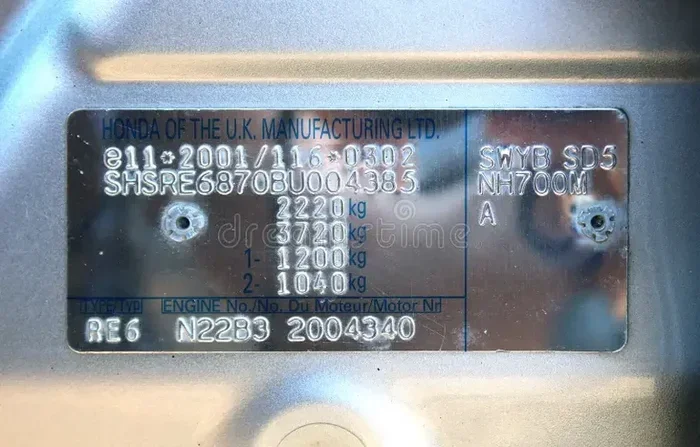
What Is the Check Digit of a Chassis Number Explained
The check digit of a chassis number is the ninth character in your VIN. It acts as a built-in security code that validates the entire vehicle identification number. Understanding this single digit helps you verify authenticity, avoid fraud, and decode your vehicle’s full history.
Every car on the road carries a unique identity. That identity lives inside a string of letters and numbers called the VIN. But did you know one tiny character inside that code holds enormous power? The check digit of a chassis number is that powerful little character. It protects you from fraud, confirms your vehicle’s authenticity, and connects every piece of your car’s history.
Whether you are buying a used vehicle, researching your own car, or just curious about how VINs work, understanding the check digit is essential. This guide walks you through everything you need to know. We will break it down simply, with real examples and practical tips you can use today.
Key Takeaways
- The ninth position matters: The check digit sits in the 9th spot of your VIN and validates the entire number.
- It prevents fraud: This digit catches fake or altered chassis numbers instantly.
- Math makes it work: A weighted formula calculates the check character using the other VIN digits.
- Every vehicle has one: Most passenger vehicles built after 1981 include a check digit in the VIN.
- You can verify it yourself: With the right formula, anyone can validate a VIN at home.
- It reveals vehicle details: The check digit connects to the WMI code, VDS section, and VIS section for full vehicle identification.
📑 Table of Contents
- What Is a Chassis Number and Why Does It Matter?
- What Is the Check Digit of a Chassis Number?
- How the Check Digit Is Calculated
- Where to Find the Check Digit in Your VIN
- Why the Check Digit Matters for Vehicle Owners
- Common Mistakes and Misconceptions
- How to Use the Check Digit in Everyday Situations
- The History Behind the Check Digit System
- Tools and Resources for Checking Your VIN
- The Future of Vehicle Identification
- Conclusion
What Is a Chassis Number and Why Does It Matter?
A chassis number is another name for your vehicle identification number, or VIN. Think of it as your car’s fingerprint. No two vehicles share the same VIN. It tells a complete story about your vehicle, from where it was built to what engine it carries.
The VIN follows a global standard called ISO 3779. This standard ensures every country and manufacturer uses the same format. That consistency is what makes the check digit of a chassis number possible. Without a universal system, vehicle identification would be chaotic.
The Anatomy of a VIN
A VIN contains 17 characters. Each section serves a specific purpose. Let us break it down:
- Positions 1-3: The World Manufacturer Identifier, or WMI code. This tells you the country of origin and the manufacturer.
- Positions 4-8: The Vehicle Descriptor Section, or VDS. This covers model, body type, engine, and trim level.
- Position 9: The check digit. This is the security character we are exploring today.
- Position 10: The model year code. This identifies the vehicle’s production year.
- Position 11: The assembly plant code. This shows where the vehicle was built.
- Positions 12-17: The Vehicle Identifier Section, or VIS. This is the serial number unique to your car.
When you run a VIN decoder tool, it pulls all of this information together. The result is a full vehicle history report. That report includes accident records, ownership changes, and recall information. But none of it works if the VIN itself is fake or altered.
Vehicle identification depends on trust. The check digit is what builds that trust into every VIN.
What Is the Check Digit of a Chassis Number?
The check digit of a chassis number is the single character found in the 9th position of a VIN. It can be a number from 0 to 9 or the letter X. That letter X represents the number 10 in the calculation formula.
This digit is not random. It is the result of a mathematical formula applied to the other 16 characters in the VIN. The purpose is simple but brilliant: it confirms that the VIN is genuine.
Why Is It Called a “Check” Digit?
The word “check” tells you exactly what this digit does. It checks the VIN for accuracy. When a VIN is entered into a system, the formula runs again. If the calculated result matches the 9th character, the VIN passes validation. If it does not match, something is wrong.
This process is called VIN validation. It is a frontline defense against several problems:
- Fraud detection: Fake VINs often fail the check digit calculation.
- Error prevention: Typos during data entry get caught immediately.
- Vehicle authentication: Authorities use it to confirm a vehicle’s legitimacy.
Without the check digit, there would be no quick way to spot a tampered VIN. Criminals could swap chassis numbers on stolen vehicles, and no one would notice. The check digit makes that much harder.
How the Check Digit Is Calculated
The calculation might sound intimidating, but it follows a clear, step-by-step process. You do not need to be a mathematician to understand it. Let us walk through it together.
The Weight Factor System
Each position in the VIN (except position 9) has a specific weight factor. These weights are part of the ISO 3779 standard. Here is how they break down:
- Position 1: weight factor 8
- Position 2: weight factor 7
- Position 3: weight factor 6
- Position 4: weight factor 5
- Position 5: weight factor 4
- Position 6: weight factor 3
- Position 7: weight factor 2
- Position 8: weight factor 10
- Position 10: weight factor 9
- Position 11: weight factor 8
- Position 12: weight factor 7
- Position 13: weight factor 6
- Position 14: weight factor 5
- Position 15: weight factor 4
- Position 16: weight factor 3
- Position 17: weight factor 2
Letter-to-Number Conversion
Before the math begins, every letter in the VIN must be converted to a number. The letters I, O, and Q are never used in a VIN because they look too similar to 1 and 0. Here is the conversion chart:
- A = 1, B = 2, C = 3
- D = 4, E = 5, F = 6
- G = 7, H = 8
- J = 1, K = 2, L = 3
- M = 4, N = 5
- P = 7, R = 9
- S = 2, T = 3, U = 4
- V = 5, W = 6, X = 7
- Y = 8, Z = 9
- Numbers 0-9 stay as they are
The Calculation Process
Here is how the modulus check works in practice:
- Take each character in the VIN.
- Convert letters to their numeric values.
- Multiply each value by its position weight factor.
- Add up all 16 products.
- Divide the total by 11.
- The remainder is the check digit.
- If the remainder is 10, the check digit becomes the letter X.
Let us look at a quick example. Imagine a VIN where the weighted sum equals 347. Divide 347 by 11, and you get a remainder of 6. So the check character in position 9 would be the number 6.
This formula is the backbone of VIN validation. Every legitimate VIN passes through it. Every fake one usually fails.
Quick Tip
You do not need to do this math by hand every time. Many online VIN decoder tools perform the check digit calculation instantly. Just enter the full VIN, and the tool will tell you if the check digit is valid.
Where to Find the Check Digit in Your VIN
The check digit sits in the 9th position of your 17-character VIN. It is easy to locate once you know where to look. Here are the most common places to find your VIN:
- Dashboard: Look through the windshield on the driver’s side. The VIN plate is usually visible from outside the car.
- Driver’s door jamb: Open the driver’s door and look at the sticker or plate on the door frame.
- Vehicle title and registration: Your legal documents always display the full VIN.
- Insurance documents: Your insurance card or policy includes the VIN.
- Engine block: Some manufacturers stamp the VIN directly onto the engine.
Once you have the VIN, count to the 9th character. That single alphanumeric symbol is your check digit. It is a small character with a big job.
Why the Check Digit Matters for Vehicle Owners
You might wonder why a regular car owner needs to understand the check digit of a chassis number. The answer is simple: it protects your investment.
Spotting Fraud Before You Buy
Vehicle fraud is more common than most people think. Stolen cars get new VINs. Salvage titles get cleaned up. Flood-damaged vehicles get new identities. The check digit is one of the first lines of defense against all of this.
When you run a vehicle history report, the system checks the VIN against the modulus check formula. If the check digit does not match, the report will flag it. That flag could save you from buying a stolen or misrepresented vehicle.
Understanding Your Vehicle Specifications
The check digit is connected to every other part of the VIN. The WMI code tells you who made the vehicle. The VDS section describes the model and features. The VIS section gives the unique serial number. Together, they paint a complete picture of your vehicle specifications.
When the check digit validates the entire sequence, you gain confidence that the vehicle information you are reading is accurate. That matters for parts ordering, insurance claims, and resale value.
Legal and Safety Implications
In many countries, tampering with a VIN is a serious crime. Law enforcement agencies use VIN validation to trace stolen vehicles. The check digit makes this process faster and more reliable.
If you are importing a vehicle from another country, the check digit helps customs officials verify the VIN. It also helps dealerships maintain accurate vehicle authentication records.
Common Mistakes and Misconceptions
Even car enthusiasts sometimes misunderstand the check digit. Let us clear up a few common errors.
Mistake 1: Thinking the Check Digit Holds Vehicle Details
The check digit does not describe your car. It does not tell you the model year, engine type, or assembly plant. Its only job is to validate the VIN. Do not try to decode it as if it carries vehicle information. It does not.
Mistake 2: Ignoring the Letter X
Many people are surprised to see the letter X as a check digit. Remember, the remainder 10 maps to X. If your VIN has an X in the 9th position, that is perfectly normal and valid.
Mistake 3: Skipping VIN Verification
Some buyers skip VIN checks entirely. They trust the seller’s word or rely only on a visual inspection. This is a risky habit. Always run a VIN decoder and verify the check digit before making a purchase decision.
Mistake 4: Confusing the Chassis Number with the Engine Number
The chassis number (VIN) and the engine number are different. The engine number identifies the specific engine unit. The VIN identifies the entire vehicle. Both are important, but the check digit of a chassis number only applies to the VIN.
Expert Insight
Automotive experts recommend always cross-referencing the VIN on the vehicle with the VIN on the paperwork. If the 9th character does not pass the modulus check, walk away. It is a red flag that something is seriously wrong with the vehicle’s identity.
How to Use the Check Digit in Everyday Situations
The check digit of a chassis number is not just for mechanics and law enforcement. Regular car owners can use it in everyday life.
Before Buying a Used Car
Always ask for the VIN and run it through a trusted VIN decoder. Check that the 9th character is mathematically valid. If the tool flags an invalid check digit, do not proceed without a full explanation from the seller.
When Ordering Replacement Parts
Parts suppliers use the VIN to match the correct components to your vehicle. A valid check digit ensures the parts order goes through smoothly. An invalid one can cause delays and ordering errors.
During Insurance Claims
After an accident, your insurance company will verify the VIN against their records. A valid check character speeds up this process and reduces the chance of disputes.
When Selling Your Vehicle
Buyers will check the VIN. A clean, valid VIN with a correct check digit builds trust and helps you sell faster. It shows you have nothing to hide.
The History Behind the Check Digit System
The modern VIN system was standardized in 1981 by the National Highway Traffic Safety Administration in the United States. Before that, VIN formats varied wildly between manufacturers. The introduction of the ISO 3779 standard brought order to the chaos.
The check digit was added as part of that standardization effort. The goal was to create a simple, reliable way to detect errors and fraud in VINs. Over the decades, this single character has helped recover thousands of stolen vehicles and prevent countless fraudulent transactions.
Today, the system works globally. Every vehicle sold in most major markets carries a VIN with a check digit. It is one of the unsung heroes of automotive security.
Tools and Resources for Checking Your VIN
You do not need to calculate the check digit manually every time. Several tools make this process effortless:
- National Insurance Crime Bureau (NICB) VINCheck: A free tool that validates VINs and checks against stolen vehicle databases.
- Manufacturer VIN Decoders: Most car brands offer free VIN lookup tools on their websites.
- Third-Party History Report Services: Services like Carfax and AutoCheck include VIN validation in their reports.
- Online Check Digit Calculators: Several websites let you enter a VIN and instantly verify the check digit.
Using any of these tools takes seconds. The peace of mind they provide is well worth the effort.
The Future of Vehicle Identification
Automotive technology is evolving rapidly. Vehicle identification systems are becoming more sophisticated. Digital VINs, blockchain-based vehicle records, and AI-powered fraud detection are all on the horizon.
But through all of these changes, the basic principle remains the same. Every vehicle needs a reliable way to prove its identity. The check digit of a chassis number has served this purpose for over four decades, and it will likely continue to do so for many more.
As long as cars have VINs, the check digit will remain a critical piece of the puzzle. It is simple, elegant, and remarkably effective.
Conclusion
The check digit of a chassis number might be a single character in a 17-character code, but its impact is enormous. It validates your VIN, protects against fraud, and gives you confidence in every vehicle transaction. Whether you are a buyer, seller, or current owner, understanding this digit empowers you to make smarter decisions.
Take a moment to locate your VIN. Find the 9th character. Run it through a VIN decoder tool. You might be surprised at what you discover. Vehicle ownership is easier and safer when you understand the details that matter most.
The next time someone asks you about the check digit, you will know exactly what they mean. And more importantly, you will know why it matters.
Frequently Asked Questions
What happens if the check digit of a chassis number is wrong?
An incorrect check digit means the VIN has an error or has been tampered with. This could indicate a fake VIN, a transcription mistake, or vehicle fraud. Always investigate further if a VIN fails validation.
Can two vehicles have the same check digit?
Yes, many vehicles share the same check digit. The check digit is calculated from the entire VIN, so different VINs can produce the same 9th character. What matters is that each VIN as a whole is unique.
Do all vehicles have a check digit in their VIN?
Most passenger vehicles manufactured after 1981 include a check digit. However, some older vehicles and certain types of commercial or military vehicles may not follow the 17-character VIN format with a check digit.
Is the letter X always valid as a check digit?
Yes, X represents the number 10 in the check digit formula. If the modulus calculation produces a remainder of 10, the check digit is X. This is completely normal and valid.
Can I calculate the check digit myself?
Absolutely. You need the VIN, the weight factor chart, and the letter-to-number conversion table. Multiply each character by its weight, sum the results, divide by 11, and the remainder is your check digit. Online calculators make this even easier.
How does the check digit help with fraud detection?
The check digit uses a mathematical formula that is very difficult to replicate randomly. If someone creates a fake VIN, the check digit will likely not match the formula. This makes it easy for systems and authorities to flag fraudulent VINs during vehicle authentication checks.
=== CONCLUSION ===
The check digit of a chassis number is one of the most important yet overlooked elements of your vehicle’s identity. It sits quietly in the 9th position of your VIN, working behind the scenes to protect you from fraud, errors, and misrepresentation.
By understanding how it works, where to find it, and why it matters, you become a more informed and confident vehicle owner. Use VIN validation tools regularly. Verify the check digit before major purchases. Share this knowledge with friends and family who buy or sell cars.
Small details like the check character make a big difference. They keep the automotive world honest, safe, and transparent. Now that you know what to look for, you have a powerful tool at your fingertips. Use it wisely and drive with confidence.