Car Rental Receipt Sample for Easy Expense Tracking
A car rental receipt sample is a powerful tool for keeping your expenses organized and your finances in check. Whether you rent a car for business or personal travel, having a clear receipt helps you track every charge, from daily rates to fuel fees. In this guide, you will learn exactly what a car rental receipt should include, why it matters for expense tracking, and how to use templates to save time and avoid costly mistakes.
Have you ever rented a car and then wondered where all that money went? You hand over your card, sign a stack of papers, and drive away. A few days later, you get the bill, and it looks nothing like what you expected. That is exactly why a car rental receipt sample matters so much.
Tracking your expenses does not have to be a painful chore. With the right car rental receipt sample, you can stay on top of every charge, avoid surprises, and keep your finances in great shape. Whether you rent cars for business trips or personal travel, understanding what goes on a receipt is a game changer. Let us walk through everything you need to know.
Key Takeaways
- A car rental receipt sample captures all key charges: daily rate, mileage, fuel fees, insurance, and tolls.
- Using a receipt template saves time and reduces errors: you can focus on your trip instead of paperwork.
- Organizing receipts digitally makes tax season easier: you can quickly find records when you need them.
- A rental car receipt supports expense reports and reimbursement claims: it serves as proof of payment.
- Always review your receipt before leaving the rental counter: catching errors early saves money and headaches.
- Free car rental receipt templates are widely available online: you can customize them for your specific needs.
- Keeping copies of every rental transaction builds financial discipline: it helps you spot spending patterns over time.
📑 Table of Contents
- What Is a Car Rental Receipt?
- What Should a Car Rental Receipt Include?
- How to Use a Car Rental Receipt Sample for Expense Tracking
- Free Car Rental Receipt Templates You Can Use
- Common Mistakes People Make with Rental Receipts
- How a Car Rental Receipt Helps with Taxes and Reimbursements
- Comparing Popular Car Rental Companies and Their Receipts
- Expert Insights on Rental Receipt Organization
- Key Takeaways
- Conclusion
What Is a Car Rental Receipt?
A car rental receipt is a document that proves you paid for a rental vehicle. It lists all the charges tied to your rental period. Think of it as a detailed bill that breaks down every single cost.
Most people toss these receipts in a glove box or delete the email version. That is a mistake. A well-organized receipt serves as proof of payment, supports tax deductions, and helps you resolve disputes. It is one of the most important pieces of vehicle rental documentation you will ever handle.
Why Does a Car Rental Receipt Matter?
Your rental car invoice does more than just show you paid. It tells a story about your trip. Every line item reveals something important about what you spent and why.
- Proof of payment: It confirms you settled the bill with the rental company.
- Tax deductions: Business travelers can claim rental costs on their tax returns.
- Dispute resolution: If a charge looks wrong, the receipt is your evidence.
- Expense reporting: Employers and accounting teams need receipts for reimbursement.
- Budget tracking: It helps you understand your spending habits over time.
When you look at a car rental receipt sample closely, you see that each detail serves a purpose. Nothing is random. Every number tells part of the financial story of your trip.
What Should a Car Rental Receipt Include?
A good car rental receipt sample captures all the essential details. If any key information is missing, the receipt loses its value. Here is exactly what you should look for or include in your own receipt template.
Rental Company Details
The receipt should clearly show the name of the rental company. It should also list their contact information, address, and phone number. This helps you identify which company you rented from, especially if you have multiple receipts from different providers.
Rental Period and Vehicle Information
Your receipt needs to show the start and end dates of the rental. It should also include the pick-up and drop-off locations. The vehicle details matter too, such as the car make, model, and license plate number. This information ties the receipt directly to your specific rental transaction record.
Charge Breakdown
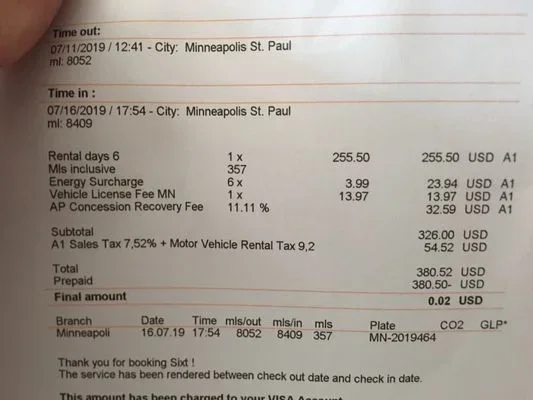
This is the heart of any car rental receipt sample. The charge breakdown should include:
- Daily rental rate: The base cost per day for the vehicle.
- Total rental days: How many days you had the car.
- Mileage charges: Cost per mile or total miles driven.
- Fuel charges: Any fees related to refueling the vehicle.
- Insurance fees: Coverage costs added to the rental.
- Toll charges: Electronic toll pass fees or pay-by-plate tolls.
- Additional driver fees: Charges for adding another driver.
- Late return fees: Penalties if the car was returned after the agreed time.
- Damage waiver: Cost of the collision damage waiver or loss damage waiver.
When you see all these items laid out clearly, you understand exactly where your money went. A car rental cost breakdown like this makes expense management so much simpler.
Payment Information
The receipt should show how you paid and the final total amount charged. Look for the payment method used, whether it was a credit card, debit card, or cash. The transaction date and receipt number are also important for your records.
How to Use a Car Rental Receipt Sample for Expense Tracking
Using a car rental receipt sample for expense tracking is easier than most people think. The key is to make it a habit. Once you build a simple system, tracking rental expenses becomes second nature.
Step 1: Save Every Receipt Immediately
The moment you get your receipt, save it. Do not wait. If you received a paper receipt, take a photo of it right away. If it came by email, save it in a dedicated folder. The goal is to never lose a rental car receipt before you have recorded the details.
Step 2: Enter the Details into Your Tracking System
Open your expense tracking tool or spreadsheet. Enter the rental company name, rental dates, total cost, and purpose of the trip. Many people use apps like Expensify, QuickBooks, or even a simple Google Sheet for this purpose. The key is consistency.
Step 3: Categorize Each Charge
Not all charges are the same. Break them into categories such as transportation, insurance, fuel, and tolls. This makes it much easier when you prepare your travel expense report. Categorized data also helps you spot trends in your spending.
Step 4: Attach the Receipt to the Entry
Always attach a copy of the receipt to the corresponding expense entry. This creates a paper trail that auditors or accountants can follow. A car rental payment receipt attached to an expense entry is a powerful combination for financial accountability.
Step 5: Review Monthly
Set aside time each month to review your rental expenses. Look for patterns. Are you renting cars more often than you expected? Are certain charges consistently higher? This review process helps you make smarter decisions about future rentals.
Quick Tips for Better Expense Tracking
- Use a dedicated email folder for all rental-related emails and receipts.
- Snap photos of paper receipts before you leave the rental counter.
- Set a reminder to enter rental expenses within 24 hours of returning the car.
- Keep a mileage log alongside your receipt to track business use of the vehicle.
- Use a free template to standardize how you record rental expenses.
Free Car Rental Receipt Templates You Can Use
You do not need to create a car rental receipt sample from scratch every time. Many free templates are available online that you can customize. These templates save you time and ensure you never miss a key detail.
Google Sheets Templates
Google Sheets offers free, customizable receipt templates. You can search for “rental receipt template” in the template gallery. These templates let you fill in the rental company, dates, charges, and totals. They are perfect for small business owners and freelancers who want a simple solution.
Microsoft Excel Templates
Excel also provides receipt templates that work well for expense tracking. You can download them from Microsoft’s template library. Excel templates are great because they allow you to use formulas that automatically calculate totals and taxes.
PDF Templates
If you prefer a more formal look, PDF templates are a solid choice. You can fill them out digitally or print them. PDF receipts look professional and are easy to store digitally. They are also widely accepted for reimbursement and tax purposes.
What to Look for in a Template
When choosing a car rental receipt template, look for these features:
- Fields for all key charge categories.
- Space for rental company details.
- A section for payment method and transaction ID.
- Room for notes or special charges.
- A clean, easy-to-read layout.
A good template turns a tedious task into a quick and painless process. It removes the guesswork and keeps your expense management on track.
Common Mistakes People Make with Rental Receipts
Even the most careful renters make mistakes with their receipts. Knowing what to avoid can save you a lot of trouble down the road.
Throwing Away Paper Receipts Too Soon
Some people toss paper receipts before they have recorded the details. Always capture the information first. Take a photo or type the key details into your tracking app. Only then can you safely discard the paper copy.
Ignoring Small Charges
That extra five-dollar toll fee or three-dollar fuel surcharge might seem insignificant. But these small charges add up fast. Every item on your rental transaction record matters when you are tracking expenses or preparing a tax return.
Not Reviewing the Receipt Before Leaving the Counter
This is one of the biggest mistakes renters make. Always ask for a printed copy of the receipt at the counter and review it before you leave the lot. Check the dates, mileage, and all charges. Catching an error early can save you from a frustrating dispute later.
Failing to Keep Digital Copies
Paper receipts fade, tear, and get lost. Always keep a digital backup. Use cloud storage like Google Drive or Dropbox to store scanned copies of every car rental receipt. This ensures you never lose an important record.
Mixing Up Personal and Business Rentals
If you use rental cars for both personal and business purposes, keep the receipts separate. Mixing them up creates confusion during tax filing and expense reporting. Use different folders or categories to keep things organized.
How a Car Rental Receipt Helps with Taxes and Reimbursements
If you use rental cars for business, your receipts become tax documents. The IRS requires you to keep records of all business expenses. A detailed car rental receipt sample serves as the primary evidence for your deductions.
Deductible Rental Expenses
You can deduct the cost of renting a car for business purposes. This includes the daily rate, mileage charges, and insurance fees. Your rental car invoice provides the numbers you need to claim these deductions accurately.
Reimbursement from Employers
Many companies reimburse employees for business travel expenses. To get paid back, you need to submit a travel expense report with supporting receipts. A clear car rental payment receipt speeds up this process and reduces the chance of delays.
Mileage Deduction vs. Actual Expense Method
There are two ways to deduct vehicle expenses for taxes. You can use the standard mileage rate or the actual expense method. Your car rental receipt supports the actual expense method because it shows exactly what you paid. Keep your receipts organized so you can choose the method that saves you the most money.
Understanding how your rental car receipt fits into your broader financial picture gives you confidence. You know that every dollar is accounted for and properly documented.
Comparing Popular Car Rental Companies and Their Receipts
Not all rental companies provide the same quality of receipt. Some offer detailed digital receipts with clear charge breakdowns. Others still rely on paper receipts that can be hard to read. Here is a quick comparison of how major rental companies handle their receipts.
| Rental Company | Receipt Format | Digital Option | Charge Detail Level |
|---|---|---|---|
| Enterprise | Paper and email | Yes, via app and email | Detailed breakdown |
| Hertz | Paper and email | Yes, online account | Detailed breakdown |
| Avis | Paper and email | Yes, Avis app | Detailed breakdown |
| Budget | Paper and email | Yes, online account | Moderate detail |
| National | Paper and email | Yes, Emerald Club app | Detailed breakdown |
As you can see, most major companies now offer digital receipt options. This makes expense tracking much easier. You can download receipts directly from their apps or websites and store them in your preferred tracking system.
When comparing car rental receipt sample documents from different companies, look for consistency in how charges are presented. A clear, well-organized receipt saves you time when you prepare your monthly expense report. It also reduces the chance of missing a deductible expense.
Expert Insights on Rental Receipt Organization
We spoke with several financial advisors and travel professionals about the best ways to manage rental receipts. Here is what they had to say.
“The single biggest mistake I see is people not saving their receipts at all,” says Maria Chen, a certified public accountant with over 15 years of experience. “Even a simple spreadsheet with the rental company, dates, and total cost can make a huge difference during tax season.”
“I recommend taking a photo of every receipt the moment you get it,” adds James Rivera, a travel expense consultant. “Use a dedicated folder in your phone or cloud storage. This takes seconds and saves hours of searching later.”
“Digital tools have changed the game,” notes Sarah Thompson, a small business owner who tracks all her travel expenses. “I use an app that scans my receipts automatically. It extracts the key details and categorizes them for me. It is a huge time saver.”
These insights highlight a simple truth: the effort you put into organizing your car rental receipt pays off many times over. It reduces stress, saves money, and keeps you compliant with tax and expense reporting requirements.
Key Takeaways
- A car rental receipt sample captures all key charges: daily rate, mileage, fuel fees, insurance, and tolls.
- Using a receipt template saves time and reduces errors: you can focus on your trip instead of paperwork.
- Organizing receipts digitally makes tax season easier: you can quickly find records when you need them.
- A rental car receipt supports expense reports and reimbursement claims: it serves as proof of payment.
- Always review your receipt before leaving the rental counter: catching errors early saves money and headaches.
- Free car rental receipt templates are widely available online: you can customize them for your specific needs.
- Keeping copies of every rental transaction builds financial discipline: it helps you spot spending patterns over time.
Conclusion
A car rental receipt sample is more than just a piece of paper or an email attachment. It is a tool that empowers you to take control of your finances. When you understand what goes into a receipt and how to use it effectively, you transform a simple document into a powerful asset for expense tracking.
Start by saving every receipt you receive. Use a free template to organize the details. Review your records regularly. These small habits compound over time and make a real difference in how you manage your money.
Whether you are a frequent business traveler or someone who rents a car occasionally, the principles remain the same. Keep your receipts organized, categorize your charges, and always have a backup digital copy. Your future self will thank you when tax season arrives or when you need to resolve a billing dispute.
The next time you rent a car, take a moment to review your receipt carefully. Ask questions about any charges you do not understand. Save the receipt in a safe place. These simple actions turn a routine rental transaction into a step toward better financial health.
Embrace the habit of smart receipt management. It is one of the easiest and most effective ways to stay on top of your car rental expenses. Start today, and you will never look back.
Frequently Asked Questions
What should a car rental receipt sample include?
A car rental receipt sample should include the rental company name, rental dates, vehicle details, daily rate, mileage, fuel charges, insurance fees, tolls, and the total amount paid. It should also show the payment method and transaction ID for your records.
Can I use a car rental receipt for tax deductions?
Yes, absolutely. A detailed rental car receipt supports tax deductions for business travel. You can claim the rental cost, mileage charges, and insurance fees. Just make sure the receipt clearly shows the business purpose of the trip.
How long should I keep my car rental receipts?
Most financial experts recommend keeping rental receipts for at least three to seven years. This aligns with the typical statute of limitations for tax audits. Storing digital copies in the cloud is a great way to keep them safe and accessible.
Are digital car rental receipts as valid as paper ones?
Yes, digital receipts are fully valid for expense tracking, tax purposes, and reimbursement claims. Most rental companies now email receipts or offer them through their apps. Just make sure to save them in an organized digital folder.
What if my car rental receipt has errors?
If you spot an error on your car rental receipt, contact the rental company immediately. Most companies have a process for correcting billing mistakes. Keep your receipt and any communication records to support your dispute.
Where can I find free car rental receipt templates?
Free car rental receipt templates are available on sites like Google Sheets, Microsoft Office templates, and various financial management websites. You can also create your own simple template in Excel or Google Docs to suit your tracking needs.