Are Car Sun Visors Legal Discover The Truth Right Now
Are car sun visors legal? The short answer is yes, but with some important caveats. Car sun visors are generally legal as original equipment, but aftermarket modifications can sometimes cross the line into illegal territory. This guide breaks down state traffic laws, DOT regulations, and common mistakes drivers make with their sun visor setup.
Have you ever driven toward the setting sun and wished your car sun visor was a little different? Maybe you want to add an extension. Or perhaps you saw a cool visor accessory online and wondered if it’s even legal. The question “are car sun visors legal” comes up more often than you might think.
The truth is not as simple as a yes or no answer. Sun visor laws vary by state. They also depend on what kind of visor you have and how you use it. In this guide, we will walk you through everything you need to know. By the end, you will feel confident about your car accessories choices.
Driving safety is the number one reason these rules exist. A visor that blocks your view can cause accidents. That is why DOT regulations and state traffic laws pay close attention to anything mounted on or near your windshield. Let us dive in and get the full picture.
Key Takeaways
- OEM sun visors are legal everywhere: Factory-installed visors meet all safety standards.
- Aftermarket visors can be risky: Some modifications may violate state traffic laws.
- Obstructed view laws matter: Anything that blocks your sightline can lead to a traffic citation.
- Tinting visors adds complexity: Window tinting regulations often apply to visor tinting too.
- State laws vary widely: What’s legal in one state may not be in another.
- Simple accessories are safe: Visor mirrors and basic clips are almost always fine.
- When in doubt, check local laws: Contact your local DMV for specific guidance.
📑 Table of Contents
- What Are Car Sun Visors and Why Do They Exist?
- Are Car Sun Visors Legal? The Short Answer
- What Do Sun Visor Laws Say?
- Aftermarket Sun Visors: What Is Allowed?
- Can You Get Pulled Over for an Illegal Sun Visor?
- How to Make Sure Your Sun Visor Setup Is Legal
- Common Mistakes Drivers Make With Sun Visors
- Expert Insights on Sun Visor Legality
- Key Takeaways
- Conclusion
What Are Car Sun Visors and Why Do They Exist?
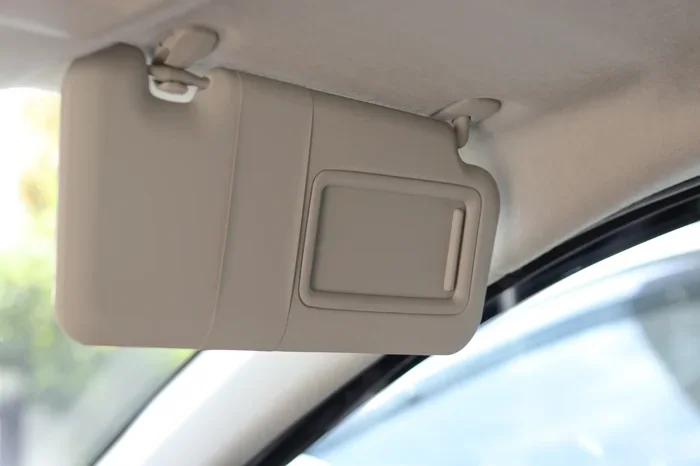
Most people take their car sun visor for granted. It is that little flip-down piece of cardboard or plastic above your windshield. But it serves a very important purpose. It blocks glare from the sun. This helps you see the road clearly.
OEM sun visors come standard in every new vehicle. They are designed and tested by the manufacturer. They meet all DOT regulations for safety. These visors usually include a visor mirror and a small pocket for storage.
Over the years, drivers have found creative ways to enhance their visors. Some add visor extensions for better coverage. Others tint them for extra glare reduction. Some even mount phone holders or mirrors to them. These upgrades are popular car accessories. But they also raise questions about legal modifications.
How Sun Visors Help With Driving Safety
Glare is a serious problem on the road. It can blind you for a split second. That split second can cause a crash. According to the National Highway Traffic Safety Administration, glare contributes to thousands of accidents every year.
A good sun visor reduces this risk. It gives you road visibility even in harsh sunlight. This is especially important during early morning and late afternoon drives. The low angle of the sun makes glare much worse during these times.
So the car sun visor is not just a convenience. It is a safety feature. This is exactly why laws exist around how they are used and modified.
Are Car Sun Visors Legal? The Short Answer
Here is the good news. Standard OEM sun visors are completely legal in all 50 states. If your car came with them from the factory, you have nothing to worry about. They have been tested and approved for safety.
But the question gets more complicated when you start talking about aftermarket sun visors. Are car sun visors legal when you add something to them? The answer depends on several factors. Let us break them down.
Factory-Installed vs. Aftermarket Visors
There is a big difference between your original visor and an add-on product. Your OEM sun visor has been through crash testing. It is securely mounted. It does not obstruct your view in any way.
Aftermarket visors are a different story. These are products you buy separately. They might be extensions, tinted covers, or clip-on accessories. Some of these are perfectly fine. Others could put you at risk of a traffic citation.
The key question is always the same. Does the modification obstruct your view? If the answer is yes, it is likely illegal. This falls under windshield obstruction laws in most states.
What Do Sun Visor Laws Say?
There is no single federal law that specifically addresses car sun visors. Instead, the rules come from a mix of sources. State traffic laws play the biggest role. DOT regulations also apply to vehicle equipment. And some local municipalities have their own rules too.
Most states have laws against obstructing your view through the windshield. This is the main legal basis for visor restrictions. If your visor or any accessory blocks your sightline, you could be pulled over.
Common State Traffic Law Restrictions
Here are some common themes you will find in state traffic laws regarding visors and obstructions:
- No objects hanging from the visor that dangle into your field of vision.
- No tinting that reduces visibility beyond what is legally allowed.
- No extensions that extend past the edge of the roof and block light or views.
- No mirrors or devices mounted on the visor that reflect light into your eyes.
- Visor extensions must not block the driver’s view through the windshield or side windows.
These rules are not meant to ruin your fun. They are in place to keep everyone safe on the road. A small visor mirror or a simple clip is almost never an issue. But anything that changes the way your visor functions can attract attention from law enforcement.
Aftermarket Sun Visors: What Is Allowed?
Many drivers love to customize their vehicles. Aftermarket sun visors are a popular way to do this. They come in all shapes and sizes. Some add extra length. Some include built-in lights. Others offer better glare reduction.
But not all aftermarket visors are created equal. Some are perfectly safe and legal. Others could get you pulled over. Let us look at the most common types.
Visor Extensions
Visor extensions are probably the most popular aftermarket visor accessory. They attach to your existing visor and give you extra coverage. This is great for taller drivers or for blocking sun from different angles.
Most visor extensions are legal. They do not change the function of your original visor. They simply add length. However, there is a catch. The extension must not block your view through any window. If it extends too far and interferes with your sightline, it could be considered an obstructed view violation.
Quick Tip: When installing a visor extension, make sure it stays within the frame of your vehicle. Do not let it hang over the door or window area where it could block your side view.
Tinted Visor Covers
Tinted visor covers are another popular option. They reduce glare even more than a standard visor. But they also raise legal concerns. Window tinting regulations apply to any tinting on your vehicle, including visor covers.
Most states have strict rules about tint darkness. The front windshield usually has the strictest limits. Some states do not allow any tint on the front windshield at all, except for a thin strip at the top. A tinted visor cover could push you over these limits.
If you want a tinted visor, check your local vehicle tinting regulations first. A traffic citation for illegal tinting can be expensive. It can also fail you during your next vehicle inspection.
Visor-Mounted Accessories
Some drivers like to mount accessories to their visors. These can include phone holders, additional mirrors, or even small screens. While these might seem harmless, they can be problematic.
Any accessory that dangles into your field of vision is a risk. Even a small mirror can become a distraction if it is not secured properly. Law enforcement officers have the authority to pull you over if they believe your car accessories are affecting your driving safety.
The safest approach is to keep your visor simple. If you must add accessories, make sure they are firmly attached and do not move around while driving.
Can You Get Pulled Over for an Illegal Sun Visor?
The short answer is yes. You can absolutely get pulled over if your car sun visor is not compliant with the law. But it does not happen very often for standard setups.
Most traffic stops related to visors happen when an accessory is clearly obstructing the driver’s view. For example, if you have a visor extension that hangs down into the driver’s sightline, an officer might cite you for an obstructed view.
Here are some situations that could lead to a traffic citation:
- Your visor extension blocks your view of the road or mirrors.
- Your tinted visor is darker than your state allows.
- You have dangling accessories that swing into your field of vision.
- Your visor mirror is cracked or loose and reflects light into your eyes.
- You have added a visor that covers your passenger side visor area and blocks outside mirror views.
Keep in mind that enforcement varies by location. Some states are stricter than others. A rural state might not care about a small visor extension. But a busy city with heavy traffic might enforce the rules more aggressively.
The Cost of a Visor-Related Citation
If you do get cited for an illegal visor modification, the costs can add up. Fines vary by state. They typically range from $50 to $200 for a first offense. But the real cost is often the points on your license.
Too many points can lead to higher insurance rates. In some cases, you might even face a license suspension. It is not worth risking your safety or your wallet for a cool visor accessory.
How to Make Sure Your Sun Visor Setup Is Legal
Want to keep your car sun visor setup both functional and legal? It is easier than you think. Follow these simple guidelines and you will stay on the right side of the law.
Step 1: Check Your State Laws
Before you buy any aftermarket visor, look up your state’s sun visor law. You can usually find this information on your state’s DMV website. Some states have very specific rules about visor extensions and tinting.
If you frequently travel between states, be aware that laws can change. What is legal in one state might not be legal in the next. This is especially true for window tinting regulations, which vary a lot from state to state.
Step 2: Keep Extensions Within Reason
If you use a visor extension, make sure it does not block your view. The extension should stay within the boundary of your original visor. It should not hang down into your sightline or cover any part of your windshield.
A good rule of thumb is the “mirror test.” Adjust your extension and then check your rearview and side mirrors. Can you see clearly in all mirrors? If yes, your extension is probably fine.
Step 3: Avoid Dark Tints
When it comes to tinting, lighter is almost always safer. If you want a tinted visor, choose one that is very lightly tinted. This will still reduce glare without running afoul of window tint laws.
Some states allow a certain percentage of light transmission through visor tints. Check your local regulations to find the legal limit. Staying below that limit will keep you safe from citations.
Step 4: Secure All Accessories
If you mount anything to your visor, make sure it is secure. A loose accessory can become a distraction or even a projectile in a sudden stop. Use strong clips or adhesive mounts designed for automotive use.
Never hang anything from your visor that could swing freely. This includes air fresheners, fuzzy dice, or decorative items. These are classic examples of obstructed view violations.
Step 5: Pass Your Vehicle Inspection
If your state requires vehicle inspection, your visor setup will be checked. Make sure your visors are in good condition. Replace any that are cracked, broken, or detached.
A simple pre-inspection check can save you from failing your vehicle inspection. Just flip down each visor and make sure it is secure and does not block your view.
Common Mistakes Drivers Make With Sun Visors
Even well-meaning drivers can make mistakes with their car sun visors. Here are some of the most common errors we see:
- Installing extensions that are too long. This is the number one mistake. A longer extension does not always mean better coverage. It can easily block your view instead.
- Using dark tint without checking the law. Many drivers assume a little tint is fine. But even a small amount of tint can put you over the legal limit in some states.
- Forgetting about the passenger side. The passenger side visor can also cause issues. Extensions on the passenger side can block the outside mirror view, which is just as dangerous.
- Ignoring cracked or damaged visors. A broken visor is not just an eyesore. It can also be cited as equipment that is not in proper working condition.
- Adding too many accessories. One or two small accessories are usually fine. But stacking multiple items on your visor creates clutter and distraction.
Avoiding these mistakes will keep you legal and safe on the road. A little awareness goes a long way.
Expert Insights on Sun Visor Legality
We spoke with a traffic safety expert to get their take on sun visor laws. Here is what they had to say:
“The vast majority of visor-related issues come from aftermarket modifications that go beyond what the manufacturer intended. A simple visor mirror or a short extension is almost never a problem. But when drivers start adding heavy tints, long extensions, or dangling accessories, that is when it becomes a safety and legal concern.”
The expert also emphasized that driving safety should always come first. Laws around visors exist for a reason. They are not just bureaucratic rules. They are designed to prevent accidents and save lives.
When you are unsure about a modification, the safest approach is to keep it simple. Your factory-installed visor is already optimized for both function and safety. If you want to enhance it, make small, conservative changes. And always check your local state traffic laws before making any modification.
Key Takeaways
- OEM sun visors are legal everywhere: Factory-installed visors meet all safety standards and are approved for use in all 50 states.
- Aftermarket visors can be risky: Some modifications may violate state traffic laws or DOT regulations if they obstruct your view.
- Obstructed view laws matter: Anything that blocks your sightline can lead to a traffic citation and failed vehicle inspection.
- Tinting visors adds complexity: Window tinting regulations often apply to visor tinting, so check your local limits before tinting.
- State laws vary widely: What is legal in one state may not be in another, especially for visor extensions and tint darkness.
- Simple accessories are safe: Visor mirrors and basic clips are almost always fine, but dangling or heavy accessories can cause issues.
- When in doubt, check local laws: Contact your local DMV for specific guidance on sun visor law in your area.
Conclusion
So, are car sun visors legal? Yes, for the most part. Your standard OEM sun visor is perfectly legal and safe. It has been designed to provide glare reduction without compromising your road visibility.
The real question is what you do with your visor after you buy the car. Aftermarket modifications can be a gray area. Extensions, tints, and accessories all need to be carefully considered. The key is to never obstruct your view or the views of other drivers around you.
Before you add any new car accessories to your visor, take a moment to research your local laws. A quick check of your state’s sun visor law can save you from a costly traffic citation. It can also keep you and your passengers safe on the road.
Stay informed, stay safe, and enjoy the ride. Your car sun visor is there to help you drive better. Just make sure it stays within the bounds of the law.
Frequently Asked Questions
Can I add a visor extension to my car sun visor?
Yes, in most states you can add a visor extension as long as it does not obstruct your view. The extension should stay within the original visor frame and not hang down into your sightline. Check your specific state traffic laws to be sure.
Is it illegal to tint your car sun visor?
It depends on your state’s window tinting regulations. Some states allow light tinting on visors, while others have strict rules about any tint on the front windshield area. Always verify the legal tint percentage before applying any tint to your visor.
Will I get pulled over for a dangling visor accessory?
You can be pulled over if an accessory is obstructing your view or distracting other drivers. DOT regulations and windshield obstruction laws give officers the authority to stop vehicles with unsafe equipment. Keep accessories small, secure, and out of your sightline.
Are aftermarket sun visors with built-in lights legal?
Most aftermarket visors with built-in lights are legal as long as the lights do not shine into your eyes or the eyes of other drivers. They must not obstruct your view or create a distraction. Check for DOT regulations compliance before installing any electronic visor accessories.
Do sun visor laws apply to commercial vehicles too?
Yes, sun visor laws apply to all vehicles, including commercial trucks and vans. In fact, commercial vehicles may face stricter inspections. Make sure your visors and any modifications meet both DOT regulations and state traffic laws.
What should I do if I get a citation for an illegal visor modification?
If you receive a traffic citation for an illegal visor modification, you can pay the fine or contest it in court. You may also want to remove the modification to avoid future issues. Check with your local DMV for guidance on how to resolve the citation and stay compliant going forward.