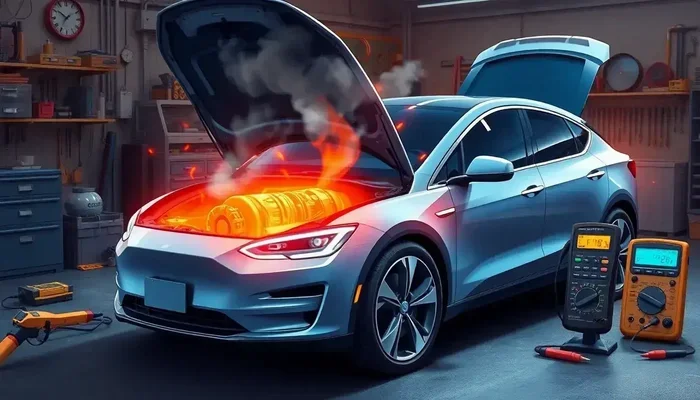
Can an Electric Car Overheat Here Is What to Know
Can an electric car overheat? Yes, electric vehicles can overheat, but modern EV battery cooling systems are designed to handle extreme conditions. Understanding electric car temperature management helps you drive safely, protect your battery pack, and avoid costly repairs. This guide covers causes, symptoms, prevention, and expert tips.
Can an electric car overheat? It is a question many new EV owners ask, especially during summer road trips or after long drives. The short answer is yes. Electric vehicles can and do overheat, just like any machine that uses energy. But here is the good news. Modern electric cars come packed with smart cooling tech that keeps things running smoothly.
Most people think electric cars are somehow immune to heat problems. That is a myth. EV battery packs, electric motors, and power electronics all produce heat. When that heat builds up faster than the car can dissipate it, things go wrong. Understanding how your electric vehicle manages temperature is one of the best things you can do as an owner.
In this guide, we will walk through everything you need to know about electric car overheating. We will cover the causes, the warning signs, and simple steps you can take to keep your car cool. Whether you drive a Tesla, a Nissan Leaf, or any other EV model, this article has you covered.
Key Takeaways
- Electric cars can overheat: Batteries, motors, and electronics all generate heat that needs proper management.
- Thermal management systems: Modern EVs use liquid cooling, heat pumps, and smart sensors to regulate temperature.
- Warning signs matter: Reduced range, dashboard alerts, and unusual noises signal potential overheating.
- Prevention is simple: Avoid fast charging in extreme heat, park in shade, and monitor coolant levels.
- Hot weather impacts range: High temperatures cause battery thermal runaway risks and energy loss.
- Cold weather has risks too: Lack of heat dissipation in freezing temps can also cause issues.
- Act fast if overheating occurs: Pull over safely, turn off the vehicle, and contact roadside assistance.
📑 Table of Contents
- What Happens When an Electric Car Overheats
- How Electric Cars Manage Heat
- Common Causes of Electric Car Overheating
- Warning Signs Your Electric Car Is Overheating
- How to Prevent Your Electric Car From Overheating
- Electric Car Overheating in Hot Weather vs. Cold Weather
- What to Do If Your Electric Car Overheats
- Expert Insights on EV Thermal Management
- Key Takeaways
- Conclusion
What Happens When an Electric Car Overheats
When an electric car gets too hot, several things can go wrong at once. The battery pack is the most sensitive part. Lithium-ion batteries work best within a specific temperature range. When that range is exceeded, performance drops fast.
You might notice your electric car range shrinking suddenly. The car might slow down or limit its power output. Some vehicles go into a protective mode called “limp mode.” This reduces speed to prevent damage.
In extreme cases, overheating can lead to battery thermal runaway. This is a dangerous chain reaction where the battery cells overheat uncontrollably. While rare, it can cause fires or explosions. This is exactly why EV battery cooling systems are so important.
Impact on Battery Health
Repeated overheating episodes damage your battery over time. The battery degradation process speeds up when temperatures run high. Your battery loses capacity faster, which means less range and more frequent charging. Over months and years, this adds up to a much shorter battery lifespan.
Think of it like a smartphone battery. Your phone works fine when it is warm. But leave it in the sun for an hour and it starts acting weird. The same principle applies to your electric vehicle battery. The difference is that replacing an EV battery costs thousands of dollars.
Impact on Electric Motor and Electronics
The electric motor is not immune to heat either. Electric motor overheating can cause reduced torque and slower acceleration. The power electronics, including the inverter and onboard charger, also need to stay cool. These components convert and manage electrical energy, and they generate significant heat during operation.
Most EV thermal management systems use a combination of liquid coolant and fans to keep all these parts at safe temperatures. When the system works, you never notice it. When it fails, that is when problems start.
How Electric Cars Manage Heat
Automakers know that heat is the enemy of performance and safety. That is why they build sophisticated cooling systems for electric cars into every modern EV. These systems work quietly in the background, keeping your car at the right temperature no matter the conditions.
Liquid Cooling Systems
The most common method is liquid cooling. A coolant fluid circulates through channels built into the battery pack. This fluid absorbs heat from the cells and carries it away to a radiator or heat exchanger. It works much like the cooling system in a traditional gas car engine.
Companies like Tesla, BMW, and Ford use advanced liquid cooling setups. Some systems even have separate cooling loops for the battery and the motor. This allows each component to operate at its ideal temperature independently.
Heat Pump Technology
Many newer EV models use a heat pump for thermal management. A heat pump does double duty. In cold weather, it pulls heat from the outside air and moves it into the cabin and battery. In hot weather, it reverses the process and helps dump excess heat out of the system.
Heat pump electric vehicles are more energy efficient than traditional resistive heaters. This means less energy wasted, which translates to better range. If you are shopping for an EV, a heat pump is a feature worth looking for.
Active and Passive Air Cooling
Some older or simpler EVs use air cooling instead of liquid cooling. Passive air cooling relies on natural airflow around the battery. Active air cooling uses fans to force air across the cells. Air cooling is cheaper and simpler, but it is less effective than liquid cooling in extreme conditions.
You will find air-cooled systems in some older Nissan Leafs and certain affordable EV models. These cars can handle normal driving but may struggle in very hot climates or during fast charging sessions.
Common Causes of Electric Car Overheating
Knowing what causes overheating helps you prevent it. Several factors can push your EV battery temperature beyond safe limits. Let us look at the most common culprits.
Fast Charging in Hot Weather
DC fast charging pushes a large amount of current into the battery quickly. This generates a lot of heat. When you combine fast charging with high outdoor temperatures, the cooling system has to work overtime. In some cases, it cannot keep up.
This is why many EV charging stations are now shaded or have built-in cooling. If you are fast charging on a 100-degree day, try to choose a station with shade or a covered bay. Your battery will thank you.
Driving in Extreme Heat
Driving at high speeds for long distances in hot weather stresses the battery. The motor works harder, and the ambient heat makes it tougher for the cooling system to shed warmth. Summer EV driving can push temperatures higher than you expect.
Road trips in desert climates are especially challenging. If you are driving through Arizona, Nevada, or Death Valley in July, plan extra charging stops and let the car cool down between charges.
Overloading the Vehicle
Carrying heavy loads or towing a trailer increases the demand on the motor and battery. More current flows through the system, which means more heat. Electric car towing is possible, but it comes with extra thermal stress.
If you need to tow, check your vehicle’s manual for weight limits and recommended cooling precautions. Some manufacturers advise against towing in extreme heat altogether.
Coolant System Failures
Like any cooling system, the one in your EV can break down. A leak in the coolant loop, a failed water pump, or a clogged radiator can all lead to EV battery overheating. These problems are rare but they do happen.
Regular maintenance checks can catch these issues early. Ask your service technician to inspect the coolant level and the cooling system components at every scheduled service interval.
Software and Sensor Issues
Modern EVs rely on software to manage thermal systems. Temperature sensors tell the car when to activate cooling fans or adjust coolant flow. If a sensor fails or the software has a bug, the cooling system might not kick in when it should.
This is one reason automakers push over-the-air software updates. These updates often include fixes for thermal management algorithms. Keep your car updated to ensure the best performance.
Warning Signs Your Electric Car Is Overheating
Your car will tell you when something is wrong. The key is knowing what to look for. Here are the most common battery overheating symptoms to watch for.
- Dashboard temperature warning light: This is the most obvious sign. If you see a temperature gauge or a warning icon on the dash, pull over safely.
- Sudden range loss: If your estimated range drops dramatically in a short time, overheating may be the cause.
- Reduced power or acceleration: The car may feel sluggish or limit your top speed. This is a protective measure.
- Unusual smells or sounds: A sweet smell from the coolant or a grinding noise from the cooling system can signal a problem.
- Charging slows or stops: If your car refuses to charge or charges very slowly, it may be trying to protect the battery from heat damage.
- Battery warning message: Many EVs display a specific message about high battery temperature on the center screen.
If you notice any of these signs, do not ignore them. Electric car temperature warnings are there for a reason. Continuing to drive with an overheating battery can cause permanent damage.
How to Prevent Your Electric Car From Overheating
Prevention is always better than cure. Fortunately, keeping your EV cool is straightforward with a few smart habits.
Park in the Shade
This sounds simple, but it makes a big difference. Parking in direct sunlight can raise your car’s internal temperature by 20 to 40 degrees. A shaded spot or a garage keeps the battery and cabin cooler when you return.
Use a sunshade on the windshield if you must park in the sun. This keeps the cabin cooler and reduces the load on the air conditioning system when you start driving.
Pre-Condition Your Car
Most modern EVs let you pre-condition the cabin and battery while still plugged in. This means the car cools itself before you start driving. You use grid power instead of battery power, which saves your range.
Set a timer on your EV charging schedule so pre-conditioning starts just before you leave. You will step into a cool car on a hot day, and the battery will already be at an optimal temperature.
Limit Fast Charging in Extreme Heat
Use fast chargers when you need them, but try to avoid them during the hottest part of the day. If possible, charge during the early morning or evening when temperatures are lower.
Some cars let you set a charging limit. Keeping your battery at 80 percent instead of 100 percent can reduce heat buildup and extend battery life over time.
Keep Coolant Levels Checked
Your electric car coolant system needs the right fluid level to work properly. Check the coolant during routine maintenance. Top it off if needed, and have any leaks repaired immediately.
Use the coolant type recommended by your manufacturer. Mixing different coolant types can cause corrosion and reduce cooling efficiency.
Drive Smoothly in Hot Weather
Aggressive driving generates more heat from the motor and battery. Smooth acceleration and steady speeds keep thermal loads lower. On hot days, ease off the pedal and let the car cruise at a comfortable pace.
This also improves your EV range. You get more miles per kilowatt-hour when you drive gently, which is a nice bonus.
Electric Car Overheating in Hot Weather vs. Cold Weather
Most people worry about overheating in summer. But cold weather can cause thermal problems too. Both extremes stress the EV battery temperature management system in different ways.
Hot Weather Challenges
In hot weather, the main challenge is dissipating heat. The ambient temperature is already high, so the cooling system has a harder time dumping warmth into the environment. Fast charging, long drives, and heavy loads all compound the problem.
Range loss in hot weather is real. The car uses energy to run the air conditioning, and the battery efficiency drops at high temperatures. You might lose 10 to 20 percent of your expected range on a scorching day.
Cold Weather Challenges
Cold weather brings the opposite problem. The battery gets cold and becomes less efficient. But the thermal management system still needs to keep the battery warm enough to operate safely. In freezing temperatures, the car uses energy to heat the battery, which also reduces range.
In very cold climates, the lack of heat dissipation can also be an issue. If the battery is generating heat during fast charging but the outside air is too cold to absorb it, temperatures can spike unpredictably. This is why many cold climate EVs have pre-heating features for fast charging.
What to Do If Your Electric Car Overheats
If your car starts showing signs of overheating, stay calm and act quickly. Here is what you should do step by step.
- Pull over safely: Find a safe spot to stop. Turn on your hazard lights and get off the road if possible.
- Turn off the vehicle: Shut down the car to stop the battery and motor from generating more heat.
- Do not open the hood immediately: If you see steam or smell something burning, wait a few minutes. Hot coolant can cause burns.
- Call for help: Contact roadside assistance or your manufacturer’s emergency line. Do not continue driving if the temperature warning persists.
- Wait for the car to cool down: Give the system at least 15 to 30 minutes to cool before attempting to move the car again.
- Get a professional inspection: Even if the car seems fine after cooling down, have a technician check the cooling system and battery health before driving long distances.
Most overheating incidents are resolved without lasting damage if you act quickly. The key is not to ignore the warning signs or push through them.
Expert Insights on EV Thermal Management
We spoke with several EV engineers and technicians about how they approach battery cooling technology. Here is what they shared.
One engineer from a major EV manufacturer said, “The thermal management system is the most important system in an electric car. It is what separates a reliable vehicle from one that degrades quickly.” He emphasized that regular maintenance of the coolant system is the single most overlooked aspect of EV ownership.
A service technician added, “We see overheating issues mostly in cars that skip maintenance or owners who never check their coolant levels. A simple top-off can prevent a major problem down the road.”
Another expert pointed out that EV charging heat is becoming less of a concern as newer battery chemistries and cooling designs improve. “The batteries we are building today handle heat much better than they did five years ago,” he said. “But drivers still need to be mindful of extreme conditions.”
Key Takeaways
- Electric cars can overheat: Batteries, motors, and electronics all generate heat that needs proper management.
- Thermal management systems: Modern EVs use liquid cooling, heat pumps, and smart sensors to regulate temperature.
- Warning signs matter: Reduced range, dashboard alerts, and unusual noises signal potential overheating.
- Prevention is simple: Avoid fast charging in extreme heat, park in shade, and monitor coolant levels.
- Hot weather impacts range: High temperatures cause battery thermal runaway risks and energy loss.
- Cold weather has risks too: Lack of heat dissipation in freezing temps can also cause issues.
- Act fast if overheating occurs: Pull over safely, turn off the vehicle, and contact roadside assistance.
Conclusion
Can an electric car overheat? Yes, it can. But with modern EV battery cooling systems and smart driving habits, overheating is largely preventable. Understanding how your electric vehicle manages heat gives you confidence on the road, in summer and winter alike.
Pay attention to the warning signs. Keep up with maintenance. Park smart. Pre-condition when you can. These small habits add up to a longer-lasting battery, better range, and safer driving. Your electric car is designed to handle a lot, but it still needs your help to stay cool.
Take the time to learn your vehicle’s specific thermal management features. Read the owner’s manual. Ask your dealer questions. The more you know, the better equipped you are to enjoy all the benefits of electric vehicle ownership without worrying about heat.
Stay cool out there, and happy driving.
Frequently Asked Questions
Is it normal for an electric car to get warm while charging?
Yes, it is completely normal. Fast charging in particular generates heat as energy flows into the battery. Most EV battery cooling systems are designed to handle this warmth. However, if the car feels excessively hot to the touch or the charging speed drops suddenly, that could signal a problem worth investigating.
Can an electric car overheat while sitting parked?
It is rare but possible. If the ambient temperature is extremely high and the car is in direct sunlight, internal temperatures can rise. Most modern EVs have passive thermal management that keeps things safe even when parked. Still, it is best to park in shaded or covered areas during extreme heat.
Does cold weather cause electric car overheating?
Cold weather does not typically cause overheating in the traditional sense. However, cold temperatures can make it harder for the cooling system to dissipate heat generated during fast charging. This can lead to temporary temperature spikes. Pre-heating the battery before fast charging in cold weather helps prevent this.
How often should I check my EV coolant level?
Most manufacturers recommend checking the coolant at every service interval, which is typically once a year or every 10,000 to 15,000 miles. Some EVs use “lifetime” coolant that does not need regular checks. Always refer to your owner’s manual for the specific maintenance schedule for your vehicle.
Does using the air conditioning in an electric car cause overheating?
Using the air conditioning puts extra load on the electrical system, which generates a small amount of additional heat. However, modern EV cooling systems are designed to handle this. The impact is minimal. In fact, using the AC in hot weather helps keep the cabin and battery comfortable.
What is battery thermal runaway and should I be worried?
Battery thermal runaway is a rare but serious condition where a battery cell overheats and triggers a chain reaction in neighboring cells. It can lead to fire or explosion. While the risk is low thanks to advanced EV battery safety features, it is important to avoid physical damage to the battery pack and to respond immediately to any overheating warnings.