Car Starting Issues: Common Causes and Proven Fixes
Car starting issues are one of the most frustrating problems drivers face. This guide covers the common causes — from dead batteries to fuel system failures — and gives you proven fixes to get back on the road fast.
Key Takeaways
- Dead battery: The #1 reason for car starting issues. Jump-starting or replacing the battery often solves the problem immediately.
- Fuel system failures: Clogged filters, weak fuel pumps, and empty tanks can prevent your engine from getting the fuel it needs.
- Ignition problems: Worn spark plugs and faulty ignition coils can stop your engine from firing properly.
- Starter motor issues: A failing starter motor may cause clicking sounds or complete silence when you turn the key.
- Regular maintenance: Simple habits like battery checks and fuel system cleaning can prevent most car starting issues before they happen.
📑 Table of Contents
- Car Starting Issues: Common Causes and Proven Fixes
- Why Car Starting Issues Happen
- Car Starting Issues: Battery-Related Problems
- Fuel System Problems That Cause Car Starting Issues
- Ignition System Failures
- Starter Motor and Electrical Issues
- How to Prevent Car Starting Issues
- Troubleshooting Guide: What to Do When Your Car Won’t Start
- When to See a Professional Mechanic
- Conclusion
Car Starting Issues: Common Causes and Proven Fixes
There is nothing quite like turning your key or pressing the start button and hearing… nothing. Car starting issues can strike at any time, leaving you stranded in a parking lot, a busy highway, or your own driveway. Whether it is a frustrating click, a slow crank, or complete silence, the problem always feels to arrive at the worst possible moment.
The good news is that most car starting issues have simple, affordable fixes. In this guide, we will walk you through every common cause — from dead batteries to fuel system problems — and give you step-by-step solutions you can use right away. You will also learn how to prevent these problems from ever happening again.
By the end, you will feel confident diagnosing why your car won’t start and know exactly what to do about it. Let us get into it.
Why Car Starting Issues Happen
Your car is a complex machine. Several systems must work together perfectly every time you turn the key. When one part fails, the whole chain breaks down. Understanding this chain helps you pinpoint the problem faster.
Here is how the starting process works. When you turn the key, your battery sends power to the starter motor. The starter motor cranks the engine. At the same time, the ignition system fires spark plugs. The fuel system delivers fuel to the engine. All of these pieces must work together. If just one fails, you get car starting issues.
Think of it like a row of dominoes. The battery starts the process. The starter motor keeps it going. The fuel and ignition systems finish the job. A problem anywhere along this chain can stop your car dead in its tracks.
The Most Common Starting Problems
Most car starting issues fall into a few main categories:
- No crank at all — Complete silence when you turn the key. Usually a battery or starter motor problem.
- Slow crank — The engine turns over weakly. Often a weak or dying battery.
- Rapid clicking — You hear clicking but the engine does not start. Typically a battery with enough charge to power the starter motor but not enough to actually crank the engine.
- Engine cranks but won’t fire — You hear the engine turning over, but it will not start. Usually a fuel or ignition problem.
Quick Tip: Before you panic, check the obvious things first. Make sure you have enough fuel. Make sure your foot is on the brake. Make sure the parking brake is released. These simple checks save many people from unnecessary stress.
Car Starting Issues: Battery-Related Problems
Batteries cause more car starting issues than any other single factor. A dead or weak battery is often the first thing to check when your car will not start. Let us look at why batteries fail and what you can do about it.
Why Car Batteries Die
Car batteries do not last forever. Most last between three and five years. Over time, the chemical reaction inside the battery weakens. The battery loses its ability to hold a full charge. Several things can speed up this process:
- Leaving lights or electronics on with the engine off
- Extreme hot or cold weather
- Corroded or loose battery terminals
- Old age and natural wear
- Parasitic electrical drains from accessories
Cold weather is especially tough on batteries. Low temperatures slow down the chemical reactions inside the battery. This reduces its power output significantly. Many car starting issues happen on cold winter mornings for this exact reason.
How to Jump-Start a Dead Battery
Jump-starting is the fastest fix for a dead battery. Here is how to do it safely:
- Get a donor vehicle with a working battery. Park it close to yours but do not let them touch.
- Turn off both vehicles. Connect the red (positive) clamp to the positive terminal on the dead battery.
- Connect the other red clamp to the positive terminal on the donor battery.
- Connect the black (negative) clamp to the negative terminal on the donor battery.
- Attach the other black clamp to an unpainted metal surface on the dead car’s engine block.
- Start the donor vehicle. Let it run for a few minutes.
- Try starting your car. If it starts, disconnect the cables in reverse order.
When to Replace Your Battery
Jump-starting works as a temporary fix. But if your battery keeps dying, it is time for a replacement. Here are signs your battery needs to go:
- It is more than three years old
- It struggles to start the car even after a full charge
- The dashboard lights dim when you turn the key
- You see swelling or bloating on the battery case
- There is heavy corrosion on the terminals
Expert Insight: “Most drivers wait too long to replace their battery,” says automotive expert Mike Reynolds. “A simple battery test at any auto parts store takes two minutes and costs nothing. Do it before you get stranded, not after.”
Battery Maintenance Tips
You can extend your battery life with a few simple habits:
- Clean your battery terminals every few months with a baking soda and water solution
- Make sure the battery is securely mounted in place
- Turn off all electronics before shutting off the engine
- Drive your car regularly. Short trips do not give the battery enough time to fully recharge.
- Have your battery tested once a year after it turns three years old
Common Mistake: Many people jump-start their car but never figure out why the battery died in the first place. A dead battery is usually a symptom, not the root cause. Check for parasitic drains or a failing alternator before simply replacing the battery.
Fuel System Problems That Cause Car Starting Issues
Your engine needs fuel to run. When the fuel system fails, you get car starting issues even though the battery and ignition are working fine. Fuel problems are the second most common cause of starting failures.
Empty or Low Fuel Tank
It sounds obvious, but running on fumes is a leading cause of starting problems. Sometimes the fuel gauge is inaccurate. A low fuel level can also cause the fuel pump to suck in air instead of gasoline. This creates engine cranking no start situations that confuse many drivers.
Clogged Fuel Filter
The fuel filter keeps dirt and debris out of your engine. Over time, it gets clogged. A clogged filter restricts fuel flow. Your engine may start fine at idle but struggle when you need more power. In severe cases, the engine will not start at all.
Most mechanics recommend replacing the fuel filter every 30,000 to 50,000 miles. Check your owner’s manual for your specific vehicle’s schedule.
Failing Fuel Pump
The fuel pump pushes fuel from the tank to the engine. When it fails, your engine gets no fuel. Here are warning signs of a weak fuel pump:
- Difficulty starting, especially after the car has been sitting for a while
- Engine sputters at high speeds
- Loss of power during acceleration
- Stalling at low speeds
- A whining noise coming from the fuel tank area
Fuel Pump Relay Issues
The fuel pump relay is a small electrical switch that powers the fuel pump. If the relay fails, the pump does not get power. The engine cranks but will not start. Replacing the relay is usually inexpensive and easy. This is one of the quickest fixes for car starting issues.
Quick Tip: If you suspect a fuel pump problem, listen for a humming sound when you turn the key to the “on” position (before cranking). You should hear the fuel pump buzz for about two seconds. No sound? The pump or its relay may be the problem.
Fuel System Comparison Table
| Problem | Symptoms | Fix | Estimated Cost |
|---|---|---|---|
| Empty Fuel Tank | No response when turning key | Add fuel immediately | $20-$50 |
| Clogged Fuel Filter | Rough idle, hard starts | Replace filter | $50-$150 |
| Failing Fuel Pump | Whining, stalling, no start | Replace fuel pump | $300-$800 |
| Bad Fuel Pump Relay | Crank but no start | Replace relay | $20-$80 |
Ignition System Failures
The ignition system creates the spark that ignites fuel in your engine. When ignition components fail, your car will not start. These vehicle not starting problems can be tricky to diagnose because several parts share similar symptoms.
Worn Spark Plugs
Spark plugs are the heart of your ignition system. They create the spark that starts combustion. Over time, they wear out. The gap between electrodes grows larger. The spark becomes weaker. Eventually, the engine cannot start.
Most spark plugs last between 30,000 and 100,000 miles depending on the type. Here are signs your spark plugs need replacing:
- Rough engine idle
- Difficulty starting, especially in cold weather
- Engine misfires
- Reduced fuel economy
- Slow acceleration
Faulty Ignition Coils
Ignition coils take the battery’s low voltage and convert it into the high voltage needed for spark plugs. A failing coil means weak or no spark. This is a very common cause of engine won’t start problems in modern vehicles.
You can test ignition coils with a multimeter. But often, the simplest approach is to swap coils between cylinders and see if the misfire follows the coil. If it does, you have found your bad coil.
Ignition Switch Problems
The ignition switch is what you actually turn or press to start the car. Over time, these switches can wear out internally. You might turn the key and hear the engine crank but get no start. Or the key might get stuck in the “on” position. Ignition switch replacement usually costs between $100 and $300.
Distributor Cap and Rotor
Older vehicles use a distributor cap and rotor to route spark to each cylinder. Moisture, corrosion, and cracks can cause these parts to fail. If your car has a distributor, inspect the cap regularly. A cracked cap or worn rotor is an easy and cheap fix for car starting issues.
Expert Insight: “Spark plugs are the most neglected maintenance item on a car,” says certified mechanic Sarah Chen. “People will spend hundreds on fancy diagnostics but ignore $30 worth of spark plugs. A full spark plug replacement can transform a car that hesitates or won’t start.”
Starter Motor and Electrical Issues
The starter motor is what physically cranks your engine. When it fails, you get no crank no start situations. This section covers the most common starter and electrical problems.
Symptoms of a Bad Starter Motor
A failing starter motor gives clear warning signs:
- A single loud click when you turn the key
- Rapid clicking but no engine turnover
- Complete silence (no click at all)
- The engine starts only after tapping the starter motor with a wrench
- Smoke coming from under the hood near the starter
Starter motors typically last 100,000 to 150,000 miles. But they can fail earlier due to worn solenoids, damaged gears, or electrical connection problems.
Starter Motor vs. Battery: How to Tell the Difference
Both a dead battery and a bad starter motor can cause car starting issues. Here is how to tell them apart:
- Battery problem: The dashboard lights come on but are dim. You hear a slow crank or rapid clicking. Jump-starting usually solves the problem.
- Starter motor problem: You hear a single click or nothing at all. Jump-starting does not help. The problem persists even with a fully charged battery.
Electrical Wiring and Ground Connections
Sometimes the problem is not a part failure. It is a connection issue. Corroded wires, loose terminals, or bad ground connections can prevent electricity from flowing properly. This causes vehicle starting problems that are hard to diagnose.
Check these electrical connections:
- Battery terminals — clean and tight
- Ground strap from battery to engine block — secure and rust-free
- Starter motor wiring — no fraying or corrosion
- Fuse box — check for blown fuses related to the starting circuit
Quick Tip: Always start your diagnosis with the simplest and cheapest possibilities. Check the battery terminals before you buy a new starter motor. A loose wire costs nothing to fix. A new starter motor can cost hundreds.
Common Mistake: Ignoring the Alternator
Many people replace the battery when the real problem is a failing alternator. The alternator charges your battery while the engine runs. A bad alternator drains the battery even while driving. You get car starting issues because the battery never gets recharged. If your battery keeps dying, test the alternator before buying a new battery.
How to Prevent Car Starting Issues
The best car starting issues are the ones that never happen. Regular maintenance and smart habits can prevent most starting problems before they occur.
Create a Regular Maintenance Schedule
Follow your vehicle manufacturer’s recommended maintenance schedule. Key items that help prevent starting problems include:
- Battery testing and replacement on schedule
- Spark plug replacement at recommended intervals
- Fuel filter changes every 30,000 to 50,000 miles
- Engine oil changes on time
- Coolant system maintenance to prevent overheating issues
Keep Your Battery in Good Shape
The battery is your car’s heart. Protect it with these habits:
- Clean terminals every three months
- Make sure the battery is tightly secured. Vibrations can damage internal components.
- Do not leave accessories on with the engine off
- Drive your car regularly. Long idling does not charge the battery properly.
- Consider a battery maintainer if your car sits unused for extended periods
Watch for Early Warning Signs
Your car tells you when something is wrong. Pay attention to these early signals:
- Dashboard warning lights, especially the battery or check engine light
- Slower engine cranking than usual
- Dim headlights when the engine is off
- Unusual sounds like whining, clicking, or grinding
- Electrical accessories that do not work properly
Expert Insight: “Prevention is always cheaper than repair,” says ASE-certified technician David Park. “A $50 diagnostic visit catches problems before they become $500 repairs. If your car gives you any hint of starting trouble, do not ignore it.”
Keep Emergency Supplies in Your Car
Even with perfect maintenance, problems can still happen. Be prepared with these items:
- A quality jumper cable set or portable jump starter
- A flashlight with fresh batteries
- Basic tools: pliers, wrenches, and screwdrivers
- Spare spark plugs for your vehicle (they are small and cheap to carry)
- A phone charger or portable power bank
Troubleshooting Guide: What to Do When Your Car Won’t Start
When you are standing in front of your car and it will not start, follow this step-by-step troubleshooting guide. This systematic approach helps you find the problem faster and avoid unnecessary stress.
Step 1: Check the Obvious
Before you dig deeper, rule out simple causes:
- Is there enough fuel in the tank?
- Is the gear in Park or Neutral?
- Is the parking brake fully released?
- Is your foot on the brake pedal?
- Are there any new warning lights on the dashboard?
Step 2: Listen Carefully
Turn the key and listen closely. What you hear tells you a lot:
- Nothing at all: Battery is completely dead, starter motor is failed, or there is a wiring problem.
- Single click: Starter motor is likely stuck or battery is too weak to engage the starter.
- Rapid clicking: Battery has some charge but not enough to crank the engine.
- Normal cranking but no start: Fuel or ignition system is the likely problem.
Step 3: Test the Battery
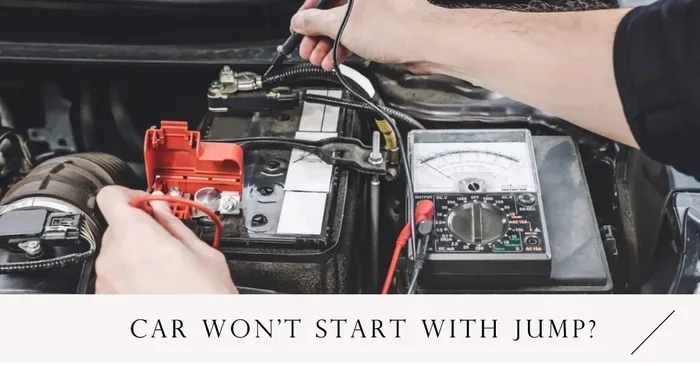
Use a multimeter to check battery voltage. A healthy battery should read about 12.6 volts when the engine is off. If it reads below 12.0 volts, the battery is weak. Below 11.5 volts and it is likely dead. Try jump-starting the car. If it starts, the battery was the problem.
Step 4: Check the Fuel System
If the engine cranks normally but will not start, check fuel delivery. Turn the key to the “on” position and listen for the fuel pump hum. No hum means a fuel pump or relay problem. You can also spray a small amount of starting fluid into the throttle body. If the engine fires briefly, the problem is fuel delivery.
Step 5: Inspect the Ignition System
If fuel is not the issue, check for spark. Pull a spark plug and inspect it. Is it wet with fuel? Is there a strong blue spark when you ground it against the engine block? No spark means a problem with the ignition coil, distributor, or spark plug wires.
Common Mistake: People often skip steps and jump straight to replacing parts. This wastes money and time. Always follow a logical sequence from simple to complex. The answer is usually something small and easy to fix.
When to See a Professional Mechanic
Not every problem can be fixed in your driveway. Some situations need professional help. Here are signs it is time to call a mechanic for your car starting issues:
- You have tried jump-starting and the car still will not start
- You smell burning or see smoke under the hood
- The starter motor makes grinding noises
- You have checked the battery, fuel, and ignition systems and still cannot find the problem
- Your car starts sometimes but not consistently
- The problem involves internal engine components
Choosing the right mechanic matters. Look for ASE-certified technicians. Read online reviews. Ask for a diagnostic estimate before they begin any repairs. Many shops offer free diagnostics for starting problems.
Conclusion
Car starting issues are stressful but they are usually solvable. Most problems come down to three systems: the battery, the fuel system, and the ignition system. By understanding how these systems work together, you can diagnose problems faster and fix them more effectively.
The key to avoiding vehicle starting problems is regular maintenance and paying attention to early warning signs. Do not ignore a slow crank. Do not dismiss a dashboard warning light. These are your car’s way of asking for help.
Remember that prevention beats repair every time. Keep your battery clean, replace spark plugs on schedule, and watch your fuel system. These small habits save you from big headaches. And when problems do arise, you now have the knowledge to tackle them with confidence.
The next time your car gives you trouble, take a deep breath. Follow the troubleshooting steps in this guide. You might just solve the problem yourself and get back on the road in minutes.
Frequently Asked Questions
Why won’t my car start but the battery is good?
If your battery is confirmed good, the issue is likely in the fuel system or ignition system. Check if the fuel pump is running when you turn the key to “on.” Also inspect your spark plugs and ignition coils. A faulty starter motor can also cause this problem even with a strong battery.
How long does a car battery typically last before causing car starting issues?
Most car batteries last between three and five years. However, extreme temperatures, frequent short trips, and leaving electronics on with the engine off can shorten that lifespan significantly. Have your battery tested annually after it reaches three years old.
Can bad spark plugs cause my car not to start?
Yes. Worn or fouled spark plugs can prevent your engine from igniting fuel properly. This leads to hard starting, misfires, or a complete failure to start. Replacing spark plugs is one of the most affordable and effective fixes for car starting issues.
What should I do if my car clicks but won’t start?
A rapid clicking sound usually means your battery has some charge but not enough to crank the engine. Try jump-starting the car. If that works, your battery is weak or there is a parasitic drain draining it. If jump-starting does not help, check the starter motor and electrical connections.
How much does it cost to fix car starting issues?
The cost varies widely depending on the cause. A jump-start is free. A new battery costs $100 to $250. Replacing spark plugs runs about $100 to $300. A fuel pump replacement can cost $300 to $800. A starter motor replacement typically runs $400 to $800 including parts and labor.
Is it safe to use starting fluid to get my car started?
Starting fluid can help you diagnose fuel delivery problems, but it should be used sparingly and only as a temporary measure. Using too much can damage the engine. If your car needs starting fluid repeatedly, there is an underlying fuel system problem that needs professional attention.