Can Hitting a Deer Total Your Car and Cost a Fortune
Hitting a deer can absolutely total your car, especially at higher speeds or during deer season. The damage often affects the front-end, including the radiator, headlights, and suspension. Comprehensive auto insurance typically covers deer-related collisions, but without it, you could face a costly repair bill or a total loss situation.
Every year, millions of drivers across North America face the same terrifying moment. You’re driving down a dark road, and suddenly a deer appears out of nowhere. You slam the brakes, brace for impact, and then — the sickening crunch of metal and glass.
Your heart races. Your hands shake. And the first question that pops into your head is, can hitting a deer total your car? The short answer is yes. But the full picture is more nuanced than you might expect. In this guide, we’ll walk you through everything you need to know about deer collision damage, auto insurance coverage, repair costs, and how to stay safe on the road.
Whether you live in a rural area where deer crossings are common or you just want to be prepared, this article has you covered. Let’s dive in.
Key Takeaways
- Deer collisions can total your car: The impact often causes severe front-end damage that may exceed your vehicle’s value.
- Comprehensive insurance is key: Without it, you’ll pay for all repairs or replacement out of pocket.
- Deer season peaks in fall and early winter: October through December sees the highest number of deer strikes.
- Repair costs vary widely: Minor damage might cost a few hundred dollars, while major collisions can exceed $10,000.
- Safety matters most: Knowing what to do immediately after a deer strike can protect you and your passengers.
- Insurance claims can raise your rates: Filing a comprehensive claim may affect your premium, but usually less than an at-fault accident.
📑 Table of Contents
What Happens When a Deer Hits Your Car
The Physics of a Deer Collision
A deer collision is nothing like a fender bender with another car. Deer weigh anywhere from 100 to 300 pounds. When your vehicle strikes one at 45 or 55 miles per hour, the force is enormous. The impact typically hits the front bumper, grille, and radiator area first.
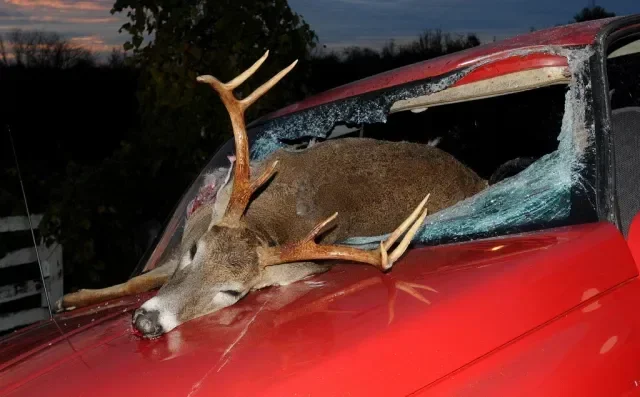
From there, the energy transfers upward into the front-end structure. This means your headlights, bumper, and suspension take the brunt of the hit. In severe cases, the deer can climb up onto the hood, smashing the windshield or crushing the roof.
Here’s what commonly gets damaged in a deer strike:
- Front bumper and grille — often cracked or completely destroyed
- Headlights and fog lights — shattered or misaligned
- Radiator and cooling system — punctured, leading to engine overheating
- Air conditioning condenser — easily bent or punctured
- Suspension components — bent or broken from impact force
- Windshield — cracked or shattered if the deer goes over the hood
- Roof and hood — damaged in high-impact or rollover scenarios
Why Deer Strikes Cause So Much Damage
Unlike a parked car or a slow-speed parking lot dent, a deer collision happens at real speed. Most drivers don’t see the animal until the last second. By that point, there’s no way to slow down enough to reduce the impact.
The vehicle damage is often concentrated at the front. But the real problem is what happens beneath the surface. A deer strike can bend the frame, damage the engine block, or compromise the structural integrity of the car. These hidden issues are what turn a seemingly minor accident into a major repair job — or a total loss.
Does Insurance Cover Deer Damage?
Comprehensive Coverage: Your Best Friend
If you have comprehensive auto insurance, there’s a good chance your policy will cover deer damage. Comprehensive coverage pays for non-collision incidents, including wildlife strikes, theft, vandalism, and weather damage.
This is different from collision coverage, which only applies when you hit another vehicle or object. Since a deer strike is classified as a non-collision event, comprehensive coverage is what kicks in.
Here’s how it typically works:
- Your insurance deductible applies first — usually $500 or $1,000
- The insurance company pays the remaining cost up to your vehicle’s actual cash value
- If the repair costs exceed the car’s value, it’s declared a total loss
- You receive a payout based on the car’s pre-accident market value
What If You Don’t Have Comprehensive Coverage?
This is where things get scary. Without comprehensive coverage, you’re on the hook for every dollar of repair costs. That means if your front-end damage requires new headlights, a bumper, and a radiator, you could be looking at thousands of dollars.
Some drivers skip comprehensive coverage to save on monthly premiums. But living in an area with high deer activity makes this a risky bet. One deer collision can easily cost more than a full year of comprehensive premiums.
How Much Does It Cost to Repair Deer Damage?
Minor vs. Major Deer Strike Damage
The cost of repairing deer collision damage varies wildly depending on several factors. A minor scrape on the bumper is very different from a full-frontal impact that takes out the radiator, headlights, and suspension.
Here’s a rough breakdown of common repair costs:
- Bumper damage only: $300 to $1,500
- Headlight replacement: $200 to $800 per light
- Radiator replacement: $500 to $1,200
- Suspension repair: $500 to $2,500
- Windshield replacement: $300 to $1,000
- Full front-end overhaul: $3,000 to $10,000+
Factors That Drive Up Repair Costs
Several things can push your repair bill higher than expected. The speed of impact matters a lot. Hitting a deer at 60 mph causes far more damage than at 25 mph. The size of the deer matters too — a full-grown buck does more damage than a small doe.
Your vehicle type also plays a role. Luxury cars and trucks often have expensive parts. A damaged Audi grille costs far more than a damaged Honda grille. And if the collision damage affects sensors, cameras, or advanced driver-assistance systems, you’re looking at even higher costs.
Here’s a quick comparison of how different vehicles handle deer strikes:
Vehicle Type and Deer Strike Damage
Different vehicles suffer different levels of deer collision damage based on their design, bumper height, and structural strength.
- Sedans: Low bumper height means the deer often hits the radiator and headlights directly. Front-end damage is common.
- SUVs and Trucks: Higher bumper placement can help deflect smaller deer, but larger bucks can still cause major damage to the grille and windshield.
- Luxury Vehicles: Advanced sensors, cameras, and expensive lighting systems make repairs significantly more costly.
- Older Vehicles: May have cheaper parts but could be totaled more easily due to lower overall value.
When Does a Deer Collision Total Your Car?
Understanding Total Loss Thresholds
A car is considered totaled when the cost of repairs exceeds the vehicle’s actual cash value. This threshold varies by state, but most insurance companies use a 70% to 75% rule. If repairs cost more than 70% of the car’s value, it’s a total loss.
So, can hitting a deer total your car? Absolutely. Here’s a simple example. Let’s say your car is worth $8,000. If the deer damage costs $6,000 to repair, your insurance company will likely declare it a total loss. You’d receive a payout of $8,000 minus your deductible.
Signs Your Car Might Be a Total Loss
Not sure if your vehicle will be declared totaled after a deer strike? Watch for these signs:
- The front-end damage is extensive and affects multiple systems
- The airbags deployed during the impact
- The frame or structural components are bent or compromised
- The engine or transmission was damaged by the collision
- The repair estimate exceeds 70% of the car’s market value
What Happens After a Total Loss
If your car is declared a total loss, the insurance company pays you the actual cash value of the vehicle. This is based on the car’s pre-accident market value, not what you originally paid for it.
You can use that payout to buy a replacement vehicle. If you still owe money on a car loan, the situation gets trickier. Gap insurance can help cover the difference between the payout and what you owe. Without gap insurance, you’d need to pay the remaining balance yourself.
How to Stay Safe During Deer Season
When and Where Deer Strikes Happen Most
Deer season runs primarily from October through January. During this time, deer are more active, especially during mating season. Dawn and dusk are the most dangerous times because deer are most active then and visibility is low.
Certain areas have higher deer collision rates:
- Rural highways and back roads
- Areas near forests and wooded areas
- Regions with high deer populations like the Midwest and Northeast
- Roads with deer crossing signs
Tips to Avoid Hitting a Deer
You can’t prevent every deer collision, but you can reduce your risk with these practical tips:
- Use high beams at night when there’s no oncoming traffic. This gives you more time to spot deer.
- Slow down in deer zones. If you see one deer, there are usually more nearby.
- Don’t swerve suddenly. Swerving can cause you to lose control or hit oncoming traffic. Brake firmly and stay in your lane.
- Watch for deer crossing signs. These are placed in areas with frequent deer activity for a reason.
- Drive defensively during peak hours. Dawn and dusk are when deer are most active.
- Keep your eyes moving. Scan the road ahead instead of staring at the center line.
Quick Safety Tips for Deer Season
- Always wear your seatbelt — it saves lives in any collision
- Keep your headlights clean and working properly
- Maintain a safe following distance so you have time to stop
- Use horn blasts to scare off deer near the road
- Never rely on deer whistles or other gimmicks — they’re not proven to work
What to Do Right After Hitting a Deer
Immediate Steps to Take
After a deer collision, your priority is safety. Here’s what you should do right away:
- Pull over safely to the side of the road. Turn on your hazard lights.
- Check yourself and your passengers for injuries. Call 911 if anyone is hurt.
- Do not approach the deer. An injured deer can be dangerous. Stay in your vehicle.
- Document the damage. Take photos of your vehicle from multiple angles.
- Call the police to file a report, even if the accident seems minor.
- Contact your insurance company as soon as possible to start the claim process.
When to Call for Help
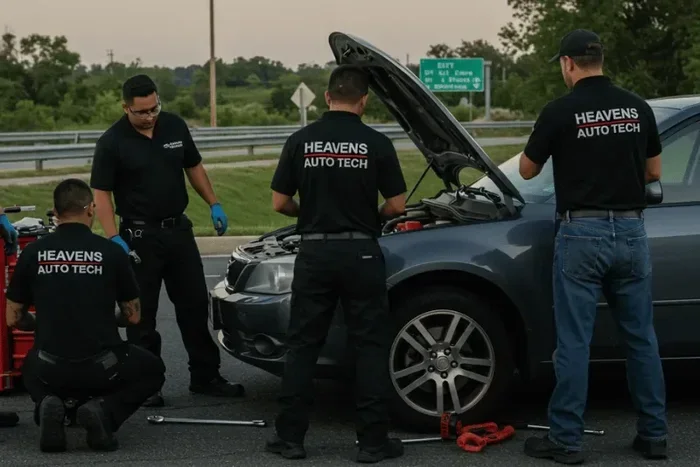
If your car is disabled or unsafe to drive, call for roadside assistance or a tow truck. Don’t try to drive a damaged vehicle long distances — you could cause more collision damage or put yourself at risk.
If the deer is blocking the road and poses a hazard, let the police handle it. They have the training and equipment to deal with wildlife safely.
Handling the Insurance Claim Process
Filing a deer damage claim is usually straightforward with comprehensive coverage. Your insurance adjuster will inspect the vehicle and provide an estimate. Be honest about what happened and provide all the documentation you gathered at the scene.
Keep in mind that filing a comprehensive claim may slightly increase your insurance premium. However, this increase is typically much smaller than what happens after an at-fault accident. Many insurance companies also offer accident forgiveness programs that can protect your rates.
Key Takeaways
- Hitting a deer can absolutely total your car, especially at highway speeds or when the impact damages critical systems like the engine and frame.
- Comprehensive auto insurance is the best protection against financial loss from a deer collision.
- Repair costs can range from a few hundred dollars to over $10,000 depending on the severity of the front-end damage.
- Deer season runs from October through January, with dawn and dusk being the most dangerous times.
- Staying alert and following safety tips can significantly reduce your risk of a deer strike.
- Always document the damage and contact your insurance company promptly after a collision.
Conclusion
So, can hitting a deer total your car? Yes, it absolutely can. The damage from a deer collision can be devastating — both to your vehicle and to your wallet. But with the right auto insurance coverage, a calm response, and a bit of preparation, you can handle the aftermath with confidence.
The best defense is a good offense. Stay alert during deer season, drive defensively, and make sure your insurance policy covers wildlife strikes. These small steps can save you from a costly repair bill or a total loss situation.
Remember, no amount of preparation can eliminate the risk entirely. Deer are unpredictable animals, and collisions happen even to the most careful drivers. But you can control how prepared you are. And being prepared makes all the difference.
Drive safe, stay aware, and never assume a road is clear just because you haven’t seen a deer yet. They can appear from anywhere, especially in areas where wildlife crossing is common. Your car, your wallet, and your peace of mind will thank you.
Frequently Asked Questions
Will my insurance rates go up after a deer claim?
Typically, a comprehensive claim for a deer collision has a smaller impact on your rates than an at-fault accident. Some insurers don’t increase rates at all for comprehensive claims. However, policies vary, so it’s best to check with your provider directly.
What should I do if a deer is in the road and I can’t stop?
Brake firmly and stay in your lane. Swerving can cause you to lose control or collide with oncoming traffic. It’s safer to hit the deer than to risk a head-on collision or rollover by swerving.
How common are deer collisions in the United States?
Deer collisions are extremely common. There are over 1.5 million reported deer strikes annually in the U.S. They are one of the most frequent types of wildlife collisions and a leading cause of vehicle damage on rural roads.
Does liability insurance cover deer damage?
No, liability insurance only covers damage you cause to other people or vehicles. Deer damage falls under comprehensive coverage. Make sure you have this optional coverage included in your policy.
Can I claim a deer collision on my taxes?
In some cases, you may be able to claim a casualty loss on your taxes if the damage is significant and your state has a casualty loss deduction. However, this is rare and usually only applies in disaster situations. Consult a tax professional for advice.
What time of year are deer collisions most likely?
Deer season peaks from October through January, with November being the highest-risk month. This is when deer are most active due to mating behavior, and shorter daylight hours reduce visibility for drivers.