How to Clean a Throttle Position Sensor the Easy Way
A dirty throttle position sensor can cause rough idle, poor acceleration, and reduced fuel economy. Cleaning your TPS sensor is a simple DIY task that takes under 30 minutes and can save you hundreds in mechanic bills. This guide walks you through every step with clear instructions and practical tips.
If your car idles rough, hesitates when you press the gas, or throws a check engine light, the throttle position sensor might be to blame. Before you spend hundreds at the mechanic, try cleaning it yourself. This guide shows you exactly how to clean a throttle position sensor the easy way.
The throttle position sensor, often called the TPS, is a small but mighty component in your car’s engine. It tells the engine control unit how far the throttle plate is open. When dirt and carbon buildup coat the sensor, it sends wrong signals. The result? Poor engine performance and wasted fuel. The good news is that cleaning it is straightforward and takes less than half an hour.
Whether you drive a compact sedan or a larger vehicle, this process works the same way. You do not need special skills or expensive tools. Just a few household items and a little patience. Let us walk through it together.
Key Takeaways
- Easy DIY Fix: You can clean your throttle position sensor at home with basic tools and a quality cleaner.
- Saves Money: Avoid costly dealer visits by learning this simple maintenance skill.
- Restores Performance: A clean sensor improves idle stability, acceleration, and fuel economy.
- Quick Process: The entire cleaning process takes 15 to 30 minutes.
- Prevents Bigger Issues: Regular cleaning stops small problems from becoming expensive repairs.
- Safe for All Types: The method works for most vehicles with electronic throttle control.
📑 Table of Contents
- What Does a Throttle Position Sensor Do?
- Signs Your Throttle Position Sensor Needs Cleaning
- Tools and Materials You Will Need
- Step-by-Step Guide to Cleaning the Throttle Position Sensor
- Common Mistakes to Avoid
- How Often Should You Clean Your Throttle Position Sensor?
- When Cleaning Is Not Enough: Signs You Need a Replacement
- Quick Tips for Best Results
- Expert Insight: Why Regular Sensor Maintenance Matters
- Key Takeaways
What Does a Throttle Position Sensor Do?
The throttle position sensor sits on the throttle body of your engine. It monitors the position of the throttle plate, which controls how much air enters the engine. Think of it as a messenger that tells your car’s computer exactly how much fuel to inject based on how hard you press the accelerator pedal.
When you step on the gas, the throttle plate opens wider. The TPS sends a voltage signal to the engine control unit that matches this position. If the sensor is dirty or worn, the signal becomes inaccurate. Your engine then runs poorly because it does not know the right air-fuel mixture.
How the TPS Works with Other Systems
The throttle position sensor does not work alone. It talks to the mass airflow sensor, the fuel injection system, and the engine control module. Together, these parts keep your engine running smoothly. When one part fails or gets dirty, it affects everything else.
For example, a dirty TPS can cause your car to idle too high or too low. It can also lead to engine stalling or rough acceleration. This is why keeping the sensor clean matters so much for overall engine performance.
Many people also confuse the TPS with the throttle body itself. The throttle body is the larger piece that houses the throttle plate. The sensor is a smaller component mounted on or near the body. Cleaning the throttle body is different from cleaning the sensor, though both help engine performance. If you are interested in broader car maintenance, you might also want to learn about 1500cc to 2000cc cars in India since smaller engine cars often have more accessible throttle bodies.
Signs Your Throttle Position Sensor Needs Cleaning
How do you know your TPS sensor needs attention? Look for these common warning signs. Catching them early saves you from bigger problems down the road.
Rough or Unstable Idle
Your car should idle smoothly when you are stopped. If the engine shakes, surges, or fluctuates in RPM, the TPS might be sending inconsistent signals. A dirty sensor confuses the engine control unit about the throttle position.
Hesitation or Stumbling During Acceleration
Do you feel a delay or stumble when you press the gas pedal? This hesitation happens because the sensor cannot accurately report throttle opening. The engine control unit then delivers the wrong amount of fuel at the wrong time.
Poor Fuel Economy
A malfunctioning TPS sensor can cause your car to use more fuel than it should. If you notice you are filling up more often, the sensor might be sending rich fuel mixture signals to the engine.
Check Engine Light
The check engine light is a broad warning, but a dirty TPS often triggers it. The engine control unit detects irregular voltage signals and flags it as a problem. Always get the code read to confirm it is the sensor causing the issue.
Engine Stalling or Surging
Sudden stalling or unexpected surges in speed can point to a failing throttle position sensor. When the sensor sends wrong data, the engine does not know how to adjust the air-fuel mixture properly.
Tools and Materials You Will Need
Before you start, gather everything you need. Having the right tools makes the job faster and safer.
- Throttle body cleaner spray — a specialty cleaner designed for fuel-injected engines
- Clean microfiber cloths — lint-free rags that will not leave debris behind
- Flathead screwdriver or Torx bit — for removing the sensor connector
- Safety gloves — to protect your hands from chemicals
- Safety glasses — to shield your eyes from spray and debris
- Electrical contact cleaner — for cleaning the sensor tip and connector pins
- Owner’s manual — to locate the exact position of your TPS sensor
Most of these items you probably already have at home. The throttle body cleaner is the one special purchase you might need. It costs around five to ten dollars and lasts for many cleaning jobs. Avoid using harsh household cleaners on the sensor. They can damage the delicate components and make the problem worse.
For those interested in other car electrical components, cleaning your car’s electrical connections properly is also important. If you use a 12V DC to 220V AC car power inverter for charging devices on the road, keeping all electrical parts clean ensures your entire system runs reliably.
Step-by-Step Guide to Cleaning the Throttle Position Sensor
Now for the main event. Follow these steps carefully and you will have a clean TPS sensor in no time. The process is the same for most vehicles, though exact placement may vary slightly.
Step 1: Park the Car and Turn Off the Engine
Find a flat, well-ventilated area to work in. Park the car on level ground, turn off the engine, and let it cool completely. A warm engine can cause burns, and working on a hot engine is never a good idea. Wait at least 20 to 30 minutes after driving before you start.
Disconnect the negative battery terminal before you touch any electrical components. This prevents accidental shorts and keeps you safe. Use a wrench to loosen the nut on the negative cable and pull it off the battery post.
Step 2: Locate the Throttle Position Sensor
Open the hood and find the throttle body. It is a cylindrical or rectangular component connected to the air intake manifold. The throttle position sensor is usually mounted on top or beside the throttle body with one or two screws.
Refer to your car’s owner manual for the exact location. On most vehicles, the sensor plugs into a small electrical connector near the throttle body. It is a small device, usually about the size of a matchbox, with a wire harness leading to it.
Step 3: Disconnect the Electrical Connector
Gently press the tab on the electrical connector and pull it straight off the sensor. Do not yank or twist the wires. If the connector is stuck, wiggle it gently side to side while pulling. Never pull on the wires themselves — always grip the connector housing.
Once disconnected, inspect the connector for corrosion or dirt. Use a dry microfiber cloth to wipe away any visible grime. If the pins look corroded, a quick spray of electrical contact cleaner works wonders.
Step 4: Remove the Sensor from the Throttle Body
Use the appropriate screwdriver or Torx bit to remove the mounting screws. Most TPS sensors have one or two small bolts holding them in place. Keep the screws in a safe spot so you do not lose them.
Pull the sensor straight out of its mounting bracket. It should slide out easily. If it feels stuck, do not force it. Double-check that all screws are removed and look for any clips or tabs holding it in place.
Step 5: Clean the Sensor
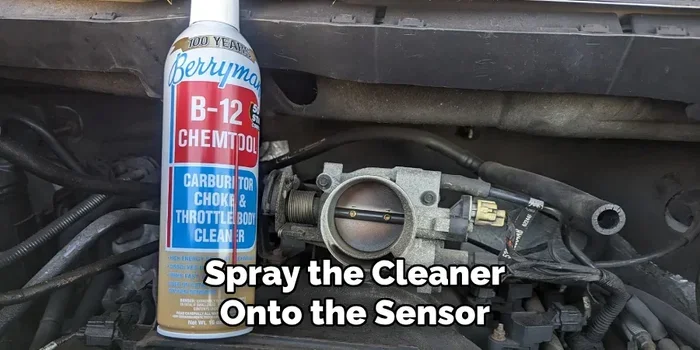
This is the most important step. Hold the throttle position sensor with a cloth and spray the throttle body cleaner directly onto the sensor tip and the throttle plate. Do not soak it — a light, even spray is enough.
Let the cleaner sit for about 30 seconds to dissolve the carbon buildup. Then use a clean microfiber cloth to gently wipe away all the grime. You will likely see dark, gunky residue come off. That is the carbon and oil buildup that was causing your problems.
Repeat the spray-and-wipe process until the cloth comes away clean. Be careful not to damage the sensor element itself. The tip has a delicate contact point that must remain intact. Do not scrub it aggressively or use abrasive materials.
Also clean the throttle plate inside the throttle body while you have access. Wipe the plate on both sides to remove any carbon deposits. A clean throttle plate helps the sensor read accurately.
Step 6: Clean the Electrical Connector
While the sensor soaks and dries, take a moment to clean the electrical connector pins. Spray a small amount of electrical contact cleaner onto the pins and let them air dry for a minute. This ensures a solid electrical connection when you reconnect everything.
You can also use a small, dry brush to gently clean any corrosion from the connector housing. A toothbrush works great for this. Just make sure it is dry and clean before you use it near electrical components.
Step 7: Reinstall the Sensor
Once the sensor and connector are completely dry, place the sensor back into its mounting bracket. Secure it with the screws you removed earlier. Tighten them firmly but do not overtighten — you could strip the threads or crack the bracket.
Reconnect the electrical connector by pressing it firmly onto the sensor until you hear a click. Make sure it is fully seated. A loose connection will cause the same problems you just fixed.
Step 8: Reconnect the Battery and Test
Reconnect the negative battery terminal and tighten the nut securely. Start the engine and let it idle for a few minutes. Listen for smooth, steady idle. If the engine runs rough at first, that is normal — the engine control unit may need a few cycles to recalibrate.
Take the car for a short test drive. Pay attention to acceleration response and idle quality. If the symptoms improve, you have successfully cleaned your throttle position sensor. If problems persist, the sensor may need replacement rather than cleaning.
Keeping your car’s electrical systems in good shape extends to all components. For those who rely on car electronics during road trips, maintaining a clean 12V to 230V car inverter and all related wiring ensures your entire electrical system performs at its best.
Common Mistakes to Avoid
Even a simple job like sensor cleaning can go wrong if you make these common mistakes. Learn from others’ errors and save yourself time and frustration.
Using the Wrong Cleaner
Never use household cleaners, WD-40, or general-purpose solvents on the TPS sensor. These chemicals can damage the sensor’s delicate electronics. Always use a dedicated throttle body cleaner or electrical parts cleaner designed for automotive use.
Being Too Aggressive When Cleaning
The sensor tip is fragile. Scrubbing it hard or using abrasive pads can destroy the sensing element. Gentle wiping with a soft cloth is all you need. Let the cleaner do the heavy lifting.
Forgetting to Disconnect the Battery
Working on electrical components without disconnecting the battery risks short circuits. Always remove the negative terminal first and wait a few minutes before starting work. This also resets the engine control unit, which can help it relearn the sensor’s clean readings.
Not Letting Parts Dry Completely
Reconnecting a wet sensor or connector can cause corrosion over time. Always let everything air dry completely before reassembly. Use a dry cloth to pat down visible moisture and then let it sit for a few minutes.
Ignoring the Throttle Body Itself
Cleaning the sensor alone helps, but a dirty throttle body will still cause problems. Always clean the throttle plate and the bore of the throttle body while you have everything open. This gives you the best results.
Skipping the Electrical Connector Check
A corroded or dirty connector can cause the same symptoms as a dirty sensor. Always inspect and clean the connector pins during the process. A simple spray of contact cleaner can make a big difference.
How Often Should You Clean Your Throttle Position Sensor?
There is no strict schedule for TPS sensor cleaning. However, most experts recommend inspecting and cleaning it every 30,000 to 50,000 miles as part of regular car maintenance. If you drive in dusty or stop-and-go traffic conditions, you may need to clean it more often.
Watch for the warning signs mentioned earlier. If you notice rough idle, hesitation, or a check engine light, it is time to inspect the sensor. Regular cleaning prevents buildup from reaching problematic levels and keeps your engine running at its best.
Think of it like brushing your teeth. A little regular maintenance prevents big problems later. Your engine will thank you with smoother operation and better fuel economy.
When Cleaning Is Not Enough: Signs You Need a Replacement
Sometimes the throttle position sensor is too far gone for cleaning to help. If you have cleaned it thoroughly but still experience the same symptoms, it is time to consider a replacement. Here are the signs:
- The sensor tip is physically damaged or worn down
- You see corrosion on the internal contacts that will not come off
- The voltage signal remains erratic even after cleaning
- The check engine light returns with the same code shortly after cleaning
- The sensor housing is cracked or damaged
A new TPS sensor is relatively inexpensive, usually between 20 and 80 dollars depending on your vehicle. The replacement process is similar to the cleaning process, minus the extensive cleaning steps. If you are comfortable with the cleaning process, swapping in a new sensor is very doable as a DIY job.
Quick Tips for Best Results
- Always work on a cool engine to prevent burns and ensure safety
- Take photos before disassembling anything so you can remember how everything goes back together
- Use gloves to keep oils from your hands off the sensor
- Clean the sensor tip in one direction to avoid pushing debris into the sensor element
- Keep a rag underneath the sensor to catch any drips and debris
- Reset your engine control unit after reinstalling the sensor for the best results
- Test drive in both city and highway conditions to fully evaluate the improvement
Expert Insight: Why Regular Sensor Maintenance Matters
Automotive experts agree that regular sensor maintenance is one of the most overlooked aspects of car care. Many drivers wait until something goes wrong before paying attention to sensors like the TPS. By that point, the buildup has often been accumulating for thousands of miles.
A clean throttle position sensor ensures accurate communication between the engine and the computer. This translates to smoother idling, better acceleration, improved fuel economy, and lower emissions. It is a small act of maintenance with outsized benefits.
Think of the TPS as the brain’s messenger for your engine’s throttle. When that messenger is clear and accurate, everything works as it should. When the messenger is confused by dirt and grime, the entire system suffers. Keeping it clean is one of the simplest things you can do for your car’s health.
Regular maintenance extends beyond just the throttle position sensor. Your car has many sensors that benefit from periodic attention, including the mass airflow sensor and the oxygen sensor. Together, these sensors form the nervous system of your fuel injection system, and keeping them all clean ensures peak engine performance.
Key Takeaways
- Simple DIY Task: Cleaning your throttle position sensor requires only basic tools and about 30 minutes of your time.
- Identifiable Symptoms: Rough idle, hesitation, poor fuel economy, and check engine light all point to a dirty TPS sensor.
- Right Tools Matter: Use only throttle body cleaner and electrical contact cleaner — never household chemicals.
- Safety First: Always disconnect the battery before working on electrical components.
- Know When to Replace: If cleaning does not resolve the issues, the sensor may need to be replaced entirely.
- Preventive Maintenance: Clean the sensor every 30,000 to 50,000 miles to prevent buildup and maintain optimal engine performance.
Frequently Asked Questions
Can I clean the throttle position sensor without removing it?
Yes, you can spray throttle body cleaner onto the sensor while it is still mounted. However, removing the sensor gives you better access and allows you to clean the throttle plate and surrounding area more thoroughly. For the best results, remove the sensor and clean it properly.
What happens if I do not clean my throttle position sensor?
A neglected TPS sensor will continue to send inaccurate signals to the engine control unit. This leads to rough idling, poor acceleration, reduced fuel economy, and eventually may trigger a check engine light. Over time, it can also cause additional stress on other engine components like the fuel injection system and catalytic converter.
Is cleaning the throttle position sensor the same as cleaning the throttle body?
No, they are different tasks but related. The throttle body is the larger component that houses the throttle plate. The TPS sensor is a smaller component that monitors the plate’s position. You can clean both at the same time since they are in the same area, but each requires attention to different parts.
How much does it cost to have a mechanic clean the throttle position sensor?
A mechanic typically charges between 50 and 150 dollars for a TPS sensor cleaning, depending on your vehicle and location. Doing it yourself costs only a few dollars for cleaner and takes about 30 minutes. It is one of the most cost-effective DIY car maintenance tasks you can do.
Can a dirty throttle position sensor cause the car to stall?
Yes, a dirty or failing TPS sensor can absolutely cause engine stalling. When the sensor sends incorrect throttle position data, the engine control unit cannot properly regulate the air-fuel mixture. This can cause the engine to stall at idle or while driving, which is dangerous and needs immediate attention.
Will cleaning the throttle position sensor fix a check engine light?
If the check engine light is caused by a dirty TPS sensor sending erratic signals, cleaning it may resolve the issue. However, if the sensor is physically damaged, cleaning will not help and you will need a replacement. Always use an OBD-II scanner to read the specific error code before deciding on the fix.
=== CONCLUSION ===
Cleaning your throttle position sensor is one of the easiest and most rewarding DIY car maintenance tasks you can tackle. It takes just 30 minutes, costs almost nothing, and can dramatically improve how your car drives. From smoother idle to better fuel economy, the benefits are immediate and noticeable.
Remember, a clean throttle position sensor means accurate signals, which means your engine runs the way it was designed to. Do not wait for serious symptoms to appear. Make sensor cleaning part of your regular maintenance routine and your car will reward you with reliable performance for years to come.
Grab your throttle body cleaner, follow the steps in this guide, and give your TPS sensor the care it deserves. Your engine — and your wallet — will thank you for it.