Is 40 PSI Too High Here Is Everything You Need To Know
Is 40 PSI too high? The answer depends on your vehicle, tire type, and driving conditions. 40 PSI is a common tire pressure rating, but it may be too much for some cars and perfect for others. Checking your owner manual and tire sidewall ensures you run the correct tire pressure for safety, fuel economy, and tire longevity.
You just checked your tire pressure and saw 40 PSI on the gauge. Now your mind is racing. Is 40 PSI too high for your car? This is one of those questions that seems simple on the surface but has a lot of nuance underneath. The short answer is: it depends. 40 PSI is the right pressure for some vehicles and way too much for others. Whether you drive a compact sedan, a family SUV, or a pickup truck, understanding what 40 PSI means for your tires is essential. In this guide, we will break down everything you need to know about tire pressure, overinflation risks, and how to make sure your tires are set up correctly. Let us get into it.
Tire pressure might not be the most exciting topic, but it directly affects your safety, fuel economy, and how long your tires last. A few PSI can make a huge difference in how your car handles, rides, and even how much gas you use. So if you have ever wondered whether 40 PSI is too much air in your tires, keep reading. We will cover every angle so you can drive with confidence and keep your tires in great shape.
Key Takeaways
- 40 PSI is not always too high: Some vehicles, especially trucks and SUVs, require or recommend 40 PSI for optimal performance.
- Passenger cars often run lower: Most sedans and compact cars use 30-35 PSI, so 40 PSI may be overinflated for those models.
- Overinflation causes uneven tire wear: Running too much air pressure wears the center of the tread faster and reduces grip.
- Always check your tire sidewall: The maximum PSI listed on the sidewall is not the recommended pressure — it is the ceiling.
- Cold tire pressure matters: Always check tire pressure when tires are cold for the most accurate reading.
- Fuel economy can improve slightly: Higher pressure reduces rolling resistance, but the safety trade-offs may not be worth it.
- Consult your owner manual: The manufacturer knows best — always follow their recommended pressure guidelines.
📑 Table of Contents
- What Does 40 PSI Mean for Your Tires?
- Is 40 PSI Too High for Passenger Cars?
- When 40 PSI Is the Right Tire Pressure
- Risks of Running 40 PSI on the Wrong Tires
- How to Check and Maintain Proper Tire Pressure
- Quick Tips for Managing Tire Pressure
- Common Mistakes Drivers Make with Tire Pressure
- Expert Insights on Tire Pressure and 40 PSI
- Comparison Table: Recommended Tire Pressure by Vehicle Type
- How 40 PSI Affects Fuel Economy
- Final Thoughts: Is 40 PSI Too High for Your Vehicle?
What Does 40 PSI Mean for Your Tires?
Understanding Tire Pressure Basics
PSI stands for pounds per square inch. It measures how much air is inside your tire. Every tire has a recommended pressure range set by the vehicle manufacturer. This number is not random. It is carefully chosen based on the weight of your vehicle, the size of the tire, and how the car is designed to handle the road.
When you see 40 PSI on a tire pressure gauge, it simply means there are 40 pounds of air pressure per square inch inside the tire. That number alone does not tell you if it is too high or just right. You need context. And that context comes from your vehicle and your tires.
Where to Find the Recommended Tire Pressure
Most drivers make the mistake of looking at the tire sidewall for pressure information. The sidewall shows the maximum cold tire pressure, not the recommended pressure. Here is where to find the real number:
- Driver side door jamb: Look for a sticker on the door frame when you open the driver side door. This sticker lists the recommended tire pressure for both front and rear tires.
- Vehicle owner manual: Your manual has a dedicated section on tire specifications and inflation pressure.
- glove box or fuel door: Some manufacturers place the sticker in these locations instead.
The recommended pressure for most passenger cars falls between 30 and 35 PSI. So if your car recommends 32 PSI and you are running 40 PSI, that is a meaningful difference. On the other hand, if your truck recommends 40 PSI, then you are right on target.
Is 40 PSI Too High for Passenger Cars?
The Typical Passenger Car Tire Pressure
Most standard passenger cars, sedans, and compact vehicles are designed to run between 30 and 35 PSI. Some economy cars even recommend as low as 28 PSI. So when you put 40 PSI into a tire that is rated for 32 PSI, you are overinflating it by a significant margin.
Here is why that matters. Overinflated tires have a smaller contact patch with the road. That means less rubber is touching the pavement at any given time. Less contact equals less grip. Less grip means longer stopping distances, especially on wet or icy roads. It also means the tire wears out faster in the center of the tread.
How Overinflation Affects Ride Quality
Running 40 PSI in a car that recommends 32 PSI will change how your car feels on the road. You will notice:
- A harder, harsher ride with less cushioning from road bumps.
- Reduced traction on wet surfaces, which increases the risk of accidents.
- Uneven tire wear that shortens the life of your tires.
- A harsher noise level from the road coming through the cabin.
These are not minor issues. They affect your daily driving experience and your safety. If you have been running 40 PSI in a passenger car and wondering why the ride feels stiff or why your tires wear out fast, this is likely the reason.
When 40 PSI Is the Right Tire Pressure
Vehicles That Require or Recommend 40 PSI
Not every car should run low pressure. Many vehicles are designed to operate at or near 40 PSI. Here are some examples:
- Trucks and SUVs: Larger vehicles with heavier loads often require higher tire pressure to support the weight. Full-size trucks like the Ford F-150 or Chevrolet Silverado frequently recommend 35 to 45 PSI depending on the load.
- Performance tires: Some high-performance tires are rated for higher pressures to handle the extra heat and stress from spirited driving.
- Light-duty trailers: Trailer tires often require 40 PSI or more to safely carry cargo.
- Certain minivans and crossovers: Models built for hauling passengers and cargo sometimes list 40 PSI as the recommended pressure.
If your vehicle’s door jamb sticker says 40 PSI, then that is your sweet spot. Do not reduce it just because you think it is too high. The manufacturer engineered the suspension, steering, and braking systems around that tire pressure.
The Role of Tire Load Index and Speed Rating
Every tire has a load index and a speed rating printed on the sidewall. These numbers tell you how much weight the tire can handle and how fast it can safely go. Higher load index tires often require higher inflation pressure to perform correctly. A tire with a load index of 95 or higher might need 40 PSI or more to support the rated weight safely.
Cold Tire Pressure vs. Hot Tire Pressure
This is something many drivers overlook. Cold tire pressure is the reading you get when the car has been parked for at least three hours or driven less than a mile. Hot tire pressure rises as you drive because the air inside the tire heats up and expands.
A general rule is that tire pressure increases by about 1 to 2 PSI for every 10 degrees Fahrenheit of temperature rise during driving. So if you set your cold pressure to 40 PSI and drive for 30 minutes, the hot reading might be 42 to 44 PSI. This is normal and expected. Never let air out of a hot tire to bring it down to the cold reading. Always adjust pressure when the tires are cold.
Risks of Running 40 PSI on the Wrong Tires
Uneven Tire Wear and Premature Damage
The biggest risk of running 40 PSI when your car recommends a lower pressure is uneven tire wear. Overinflated tires bulge in the center of the tread. This means the center wears down much faster than the outer edges of the tread.
Over time, you will notice:
- The center of the tread looks smooth and shiny while the edges still have depth.
- You need to replace tires much sooner than expected.
- The tire becomes more vulnerable to punctures because the hardened center tread has less flexibility.
Replacing a set of tires is expensive. A simple pressure adjustment can prevent this unnecessary cost.
Reduced Traction and Safety Concerns
Safety should always come first when it comes to tire pressure. Overinflated tires have a smaller footprint on the road. This reduces the amount of grip available for braking, cornering, and accelerating.
In wet conditions, this is especially dangerous. A tire with too much air cannot channel water away from the contact patch as effectively. The result is a higher risk of hydroplaning. On snow and ice, the loss of grip is even more pronounced.
If you have ever felt your car sliding a bit more than it should on a wet road, check your tire pressure first. 40 PSI on a car that needs 32 PSI could be the hidden cause.
Impact on Ride Comfort and Noise
Tires with too much air pressure transmit more road vibration into the cabin. You will feel every bump, pothole, and seam in the road more intensely. The ride becomes harsh and uncomfortable, especially on older roads or rougher surfaces.
Noise levels also increase. The harder the tire, the more road noise it transmits through the sidewall. If your car has gotten noticeably louder on the highway, overinflation might be the culprit.
TPMS Warnings and False Alarms
Your Tire Pressure Monitoring System (TPMS) is designed to alert you when pressure drops below a safe level. However, some systems also trigger warnings when pressure is too high. If you see a TPMS light on your dashboard after inflating to 40 PSI, it could mean the pressure exceeds what the system expects for your vehicle.
Do not ignore TPMS warnings. They exist to protect you. If the light comes on, check your pressure against the recommended number on the door jamb sticker.
How to Check and Maintain Proper Tire Pressure
Step-by-Step Guide to Checking Tire Pressure
Checking your tire pressure is easy and takes just a few minutes. Here is how to do it right:
- Check when the tires are cold. Park the car for at least three hours or drive less than one mile.
- Remove the valve cap from the tire valve stem.
- Press the tire pressure gauge firmly onto the valve stem. You will hear a brief hiss of air — that is normal.
- Read the gauge. Compare the number to the recommended pressure on your door jamb sticker.
- Add or release air as needed to match the recommended PSI.
- Replace the valve cap to keep dirt and moisture out.
Best Tools for Measuring Tire Pressure
Not all tire pressure gauges are created equal. Here are some reliable options:
- Pencil-style gauge: Affordable, compact, and easy to use. Good for basic checks.
- Digital gauge: More precise readings with a backlit display. Great for accuracy.
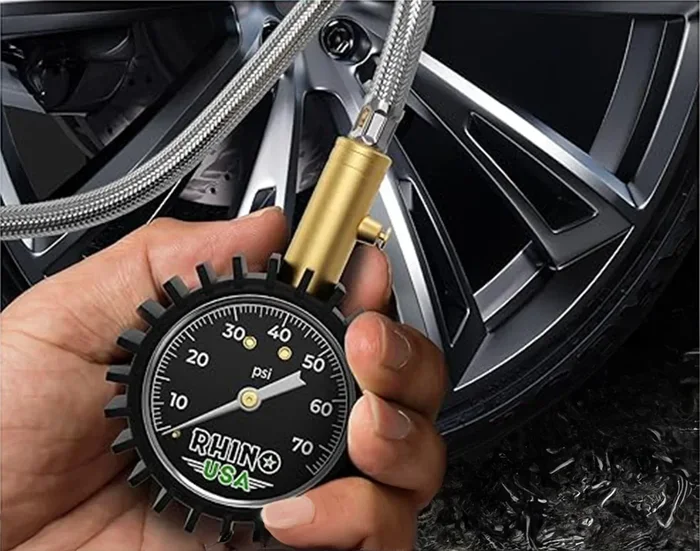
- Dial gauge: Durable and easy to read. A solid choice for regular use.
- Gas station air pumps: Convenient but often not perfectly calibrated. Use them for quick top-offs, not precision measurements.
Investing in a good tire pressure gauge for your home garage is one of the smartest things you can do for your car. Gas station gauges are often inaccurate, and relying on them alone can lead to incorrect pressure readings.
How Often Should You Check Tire Pressure?
Make it a habit to check your tire pressure at least once a month. Air slowly leaks through the rubber and valve stem over time. A tire can lose 1 to 2 PSI per month without any visible leak. Temperature changes also affect pressure. In cold weather, tire pressure drops. In hot weather, it rises.
Quick tip: Before long road trips, always check your tire pressure. Properly inflated tires improve fuel economy, handling, and safety on the highway.
Quick Tips for Managing Tire Pressure
- Keep a tire pressure gauge in your glove box. Do not rely on gas station gauges alone.
- Check all four tires plus the spare. The spare tire often loses pressure over time and goes unnoticed.
- Do not eyeball the tire. A tire can look perfectly fine but be significantly over or underinflated.
- Reset your TPMS after adjusting pressure. Follow your vehicle manual for the reset procedure.
- Rotate your tires regularly. This promotes even wear and helps you spot pressure issues early.
Common Mistakes Drivers Make with Tire Pressure
Confusing Maximum PSI with Recommended PSI
This is the number one mistake. The number printed on the tire sidewall is the maximum cold pressure the tire can handle, not the pressure you should use. Always follow the number on your vehicle’s door jamb or owner manual.
Ignoring Seasonal Temperature Changes
Air pressure inside tires changes with temperature. For every 10-degree drop in outside temperature, tire pressure can decrease by about 1 PSI. In winter, this means your tires could be underinflated even if you checked them in summer. In summer, heat can push pressure higher.
Overlooking the Spare Tire
Your spare tire sits in the trunk or under the car for months or years without anyone checking it. When you finally need it, it might be flat. Check the spare tire pressure at least twice a year.
Adding Air Based on How the Tire Looks
A tire can look perfectly round and firm at 28 PSI even though it needs 35 PSI. Visual inspection is not a reliable way to judge tire pressure. Always use a gauge.
Expert Insights on Tire Pressure and 40 PSI
We spoke with automotive technicians and tire specialists to get their take on 40 PSI and tire pressure in general. Here is what they had to say:
Most technicians agree that the single most important rule is to follow the manufacturer’s recommended pressure. This number is printed on the door jamb for a reason. It balances ride comfort, handling, tire wear, and safety for that specific vehicle.
One tire shop owner shared that he sees plenty of customers running 40 PSI or higher in small sedans. The result is almost always premature center wear and a harsher ride. He recommends checking the door jamb sticker before adding air.
On the flip side, truck and SUV owners are often told by their dealerships that 40 PSI is standard for their vehicles, especially when the vehicle is loaded or towing. In these cases, higher pressure is not just acceptable — it is necessary.
An important takeaway from the experts: tire pressure is not one-size-fits-all. It varies by vehicle, tire type, load, and driving conditions. Always do your research before setting your pressure.
Comparison Table: Recommended Tire Pressure by Vehicle Type
| Vehicle Type | Typical Recommended PSI | Is 40 PSI Too High? |
|---|---|---|
| Compact Sedan | 30-35 PSI | Yes, too high |
| Mid-Size Sedan | 32-36 PSI | Slightly high |
| SUV (Passenger) | 33-38 PSI | Borderline, check manual |
| Full-Size Truck | 35-45 PSI | No, often correct |
| Light-Duty Trailer | 40-65 PSI | No, within range |
| Performance Car | 32-38 PSI | Usually too high |
| Minivan | 33-38 PSI | Check door jamb |
How 40 PSI Affects Fuel Economy
Some drivers intentionally run higher tire pressure to improve fuel economy. The logic is sound. Higher pressure means less rolling resistance. Less rolling resistance means the engine does not have to work as hard to keep the tires moving. This can lead to a slight improvement in miles per gallon.
However, the fuel economy gains from running 40 PSI over the recommended pressure are usually small — maybe 1 to 2 percent at best. The potential downsides, including reduced traction, uneven wear, and a harsher ride, often outweigh those minor fuel savings.
If fuel economy is your goal, the better approach is to keep your tires at the manufacturer-recommended pressure and maintain them regularly. Properly inflated tires, not overinflated tires, are the key to good fuel economy.
Final Thoughts: Is 40 PSI Too High for Your Vehicle?
The answer to is 40 PSI too high is not a simple yes or no. It depends entirely on your vehicle, your tires, and how you use your car. For most passenger cars, 40 PSI is higher than recommended and can lead to a harsher ride, reduced traction, and premature tire wear. For trucks, SUVs, trailers, and vehicles that carry heavy loads, 40 PSI is often exactly right.
The best thing you can do for your tires and your safety is to check your vehicle’s recommended pressure and stick with it. Use a reliable tire pressure gauge, check your tires when they are cold, and make adjustments as needed. Do not rely on the number printed on the tire sidewall. Do not guess based on how the tire looks. Trust the data from your vehicle manufacturer.
Your tires are the only part of your car that touches the road. Taking care of them with the right tire pressure is one of the easiest and most impactful things you can do as a driver. So next time you see 40 PSI on your gauge, take a moment to check your door jamb sticker. Your tires — and your safety — will thank you for it.
Frequently Asked Questions
Can I drive with 40 PSI if my car recommends 35 PSI?
Running 5 PSI over the recommended pressure is not ideal but is generally not dangerous for short drives. However, consistently overinflating your tires by 5 PSI can lead to uneven center tread wear and a firmer ride. It is best to adjust the pressure to match your vehicle’s recommendation.
What happens if tire pressure is too high?
Overinflated tires have a smaller contact patch with the road, which reduces traction, especially on wet surfaces. They also wear out faster in the center of the tread and provide a harsher, less comfortable ride. In extreme cases, overinflation increases the risk of a tire blowout from road hazards like potholes or debris.
Is 40 PSI too high for a sedan?
For most sedans, 40 PSI is higher than the recommended pressure, which typically ranges from 30 to 36 PSI. Running 40 PSI in a sedan will likely cause a harsher ride, reduced grip, and faster center tread wear. Always check your sedan’s door jamb sticker for the correct pressure.
Should I check tire pressure when the tires are hot or cold?
Always check tire pressure when the tires are cold for the most accurate reading. Driving heats up the air inside the tire, causing the pressure to rise by 1 to 2 PSI or more. Checking cold pressure ensures you are comparing your reading to the manufacturer’s recommended number accurately.
Does 40 PSI improve fuel economy?
Higher tire pressure does reduce rolling resistance slightly, which can improve fuel economy by a small margin. However, the gains are usually minimal, around 1 to 2 percent. The potential safety and tire wear downsides of overinflation often outweigh these small fuel savings.
Where is the recommended tire pressure for my vehicle?
The recommended tire pressure is listed on a sticker on the driver side door jamb. It can also be found in your vehicle owner manual. The number on the tire sidewall is the maximum pressure, not the recommended pressure. Always use the door jamb or manual number.
=== CONCLUSION ===
Is 40 PSI too high? The answer really comes down to your specific vehicle and what the manufacturer recommends. 40 PSI is a perfectly valid tire pressure for many trucks, SUVs, and trailers. But for most passenger cars and sedans, it is too much air and can cause real problems with ride quality, tire wear, and safety. The key takeaway is simple: always follow your vehicle’s recommended tire pressure, check your tires regularly with a reliable gauge, and never confuse the maximum pressure on the tire sidewall with the recommended pressure. Your tires are a critical safety component, and getting the pressure right is one of the easiest ways to protect yourself, your passengers, and your investment in your vehicle. Take a few minutes today to check your tire pressure and make sure everything is where it should be.