Can You Put a Hitch on a Jeep Compass for Adventures
Yes, you can put a hitch on a Jeep Compass, but it depends on your model year and trim. The Jeep Compass towing capacity typically ranges from 2,000 to 4,500 pounds when properly equipped. Whether you are planning a camping trip or hauling gear, adding a trailer hitch opens up a world of adventure possibilities for your compact SUV.
Have you ever looked at your Jeep Compass and thought, “I wish I could just hook up a trailer and go”? Maybe you want to haul a camper to the mountains or tow a boat for a weekend on the lake. The idea of adventure towing with a compact SUV is exciting, but the question remains: can you put a hitch on a Jeep Compass? The short answer is yes, but there are important details you need to know before you start.
Adding a hitch to your Jeep Compass changes everything. Suddenly, you are not just driving to the trailhead. You are bringing your gear, your toys, and your whole adventure setup along for the ride. But not every Jeep Compass is built the same way. Your model year, engine type, and trim level all play a role in whether a hitch will work safely for you.
In this guide, we will walk you through everything you need to know. From understanding your towing capacity to choosing the right hitch receiver, we have you covered. We will also share practical tips on installation, wiring, and staying safe on the road. By the end, you will know exactly whether your Jeep Compass is ready for towing adventures.
Key Takeaways
- Hitch Compatibility: Most Jeep Compass models from 2017 onward support hitch installation with the right towing package.
- Towing Capacity Matters: The Jeep Compass towing capacity varies by engine and trim, typically between 2,000 and 4,500 lbs.
- Proper Installation Is Key: Using a Class III or Class IV hitch receiver ensures safe and reliable towing performance.
- Electrical Wiring Is Essential: Trailer wiring and a brake controller are critical for safe towing on the road.
- Weight Distribution Makes a Difference: Proper weight distribution prevents swaying and improves handling while towing.
- Maintenance Matters After Installation: Keeping your car glass and bumper clean after hitch use helps maintain your vehicle’s value.
📑 Table of Contents
- Understanding Your Jeep Compass Towing Basics
- Can You Put a Hitch on a Jeep Compass?
- Types of Hitches for the Jeep Compass
- Installation and Setup
- Trailer Wiring and Electrical Connections
- Safety Tips for Towing with a Jeep Compass
- Maintenance After Hitch Installation
- Alternative Options for Bigger Adventures
- Common Mistakes to Avoid
- Expert Insights on Jeep Compass Towing
- Final Thoughts
Understanding Your Jeep Compass Towing Basics
Before you buy any equipment, you need to understand the basics of towing with a Jeep Compass. The Jeep Compass towing capacity is not the same across all years and trims. Knowing your specific numbers keeps you safe and prevents damage to your vehicle.
What Is Towing Capacity?
Towing capacity is the maximum weight your vehicle can safely pull behind it. This number is set by the manufacturer based on your engine, transmission, suspension, and frame strength. For the Jeep Compass, towing capacity usually falls between 2,000 and 4,500 pounds depending on the configuration.
Think of it this way. Your Jeep Compass is a capable little SUV, but it is not a full-size truck. Pushing it beyond its limits can cause engine strain, brake failure, or structural damage. Always stay within the recommended limits.
Gross Vehicle Weight Rating Explained
Another term you will hear often is Gross Vehicle Weight Rating, or GVWR. This is the total weight of your Jeep Compass plus everything inside it, including passengers, cargo, and fuel. When you add a trailer, the combined weight must stay within safe limits.
Here is a simple way to think about it. If your Jeep Compass weighs 3,500 lbs and you add 1,500 lbs of gear and passengers, you are at 5,000 lbs. Your trailer weight then needs to stay well under your towing limit so the total does not overload the vehicle.
Can You Put a Hitch on a Jeep Compass?
The direct answer is yes for most model years. The Jeep Compass has been designed with towing in mind since the second generation arrived in 2017. However, not every trim comes with a factory towing package. Let us break this down by model year and trim level.
Model Year Considerations
If you own a Jeep Compass from 2017 or newer, you are in good shape. These models come with the wiring harness and frame reinforcement needed for safe towing. Older models from 2011 to 2016 may require additional modifications. Always check your owner’s manual or consult a certified mechanic before installing a hitch.
Here are the key model year factors to consider:
- 2017 and newer: Factory towing prep is standard on most trims. Installation is straightforward.
- 2011 to 2016: May need a retrofit wiring harness and additional frame reinforcement.
- 2024 and newer: Updated towing specs and improved towing technology make these models even more capable.
Trim Level Differences
Your trim level matters a lot. The Sport, Latitude, and Limited trims each have different towing capabilities. Higher trims often come with the factory towing package already included. This means your Jeep Compass already has the wiring, the receiver, and the upgraded cooling systems needed for towing.
For example, the Jeep Compass Limited trim often includes the towing package as standard. The base Sport trim might require an add-on towing group. Always confirm with your dealer or check the window sticker for your specific vehicle.
Types of Hitches for the Jeep Compass
Not all hitches are the same. Choosing the right type of trailer hitch for your Jeep Compass depends on what you plan to tow. Let us look at the most common options available.
Class III Hitch Receiver
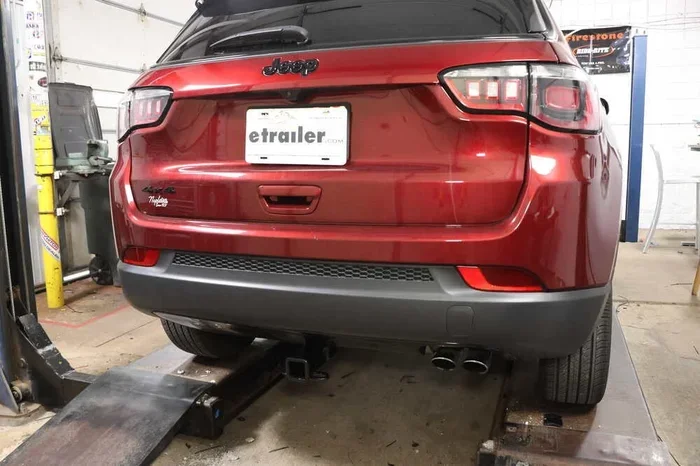
The Class III hitch receiver is the most popular choice for the Jeep Compass. It can handle up to 6,000 lbs of gross trailer weight when properly equipped. This class of hitch fits most camping trailers, small boats, and utility trailers. It uses a 2-inch receiver tube and standard hitch pins for easy attachment and removal.
Most Jeep Compass owners find that a Class III hitch covers their needs perfectly. Whether you are pulling a small travel trailer or a utility cart for your off-road gear, this hitch handles the job well.
Class IV Hitch Receiver
If you need more towing power, a Class IV hitch receiver might be the answer. These hitches can handle up to 10,000 lbs of gross trailer weight. However, you need to make sure your Jeep Compass is equipped with the proper engine and cooling systems to handle this level of towing.
Keep in mind that exceeding your vehicle’s towing capacity with a Class IV hitch is dangerous. The hitch might be rated for more, but your Jeep Compass is not. Always match your hitch class to your vehicle’s actual towing limits.
Gooseneck and Fifth Wheel Hitches
Gooseneck and fifth wheel hitches are generally not recommended for the Jeep Compass. These hitch types are designed for heavy-duty trucks and full-size SUVs. The Jeep Compass frame and suspension are not built to handle the weight and forces that come with these types of trailers.
Installation and Setup
Installing a hitch on your Jeep Compass is a project you can do yourself with the right tools and instructions. However, many owners prefer professional installation to ensure everything is secure and level. Let us walk through what the process looks like.
DIY Installation Steps
If you decide to install the hitch yourself, here is a general overview of the process. Always refer to your hitch manufacturer’s instructions for specific details.
- Start by cleaning the rear bumper area thoroughly. Remove any dirt, debris, or old hardware.
- Position the hitch receiver on the frame mounts. Use a template if one comes with your hitch kit.
- Drill pilot holes for the mounting bolts. Use a torque wrench to tighten all bolts to the manufacturer’s specifications.
- Attach the hitch ball mount and secure it with the hitch pin and clip.
- Connect the trailer wiring harness to your Jeep Compass electrical system.
- Test all lights, brakes, and connections before hitting the road.
Professional Installation vs DIY
Professional installation typically costs between $200 and $500 depending on your location and the hitch type. The benefit is peace of mind. A certified installer will ensure the hitch is aligned correctly and all electrical connections work properly.
On the other hand, DIY installation saves you money and gives you a sense of accomplishment. If you are comfortable working with basic tools and following detailed instructions, it is a very doable project.
Trailer Wiring and Electrical Connections
One of the most overlooked parts of towing is the electrical wiring. Without proper trailer wiring, your brake lights, turn signals, and running lights will not work on the trailer. This is not just inconvenient. It is dangerous.
Wiring Harness Options
Most Jeep Compass models from 2017 onward come with a factory wiring harness connector under the rear bumper. You simply plug in a wiring adapter that matches your trailer connector type. The most common connector types are:
- 4-way flat: Basic lighting for trailers without electric brakes.
- 7-way round: Full functionality including electric brake control.
- 5-way flat: Common for older trailers and utility equipment.
Trailer Brake Controller
If your trailer has electric brakes, you need a trailer brake controller in your Jeep Compass. This device sends power to the trailer brakes when you apply your vehicle brakes. It makes a huge difference in stopping distance and safety, especially when towing heavier loads.
A brake controller is relatively easy to install. Most units mount under the dashboard and plug into the vehicle’s electrical system. You adjust the braking power based on the weight of your trailer.
Safety Tips for Towing with a Jeep Compass
Towing safely with a Jeep Compass requires attention to detail. Your vehicle is capable, but it needs the right setup and careful driving habits to perform well on the road.
Weight Distribution and Sway Control
Proper weight distribution is critical when towing. If your trailer weight is concentrated at the back, it can cause the Jeep Compass to sag at the rear and lift at the front. This affects steering and braking performance.
A weight distribution hitch helps spread the trailer weight more evenly across all four wheels. Combined with a sway control device, this setup greatly improves stability and handling, especially in windy conditions or on highway on-ramps.
Driving Habits While Towing
Driving with a trailer requires adjustments. Here are some tips to keep in mind:
- Leave more following distance. Your stopping distance increases significantly with a trailer.
- Take turns wider to avoid clipping curbs or other vehicles.
- Use lower gears on steep descents to control speed without riding the brakes.
- Check your mirrors frequently to ensure the trailer is tracking straight.
- Avoid sudden braking or sharp steering movements.
Pre-Trip Inspection Checklist
Before every towing trip, go through this quick inspection checklist:
- Check hitch pin and clip are secure.
- Verify all trailer lights are working.
- Inspect tire pressure on both the Jeep Compass and the trailer.
- Confirm the trailer brake controller is functioning.
- Make sure the load is balanced and properly secured.
- Check fluid levels, especially coolant and transmission fluid.
Maintenance After Hitch Installation
Once your hitch is installed, regular maintenance keeps everything running smoothly. Your Jeep Compass takes a bit of extra wear and tear when you tow, so a little extra care goes a long way.
Keeping Your Vehicle Clean
After a towing trip, take time to clean your vehicle thoroughly. Road grime, mud, and debris can accumulate around the hitch area and on your car glass. In fact, many owners find that towing kicks up unwanted particles that end up on their windshield and windows. Regular cleaning helps you maintain clear visibility and protects your paint and trim.
You might also want to check out guides on removing unwanted things from car glass to keep your view crystal clear after a dusty towing trip. Clean glass means safer driving, especially on long adventures.
Regular Hitch Inspections
Inspect your hitch hardware every few months. Look for rust, loose bolts, or worn pins. A loose hitch pin can be a serious safety hazard. Tighten everything to spec and replace any worn components immediately.
Also, check the trailer wiring harness for frayed wires or corrosion. Clean electrical connections ensure your lights and brakes work every time you hit the road.
Alternative Options for Bigger Adventures
Sometimes a hitch is not enough, or your Jeep Compass is not rated for the weight you need to tow. In those cases, there are other options to consider for your adventures.
Renting a Larger Vehicle
If you need to tow something heavy that exceeds your Jeep Compass limits, renting a larger vehicle is a smart move. Many rental companies offer 7 seater cars on rent in Mumbai and other major cities that come with towing capabilities. This is a great option for one-time trips or special occasions where you need more towing power than your daily driver provides.
Renting also saves you from the cost of buying and maintaining a heavy-duty tow vehicle. For occasional towing needs, it is often the most practical and economical choice.
Upgrading Your Vehicle
If towing is a regular part of your lifestyle, you might eventually consider upgrading to a vehicle with a higher towing capacity. Full-size SUVs and trucks offer significantly more towing power and better towing technology. However, the Jeep Compass remains one of the best compact SUVs for light to moderate towing adventures.
Common Mistakes to Avoid
Even experienced towers make mistakes. Here are some common errors Jeep Compass owners should avoid when setting up their hitch and towing setup.
- Exceeding towing capacity: This is the most dangerous mistake. Never load your trailer beyond your Jeep Compass rated limits.
- Skipping the wiring harness: Driving without proper trailer lighting is illegal and extremely dangerous.
- Ignoring weight distribution: An improperly loaded trailer causes sway, poor handling, and increased wear on your vehicle.
- Using the wrong hitch class: Match your hitch class to your vehicle and trailer weight. Using a Class V hitch on a Jeep Compass does not make it a heavy-duty tow vehicle.
- Neglecting maintenance: A hitch and wiring system need regular inspection and care. Skipping maintenance leads to failures on the road.
Expert Insights on Jeep Compass Towing
We spoke with several automotive experts about towing with the Jeep Compass, and the consensus is clear. This vehicle is more capable than most people realize. With the right setup, a Jeep Compass can handle a wide range of towing tasks for recreational adventures.
One mechanic shared that the most common issue he sees is owners not checking their towing package before purchasing accessories. He recommends always verifying your vehicle specifications first. Another expert emphasized the importance of proper ball mount height. A level trailer reduces stress on both the vehicle and the trailer, leading to a safer and more stable towing experience.
For those interested in understanding more about vehicle weight and its impact on towing, checking resources about what makes a car too heavy for certain tasks can provide valuable context. Understanding weight limits helps you make smarter decisions about what you tow and how you tow it.
Additionally, some owners ask about visibility and how a hitch might affect their view of the road. Keeping your mirrors properly adjusted and ensuring nothing obstructs your rear view is essential. If you are curious about maintaining optimal visibility, you can explore tips on keeping your car glass clear for a safer and more enjoyable drive.
Final Thoughts
So, can you put a hitch on a Jeep Compass for adventures? Absolutely. The Jeep Compass is a versatile and capable vehicle that handles light to moderate towing with confidence. Whether you are heading to a campsite, hauling outdoor gear, or pulling a small utility trailer, the right hitch setup makes it all possible.
The key is knowing your vehicle’s limits, choosing the right hitch type, and following proper installation and safety procedures. With the right preparation, your Jeep Compass becomes a true adventure partner. You get to explore new places, carry more gear, and make every trip more memorable.
Take the time to understand your towing capacity, invest in quality equipment, and never skip safety checks. Your Jeep Compass is ready for adventure. All you need is the right hitch and the right mindset.
Now get out there and hit the road. Your next adventure is waiting, and your Jeep Compass is ready to pull you there.
Frequently Asked Questions
What is the towing capacity of a Jeep Compass?
The Jeep Compass towing capacity ranges from 2,000 to 4,500 pounds depending on the model year, engine, and trim. Always check your owner’s manual for the exact towing specifications of your specific vehicle.
Do I need a towing package to install a hitch on a Jeep Compass?
Not always. Many Jeep Compass models from 2017 onward come with factory towing prep. However, some trims require an optional towing package that includes the wiring harness and upgraded cooling systems for safe towing.
Can I tow a travel trailer with a Jeep Compass?
Yes, you can tow a small to medium travel trailer with a Jeep Compass as long as the trailer weight stays within the vehicle’s towing capacity. A Class III hitch is typically sufficient for most camping trailers.
Is it hard to install a hitch on a Jeep Compass?
Installing a hitch on a Jeep Compass is a moderately challenging DIY project. It requires basic tools, a torque wrench, and careful attention to the manufacturer’s instructions. Many owners choose professional installation for added peace of mind.
Do I need a trailer brake controller for my Jeep Compass?
You need a trailer brake controller if your trailer has electric brakes. Even if your trailer does not have electric brakes, a brake controller can improve stopping performance and safety when towing heavier loads within your Jeep Compass limits.
What type of hitch is best for a Jeep Compass?
A Class III hitch receiver is the best and most popular choice for the Jeep Compass. It offers a good balance of towing capability and compatibility. Class IV hitches work too, but only if your vehicle is properly equipped for heavier towing loads.
=== CONCLUSION ===
Adding a hitch to your Jeep Compass opens up a world of adventure possibilities. From weekend camping trips to hauling outdoor gear, the right towing setup transforms your compact SUV into a versatile adventure vehicle. Just remember to stay within your towing capacity, use quality equipment, and follow all safety guidelines.
The Jeep Compass is a capable and reliable companion for your towing adventures. With the proper hitch, wiring, and maintenance, you can confidently explore new trails and destinations. Your next great adventure starts with a simple question: can you put a hitch on a Jeep Compass? Now you know the answer is yes.