Why Cant Hybrids Tow as Much Compared to Gas Trucks
Why can’t hybrids tow as much? The answer comes down to how hybrid powertrains are built, battery weight limits, and cooling systems designed for efficiency, not heavy hauling. While hybrid trucks offer great fuel efficiency, their towing capacity trails behind gas trucks due to engineering trade-offs that prioritize economy over raw pulling power.
You have probably seen them on the road. Hybrid trucks and hybrid SUVs are everywhere. They promise great fuel efficiency, smooth driving, and a greener way to get around. But there is one thing they struggle with. Why can’t hybrids tow as much as their gas-powered cousins? If you have ever tried to hook up a trailer and felt your hybrid truck hesitate, you are not alone.
The short answer is that hybrid powertrains are built for a different purpose. They focus on saving fuel and cutting emissions. That means they make trade-offs in areas like towing horsepower, torque delivery, and sustained pulling power. In this article, we will break down exactly why hybrids can’t tow as much as gas trucks. We will look at the engineering, the battery limits, and what it all means for you.
Whether you are shopping for a new truck or just curious about hybrid towing capacity, this guide has you covered. Let us dive in.
Key Takeaways
- Hybrid systems limit towing power: Electric motors and smaller batteries reduce the overall towing horsepower compared to traditional gas trucks.
- Battery weight and cooling matter: Hybrid batteries add weight but don’t boost torque enough to match conventional towing capacity.
- Cooling systems are different: Hybrids cool their drivetrain for efficiency, not for the sustained heat that towing trailer loads create.
- Payload and towing ratings differ: A hybrid SUV or truck may have lower towing weight limits than its gas-powered counterpart.
- Hybrid towing is still improving: Newer models are closing the gap, but gas trucks remain the go-to for heavy towing performance.
- Know your needs before buying: If you tow often, a conventional truck may still be the better choice for your towing limits.
📑 Table of Contents
- How Hybrid Powertrains Work Differently
- Battery Size and Weight Limits
- Cooling Systems Built for Efficiency, Not Towing
- Towing Horsepower and Torque Differences
- Hybrid Towing Efficiency: The Trade-Off
- Are Hybrids Getting Better at Towing?
- When to Choose a Gas Truck Over a Hybrid for Towing
- The Bottom Line: Why Hybrids Will Always Tow Less
- Key Takeaways
How Hybrid Powertrains Work Differently
To understand why hybrids can’t tow as much, you need to know how a hybrid powertrain works. A hybrid truck uses two power sources. One is an electric motor. The other is a combustion engine. They work together to move the vehicle. This setup is great for city driving and highway cruising. But it creates problems when you need serious towing performance.
The Electric Motor’s Role
The electric motor in a hybrid delivers instant torque. That sounds great for towing. But here is the catch. Electric motors in hybrids are small. They are designed to assist the gas engine, not replace it. When you need to pull a heavy towing trailer, that small motor simply does not have enough power on its own. It kicks in for a boost, but it cannot sustain the effort needed for heavy loads.
The Combustion Engine Takes the Lead
When towing gets tough, the combustion engine has to do most of the work. In a gas truck, the engine is built big and strong. It has a larger displacement. It produces more horsepower and torque from the start. A hybrid’s gas engine is usually smaller. It is tuned for efficiency, not brute force. So when the hybrid needs to tow, it is asking a smaller engine to do a big job.
This is the core reason hybrids tow as much less than gas trucks. The parts are just not built the same way. The hybrid drivetrain splits the workload between two smaller systems instead of relying on one big, powerful engine.
Battery Size and Weight Limits
Hybrid batteries are a key factor in towing. They store energy for the electric motor. But they also add weight to the vehicle. And they have size limits. Let us look at how this affects towing capacity.
Heavy Batteries, Less Payload
A hybrid battery pack can weigh several hundred pounds. That weight comes off the truck’s towing payload. Payload is the weight your truck can carry, including passengers and cargo. When you subtract battery weight from the total payload, you have less capacity left for towing. A gas truck with the same frame size can carry more because it does not carry that heavy battery pack.
Think of it this way. You have a bucket that holds 100 pounds. The battery takes up 30 pounds of space. Now you only have 70 pounds left for other things, like a trailer. A gas truck has the full 100 pounds available for towing weight.
Battery Cooling Under Load
Hybrid batteries also need to stay cool. When you are towing a heavy load, the battery works harder. It drains faster. It also generates more heat. Most hybrid battery cooling systems are not designed for sustained high loads. They are built for normal driving. When you push a hybrid to its towing limits, the battery can overheat. The system then reduces power to protect itself. This means less towing strength when you need it most.
Cooling Systems Built for Efficiency, Not Towing
This is one of the biggest reasons hybrids can’t tow as much. The cooling systems in hybrid trucks are different from those in gas trucks. Let us break it down.
How Gas Truck Cooling Works
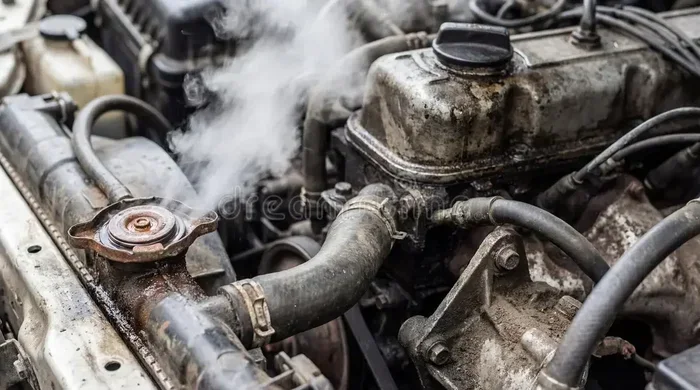
A gas truck has a large radiator and a powerful water pump. These are designed to handle the heat generated by heavy towing. When you pull a towing trailer up a mountain, the engine works hard. It gets hot. The cooling system keeps the engine from overheating. It can sustain that effort for miles. That is what gives gas trucks their strong towing ratings.
Hybrid Cooling Focuses on the Powertrain
A hybrid truck has to cool two systems. The gas engine. And the electric motor and battery. The cooling system is split between them. Neither system gets as much cooling power as a gas truck’s single, focused system. When you are towing, both systems generate heat. The hybrid cooling system struggles to keep up.
Manufacturers know this. That is why they put lower towing limits on hybrid models. They do not want the engine or battery to overheat and cause damage. So they cap the towing capacity at a lower number. It is a safety feature, not a flaw. But it does mean hybrid towing capacity will always lag behind gas trucks in most cases.
Towing Horsepower and Torque Differences
Horsepower and torque are the two numbers that matter most for towing performance. Let us compare how hybrid trucks stack up against gas trucks in these areas.
What Is Towing Horsepower?
Towing horsepower is the power your truck needs to move a loaded trailer. It is not just about speed. It is about pulling force. A truck needs strong torque at low speeds to get a heavy load moving. It needs steady horsepower to keep moving uphill or against wind resistance.
Hybrids Deliver Torque Differently
The electric motor in a hybrid does deliver strong torque at low speeds. That is one advantage of hybrid towing. But that torque drops off quickly. The electric motor is small. It cannot sustain high torque for long periods. The gas engine in a hybrid kicks in, but it is not as powerful as the engine in a gas truck. So the combined towing horsepower of a hybrid is usually lower.
Here is a simple comparison.
- Gas truck: Large engine, high torque, sustained horsepower for long towing stretches.
- Hybrid truck: Small gas engine plus a small electric motor. Good for short bursts. Not built for long, heavy towing sessions.
Real-World Towing Numbers
Let us look at some real numbers. The Ford F-150 gas version can tow up to around 13,500 pounds depending on the model. The Ford F-150 PowerBoost hybrid tows about 12,700 pounds. That is a noticeable difference. The Chevrolet Silverado gas version tows over 13,000 pounds. The Silverado hybrid trails behind. These numbers show a clear pattern. Gas trucks tow more than their hybrid counterparts.
This is not a flaw in the hybrid technology. It is simply how the powertrain is configured. The hybrid version prioritizes fuel efficiency and daily driving comfort over maximum towing capacity.
Hybrid Towing Efficiency: The Trade-Off
Here is something that might surprise you. Hybrids are actually quite efficient for light towing. If you are pulling a small trailer or a boat, a hybrid truck can do the job well. The electric motor helps with the initial pull. The gas engine takes over for cruising. Together, they use less fuel than a pure gas truck would.
But the trade-off is clear. The more weight you add, the more the hybrid falls behind. Heavy trailers, large campers, and equipment haulers push the hybrid towing limits fast. The system was not designed for that kind of sustained demand.
Towing efficiency is a balancing act. Hybrids win for light loads and short trips. Gas trucks win for heavy loads and long hauls. If you know you will tow often and tow heavy, a conventional truck is still the smarter choice.
Are Hybrids Getting Better at Towing?
The short answer is yes. Hybrid towing technology is improving every year. Automakers are learning from early models. They are building better hybrid powertrains that can handle more weight. But the gap between hybrids and gas trucks is not closing fast.
New Hybrid Models on the Horizon
Several automakers are working on stronger hybrid trucks. Some are adding larger electric motors to boost towing horsepower. Others are improving battery cooling systems to handle heavier loads. These changes will help hybrid trucks tow more in the future. But for now, they still cannot match the raw power of a large gas truck.
What to Look for in a Hybrid Towing Truck
If you are set on a hybrid and still want to tow, here are some tips.
- Check the towing ratings carefully. Not all hybrid trucks are the same. Some have higher towing limits than others.
- Look for a larger battery pack. Bigger batteries mean more electric assist, which helps with towing performance.
- Test the truck with your trailer. Before you buy, take the hybrid for a test tow. See how it handles the weight.
- Consider a plug-in hybrid. Some plug-in hybrid SUVs and trucks offer more electric-only range and better low-speed torque for towing.
When to Choose a Gas Truck Over a Hybrid for Towing
So how do you decide? Here are some clear signs that a gas truck is the better choice for your needs.
- You tow heavy loads regularly. If your towing weight is close to the truck’s max rating, go with gas.
- You tow long distances. Hybrids can overheat on long hauls with heavy loads. Gas trucks handle this better.
- You need maximum payload. Without the battery weight, a gas truck offers more room for cargo and passengers.
- You tow in hilly or mountainous areas. Sustained climbing demands consistent horsepower and torque. Gas trucks deliver that.
On the other hand, if you mostly tow light loads and want to save on fuel, a hybrid truck can still work well. Just know your towing limits and stay within them.
The Bottom Line: Why Hybrids Will Always Tow Less
The fundamental reason hybrids can’t tow as much comes down to design priorities. Hybrid powertrains are engineered for efficiency. Every component, from the electric motor to the battery pack to the cooling system, is optimized for saving fuel. That is their job. And they do it well.
Gas trucks, by contrast, are engineered for power. The engine is bigger. The cooling system is stronger. The drivetrain is built to handle sustained heavy loads. When you need to pull a heavy towing trailer up a steep grade for hours, a gas truck is built for that task.
Neither approach is wrong. They are just different tools for different jobs. If your priority is fuel efficiency and light-duty towing, a hybrid makes sense. If your priority is towing capacity and heavy-duty work, stick with a gas truck.
The future may bring stronger hybrids. But for now, hybrid towing capacity will continue to trail behind gas trucks. Understanding why helps you make the right choice for your needs.
Key Takeaways
- Hybrid powertrains split power between an electric motor and a smaller gas engine, which limits overall towing horsepower compared to a single large gas engine.
- Heavy hybrid batteries reduce payload capacity and add weight that takes away from towing potential.
- Hybrid cooling systems are designed for efficiency, not sustained high-heat towing, which caps towing limits for safety.
- Electric motors deliver strong low-end torque but cannot sustain it for long periods needed in heavy towing.
- Gas trucks still lead in towing capacity, towing performance, and long-haul towing reliability.
- Hybrids work well for light towing and short trips, but they are not built for heavy-duty hauling.
- Always check towing ratings before buying and test the truck with your actual trailer weight.
Frequently Asked Questions
Why do hybrids have lower towing capacity than gas trucks?
Hybrids use smaller gas engines and electric motors that are designed for efficiency, not heavy pulling. The battery weight also reduces available payload, and the cooling systems are not built for sustained high-heat towing. All of these factors combine to lower the overall towing capacity.
Can a hybrid truck tow a travel trailer?
Yes, most hybrid trucks can tow a travel trailer, but only within their rated limits. Light to medium trailers work well. Heavy fifth wheels or large horse trailers may exceed the hybrid’s towing capacity and cause overheating or strain on the drivetrain.
Do hybrid trucks save money on fuel while towing?
Hybrids are more fuel-efficient than gas trucks during normal driving. But when towing heavy loads, the fuel savings shrink significantly. The gas engine works harder, and the electric motor provides less assist under heavy load, so the efficiency advantage decreases.
Are plug-in hybrids better for towing than regular hybrids?
Plug-in hybrids offer more electric-only power at low speeds, which can help with initial towing pull. However, their towing capacity is still limited by the battery size and cooling system. They are better than standard hybrids for light towing but still fall short of gas trucks for heavy loads.
What happens if you exceed a hybrid’s towing limit?
Exceeding the towing limit can cause the hybrid battery to overheat, strain the electric motor, and overload the gas engine. The vehicle may go into a power-reduction mode to protect itself. Over time, this can cause serious damage to the drivetrain and reduce the truck’s lifespan.
Will future hybrid trucks be able to tow as much as gas trucks?
Future hybrid trucks may close the gap as battery technology and cooling systems improve. Larger electric motors and more advanced hybrid powertrains could boost towing capacity. But for now, gas trucks remain the strongest choice for heavy towing needs.
=== CONCLUSION ===
Why can’t hybrids tow as much as gas trucks? The reasons are clear. Hybrid powertrains are built for efficiency, not raw pulling power. Smaller engines, limited battery capacity, and cooling systems designed for daily driving all play a role. The result is a vehicle that excels at saving fuel but falls short in heavy towing performance.
That does not mean hybrids are bad trucks. They are great for everyday driving, light towing, and drivers who want to save at the pump. But if your priority is maximum towing capacity, a gas truck is still the way to go. Know your needs, check the ratings, and choose the truck that fits your life.
Hybrid towing technology will keep improving. But for today, understanding the limits helps you make a smart, informed decision. Whether you choose a hybrid or a gas truck, the right choice is the one that matches your towing needs.