Can I Use 5W-30 Instead of 5W-20 in My Toyota Camry
Using 5W-30 instead of 5W-20 in your Toyota Camry is a common question among car owners. While both oils share the same cold-weather rating, their hot-weather viscosity differs, which can affect engine performance and protection. Toyota generally recommends 5W-20 for most Camry models, but certain driving conditions and older engines may tolerate or even benefit from 5W-30. Always check your owner manual before making the switch.
So you are standing in the oil aisle at your local auto parts store. You grab the 5W-20 bottle your Camry needs. Then you notice the 5W-30 sitting right next to it. It costs less. Or maybe you just have some 5W-30 sitting in your garage from a previous oil change. The question pops into your head immediately. Can I use 5W-30 instead of 5W-20 in my Toyota Camry?
This is one of the most common questions Toyota Camry owners ask. And it is a really important one too. The oil you put in your engine is not just any fluid. It is the lifeblood that keeps everything running smoothly. Using the wrong viscosity can lead to poor performance, reduced fuel economy, or even long-term engine damage.
In this guide, we will break down everything you need to know about switching from 5W-20 to 5W-30 in your Toyota Camry. We will cover what the numbers mean, what Toyota recommends, when it might be okay to switch, and what risks you should watch out for. By the end, you will feel confident making the right choice for your engine.
Key Takeaways
- Toyota recommends 5W-20: Most Camry models are engineered for 5W-20 oil for optimal fuel efficiency and protection.
- 5W-30 is thicker at operating temperature: The “30” means the oil is heavier when hot compared to “20,” which affects lubrication.
- Using the wrong viscosity can void warranty: Sticking to Toyota’s spec helps protect your warranty coverage.
- Older Camry models may tolerate 5W-30: High-mileage engines with more wear sometimes handle thicker oil better.
- Check your owner manual first: The manual is the ultimate guide for your specific Camry year and engine type.
- Mixing viscosities is not ideal: Avoid combining different oil weights in the same engine.
📑 Table of Contents
What Do the Oil Numbers 5W-20 and 5W-30 Mean?
Understanding oil viscosity ratings is simpler than it sounds. The numbers on the bottle tell you how the oil flows at different temperatures. Let us break it down piece by piece.
The “W” Stands for Winter
The “W” in 5W means the oil is rated for winter use. The number before the W tells you how thick the oil is when cold. Both 5W-20 and 5W-30 have a “5” rating for cold weather. This means they flow similarly when your engine is cold and struggling to start on a winter morning.
The Second Number Is the Hot Rating
The number after the dash is where things get interesting. The “20” in 5W-20 means the oil is thinner at operating temperature. The “30” in 5W-30 means it is thicker when hot. Think of it like honey. Cold honey is thick and slow. Warm honey flows much easier. Now imagine two different types of honey. One stays a bit thicker even when warm.
That is essentially what 5W-20 and 5W-30 do inside your engine. At operating temperature, 5W-30 creates a slightly thicker film between engine parts. This thicker film can be good or bad depending on your engine.
Why Does This Matter for Your Camry?
Toyota designs the Camry engine with very specific tolerances. These are the tiny gaps between moving parts inside the engine. The manufacturer selects an oil viscosity that fills those gaps perfectly. Using the wrong viscosity can mean too much oil or too little oil reaching critical areas. Either scenario is not great for your engine’s health.
What Does Toyota Recommend for the Camry?
Toyota has clear recommendations for oil viscosity. For most Camry models, the manufacturer specifies 5W-20. This is not a suggestion. It is the engineered specification for your engine.
Checking Your Owner Manual
Your owner manual is the best place to start. Open it up and look for the maintenance section. There you will find the exact oil weight Toyota recommends for your specific Camry model and year. Always follow the owner manual as your primary guide.
Toyota’s Official Oil Specifications
Toyota does not just pick any 5W-20 oil off the shelf. The oil must meet specific performance standards. These include:
- API SN or SP rating: This is the industry standard for modern engine protection.
- Toyota Genuine Motor Oil: Toyota sells its own branded oil that meets all specifications.
- Resource Conserving additives: These help improve fuel economy and reduce emissions.
Many Toyota dealerships and service centers use Toyota Genuine Motor Oil. It is formulated specifically for Toyota engines. You can also use high-quality aftermarket oils that meet the same API and ILSAC standards.
Does Every Camry Use 5W-20?
Most modern Camry models use 5W-20. However, there are exceptions. Some older Camry models, particularly those with the 2.4-liter four-cylinder engine, may recommend 5W-30. Always double-check your specific model year. You can also look at the oil fill cap under the hood. Toyota often prints the recommended oil weight right on the cap.
If you are unsure, you can also do your own car diagnostics to verify what your engine needs. Many modern Camrys have an oil life monitor system that provides maintenance reminders and specifications.
Can You Use 5W-30 Instead of 5W-20 in a Toyota Camry?
This is the big question. And the answer is not a simple yes or no. It depends on several factors including your Camry model year, engine type, driving conditions, and mileage.
What Happens If You Put 5W-30 in a Camry That Needs 5W-20?
Using 5W-30 in an engine designed for 5W-20 can cause several issues. Here is what might happen:
- Reduced fuel economy: Thicker oil creates more drag inside the engine. Your engine has to work harder to pump the oil. This means you might notice a slight drop in miles per gallon.
- Reduced engine responsiveness: The thicker oil takes slightly longer to circulate through the engine. You might notice a very brief delay in power delivery, especially when the engine is cold.
- Potential oil pressure changes: Thicker oil generates slightly different oil pressure readings. This is usually within normal range but can trigger warning lights on some vehicles.
That said, using 5W-30 once or twice is unlikely to cause catastrophic damage. Modern engines are more forgiving than older ones. But making it a habit is not a good idea.
When Might 5W-30 Be Okay for a Camry?
There are a few situations where 5W-30 might be acceptable or even beneficial for a Toyota Camry:
- High-mileage engines: If your Camry has over 150,000 miles on the odometer, the engine tolerances may have widened slightly over time. A slightly thicker oil like 5W-30 can help fill those gaps and reduce oil consumption.
- Hot climate driving: If you live in a very hot climate, the thicker hot-weather viscosity of 5W-30 may provide marginally better protection at extreme temperatures.
- Towing or heavy loads: If you regularly tow a trailer or carry heavy loads, the extra protection of thicker oil might be helpful.
- Older Camry models: Some older Camry generations were designed to run on 5W-30. Check your manual to confirm.
Even in these situations, it is best to consult a trusted mechanic or refer to your owner manual before switching. You can also visit a local Chevrolet dealership or Toyota dealership for professional advice on the right oil for your vehicle.
What About Mixing 5W-20 and 5W-30?
Some drivers wonder if mixing the two oils is okay in a pinch. Here is the honest answer. It is not ideal. While topping off with a different viscosity once will not destroy your engine, it is best to avoid it. Mixing oils can dilute the additive package and reduce overall performance. If you accidentally mix them, do not panic. Just get the oil changed properly at your next service interval.
Also, be careful about carrying heavy loads or extra weight in your vehicle, as this can affect how your engine performs with any oil viscosity. Check our guide on Can I Put Too Much Weight In My Car for more tips on vehicle load limits.
The Risks of Using the Wrong Oil Viscosity
Using the wrong oil viscosity is not something to take lightly. While one-time use might not cause immediate disaster, repeated use of the wrong oil can lead to serious problems over time.
Engine Wear and Tear
The whole point of motor oil is to create a protective film between moving metal parts. If the oil is too thin, it cannot maintain that film under high pressure and temperature. This leads to increased metal-on-metal contact and accelerated wear. If the oil is too thick, it may not flow quickly enough to reach all the critical lubrication points, especially during cold starts.
Fuel Economy Impact
Toyota designed the Camry with 5W-20 oil partly for fuel efficiency reasons. Thinner oil reduces internal friction, which helps your engine sip fuel rather than guzzle it. Switching to 5W-30 can reduce your fuel economy by 1 to 3 percent. That might not sound like much, but over thousands of miles, it adds up at the pump.
Warranty Concerns
If your Camry is still under warranty, using the wrong oil viscosity can be a problem. Toyota requires owners to follow the maintenance schedule outlined in the owner manual. Using an unapproved oil weight could potentially void your warranty coverage for engine-related repairs. This is especially important to know if your Camry is still relatively new.
Oil Pressure and Flow Issues
Thicker oil flows more slowly through narrow oil passages. In an engine designed for thinner oil, this can lead to slightly lower oil pressure at idle and delayed oil delivery during startup. Modern Camrys have oil pressure sensors that monitor this closely. You might see a warning light on your dashboard if the oil pressure drops below acceptable levels.
Taking care of your car also means staying on top of regular maintenance. If you are looking to protect your vehicle from the outside, check out our article on Benefits Of Auto Paint Protection Film to learn how to keep your Camry looking great.
How to Choose the Right Oil for Your Toyota Camry
Choosing the right oil does not have to be confusing. Follow these simple steps to make sure you always use the correct oil for your Camry.
Step 1: Check the Owner Manual
This is the most important step. Your owner manual contains all the information you need. Look for the recommended oil weight, capacity, and specification. Write this down and keep it in your glove box for reference.
Step 2: Look at the Oil Fill Cap
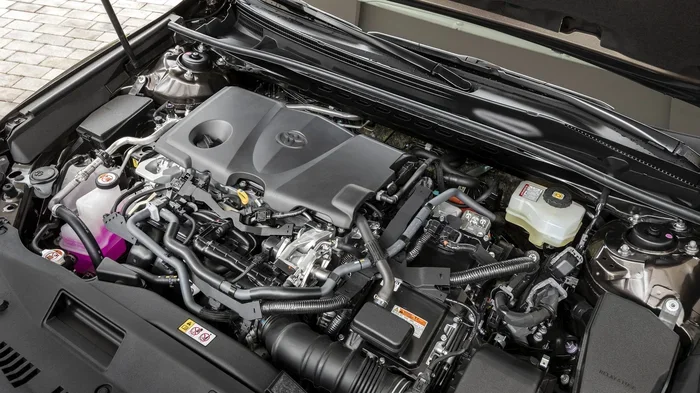
Pop your hood and look at the oil fill cap on top of the engine. Toyota usually prints the recommended oil weight right on this cap. If it says 5W-20, stick with 5W-20.
Step 3: Consider Your Driving Conditions
Think about how and where you drive. Do you drive short trips in cold weather? Long highway commutes? Do you live in a hot climate? These factors can influence your oil choice, but they should not override what Toyota recommends.
Step 4: Choose a Quality Oil
Once you know the correct viscosity, choose a high-quality oil that meets API SN or SP standards. Synthetic oils offer the best protection and longevity. They also handle temperature extremes better than conventional oils. Many Toyota Camrys benefit greatly from full synthetic 5W-20 oil.
Step 5: Stick to a Regular Oil Change Schedule
No matter which oil you use, regular oil changes are essential. Toyota recommends oil changes every 5,000 to 10,000 miles depending on driving conditions and oil type. Setting a reminder or using the built-in oil life monitor helps you stay on track.
If you ever find yourself low on oil and far from a service station, you might wonder how far you can push it. Check out our guide on Can I Drive 10 Miles On Empty for practical advice on how far you can really go when your tank is nearly empty.
Expert Tips for Toyota Camry Oil Maintenance
Here are some practical tips from experienced mechanics and Toyota specialists to keep your Camry engine in top shape.
Switch Gradually If Needed
If you have been using 5W-30 and want to switch back to 5W-20, do not worry. You can make the switch at your next oil change. The engine will adjust. Just make sure to flush out the old oil completely during the change.
Keep an Oil Log
Record every oil change in a simple notebook or phone app. Note the date, mileage, oil brand, and viscosity. This helps you track your maintenance history and spot any potential issues early.
Watch for Oil Consumption
Some Toyota Camrys, especially older models, tend to consume a small amount of oil between changes. If you notice you need to top off frequently, check for leaks or signs of engine wear. Using the correct viscosity oil can help minimize consumption.
Do Not Skip Oil Changes
It can be tempting to push an oil change a few extra hundred miles. Do not do it. Old oil breaks down and loses its protective properties. Fresh oil keeps your engine clean, cool, and well-lubricated. Think of it as a small investment that prevents expensive repairs down the road.
Use the Right Filter Too
The oil filter is just as important as the oil itself. Use a high-quality filter that meets Toyota specifications. A cheap filter might not capture contaminants effectively, which can lead to premature engine wear.
Conclusion
So, can you use 5W-30 instead of 5W-20 in your Toyota Camry? The short answer is: it depends, but you should stick with what Toyota recommends whenever possible. 5W-20 is the factory-specified oil for most Camry models and it is formulated to deliver the best balance of protection, performance, and fuel efficiency.
Using 5W-30 occasionally in an emergency will not ruin your engine. But making it a regular practice can lead to reduced fuel economy, potential warranty issues, and less-than-optimal engine protection over time. If your Camry is high-mileage or you drive in extreme conditions, consult a professional mechanic before switching.
The bottom line is simple. Read your owner manual. Follow Toyota’s recommendations. Use quality oil and change it on schedule. Your Camry will reward you with years of reliable, efficient service. Taking a few extra minutes to get the right oil today saves you from costly repairs tomorrow.
Remember, your engine is the heart of your Camry. Treat it right, and it will keep on running strong for hundreds of thousands of miles.
Frequently Asked Questions
What happens if I accidentally put 5W-30 in my Toyota Camry instead of 5W-20?
One time will not cause immediate damage. Your engine will still run. However, the thicker oil may reduce fuel economy slightly and take a bit longer to circulate during cold starts. If this happens, just plan to get the oil changed back to 5W-20 at your next service. You can also do your own car diagnostics to check for any warning signs.
Will using 5W-30 void my Toyota Camry warranty?
It could, if your Camry is still under warranty. Toyota requires owners to use the oil viscosity specified in the owner manual. Using 5W-30 when 5W-20 is recommended may be considered a maintenance violation. This could lead to denied claims for engine-related repairs. Always check with your dealer if you are unsure.
Can I use 5W-30 in my older Toyota Camry with over 150,000 miles?
Older engines with higher mileage sometimes develop wider internal tolerances. In these cases, a slightly thicker oil like 5W-30 may help reduce oil consumption and provide better protection. However, it is still best to consult a trusted mechanic before making the switch. You might also want to check Can I Do My Own Car Diagnostics for guidance on assessing your engine’s condition.
Is synthetic 5W-20 better than conventional 5W-20 for my Camry?
Yes, synthetic oil generally offers superior protection. It resists breakdown at high temperatures better and flows more smoothly in cold weather. Full synthetic 5W-20 is an excellent choice for most Toyota Camry models. It provides better engine protection and can extend oil change intervals compared to conventional oil.
How often should I change the oil in my Toyota Camry?
Toyota recommends oil changes every 5,000 to 10,000 miles depending on driving conditions and the type of oil used. If you use synthetic oil, you can often go longer between changes. Check your owner manual for the specific interval for your model year. Regular oil changes are one of the simplest ways to protect your engine.
Can I switch from 5W-20 to 5W-30 if I live in a hot climate?
While a hot climate might make thicker oil seem appealing, Toyota still recommends 5W-20 for most Camry models even in hot weather. The oil is engineered to handle a wide range of temperatures. If you are concerned about extreme heat, consider using a high-quality full synthetic 5W-20 rather than switching to a different viscosity without professional advice.