Everything You Need to Know About Air Filling for Car
Air filling for car tires is one of the simplest yet most overlooked maintenance tasks every driver should master. Keeping your tires at the right pressure boosts safety, improves fuel economy, and extends tire life. This guide covers everything from choosing the right air compressor to step-by-step filling instructions and common mistakes to avoid.
Key Takeaways
- Proper tire air filling prevents accidents: Under-inflated and over-inflated tires both create serious driving risks.
- You can fill tires at home: A portable air compressor makes tire inflation quick and easy without visiting a gas station.
- Check pressure when tires are cold: This gives the most accurate reading for optimal tire pressure.
- Air filling for car tires saves money: Correct pressure improves fuel efficiency and reduces uneven tire wear.
- Know your PSI rating: Every car has a recommended tire pressure listed on the driver-side door jamb.
- Use a quality tire pressure gauge: Built-in compressor gauges are often inaccurate, so a separate gauge is a smart investment.
- Inspect tires regularly: Routine checks catch slow leaks and keep your tire pressure monitoring system working properly.
📑 Table of Contents
- What Is Air Filling for Car and Why It Matters
- How to Check Your Tire Pressure Before Filling
- Best Tools and Equipment for Air Filling for Car
- Step-by-Step Guide to Filling Car Tires with Air
- Common Mistakes to Avoid When Filling Car Tires
- Benefits of Proper Tire Air Filling for Your Vehicle
- When to Seek Professional Help for Tire Air Filling
- Conclusion
What Is Air Filling for Car and Why It Matters
Air filling for car tires means adding compressed air to your tires to reach the recommended pressure level. It sounds simple, but it plays a huge role in how your car drives, handles, and even how much fuel you use.
Every car manufacturer sets a specific tire pressure recommendation. You can find this number on the driver-side door jamb or in your owner’s manual. This number is usually measured in PSI, which stands for pounds per square inch. Sticking to the right PSI rating keeps your tires performing at their best.
Why does this matter so much? Tires that are low on air create more rolling resistance. That means your engine has to work harder. Harder work means more fuel burned. On the flip side, tires filled too much have less contact with the road. This reduces grip and makes braking dangerous, especially on wet surfaces.
Proper tire maintenance through regular air filling also helps your tires wear evenly. Even wear means you get more miles out of every set of tires. That saves you real money over time. Plus, correctly inflated tires give you a smoother, quieter ride.
Many drivers ignore their tires until something goes wrong. A flat tire or a blowout can turn a good day into a terrible one. A simple habit of checking and filling your air regularly can prevent most of these problems. It takes just a few minutes and costs almost nothing.
Think of tire air filling like brushing your teeth. It is a small daily habit that prevents big problems later. Once you make it part of your routine, you will never look back.
How Tire Pressure Affects Your Driving
Your tires are the only part of your car that touches the road. So their condition directly affects everything from steering to stopping distance. Here is how tire pressure impacts your driving experience:
- Fuel economy: Tires at the correct pressure roll more easily. Less resistance means your engine uses less gas. Studies show that under-inflated tires can reduce fuel efficiency by up to 3 percent.
- Handling and safety: Properly filled tires grip the road better. You get sharper turning response and shorter braking distances. This matters most in emergency situations.
- Tire lifespan: Under-inflated tires wear out faster on the outer edges of the tread. Over-inflated tires wear down the center. Even wear from correct pressure doubles your tire life.
- Ride comfort: The right air pressure absorbs road bumps better. Your car feels more stable and comfortable at highway speeds.
How to Check Your Tire Pressure Before Filling
Before you add any air, you need to know what your tires currently read. This is where a good tire pressure gauge comes in. You can buy a simple digital gauge for under fifteen dollars. It is one of the best tools you can own for basic car care.
Always check your tire pressure when the tires are cold. Cold means the car has been parked for at least three hours or driven less than a mile. Driving heats up the air inside the tire, which raises the pressure reading. A cold reading gives you the most accurate baseline.
Here is the simple process:
- Remove the valve cap from the tire valve stem.
- Press the tire pressure gauge firmly onto the valve.
- Read the number on the gauge.
- Compare it to the recommended PSI for your car.
- Add or release air as needed.
Your recommended PSI is usually between 30 and 35 for most passenger cars. However, always trust the number on your door jamb over the number printed on the tire sidewall. The tire sidewall number is the maximum pressure the tire can handle, not the pressure your car needs.
Understanding the Tire Pressure Monitoring System
Most modern cars come with a tire pressure monitoring system, or TPMS. This system uses sensors inside each tire to detect pressure changes. When pressure drops too low, a warning light shaped like a horseshoe with an exclamation mark lights up on your dashboard.
The TPMS light is your car’s way of telling you something is wrong. Do not ignore it. A flashing light means a sudden pressure drop, possibly from a puncture. A steady light usually means one or more tires are under-inflated.
Keep in mind that the TPMS is a backup system, not a replacement for regular checks. The sensors can fail, batteries die, or the system may not detect slow leaks. Manual checks with a quality gauge should happen at least once a month.
Best Tools and Equipment for Air Filling for Car
Having the right tools makes air filling for car tires fast and painless. You do not need expensive equipment. A few key items will handle the job perfectly.
The most important tool is an air compressor. You have several options here. Let us break them down.
Portable Tire Air Pump
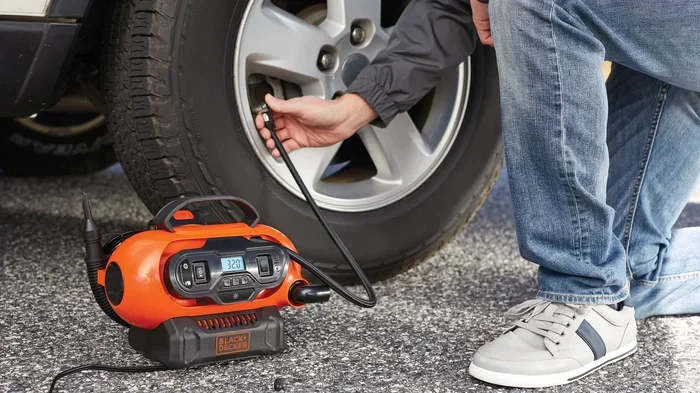
A portable air pump is perfect for drivers who want convenience. These compact devices plug into your car’s 12-volt socket, also called the cigarette lighter. They are lightweight, easy to store in your trunk, and ready to use anytime.
Most portable tire air pumps come with a built-in digital gauge. Some models also include LED lights for nighttime use. They are ideal for top-offs and emergency situations. However, they work best for minor pressure adjustments rather than fully inflating a completely flat tire.
Electric Air Pump for Home Use
If you have a garage or driveway, a full-size electric air compressor is a game changer. These units plug into a wall outlet and deliver strong, consistent airflow. They can fill all four tires in just a few minutes.
Look for a compressor with a tank size of at least 6 gallons for car tire use. A built-in regulator lets you set the exact PSI you need. This removes the guesswork and ensures every tire gets the right amount of air.
Gas Station Air Pumps
Many gas stations have air pumps available for a small fee, usually around fifty cents to two dollars. These are coin-operated and work well for quick fills. The downside is that the gauges on these machines are often inaccurate. Always bring your own tire pressure gauge to double-check the reading.
Manual Tire Pump
A manual hand pump is a lightweight backup option. It requires more effort but works when you have no access to electricity or a compressor. These pumps are great for keeping in your emergency kit. They are also quiet and environmentally friendly since they need no power source.
| Tool Type | Best For | Price Range | Speed |
|---|---|---|---|
| Portable Tire Air Pump | Emergency top-offs, road trips | $15 – $50 | Slow to moderate |
| Electric Air Pump (Home) | Regular home use, all four tires | $40 – $150 | Fast |
| Gas Station Air Pump | Quick fills on the go | Free – $2 per use | Moderate |
| Manual Tire Pump | Backup, light emergencies | $10 – $30 | Slow |
Step-by-Step Guide to Filling Car Tires with Air
Now that you have your tools ready, let us walk through the actual process of filling your tires. Follow these steps carefully for safe and accurate results.
Step 1: Park on a Flat Surface
Find a flat, level surface to park your car. Turn off the engine and let the tires cool down if you have been driving. Engage the parking brake for safety.
Step 2: Remove the Valve Cap
Each tire has a small valve stem with a rubber cap. Twist the cap counterclockwise to remove it. Keep the cap in a safe place. These small caps prevent dirt and moisture from entering the valve, which can cause slow leaks over time.
Step 3: Check the Current Pressure
Press your tire pressure gauge onto the valve stem. You will hear a brief hiss of air. That is normal. Hold the gauge steady and read the number. Write down the reading for each tire so you can track them.
Step 4: Attach the Air Filler
Connect your air compressor hose to the tire valve. Make sure the connection is snug to prevent air from escaping. If you are using a gas station pump, insert your coins and select the appropriate PSI setting.
Step 5: Add Air in Short Bursts
Do not just hold the trigger and walk away. Add air in short bursts of five to ten seconds. After each burst, check the pressure with your gauge. This prevents over-inflation, which is just as dangerous as under-inflation.
Step 6: Check the Pressure Again
Once you reach the recommended PSI, remove the air hose and recheck the pressure with your own gauge. This double-check ensures accuracy. Replace the valve cap securely.
Step 7: Repeat for All Tires
Do all four tires the same way. Do not forget your spare tire! A full-size spare should be at the same pressure as your other tires. A compact spare may have a different PSI rating, usually around 60 PSI. Check the label on the spare for the correct number.
Common Mistakes to Avoid When Filling Car Tires
Even with the best intentions, many drivers make mistakes when filling their tires. Knowing what to avoid saves time, money, and potentially lives.
Over-Inflating the Tires
Over-inflation is one of the most common errors. It is tempting to add a little extra air thinking it will last longer. But over-inflated tires have a smaller contact patch with the road. This means less grip, a harsher ride, and faster wear in the center of the tread.
If you accidentally over-inflate, press the small pin inside the valve stem to release a small amount of air. Check the pressure again and stop once you reach the correct number.
Ignoring the Spare Tire
Your spare tire sits quietly in the trunk until you need it. By then, it is too late if it is flat. Make checking the spare part of your regular tire maintenance routine. A spare tire with no air is useless when you have a flat on the side of the road.
Relying Only on the TPMS Light
The tire pressure monitoring system is a helpful safety feature, but it is not perfect. The light usually only activates when pressure drops 25 percent or more below the recommended level. By that point, your tires are already significantly under-inflated and may have caused damage. Regular manual checks are essential.
Using the Wrong PSI Number
Remember, the number on the tire sidewall is the maximum pressure, not the recommended pressure. Always use the number from your door jamb sticker or owner’s manual. Using the wrong number can lead to poor handling, uneven wear, or even a dangerous blowout at high speeds.
Skipping Regular Checks
Tire pressure naturally decreases over time. A tire can lose one to two PSI per month. Temperature changes also affect pressure. For every ten-degree drop in outside temperature, your tire pressure drops about one PSI. This means winter months often require more frequent air filling for car tires.
Failing to Replace Valve Stems
Valve stems are small rubber parts that wear out over time. Cracked or old valve stems cause slow air leaks that are hard to detect. When you replace your tires, ask your mechanic to replace the valve stems at the same time. It is a small cost that prevents frustrating pressure loss.
Benefits of Proper Tire Air Filling for Your Vehicle
Now that you know how to check and fill your tires correctly, let us talk about the real-world benefits. Proper tire air filling for your car pays off in many ways.
Improved Fuel Efficiency
Correctly inflated tires reduce rolling resistance. Your engine does not have to push the car as hard. This directly translates to better miles per gallon. Over a year of driving, the fuel savings from proper tire pressure can add up to real money in your pocket.
Enhanced Safety on the Road
Well-inflated tires grip the road better. They handle turns more predictably and stop shorter on wet and dry surfaces. This is especially important during emergency maneuvers. Proper tire pressure is one of the easiest ways to improve your car’s safety profile.
Longer Tire Life
Tires are not cheap. A full set can cost several hundred dollars or more. By keeping them properly inflated, you ensure even wear across the entire tread. This can extend tire life by thousands of miles, delaying the need for expensive replacements.
Better Ride Quality
tires with the right air pressure absorb road imperfections more effectively. Your car feels more stable and comfortable. You notice less vibration and noise from the road. It is a simple upgrade that makes every drive more pleasant.
Environmental Benefits
Better fuel efficiency means fewer emissions. Properly inflated tires reduce your car’s carbon footprint. It is a small change that contributes to a greener planet. When thousands of drivers adopt this habit, the collective impact is significant.
Reduced Risk of Blowouts
Under-inflated tires flex more than they should. This causes excessive heat buildup in the tire sidewall. Over time, this heat weakens the tire structure and increases the risk of a sudden blowout. Keeping your tires at the correct pressure eliminates this danger almost entirely.
When to Seek Professional Help for Tire Air Filling
Filling your tires at home is straightforward for most drivers. But there are times when professional help is the smart choice.
If you notice a tire losing pressure frequently, there may be a puncture, a damaged valve stem, or a problem with the wheel rim. These issues need professional diagnosis and repair. A trained technician can inspect the tire internally and identify problems you cannot see from the outside.
Also, if you are ever unsure about the correct pressure for your specific vehicle, consult your owner’s manual or visit a trusted auto repair shop. They can check all four tires and your spare in minutes. Many shops offer free tire pressure checks as part of their basic service.
For drivers who frequently tow heavy loads or drive in extreme conditions, professional tire services can recommend specialized tire pressure adjustments. Heavy loads may require slightly higher PSI than the standard recommendation. A professional can guide you safely through these adjustments.
Signs You Need Professional Tire Service
- Your tire pressure light keeps coming back on even after filling.
- You notice visible damage like bulges, cuts, or punctures on the tire sidewall.
- Your car pulls to one side while driving, even with correct tire pressure.
- You hear a hissing sound coming from a tire while parked.
- One or more tires consistently lose pressure faster than the others.
- The tire tread shows uneven wear patterns despite regular rotation.
Conclusion
Air filling for car tires is a simple, essential skill every driver should have. It takes just a few minutes each month and delivers real benefits for safety, fuel savings, and tire longevity. Whether you use a portable air pump in your trunk, a home electric compressor, or the air pump at your local gas station, the key is consistency.
Make it a habit to check your tire pressure at least once a month. Do it when the tires are cold for the most accurate reading. Use a quality tire pressure gauge and always follow the PSI rating from your door jamb, not the tire sidewall. Avoid common mistakes like over-inflation and ignoring your spare tire.
Your tires are your car’s connection to the road. Treat them well, and they will keep you safe, save you money, and give you a smoother ride for miles to come. Start today. Grab a tire pressure gauge, check your tires, and make air filling part of your regular car maintenance routine. Your future self will thank you.
Frequently Asked Questions
How often should I fill air in my car tires?
You should check your tire pressure at least once a month. Air naturally escapes through the valve and tire walls over time. Seasonal temperature changes also affect pressure, so check more frequently during winter months when temperatures drop significantly.
What is the correct tire pressure for my car?
The correct tire pressure is listed on the sticker inside your driver-side door jamb. You can also find it in your car owner’s manual. Never use the maximum pressure printed on the tire sidewall, as that number is the tire’s limit, not your car’s recommendation.
Can I over-inflate my car tires by adding too much air?
Yes, over-inflation is just as dangerous as under-inflation. Over-inflated tires have less contact with the road, which reduces grip and causes uneven wear in the center of the tread. Always add air in short bursts and check the pressure frequently to avoid this mistake.
Do I need a special air compressor for filling car tires?
No, you do not need a specialized compressor. A standard portable tire air pump that plugs into your car’s 12-volt outlet works perfectly for most drivers. For home use, a small electric air compressor with a built-in regulator is ideal and affordable.
Why does my tire lose air even after I fill it?
Slow leaks are common and can be caused by a faulty valve stem, a small puncture, or even a poor seal between the tire and the wheel rim. If a tire consistently loses pressure, have a professional inspect it. They can identify the source of the leak and recommend the right repair.
Is it safe to fill tires at a gas station air pump?
Yes, it is generally safe. Gas station air pumps work well for quick fills. However, their built-in gauges are often inaccurate. Always bring your own tire pressure gauge to verify the reading. Also, remember to fill when the tires are cold for the most accurate result.