Can a CVT Last 300000 Miles Discover the Surprising Truth
Yes, a CVT can last 300000 miles with proper care, but it depends on the brand, driving habits, and maintenance schedule. Many drivers fear CVT transmissions because of early reputation problems, but modern CVTs have improved dramatically. This guide reveals what really determines CVT lifespan and how you can push yours past the 300000-mile mark.
You bought a car with a CVT transmission. Maybe you love the fuel economy. Maybe you just wanted a smooth ride. But then you hear the rumors. People say CVTs fall apart at 100000 miles. They say these transmissions are ticking time bombs. So you wonder, can a CVT last 300000 miles? The answer might surprise you.
The truth is more nuanced than a simple yes or no. Some CVTs absolutely reach 300000 miles and keep going strong. Others fail at 80000 miles. What separates these two outcomes? Maintenance, brand selection, driving style, and a bit of luck. In this article, we break down everything you need to know about CVT longevity. You will learn which brands build the most durable CVTs. You will discover the maintenance steps that make all the difference. And you will understand why the bad reputation around CVTs is not always fair.
Whether you already own a CVT vehicle or are shopping for one, this guide gives you the real facts. No hype. No scare tactics. Just honest, practical information about CVT transmission lifespan and how to get the most miles out of your drivetrain.
Key Takeaways
- CVTs can reach 300000 miles: With regular maintenance and gentle driving, many CVT transmissions survive well beyond 300000 miles.
- Brand matters enormously: Honda, Subaru, and Toyota CVTs tend to outlast Nissan and certain other brands.
- Fluid changes are critical: Skipping CVT fluid and filter replacements is the number one killer of these transmissions.
- Driving habits affect longevity: Aggressive acceleration and towing strain CVT components far more than smooth driving.
- Modern CVTs are much better: Manufacturers learned from early failures and redesigned CVT internals for durability.
- Repair costs vary widely: A CVT rebuild can cost 3000 to 8000 dollars, so prevention saves real money.
- Warranty coverage helps: Many brands offer extended CVT warranties that cover major repairs.
📑 Table of Contents
What Is a CVT Transmission and Why Does It Matter?
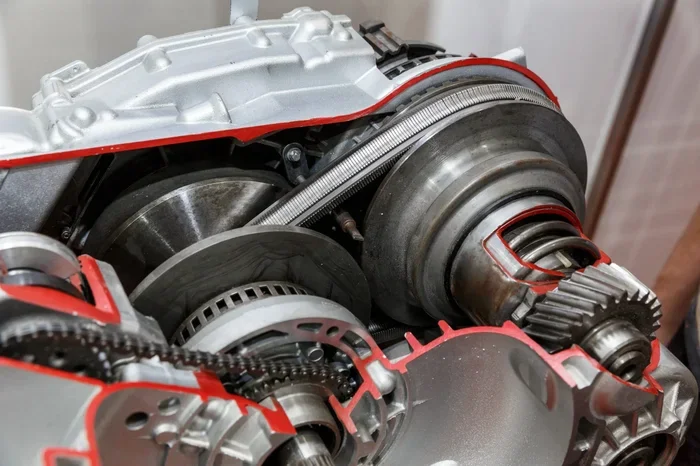
A continuously variable transmission works differently from a traditional automatic. Instead of fixed gear ratios, a CVT uses a belt or chain connected to two pulleys. These pulleys change diameter continuously. This gives the engine an infinite number of gear ratios. The result is smooth acceleration and better fuel efficiency.
Car manufacturers love CVTs because they help vehicles meet strict fuel economy standards. Drivers love them because the ride feels seamless. No jerky shifts. No lag. But the design also introduces unique wear points. The belt or chain sits under constant tension. The pulleys slide to adjust ratio. Heat builds up. Over time, these factors can cause degradation.
Understanding how a CVT works helps you understand why maintenance matters so much. A traditional automatic transmission has planetary gear sets that handle power through mechanical engagement. A CVT relies on friction. That friction creates heat. And heat is the enemy of any transmission component. This is exactly why CVT longevity depends heavily on how well you care for the system.
How CVTs Differ from Traditional Automatics
A standard automatic uses a torque converter and a set of gears. These components have been refined for decades. A CVT replaces all those gears with a simple belt-and-pulley setup. Fewer parts sounds better, right? Not always. The belt or chain must maintain constant contact with the pulleys. If the fluid degrades, that contact suffers. If the fluid overheats, the belt can slip. Slipping accelerates wear. It is a cycle that compounds over time.
Traditional automatics can also reach 300000 miles. But the failure modes are different. A CVT failure often means total replacement. A traditional automatic might need a rebuild. Understanding these differences helps you set realistic expectations for your specific vehicle.
Can a CVT Really Last 300000 Miles?
The short answer is yes. Plenty of CVT-equipped vehicles have crossed the 300000-mile mark without major transmission issues. But the longer answer requires some context. Not all CVTs are created equal. Some are engineered for durability from day one. Others were designed more for cost savings than longevity.
When we talk about a CVT lasting 300000 miles, we mean the transmission still functions properly without a major rebuild or replacement. The vehicle shifts smoothly. The belt or chain shows no abnormal wear. The fluid remains in acceptable condition. This is absolutely achievable. But it takes the right combination of factors working together.
Real-World Examples of High-Mileage CVTs
Honda vehicles with CVTs regularly hit 300000 miles. The Honda Civic and Honda Accord CVT models are well known for their durability. Many owners report 250000 to 350000 miles without a transmission rebuild. Toyota has also made significant improvements. The Toyota Corolla CVT and Toyota RAV4 CVT have strong track records. Subaru’s Lineartronic CVT in the Subaru Forester and Subaru Outback also performs well at high mileage when maintained properly.
On the other side, some Nissan CVTs gained a bad reputation for early failures. The Nissan Rogue CVT and Nissan Altima CVT models from certain years experienced premature wear. Nissan extended warranties on many of these models because of the widespread issues. This is why brand reputation matters when you ask, can a CVT last 300000 miles.
What Mileage Should You Expect from a CVT?
Here is a realistic breakdown of what to expect from a well-maintained CVT:
- 100000 to 150000 miles: Most CVTs operate normally. Fluid may need its first full change if not done earlier.
- 150000 to 200000 miles: This is the critical zone. Neglected CVTs often start showing problems here. Well-maintained CVTs feel just fine.
- 200000 to 250000 miles: With proper care, many CVTs are still going strong. Some may need minor adjustments or fluid top-offs.
- 250000 to 300000 miles: This is the high-mileage zone. Only CVTs from durable brands with consistent maintenance reach this milestone reliably.
- 300000+ miles: Absolutely possible. These are the CVTs that had the right fluid, the right driving habits, and the right brand engineering.
Which CVT Brands Last the Longest?
Not every automaker builds CVTs the same way. Some invest heavily in durability testing. Others prioritize cost reduction. The difference shows up at the 150000-mile mark and beyond. If you want a CVT that can last 300000 miles, your brand choice matters a lot.
Honda CVT Reliability
Honda has been a leader in CVT durability for years. Their CVT designs use a chain-driven system rather than a belt. The chain handles higher torque loads better and tends to last longer. Honda also recommends CVT fluid changes at regular intervals, and this discipline shows in the long-term results. Many Honda CVTs regularly surpass 300000 miles without issues.
Toyota CVT Reliability
Toyota took a different approach. For years, Toyota avoided CVTs in most models. When they finally adopted CVTs, they focused on refinement and reliability. The Toyota-built CVTs use robust materials and advanced fluid formulations. Toyota CVTs are not as common as their traditional automatics, but the ones they do produce tend to be very long-lasting.
Subaru CVT Reliability
Subaru uses the Lineartronic CVT across most of its lineup. The system pairs well with Subaru’s horizontally opposed engines. Subaru CVTs generally hold up well, especially when owners follow the recommended maintenance schedule. The CVT in the Subaru Forester and Subaru Outback has a solid reputation for reaching high mileage.
Brands to Approach with Caution
Some brands have historically struggled with CVT reliability. Nissan is the most notable example. Early Nissan CVTs used a belt design that was prone to overheating and premature wear. Chrysler also had issues with their CVT designs in certain models. If you are buying a used car with a CVT from one of these brands, get a pre-purchase inspection and check the maintenance history carefully.
| Brand | CVT Type | Durability Rating | Common Issues |
|---|---|---|---|
| Honda | Chain-driven | Excellent | Rare at high mileage |
| Toyota | Belt/chain hybrid | Very Good | Minimal when maintained |
| Subaru | Belt-driven | Good | Occasional shudder at high miles |
| Nissan | Belt-driven | Poor to Moderate | Overheating, premature wear |
| Jaguar/Land Rover | Belt-driven | Poor | Frequent failures, costly repairs |
How to Make Your CVT Last 300000 Miles
You cannot control the brand engineering. But you can control how you maintain and drive your vehicle. The difference between a CVT that dies at 120000 miles and one that reaches 300000 miles often comes down to these simple habits.
Change the CVT Fluid on Schedule
This is the single most important thing you can do. CVT fluid degrades over time. It loses its friction properties. It absorbs metal particles from normal wear. Old fluid means more friction inside the transmission. More friction means more heat. More heat means accelerated wear. Most manufacturers recommend a CVT fluid change every 60000 to 100000 miles. Do not skip this service. Ever.
Use the exact fluid type recommended by your vehicle manufacturer. CVT fluid is not the same as automatic transmission fluid. Using the wrong fluid can cause catastrophic failure. Check your owner manual or ask your dealer for the part number.
Avoid Aggressive Driving
CVTs do not like sudden, hard acceleration. When you slam the throttle, the pulleys adjust rapidly. The belt or chain experiences sudden load changes. Over thousands of cycles, this creates wear. Smooth acceleration extends transmission life significantly. Think of your CVT as a marathon runner, not a sprinter. It wants steady, predictable loads.
This does not mean you cannot enjoy your car. Just be mindful. Ease into the throttle from a stop. Avoid holding the engine at high RPM for extended periods. These small changes add up over hundreds of thousands of miles.
Keep the Transmission Cool
Heat is the biggest enemy of any CVT. If you tow a trailer, carry heavy loads, or drive in stop-and-go traffic in hot climates, your CVT works harder. Consider adding an external transmission cooler if you regularly haul heavy loads. This simple upgrade can add years to your CVT life.
Also, avoid shifting from drive to reverse while the vehicle is still moving. This stresses the pulleys and belt unnecessarily. Come to a complete stop first. It takes two seconds and saves your transmission.
Address Problems Early
If you notice any warning signs, do not ignore them. A CVT that shudders during acceleration needs attention. A CVT that hesitates or slips needs service. Catching problems early often means a simple fluid change or adjustment. Ignoring them can lead to a full transmission failure.
Common early warning signs include:
- Delayed engagement when shifting from park to drive
- Vibration or shuddering during acceleration
- Unusual whining or grinding noises
- Burning smell from the transmission area
- Check engine light with transmission-related codes
Follow the Maintenance Schedule Exactly
Your owner manual has a maintenance schedule for a reason. Follow it to the letter. This includes not just fluid changes but also filter replacements, belt inspections, and software updates. Some manufacturers release transmission software updates that improve shift logic and reduce wear. Stay current with recalls and service bulletins for your vehicle.
Common CVT Problems and How to Avoid Them
Even well-maintained CVTs can develop issues over time. Knowing what to watch for helps you stay ahead of problems. Here are the most common CVT complaints and how to prevent them.
Belt or Chain Stretch
Over hundreds of thousands of miles, the CVT belt or chain can stretch. This causes slipping and reduced performance. Regular fluid changes help minimize this. Using the correct fluid specification is equally important. The fluid contains additives that condition the belt and keep it supple.
Bearing Wear
The internal bearings in a CVT handle constant rotational stress. As they wear, you may notice noise during acceleration or deceleration. This is more common in higher-mileage vehicles. Keeping the fluid fresh helps bearings last longer because the fluid carries lubrication to these small components.
Software and Sensor Issues
Modern CVTs rely on sensors and electronic control units. A faulty sensor can cause harsh shifts, limp mode, or incorrect ratio selection. These issues are often software-related and can be fixed with a simple update. Always have a technician scan for error codes before assuming mechanical failure.
Pulley Wear
The pulleys that change diameter are subject to constant friction. Over time, the grooves can wear. This affects how the belt or chain tracks. Pulley wear is more common in vehicles that have been poorly maintained or driven aggressively. A pulley replacement is much cheaper than a full CVT rebuild.
CVT Repair Costs vs. Replacement Costs
If your CVT does fail, the repair bill can be significant. Understanding the costs helps you make informed decisions about whether to repair or replace the vehicle.
A CVT fluid change typically costs between 150 and 300 dollars. This is the cheapest and most effective maintenance step. A CVT rebuild ranges from 3000 to 5000 dollars depending on the vehicle. A complete CVT replacement can cost 5000 to 8000 dollars or more. Some dealerships offer remanufactured CVTs at lower prices.
Compare these costs to the value of your vehicle. If your car is worth 10000 dollars and the CVT replacement costs 7000 dollars, you need to think carefully about whether the repair makes sense. This is exactly why prevention through regular maintenance is so valuable.
Final Thoughts on CVT Longevity
So, can a CVT last 300000 miles? The answer is a resounding yes. But it requires the right vehicle, the right maintenance habits, and the right driving style. Choose a brand with a strong CVT reputation. Change the fluid on schedule. Drive smoothly. Address problems early. Follow these steps and your CVT transmission can comfortably exceed 300000 miles.
The bad reputation some CVTs carry comes from early models that were rushed to market. Modern CVTs are far more refined. Manufacturers learned from past mistakes and invested heavily in durability. The CVT technology of today is not the same technology from ten or fifteen years ago. If you treat your CVT with respect, it will reward you with years of smooth, efficient driving.
Take ownership of your vehicle’s maintenance. Read the owner manual. Build a relationship with a trusted mechanic who understands CVT systems. The miles you put in should be enjoyable, not stressful. With the right care, your CVT can be one of the most reliable components on your car for the long haul.
Frequently Asked Questions
What is the average lifespan of a CVT transmission?
A well-maintained CVT transmission can last between 200000 and 300000 miles. Some examples exceed 300000 miles with proper care. The average lifespan depends heavily on the brand, driving habits, and maintenance schedule. Regular fluid changes are the single most important factor in extending CVT life.
Is it worth buying a car with a CVT transmission?
Yes, especially if you choose a brand known for CVT reliability like Honda, Toyota, or Subaru. CVTs offer excellent fuel economy and smooth driving. The key is staying on top of maintenance and avoiding aggressive driving habits that cause premature wear.
How often should I change CVT fluid?
Most manufacturers recommend changing CVT fluid every 60000 to 100000 miles. Some newer vehicles claim to have lifetime fluid, but most experts still recommend changing it at least once by the 100000-mile mark. Always use the exact fluid type specified for your vehicle.
What causes a CVT transmission to fail early?
The most common causes are neglected fluid changes, aggressive driving, overheating from heavy loads, and manufacturing defects. Using the wrong CVT fluid can also cause premature failure. Early warning signs like shuddering or slipping should never be ignored.
Can you tow with a CVT transmission?
Some CVTs are rated for light towing, but heavy towing puts significant stress on the transmission. Check your owner manual for the maximum towing capacity. If you tow regularly, consider adding an external transmission cooler to help manage heat buildup.
Are modern CVTs more reliable than older ones?
Yes, modern CVTs are significantly more reliable than earlier versions. Manufacturers redesigned belt and chain systems, improved fluid formulations, and updated electronic controls. The early reputation problems with certain brands have been largely addressed in current models.
=== CONCLUSION ===
A CVT transmission can absolutely last 300000 miles when you choose the right brand and commit to proper maintenance. The days of CVTs being disposable drivetrain components are long gone. Today’s continuously variable transmissions are engineered for longevity, efficiency, and smooth performance. Your role is simple: change the fluid on schedule, drive with care, and address any warning signs promptly. Follow these principles and your CVT will serve you reliably for hundreds of thousands of miles. The surprising truth is that a well-cared-for CVT is one of the most durable components in your entire vehicle.