Does a Camry Need Full Synthetic Oil for Best Performance
Yes, a Camry performs best with full synthetic oil. Toyota recommends full synthetic oil for most modern Camry models, especially the 2018 and newer versions. Full synthetic oil offers superior engine protection, better fuel economy, and longer intervals between changes. Using the right oil keeps your Camry running smoothly for years.
Your Toyota Camry is one of the most reliable cars on the road. But keeping it running strong depends on one simple thing: the right oil. Many Camry owners wonder whether they need full synthetic oil or if a cheaper option will do the job. The answer matters more than you might think.
Using the wrong type of oil can hurt your engine over time. It can reduce fuel efficiency, cause wear, and even void your warranty. On the other hand, the right oil keeps everything running smooth and quiet. In this guide, we will walk you through everything you need to know about does a Camry need full synthetic oil for best performance.
We will cover what Toyota recommends, the real benefits of full synthetic oil, when you might consider alternatives, and how often you should change your oil. By the end, you will feel confident about keeping your Camry in top shape. Let us get into it.
Key Takeaways
- Toyota recommends full synthetic oil for most Camry models to ensure optimal engine performance and longevity.
- Full synthetic oil provides better protection in extreme temperatures and reduces engine wear over time.
- SAE 0W-20 is the standard viscosity for most modern Toyota Camry engines.
- Oil change intervals can extend to 10,000 miles when using full synthetic oil in a Camry.
- Using the wrong oil type can void your warranty and cause long-term engine damage.
- Synthetic blend oil is a budget-friendly alternative but does not match full synthetic performance.
- Regular oil changes are essential even with high-quality synthetic oil to maintain engine health.
📑 Table of Contents
- What Is Full Synthetic Oil and Why It Matters
- Toyota’s Official Recommendations for the Camry
- Does a Camry Need Full Synthetic Oil for Best Performance
- How Often Should You Change Your Camry’s Oil
- Common Mistakes Camry Owners Make with Oil
- Quick Tips for Choosing the Right Oil for Your Camry
- Expert Insights on Camry Oil Maintenance
- Conclusion
- Frequently Asked Questions
What Is Full Synthetic Oil and Why It Matters
Not all motor oils are created equal. The differences matter a lot for your engine. Let us break down what full synthetic oil actually is and why it is a big deal for your Camry.
How Synthetic Oil Differs from Conventional Oil
Conventional oil comes from crude oil. It is refined and processed, but it still has impurities. Full synthetic oil, on the other hand, is built from the ground up in a lab. Every molecule is designed to be uniform and precise.
This means synthetic oil performs better in several key ways:
- Better flow in cold weather so your engine starts easily in winter.
- Higher heat resistance which prevents oil breakdown during hot drives.
- Fewer impurities which means less sludge buildup inside your engine.
- Longer lasting so you can go further between oil changes.
Conventional oil does the job for older cars. But modern engines like the ones in the Camry need the precision that only full synthetic can provide. Think of it this way. Would you feed a high-performance engine cheap fuel? Probably not. The same logic applies to your oil choice.
The Science Behind Full Synthetic Formulations
Full synthetic oils use artificially engineered base oils along with special additives. These additives help with everything from reducing friction to preventing rust. The result is a product that protects your engine in ways conventional oil simply cannot match.
For example, synthetic oil maintains a stable viscosity across a wide range of temperatures. Viscosity is just a fancy word for how thick or thin your oil is. When oil gets too thin, it does not protect your engine parts properly. When it gets too thick, it does not flow well. Full synthetic oil stays balanced no matter the conditions.
This is especially important for the Toyota Camry because its engine is designed to run with precision tolerances. Those tight spaces need oil that flows exactly when and where it is needed.
Toyota’s Official Recommendations for the Camry
Toyota does not leave Camry owners guessing about oil. The manufacturer provides clear guidelines in the owner’s manual. Let us look at what they say and what it means for you.
What the Owner’s Manual Says
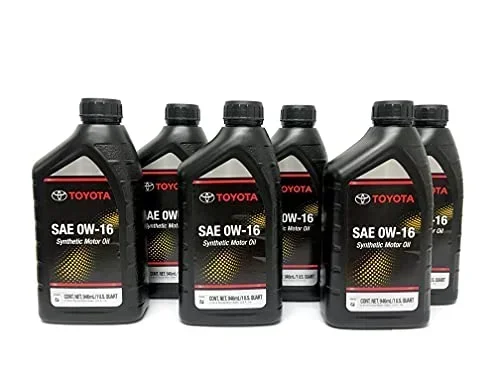
Most modern Toyota Camry models require full synthetic 0W-20 oil. This has been the standard for several years now. Toyota specifically designed the Camry engine to work best with this viscosity grade.
The owner’s manual will also tell you the exact oil capacity for your engine. For the four-cylinder Camry, it is typically around 4.6 quarts. For the V6 models (older ones), it is a bit more. Always check your specific model year to be sure.
Toyota’s recommendation is not just a suggestion. Using a different oil type could affect your warranty coverage. If something goes wrong and Toyota finds you used the wrong oil, they might deny a claim. That alone is a strong reason to follow the guidelines.
SAE Viscosity Grades Explained Simply
You have probably seen numbers like 0W-20 or 5W-30 on oil bottles. These are SAE viscosity grades. They tell you how the oil behaves at different temperatures.
The first number (the one with the W for winter) shows how the oil flows in cold temperatures. A lower number means better cold-weather flow. So 0W-20 flows better in winter than 5W-30.
The second number shows the oil’s thickness at operating temperature. For the Camry, 20 is the target. It keeps the engine well-lubricated without wasting energy.
Sticking with 0W-20 full synthetic is the safest bet for almost all Camry models. If you are unsure, check your owner’s manual or ask a service advisor.
Does a Camry Need Full Synthetic Oil for Best Performance
This is the question that brings most people here. The short answer is yes. But let us dig deeper into why full synthetic oil makes such a difference for your Camry.
Benefits of Full Synthetic Oil in a Camry
Using full synthetic oil in your Camry comes with real, measurable benefits. Here is what you can expect:
- Better engine protection. Synthetic oil forms a stronger film between moving parts. This reduces metal-to-metal contact and minimizes wear.
- Improved fuel economy. Because synthetic oil flows more easily, your engine does not work as hard. Over time, this can save you money at the pump.
- Longer oil life. Full synthetic oil degrades more slowly than conventional oil. You can often go 7,500 to 10,000 miles between changes.
- Cleaner engine internals. Synthetic oil produces less sludge and deposits. Your engine stays cleaner inside, which helps it last longer.
- Better performance in extreme temperatures. Whether it is a freezing winter morning or a hot summer drive, synthetic oil holds up well.
These benefits add up over the life of your Camry. A well-maintained Camry can easily last 200,000 miles or more. Using full synthetic oil is one of the simplest ways to help get there.
When Conventional or Synthetic Blend Oil Might Work
There are a few situations where you might consider alternatives:
- Older Camry models (pre-2010). Some older Camrys were designed for conventional oil. Check your manual before switching.
- High-mileage synthetic blends. These offer some synthetic benefits at a lower price point. They can be a good middle ground.
- Budget constraints. Full synthetic costs more upfront. A synthetic blend can still offer decent protection if full synthetic is not in your budget right now.
However, if you want the best performance and longest engine life, full synthetic is the way to go. Think of it as an investment in your car’s future.
For Camry Hybrid owners, oil choice is just as important. The hybrid system adds extra components that need proper lubrication. If you want to learn more about how the hybrid system works, check out when a hybrid switches to gas for useful background on your Camry Hybrid’s dual power system.
How Often Should You Change Your Camry’s Oil
Even the best oil does not last forever. Knowing when to change it keeps your Camry engine healthy and strong.
Oil Life Monitor vs. Mileage Intervals
Modern Toyotas come with an oil life monitor system. This computer tracks your driving conditions and tells you when it is time for a change. It is not based on a fixed mileage number.
Generally, with full synthetic oil, the oil life monitor will prompt you around 7,500 to 10,000 miles. Some drivers in ideal conditions can stretch this a bit further. But it is always better to change early than late.
If your Camry is older and does not have an oil life monitor, stick with the traditional interval of every 5,000 to 7,500 miles. This is a safe and proven schedule.
Signs Your Camry Needs an Oil Change
Your car will tell you when something is off. Watch for these warning signs:
- Dark or gritty oil on the dipstick. Clean oil should be amber in color.
- Engine noise that is louder than usual, especially on startup.
- Oil pressure warning light on the dashboard. Never ignore this one.
- Burning oil smell inside the cabin. This could indicate a leak or burning issue.
- Reduced fuel economy which can signal that your oil is no longer doing its job.
Catching these signs early can prevent expensive repairs. A simple oil change is a lot cheaper than a new engine.
Common Mistakes Camry Owners Make with Oil
Even well-meaning Camry owners sometimes make oil mistakes. Here are the most common ones and how to avoid them.
Using the Wrong Viscosity
This is the number one mistake. Some owners think thicker oil is better for older engines. That is not always true. The Camry engine is designed for a specific viscosity, and using something different can reduce performance.
For example, using 5W-30 instead of 0W-20 might seem like a small difference. But it affects how the oil flows through tight engine passages. Over time, this can cause increased wear and reduced fuel economy.
Skipping Oil Changes
It is tempting to push an oil change a few thousand miles past due. After all, the oil still looks fine. But oil degrades even when it looks clean. The additives that protect your engine wear out over time.
Skipping oil changes regularly will lead to sludge buildup, increased friction, and eventually engine damage. Do not skip this maintenance task. Your Camry will thank you for it.
Overfilling or Underfilling
Both too much and too little oil cause problems. Overfilling can cause foaming, which reduces lubrication. Underfilling means the engine does not get enough oil flow.
Always check the oil level with the dipstick after a change. The level should be between the minimum and maximum marks. If you are unsure, ask a technician at a local dealership for help. Many service departments, including those at a local car dealership, can assist with oil checks and changes even if they do not carry Toyota models.
Quick Tips for Choosing the Right Oil for Your Camry
- Always use 0W-20 full synthetic oil unless your owner’s manual says otherwise.
- Check for the API SP certification on the oil bottle. This ensures the oil meets current standards.
- Look for oils that meet Toyota’s specification (usually printed on the bottle).
- Change your oil filter every time you change the oil.
- Keep a record of your oil changes for warranty and resale purposes.
- Do not mix different oil types unless absolutely necessary in an emergency.
Expert Insights on Camry Oil Maintenance
Toyota engineers design the Camry to be a long-lasting, dependable sedan. But even the best engineering needs proper maintenance to shine. Oil is the lifeblood of your engine, and choosing the right type is one of the most impactful things you can do.
Toyota’s engineering team has tested the Camry engine extensively with full synthetic 0W-20 oil. They found it delivers the best balance of protection, efficiency, and longevity. This is not just a marketing choice. It is backed by real data and thousands of hours of testing.
Many Camry owners report going well over 200,000 miles with proper oil maintenance. The key is consistency. Use the right oil, change it on schedule, and your engine will reward you with years of reliable service.
Your Camry’s weight and size also play a role in oil performance. For context, the Camry falls in a mid-range weight class for sedans. If you are curious about how vehicle weight affects oil and engine requirements, you can explore what counts as heavy for a car to understand how weight impacts engine demands.
Conclusion
So, does a Camry need full synthetic oil for best performance? The answer is a clear yes. Full synthetic 0W-20 oil is what Toyota recommends, and for good reason. It provides superior protection, better fuel economy, and longer intervals between changes.
Sticking with Toyota’s recommendation is the simplest way to protect your investment. It keeps your engine clean, your fuel economy high, and your warranty intact. Skipping full synthetic oil or using the wrong viscosity can lead to problems down the road.
Your Camry is built to last. Give it the care it deserves with the right oil and regular changes. A few dollars spent on quality oil today can save you thousands in engine repairs tomorrow. Make full synthetic oil a non-negotiable part of your Camry maintenance routine, and your car will keep running strong for years to come.
Frequently Asked Questions
Can I use conventional oil in my Toyota Camry?
Toyota recommends full synthetic oil for most modern Camry models. Using conventional oil may work in older models, but it will not provide the same level of protection. It can also affect your warranty if your Camry is still under coverage. Always check your owner’s manual before switching oil types.
How much does full synthetic oil cost for a Camry oil change?
A full synthetic oil change for a Camry typically costs between $65 and $120, depending on where you go. Dealership service centers tend to be on the higher end. Independent shops often offer competitive pricing. The cost is worth it for the protection and performance benefits you get.
Can I switch from synthetic blend to full synthetic oil?
Yes, you can switch from synthetic blend to full synthetic oil at any time. There is no harm in making the switch. In fact, your engine will benefit from the superior protection and performance of full synthetic. Just make sure to change the oil filter when you switch.
What happens if I use the wrong oil viscosity in my Camry?
Using the wrong viscosity can reduce engine protection and fuel efficiency. It may also trigger the oil pressure warning light in some cases. Over time, incorrect oil can cause increased wear on engine components. Always use the viscosity grade recommended by Toyota for your specific Camry model.
Does the Camry Hybrid need a different type of oil?
The Camry Hybrid uses the same 0W-20 full synthetic oil as the standard Camry. The hybrid powertrain does not change the engine oil requirements. However, the hybrid system does mean the engine runs differently at times, which makes quality oil even more important. Stick with full synthetic for the best results.
How can I tell if my Camry’s oil needs changing?
Check your oil life monitor system if your Camry has one. It will display a message when it is time for a change. You can also check the oil color on the dipstick. Dark, gritty oil means it is time for a change. Other signs include engine noise, reduced fuel economy, and the oil pressure warning light.