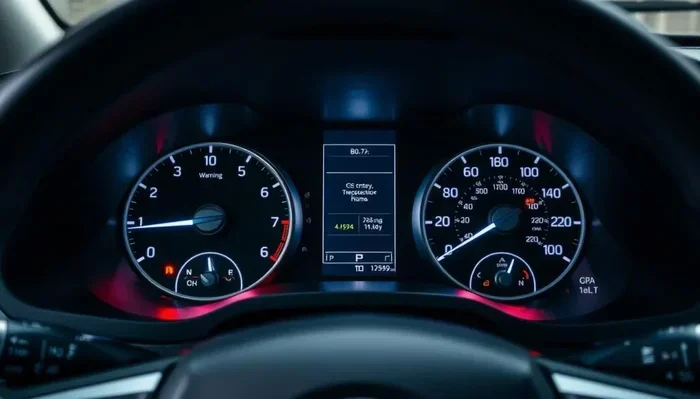
Can I Drive My Camry With the Check Engine Light On
Yes, you can drive your Toyota Camry with the check engine light on in most cases, but it depends on what triggered the light. A loose gas cap or minor sensor issue is usually nothing to panic about, while a flashing light or rough engine performance means you should pull over right away. Understanding what your check engine light is trying to tell you can save you from costly repairs and keep you safe on the road.
You are cruising down the highway in your Toyota Camry, and suddenly a yellow or orange light pops up on your dashboard. It looks like an engine, and your stomach drops a little. Your first thought? Can I drive my Camry with check engine light on? The short answer is yes, in most situations. But the longer answer matters a lot more, and it could save you hundreds of dollars in repairs or even prevent a dangerous breakdown on the road.
The check engine light is one of the most misunderstood warning lights in any vehicle. Some drivers ignore it for months. Others panic and pull over immediately. The truth is somewhere in between. Your Camry is a reliable car, but even the best vehicles need attention from time to time. This guide walks you through everything you need to know about driving your Camry when that little engine icon shows up.
We will cover what the light means, the most common reasons it comes on, when it is safe to keep driving, and when you should stop and call for help. By the end, you will feel confident making the right decision for your car and your safety.
Key Takeaways
- A steady check engine light: Usually means a minor issue like a loose gas cap or failing oxygen sensor.
- A flashing check engine light: Signals a serious problem like engine misfire that can damage your catalytic converter.
- You can often drive short distances: But avoid highway speeds and heavy loads until you diagnose the issue.
- OBD-II scanners help: You can read the error codes yourself or visit a shop for a free diagnostic check.
- Ignoring the light is risky: Small problems can turn into expensive repairs and failed emissions tests.
- Common Camry triggers: Loose gas cap, bad spark plugs, faulty mass airflow sensor, and aging catalytic converter.
📑 Table of Contents
- What Does the Check Engine Light Mean on a Toyota Camry?
- Common Reasons the Check Engine Light Comes On in a Camry
- Can You Safely Drive Your Camry With the Light On?
- What Happens If You Ignore the Check Engine Light?
- How to Diagnose the Problem Yourself
- How to Reset the Check Engine Light on a Camry
- Quick Tips for Camry Owners
- Common Mistakes People Make With the Check Engine Light
- Expert Insights on Check Engine Lights and Toyota Vehicles
- Conclusion
What Does the Check Engine Light Mean on a Toyota Camry?
Your Toyota Camry has a network of sensors that monitor everything from fuel mixture to exhaust emissions. When one of these sensors detects something outside its normal range, it triggers the check engine light. The light is part of your car’s onboard diagnostics system, often called OBD-II. This system has been standard in all cars sold in the United States since 1996.
The check engine light can show up in two ways: steady or flashing. Each means something very different.
Steady Check Engine Light
A steady yellow or orange light usually means a less urgent problem. Your Camry is still drivable, but something needs attention soon. Common causes include a loose gas cap, a failing oxygen sensor, or a worn spark plug. These issues will not destroy your engine overnight, but they should not be ignored for too long.
Think of the steady light like a minor ache in your knee. It is not an emergency, but you should get it checked out before it gets worse.
Flashing Check Engine Light
A flashing check engine light is a red flag. It means there is a serious problem that could cause immediate damage to your vehicle. The most common cause is an engine misfire, where unburned fuel shoots into the exhaust system. This can overheat and destroy your catalytic converter, which is an expensive part to replace. If your light is flashing, pull over safely and turn off the engine. Do not keep driving.
Common Reasons the Check Engine Light Comes On in a Camry
Toyota Camrys are known for lasting well over 200,000 miles, but they are not immune to problems. Here are the most common reasons the check engine light appears on a Camry.
Loose or Faulty Gas Cap
This is the number one cause of a check engine light, and it is also the easiest to fix. Your Camry’s fuel system relies on pressure to work properly. If your gas cap is loose, cracked, or missing, fuel vapors escape and trigger the light. Next time the light comes on, try tightening your gas cap. If it was loose, the light often goes away after a few days of driving.
Replacing a gas cap costs under fifteen dollars and takes ten seconds. It is the cheapest fix on this entire list.
Oxygen Sensor Failure
The oxygen sensor measures how much unburned oxygen is in your exhaust. Your Camry has at least two of these sensors, and they help the engine control module adjust the fuel mixture. When an oxygen sensor fails, your engine runs rich (too much fuel) or lean (too little fuel). This reduces fuel efficiency and can damage your catalytic converter over time.
Replacing an oxygen sensor typically costs between 200 and 350 dollars at a repair shop. It is a common repair for Camrys with over 100,000 miles.
Faulty Mass Airflow Sensor
The mass airflow sensor tells your Camry’s computer how much air is entering the engine. Without this information, the fuel injection system cannot deliver the right amount of fuel. A dirty or failing mass airflow sensor causes rough idling, poor acceleration, and lower gas mileage. You can often clean these sensors with a special spray, but replacement costs around 200 to 400 dollars.
Worn Spark Plugs or Ignition Coils
Spark plugs ignite the air-fuel mixture in your Camry’s cylinders. Over time, they wear out and stop firing properly. This causes engine misfires, which are one of the most common reasons for a flashing check engine light. Ignition coils can also fail, especially in higher-mileage Camrys. Replacing spark plugs is inexpensive, but ignoring the problem can lead to much bigger issues.
Catalytic Converter Problems
The catalytic converter reduces harmful emissions from your exhaust. Camrys are generally reliable, but the catalytic converter can fail, especially if you have ignored misfires or fuel mixture problems for a long time. A bad catalytic converter triggers the check engine light and can cause your car to fail an emissions test. Replacement costs can range from 1,000 to 2,500 dollars depending on your model year.
Can You Safely Drive Your Camry With the Light On?
This is the big question, and the answer depends on a few factors. Let us break it down.
When It Is Generally Safe to Drive
If your check engine light is steady and your Camry is running smoothly, you can usually drive it for a short distance. You should head to a repair shop or auto parts store for a diagnostic check as soon as possible. Avoid pushing the car hard. Do not tow heavy loads, drive at high speeds for long periods, or race the engine. Treat your Camry gently until you know what the problem is.
If you need to drive to work or the grocery store, that is usually fine. Just keep an eye on how the car feels. If you notice anything unusual, pull over and assess the situation.
When You Should NOT Drive
Do not drive your Camry if you notice any of the following symptoms along with the check engine light:
- Flashing check engine light — this indicates a serious misfire that can damage your catalytic converter
- Rough idle or stalling — your engine is struggling and may shut down unexpectedly
- Loss of power — if your Camry feels sluggish or unresponsive, stop driving
- Strange noises — knocking, pinging, or loud rattling from the engine area
- Smoke or unusual smells — these signal serious internal problems
- Temperature gauge in the red — overheating can destroy your engine quickly
If you are ever unsure, it is better to be safe than sorry. Call a tow truck if needed. A tow ride costs a fraction of what a new engine costs.
What Happens If You Ignore the Check Engine Light?
Some drivers see a steady check engine light and decide to just live with it. They do not notice any immediate problems, so they assume everything is fine. This is a risky approach. Here is what can happen if you ignore the light.
Reduced Fuel Efficiency
Many issues that trigger the check engine light affect how efficiently your Camry burns fuel. A bad oxygen sensor, a leaking fuel injector, or a misfiring cylinder can all drop your gas mileage by 10 to 30 percent. Over time, that adds up at the pump.
Worsening Damage
Small problems grow into big ones. A simple oxygen sensor replacement that costs 200 dollars can turn into a 2,000 dollar catalytic converter replacement if you ignore it for months. Your Camry’s engine is a complex system, and every part works together. When one part fails, others have to work harder, which causes more wear and tear.
Failed Emissions Test
If you live in a state that requires emissions testing, a check engine light will automatically cause you to fail. You will not be able to register your vehicle until the problem is fixed and the light is cleared. This can be frustrating and costly, especially if the fix turns out to be simple.
Safety Risks
A car that is running poorly is not safe to drive. Misfires can cause the engine to stall at intersections or on highways. Electrical issues triggered by sensor failures can affect your braking, steering, or other critical systems. Always take the check engine light seriously.
How to Diagnose the Problem Yourself
You do not need to be a mechanic to figure out what is going on with your Camry. Modern cars store diagnostic trouble codes in their computer memory. You can read these codes with the right tools.
Use an OBD-II Scanner
An OBD-II scanner is a small device that plugs into your Camry’s diagnostic port. The port is usually located under the dashboard on the driver’s side. Once plugged in, the scanner reads the error codes stored in your car’s computer. Each code tells you which system or component triggered the check engine light.
You can buy a basic OBD-II scanner for 20 to 50 dollars at any auto parts store. Some scanners plug into your phone via Bluetooth and display the codes on an app. This is a great way to get a quick idea of what is wrong without visiting a repair shop.
If you prefer not to buy a scanner, many auto parts stores offer free diagnostic checks. They will plug in their scanner and read the codes for you at no charge. This is a smart first step before committing to any repairs.
Understanding Common OBD-II Codes for Camrys
Here are some of the most common codes you might see on a Toyota Camry:
- P0420: Catalyst system efficiency below threshold — often points to a failing catalytic converter
- P0171: System too lean (Bank 1) — usually means a vacuum leak or fuel delivery problem
- P0300: Random/multiple cylinder misfire — could be spark plugs, ignition coils, or fuel injectors
- P0441: Evaporative emission control system malfunction — often caused by a loose gas cap
- P0135: Oxygen sensor heater circuit malfunction — the sensor needs replacement
Keep in mind that these codes point you in the right direction but do not always tell the full story. A code for a bad oxygen sensor might actually be caused by a vacuum leak upstream. Use the code as a starting point, not a final diagnosis.
When to See a Professional
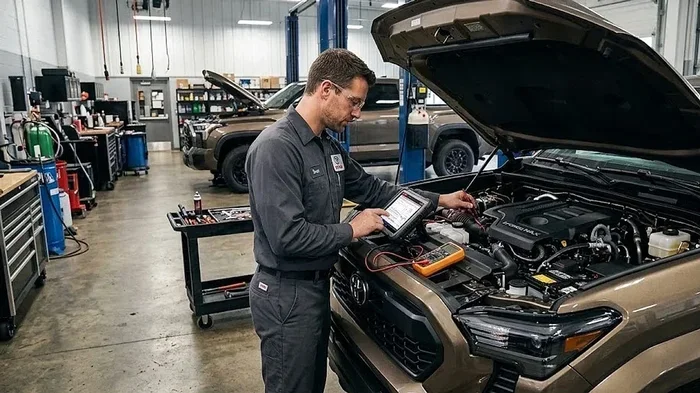
While DIY diagnostics are helpful, some problems need a trained mechanic. If the codes point to internal engine issues, transmission problems, or anything involving the emissions system, it is worth getting a professional opinion. A qualified Toyota technician has specialized tools and factory training that can pinpoint problems faster than a generic scanner.
How to Reset the Check Engine Light on a Camry
Once you have fixed the problem, you will want to clear the check engine light. There are a few ways to do this.
Drive It Off
In many cases, simply fixing the problem and driving your Camry for a few days will clear the light automatically. The car’s computer monitors the issue for several driving cycles before it decides the problem is resolved.
Disconnect the Battery
You can disconnect the negative battery terminal for about 15 minutes to reset the car’s computer. This clears the error codes and turns off the check engine light. However, this method also resets other settings like your radio presets and clock, so keep that in mind.
Use an OBD-II Scanner
The most reliable method is to use an OBD-II scanner to clear the codes after the repair. This ensures the problem is actually fixed before the light goes off. Some scanners will also confirm that the issue has been resolved by checking for new codes.
Never disconnect the battery or clear codes just to hide the light. If the underlying problem is not fixed, the light will come back, and you could fail an emissions test or cause further damage to your vehicle.
Quick Tips for Camry Owners
Here are some practical tips to keep your Toyota Camry running well and avoid unexpected check engine light surprises:
- Check your gas cap every time you fill up. Make sure it clicks at least three times.
- Replace spark plugs on schedule, usually every 60,000 to 100,000 miles depending on your model year.
- Use the recommended fuel grade. If your Camry calls for regular unleaded, do not pay extra for premium unless the manual says otherwise.
- Keep up with oil changes. Dirty oil causes engine wear that can trigger sensor problems.
- Do not ignore small symptoms. A slight rough idle or minor drop in fuel economy today can become a big repair tomorrow.
- Store an OBD-II scanner in your glove box. It is a cheap investment that pays for itself the first time it saves you a trip to the mechanic.
- Keep your Camry well-maintained. Regular service at a trusted Toyota dealership or independent shop catches small issues before they become big problems.
Common Mistakes People Make With the Check Engine Light
Avoid these common mistakes that Camry owners make when the check engine light comes on:
- Ignoring it completely. Even if the car feels fine, the underlying problem is still there and getting worse.
- Panic-buying parts. Do not buy random parts based on internet advice. Get a proper diagnosis first.
- Clearing the light without fixing the problem. This just hides the symptom and wastes your time.
- Driving aggressively. Hard acceleration and high speeds put extra stress on an already compromised engine.
- Delaying repairs because of cost fears. Many check engine light issues are inexpensive to fix if caught early.
Expert Insights on Check Engine Lights and Toyota Vehicles
Toyota technicians who work on Camrys every day have a few insights that every owner should know. First, Toyota vehicles are designed to be forgiving. The check engine light is set up to trigger early, often before you notice any change in how the car drives. This is actually a good thing. It gives you a warning before a small problem becomes a major one.
Second, the most common check engine light issues on Camrys are simple and inexpensive. The top three causes across all model years are a loose gas cap, a failing oxygen sensor, and worn spark plugs. None of these are expensive to fix if you address them promptly.
Finally, if you own an older Camry with high mileage, expect the check engine light to come on at some point. This does not mean your car is falling apart. It means it is aging like any machine and needs routine maintenance to keep running well. A well-maintained Camry can easily last 300,000 miles or more with proper care.
For those who want to learn more about car diagnostics and understand what their vehicle is trying to tell them, you can explore how to do your own car diagnostics with simple tools and a little patience. Understanding your car’s signals is one of the best ways to stay ahead of expensive repairs.
Conclusion
So, can you drive your Camry with the check engine light on? In most cases, yes. A steady light with no other symptoms means you can drive carefully to a repair shop. A flashing light or any unusual driving behavior means you should stop and seek help immediately.
The key is not to panic and not to ignore the light. Your Toyota Camry is built to last, and the check engine light is there to protect your investment. Use it as a tool, not a threat. Get a diagnosis, fix the problem, and keep driving with confidence.
Small problems caught early are always cheaper and easier to fix. Take care of your Camry, and it will take care of you for miles and miles to come.
Frequently Asked Questions
Can I drive my Camry with the check engine light on for a long trip?
If the light is steady and the car runs smoothly, a short trip is usually fine. However, for a long road trip, it is best to get the issue diagnosed first. Driving long distances with an unresolved problem can cause more damage and leave you stranded far from home.
How much does it cost to fix a check engine light on a Toyota Camry?
The cost varies widely depending on the cause. A loose gas cap fix costs under 20 dollars. Oxygen sensor replacement runs 200 to 350 dollars. Spark plug replacement is typically 100 to 300 dollars. Catalytic converter repairs can range from 1,000 to 2,500 dollars. Always get a proper diagnosis before committing to a repair.
Will my Camry pass emissions with the check engine light on?
No. In most states, a vehicle with an illuminated check engine light will automatically fail an emissions test. You will need to fix the underlying problem and clear the light before your car can pass.
Can low oil cause the check engine light to come on in a Camry?
Low oil typically triggers the oil pressure warning light, not the check engine light. However, severely low oil levels can cause engine performance issues that may trigger the check engine light indirectly. Always check your oil level regularly to avoid engine damage.
How long can I drive with a steady check engine light?
You can usually drive a few hundred miles with a steady check engine light if the car is running normally. However, you should get the issue checked as soon as possible. The longer you wait, the more likely a small problem will turn into an expensive repair.
Is it safe to drive a Camry with the check engine light on in the rain?
Driving in rain with a check engine light is not recommended if the light is flashing or if you notice any drivability issues. Water and electrical sensor problems do not mix well. If the light is steady and the car drives normally, light rain is usually okay, but exercise caution and get the car checked soon.