Can You Shift Into Sport Mode While Driving on Roads
Yes, you can shift into sport mode while driving on roads, and it’s simpler than you think. Sport mode instantly changes your vehicle’s throttle response, gear shifting behavior, and overall driving dynamics to give you a more responsive and powerful feel. In this guide, we’ll walk you through everything you need to know about using sport mode safely and effectively.
Key Takeaways
- Sport mode adjusts throttle and shifting: It makes your car respond faster to pedal inputs and hold lower gears longer.
- You can activate it while driving: Most modern vehicles allow switching into sport mode at any speed without stopping.
- It’s not just for sports cars: Sedans, SUVs, and crossovers now commonly offer sport mode as a drive setting.
- Fuel consumption increases: Sport mode typically raises your fuel usage due to more aggressive engine behavior.
- Know your vehicle’s limits: Always understand how your specific car handles in sport mode before pushing it on busy roads.
- Electronic safeguards still apply: Your car’s stability and traction control systems remain active even in sport mode.
- Switching back is easy: You can return to normal mode anytime with a simple button press or dial turn.
📑 Table of Contents
- Can You Shift Into Sport Mode While Driving on Roads?
- Can You Really Shift Into Sport Mode While Driving?
- Benefits of Using Sport Mode While Driving
- Potential Risks and Downsides of Sport Mode
- Sport Mode vs. Manual Mode: What’s the Difference?
- How to Use Sport Mode Safely on Different Road Types
- Common Mistakes When Using Sport Mode
- Expert Tips for Getting the Most Out of Sport Mode
- Does Sport Mode Affect Insurance or Warranty?
- Conclusion
Can You Shift Into Sport Mode While Driving on Roads?
Have you ever been cruising down the road and felt like your car needed a little more pep in its step? Maybe you wanted quicker acceleration or a more responsive feel when you pressed the gas pedal. That’s exactly where sport mode comes in. So, can you shift into sport mode while driving on roads? The short answer is yes, absolutely.
But there’s more to it than just flipping a switch. Understanding how sport mode works, when to use it, and what it does to your vehicle can make your driving experience way more enjoyable. It also helps you stay safe and avoid common mistakes that many drivers make. Let’s dive deep into everything about sport mode and how you can use it confidently on any road.
Sport mode isn’t just a fancy feature for luxury or sports cars anymore. Today, you’ll find it in everyday sedans, crossovers, and even trucks. Whether you’re on a highway, a winding country road, or just cruising through town, sport mode can change how your car behaves. Let’s break it all down.
What Is Sport Mode?
Sport mode is a driving setting that changes how your vehicle’s engine, transmission, and throttle work together. When you activate it, your car’s electronic control unit (ECU) adjusts the powertrain settings to give you a more responsive and aggressive driving feel.
Here’s what typically changes when you switch to sport mode:
- Throttle response becomes sharper. Your car reacts faster when you press the accelerator pedal.
- Gear shifts happen higher in the RPM range. The transmission holds onto lower gears longer instead of shifting up early.
- Acceleration feels more powerful. You get quicker bursts of speed when you need them.
- Steering may tighten. Some vehicles also adjust steering weight for a sportier feel.
Think of it like this. Normal mode is like walking at a comfortable pace. Sport mode is like picking up the pace and jogging. Your car is simply more ready to go when you ask it to do something.
How Does Sport Mode Work Under the Hood?
Under the hood, sport mode communicates with several vehicle systems. The transmission system is the biggest player here. In normal mode, your automatic transmission shifts gears early to save fuel and keep things smooth. But in sport mode, the transmission holds lower gears longer, which keeps more power available at any given moment.
The throttle body also gets adjusted. In normal driving, the throttle response might feel a bit lazy to improve comfort. Sport mode removes that delay. When you step on the gas, you get immediate acceleration. This is what drivers mean when they talk about responsive acceleration.
Some vehicles also adjust the exhaust note, suspension stiffness, or even all-wheel-drive behavior when sport mode is activated. It depends on your specific car and its features. But the core idea stays the same. Your vehicle is tuned to perform more aggressively.
Can You Really Shift Into Sport Mode While Driving?
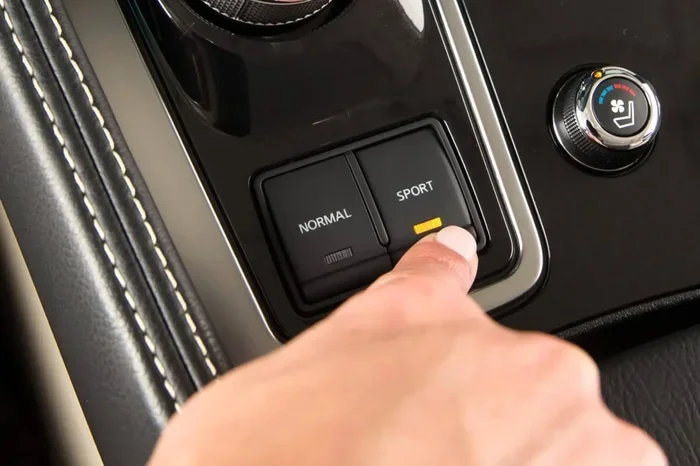
Let’s get right to it. Yes, you can shift into sport mode while driving on roads. Most modern vehicles with automatic transmissions allow you to switch between normal and sport mode at any time. You don’t need to stop or pull over. Just press the button or turn the dial, and the change happens instantly.
This applies to vehicles with electronic drive mode selectors. These are the buttons or dials you often find near the steering wheel or center console. Many cars also have a simple toggle on the gear shifter itself. The process is usually straightforward and takes just a second.
When Is It Safe to Switch?
While it’s technically safe to switch into sport mode at any time, timing matters. Here are some good moments to make the switch:
- When merging onto a highway. You want quick acceleration to match traffic speed.
- During a safe overtake. Sport mode gives you that extra punch to pass smoothly.
- On open roads with good visibility. You have space to enjoy the responsive driving feel.
- On winding or hilly roads. Sport mode keeps your car in the right gears for better control.
However, you should avoid switching modes when traffic is very tight or when you’re in stop-and-go conditions. The sudden change in throttle behavior might catch you off guard. Always make sure you have full control of your vehicle before making the switch.
Does It Work at High Speeds?
Absolutely. Sport mode works at any speed, including highway speeds. When you’re cruising at 70 mph or higher, switching to sport mode won’t cause any abrupt changes. Your car simply adjusts its shifting strategy and throttle sensitivity in the background. You’ll notice the difference mostly when you accelerate or climb inclines.
Some drivers worry that switching into sport mode at high speeds might cause their car to lurch or behave unpredictably. That’s a common misconception. Modern vehicles are designed to handle mode changes smoothly at all speeds. The electronic control unit manages the transition carefully so you barely notice it happening.
Benefits of Using Sport Mode While Driving
Using sport mode isn’t just about looking cool or hearing a louder engine. There are real benefits that make it worth trying. Let’s look at some of the key advantages.
Better Acceleration and Responsiveness
The biggest benefit of sport mode is faster throttle response. In normal mode, there’s often a slight delay between when you press the gas pedal and when the car responds. Sport mode eliminates that lag. The powertrain is primed and ready to deliver power the moment you ask for it.
This is especially useful in situations where you need quick acceleration. Think highway merges, emergency overtakes, or even just merging from a side road into busy traffic. Sport mode gives you confidence that your car will respond exactly when you want it to.
Improved Gear Shifting Behavior
In normal mode, your automatic transmission often shifts up as early as possible. This helps with fuel efficiency and smooth riding. But it also means the engine might be in a higher gear when you suddenly need power. Sport mode tells the transmission to hold lower gears longer.
This means the engine stays in its power band more often. You get stronger acceleration without needing to downshift manually. It’s a feature often called sporty transmission behavior, and it makes driving feel much more engaging.
Enhanced Vehicle Dynamics
In some vehicles, sport mode also affects more than just the engine and transmission. It can adjust things like:
- All-wheel-drive distribution. More power can be sent to the rear wheels for a sportier feel.
- Suspension damping. Some cars stiffen the suspension for better handling.
- Stability control sensitivity. The system may allow a bit more wheel slip before intervening.
These changes work together to improve your overall vehicle dynamics. The car feels tighter, more connected, and more responsive to your inputs. It’s like the car is built to handle spirited driving.
Potential Risks and Downsides of Sport Mode
Sport mode is great, but it’s not without its downsides. Before you go switching into sport mode every time you drive, it’s important to understand the risks. Being informed helps you make better decisions.
Increased Fuel Consumption
This is the most obvious downside. Sport mode uses more fuel because the engine is working harder. The transmission holds lower gears, the throttle responds more aggressively, and the engine often runs at higher RPMs. All of this adds up to lower miles per gallon.
If you’re on a long road trip and want to save gas, normal mode is the better choice. Sport mode is best saved for moments when performance matters more than fuel economy. Think of it as a tool you use when you need it, not a setting you leave on all the time.
More Wear on the Powertrain
Driving in sport mode regularly puts extra stress on your engine, transmission, and drivetrain. The engine runs hotter, the transmission shifts harder, and the overall system works tougher. Over time, this can lead to faster wear and potentially more maintenance costs.
That doesn’t mean you should never use sport mode. Occasional use is perfectly fine for most vehicles. But if you drive in sport mode every single day, you might notice your car needs oil changes, transmission fluid flushes, or other maintenance more frequently. It’s all about balance.
Temptation to Drive Too Fast
Let’s be honest. Sport mode makes your car feel exciting. That excitement can sometimes lead to pushing the limits a bit too far. The faster throttle response and stronger acceleration might tempt you to drive faster than is safe, especially on unfamiliar roads or in areas with heavy traffic.
Always remember that sporty driving should happen in safe and legal conditions. Respect speed limits and road conditions. Sport mode enhances your car’s abilities, but it doesn’t change the laws of physics. Drive responsibly.
Sport Mode vs. Manual Mode: What’s the Difference?
Many vehicles offer both sport mode and manual mode. These are not the same thing, and understanding the difference helps you choose the right setting for your driving situation.
Understanding Manual Mode
Manual mode lets you control gear shifts yourself. Instead of the transmission deciding when to shift, you use paddle shifters on the steering wheel or a +/- gate on the gear shifter. You tell the car when to upshift or downshift. This gives you the most control over how the car behaves.
Manual mode is great for:
- Navigating steep hills where you want to control gear selection.
- Cornering on winding roads where you want to stay in a specific gear.
- Engine braking on long downhill stretches.
Understanding Sport Mode
Sport mode is automatic but tuned for performance. The transmission still shifts itself, but it does so with a sportier strategy. It holds lower gears, shifts later, and responds faster to your throttle inputs. You don’t need to do anything extra. The car just feels more alive.
Quick Comparison
Here’s a simple comparison to help you understand the key differences:
- Sport mode: Automatic shifting with a performance tune. Best for spirited driving with minimal input.
- Manual mode: You control all gear changes. Best for maximum control in specific situations.
- Combined use: Some drivers use both together. They activate sport mode for the overall feel and then use paddle shifters to hold specific gears when needed.
Both modes can be activated while driving. You can switch between them at any time on most modern vehicles. Experiment with both to find what works best for your driving style and the road conditions you face.
How to Use Sport Mode Safely on Different Road Types
Using sport mode isn’t one-size-fits-all. Different road conditions call for different approaches. Here’s how to use sport mode safely across various driving scenarios.
On Highways
Sport mode works well on highways, especially when you need to overtake slower traffic. Switch to sport mode when you need that extra acceleration. Once you’re back at cruising speed, you can switch back to normal mode to save fuel. It’s a great tool for safe and confident passing maneuvers.
On City Streets
Using sport mode in the city is fine but use it wisely. Stop-and-go traffic isn’t the best time for sport mode because the aggressive throttle can feel jerky in heavy traffic. Instead, save sport mode for open intersections, clear straightaways, or when you’re merging from a side street.
On Mountain or Winding Roads
This is where sport mode truly shines. On curvy mountain roads, the sharper throttle response and better gear holding make your car feel more precise. You’ll appreciate the way the transmission stays in lower gears through long curves. Just drive within your skill level and the road conditions.
Common Mistakes When Using Sport Mode
Even though sport mode is easy to use, many drivers make mistakes. Here are some common ones to avoid.
- Leaving sport mode on all the time. This wastes fuel and stresses your powertrain unnecessarily.
- Switching mode during hard acceleration. Always make mode changes smoothly, not during aggressive driving.
- Confusing sport mode with sport+ or track mode. Some vehicles have multiple sport settings. Sport+ or track mode is even more aggressive and may not be suitable for road use.
- Ignoring road conditions. Wet, icy, or rough roads are not the place for aggressive driving, even with sport mode activated.
- Assuming traction control is off. In most vehicles, your traction and stability control systems still work in sport mode. They may allow slightly more slip, but they’re still protecting you.
Expert Tips for Getting the Most Out of Sport Mode
Ready to try sport mode? Here are some practical tips from experienced drivers and automotive experts to help you get the best experience.
Start Slowly
If you’re new to sport mode, ease into it. Try it first on a quiet road where you’re comfortable. Get a feel for how your specific car responds. Every vehicle behaves differently in sport mode. What works for a sports car might feel different from a family sedan.
Listen to Your Car
Your car gives you clues about how it’s behaving. Pay attention to engine sounds, shifts, and how the car responds to your inputs. If something feels off, switch back to normal mode and check your vehicle. There’s no shame in playing it safe.
Use Steering Wheel Paddles If Available
If your car has steering wheel paddle shifters, you can combine sport mode with manual gear selection. This gives you the best of both worlds. The car has a sporty tune, but you still control when it shifts. It’s a fantastic way to enjoy spirited driving on safe roads.
Know When to Switch Back
Sport mode is a tool, not a permanent setting. Use it when you need performance, then switch back when you’re done. This saves fuel, reduces wear, and keeps your driving smooth for everyone around you. A good rule of thumb: if you’re cruising and not actively enjoying the sportier feel, switch back.
Does Sport Mode Affect Insurance or Warranty?
This is a question many drivers wonder about. The good news is that simply using sport mode does not void your vehicle warranty or affect your insurance. Sport mode is a standard feature designed by the manufacturer. Using it as intended is perfectly normal and covered.
However, if you modify your vehicle’s software or install aftermarket tuning that changes how sport mode behaves, that’s a different story. Such modifications could potentially affect your warranty or insurance coverage. Always stick with the manufacturer’s settings and features as designed.
Conclusion
So, can you shift into sport mode while driving on roads? Absolutely, yes. Sport mode is a versatile and user-friendly feature that can make your driving more exciting, responsive, and engaging. Whether you’re merging onto a busy highway, cruising through scenic mountain roads, or just wanting a bit more thrill during your daily commute, sport mode has you covered.
Remember to use it wisely. Switch to sport mode when conditions are safe and you need that extra performance. Switch back when you want to save fuel or drive more comfortably. Respect the road, respect the speed limits, and always prioritize safety over excitement.
Now that you know how sport mode works and how to use it properly, it’s time to hit the road and experience it for yourself. Your car has been waiting to show you what it can do. Go ahead, flip that switch, and enjoy the drive.
Frequently Asked Questions
Can you shift into sport mode while driving at high speeds?
Yes, you can safely shift into sport mode at any speed, including highway speeds. Your car’s electronic control unit handles the transition smoothly, so you won’t experience any jerky behavior. The throttle response and gear shifting strategy adjust in the background without disrupting your drive.
Does sport mode make your car faster?
Sport mode doesn’t add horsepower to your engine, but it makes your car feel faster by improving throttle response and gear shifting behavior. The transmission holds lower gears longer, which keeps more power available for acceleration. You get quicker and more responsive performance overall.
Is it okay to use sport mode every day?
While you can use sport mode daily, it’s not recommended for everyday driving. Sport mode increases fuel consumption and puts extra stress on your engine and transmission. It’s best to use sport mode selectively, such as during spirited driving or when you need extra acceleration, and stick to normal mode for daily commutes.
Will sport mode waste more fuel?
Yes, sport mode typically increases fuel consumption. The engine runs at higher RPMs, the transmission holds lower gears, and the throttle responds more aggressively. If fuel efficiency is a priority, use normal mode and switch to sport mode only when you need the extra performance.
Can you switch from sport mode back to normal while driving?
Yes, switching back to normal mode while driving is just as easy as switching into sport mode. Simply press the button or turn the dial to return to normal mode. Your car’s systems will adjust smoothly, and the transition is safe at any speed.
Does sport mode turn off traction control?
In most vehicles, sport mode does not completely turn off traction control or stability control. These safety systems usually remain active, though they may allow slightly more wheel slip before intervening. Always check your vehicle’s owner manual to understand exactly how your car’s systems behave in sport mode.