Capital Gain on Car Sale How to Report and Pay Less Tax
A capital gain on car sale happens when you sell your vehicle for more than what you paid for it. You must report this gain on your tax return using specific IRS forms and follow rules that depend on how you used the car. Understanding the process helps you avoid penalties and potentially pay less tax.
Selling a car can bring in a nice chunk of cash. But many people do not realize that a capital gain on car sale can create a tax obligation. Whether you are selling a classic collector car or your daily commuter, the IRS wants to know about any profit you made.
The good news is that understanding the rules does not have to be scary. This guide walks you through everything you need to know. You will learn how to calculate your gain, which forms to file, and how to legally reduce your tax bill. By the end, you will feel confident about handling the capital gains tax on your vehicle sale.
Let us start with the basics. A capital gain simply means you sold something for more than what it cost you. For cars, this idea gets a little tricky because vehicles lose value fast. That loss in value is called depreciation. And depreciation plays a big role in how much tax you owe.
Key Takeaways
- Know Your Gain: A capital gain on car sale is the profit you make after subtracting your cost basis from the sale price.
- Personal vs. Business Use Matters: The IRS treats personal vehicles differently from business or investment cars when calculating taxes.
- Report on Schedule D and Form 8949: These are the key tax forms you need to file a car sale correctly.
- Depreciation Recapture Can Increase Your Tax Bill: If you claimed depreciation on a business car, you may owe taxes on that amount.
- You Can Reduce Taxes Legally: Strategies like timing your sale, using losses, and keeping good records help you pay less.
- Avoid Common Mistakes: Failing to report, miscalculating your cost basis, and ignoring depreciation rules are frequent errors.
📑 Table of Contents
- Understanding Capital Gain on Car Sale Basics
- How to Calculate Your Capital Gain or Loss
- When You Owe Taxes on a Car Sale
- How to Report a Car Sale on Your Tax Return
- Smart Ways to Reduce Taxes When Selling a Car
- Common Mistakes to Avoid When Reporting a Car Sale
- Expert Insights on Minimizing Tax on Car Sales
- Conclusion
Understanding Capital Gain on Car Sale Basics
Before you sell, you need to understand what a capital gain on car sale actually means. At its core, it is the difference between what you sold the car for and what it originally cost you, minus any adjustments.
What Is a Capital Gain?
A capital gain is a profit from selling an asset. For most people, this term brings up thoughts of stocks and real estate. But the IRS treats cars as capital assets too. So when you sell a car for more than your cost basis, you have a gain.
Your cost basis is usually what you paid for the car plus certain costs. These costs can include sales tax, registration fees, and any improvements you made. If you sell the car for less than this number, you have a capital loss. Capital losses can sometimes offset other gains on your tax return.
Personal Use vs. Business Use Vehicles
The IRS draws a big line between personal cars and business cars. If you used your car only for personal reasons, the rules are simpler. But if you used it for business, the capital gain on car sale calculation changes quite a bit.
For personal vehicles, you generally report the gain as a capital gain on Schedule D. For business vehicles, things get more complex. You may owe what is called depreciation recapture tax. This means you pay taxes on the depreciation you claimed while using the car for work.
How Depreciation Affects Your Gain
Cars lose value over time. This is called depreciation. If you owned a car for business, you likely claimed depreciation deductions each year on your tax return. When you sell the car, the IRS wants to know about that depreciation.
Here is why it matters. If you sold the car for more than its adjusted basis, you may owe ordinary income tax on the depreciation amount. This is different from the lower long-term capital gains tax rate. So understanding depreciation is key to knowing your true tax bill.
How to Calculate Your Capital Gain or Loss
Calculating your gain or loss on a car sale is not as hard as it sounds. You just need a few numbers and some simple math. Let us walk through the steps.
Step 1: Determine Your Cost Basis
Your cost basis is the starting point. For most car owners, this is the purchase price. But you also add in things like:
- Sales tax paid at the time of purchase
- Registration and title fees
- Any improvements or repairs that added value
- Delivery or shipping costs
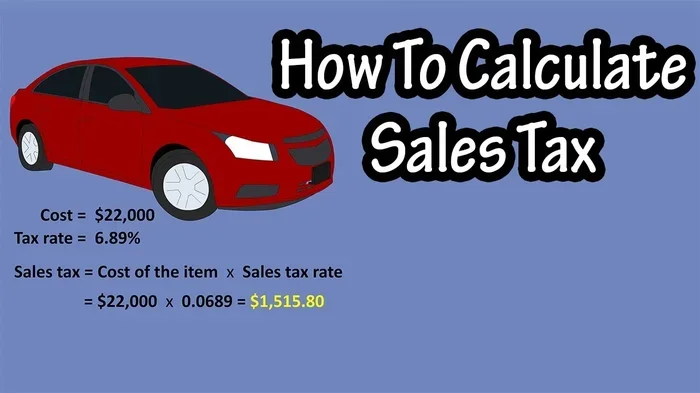
For example, if you bought a car for $20,000, paid $1,500 in taxes and fees, and spent $2,000 on a new engine, your cost basis would be $23,500. That number matters a lot when you calculate your capital gain on car sale.
Step 2: Find the Sale Price
The next step is figuring out how much you sold the car for. This is your sale price. If you sold it to a private buyer, use the actual amount you received. If you traded it in at a dealer, use the trade-in value.
Keep in mind that any money you received counts. This includes cash, checks, and even the fair market value of items you received in trade. The IRS wants the full picture of what you gained from the capital gain on car sale.
Step 3: Subtract and Calculate
Now simply subtract your cost basis from the sale price. If the result is positive, you have a gain. If it is negative, you have a loss.
Here is a quick example:
- Sale Price: $18,000
- Cost Basis: $23,500
- Result: -$5,500 (a capital loss)
In this case, you would not owe any tax on the sale. In fact, you might be able to use the loss to offset other gains. But if the sale price was higher than the cost basis, you would owe taxes on the profit.
Using Form 8949 for Reporting
When you file your taxes, you use Form 8949 to list your sales. This form captures the details of each transaction. You enter the car description, your cost basis, the sale price, and the gain or loss.
The totals from Form 8949 flow into Schedule D. Schedule D is where you summarize all your capital gains and losses for the year. It is the main form for reporting a capital gain on car sale.
When You Owe Taxes on a Car Sale
Not every car sale triggers a tax bill. Whether you owe taxes depends on several factors. Let us look at when you need to pay and when you do not.
Situations That Create a Taxable Gain
You will owe taxes on a capital gain on car sale in these common situations:
- You sold the car for more than your adjusted cost basis
- You used the car for business and claimed depreciation deductions
- The car was an investment or collectible that appreciated in value
- You sold a car that was held for more than one year (long-term gain)
If any of these apply, you need to report the sale and pay the appropriate taxes. The rate you pay depends on your total income and how long you held the car.
Situations Where You May Not Owe Taxes
There are also times when you do not owe taxes on a car sale:
- You sold the car for less than what it cost you (a capital loss)
- You sold a personal car at a loss and it was not used for business
- The sale price was equal to or below your adjusted basis
- The car was a gift or inheritance with a stepped-up basis
Even if you do not owe taxes, you should still report the sale if required. Failing to report can trigger an audit or penalties from the IRS.
Short-Term vs. Long-Term Capital Gains
The IRS looks at how long you held the car before selling it. If you owned it for one year or less, it is a short-term gain. Short-term gains are taxed at your ordinary income tax rate. This rate can be high depending on your tax bracket.
If you owned the car for more than one year, it is a long-term gain. Long-term gains often get taxed at lower rates. For most people, the long-term capital gains tax rate is 0%, 15%, or 20%. This is why holding a car longer before selling can save you money.
How to Report a Car Sale on Your Tax Return
Reporting a car sale correctly is essential. The IRS has specific forms and rules you must follow. Let us walk through the process step by step.
Form 8949: Sales and Other Dispositions of Capital Assets
Form 8949 is where you list every capital asset sale for the year. For each car sale, you provide:
- The date you acquired the car
- The date you sold the car
- The sale proceeds
- Your cost basis
- The adjustment amount (if any)
- The gain or loss
Make sure your numbers match your records. If the IRS sees a mismatch, it may send you a notice asking for more information. Keeping good records makes this process smooth and stress-free.
Schedule D: Capital Gains and Losses
Schedule D summarizes all your capital gains and losses. It pulls the totals from Form 8949 and calculates your net gain or loss for the year. You then transfer this number to your main tax form, usually Form 1040.
If you have both gains and losses, Schedule D helps you net them out. For example, if you sold one car for a $3,000 gain and another for a $2,000 loss, your net gain is $1,000. You only pay tax on the $1,000.
Form 4797: Sales of Business Property
If you sold a business car, you may also need Form 4797. This form handles the sale of business property and deals with depreciation recapture. It works alongside Schedule D to make sure the IRS gets the full picture.
For business vehicles, the depreciation you claimed reduces your basis. When you sell, any gain up to the amount of depreciation claimed may be taxed as ordinary income. Form 4797 captures this correctly.
Keeping Good Records
Good record-keeping is your best friend when it comes to taxes. Keep all documents related to the car sale, including:
- The original purchase receipt or invoice
- Registration and title documents
- Receipts for any improvements or major repairs
- The bill of sale from the buyer
- Bank records showing the sale proceeds
Store these documents for at least three years after filing. The IRS can audit you within that time frame. Having organized records makes any audit much easier to handle.
Smart Ways to Reduce Taxes When Selling a Car
Nobody wants to pay more tax than they have to. The good news is there are legal ways to reduce your tax bill on a capital gain on car sale. Here are some smart strategies to consider.
Time Your Sale Strategically
Timing matters a lot for taxes. If you are close to the end of the tax year, consider when you sell. Selling in a year when your income is lower can reduce the tax rate on your gain. Also, if you expect to have a big income spike next year, selling this year might save you money.
Use Capital Losses to Offset Gains
If you have capital losses from other investments, you can use them to offset your car sale gain. For example, if you sold stock at a $5,000 loss and sold a car at a $3,000 gain, you can use the stock loss to wipe out the car gain. You would then have a remaining $2,000 loss that could offset other income.
The IRS allows you to deduct up to $3,000 in capital losses against ordinary income each year. Any extra losses carry forward to the next year. This is a powerful tool for managing your taxable income.
Improve Your Cost Basis
Adding improvements to a car before selling it increases your cost basis. A higher cost basis means a smaller gain and less tax. Just make sure the improvements actually added value. Routine maintenance like oil changes and tire rotations do not count.
Examples of improvements that boost your cost basis include:
- Engine rebuilds
- Transmission replacements
- Body work that restores the car to better condition
- Upgraded systems that increase the car’s value
Consider a Trade-In Instead of a Private Sale
Sometimes trading in a car at a dealer works better for taxes. A trade-in reduces the cost basis of the new car you buy. This can lower your overall tax picture. However, the rules differ depending on whether you bought a new or used car.
Talk to a tax professional to see if a trade-in makes sense for your situation. The right move can save you hundreds or even thousands of dollars in taxes.
Donate the Car Instead of Selling
If the car is old and not worth much, consider donating it. You may get a tax deduction for the fair market value. This can be especially valuable if the car goes to a charity that uses it for its mission. Just make sure you follow the IRS rules for charitable deductions.
Common Mistakes to Avoid When Reporting a Car Sale
Making mistakes on your tax return can lead to penalties, interest, and headaches. Here are the most common errors people make when reporting a capital gain on car sale.
Failing to Report the Sale
Some people think that if they do not owe taxes, they do not need to report the sale. This is not always true. If the IRS sees a large sale price with no corresponding report, it may send you a letter asking questions. Always report the sale to be safe.
Using the Wrong Cost Basis
Your cost basis is the foundation of your gain or loss calculation. If you get this number wrong, everything else falls apart. Common mistakes include forgetting to add purchase fees or using the wrong improvement costs.
Take the time to gather all your receipts and records. A small effort now can save you from a big problem later.
Ignoring Depreciation Recapture
If you used a car for business and claimed depreciation, you cannot ignore the depreciation recapture rule. This is one of the most common mistakes people make. The IRS expects you to pay taxes on the depreciation you claimed, often at ordinary income rates.
Mixing Up Personal and Business Use
Mixing up personal and business use of a car creates confusion. If you used the car partly for business and partly for personal reasons, you need to allocate the gain correctly. Using the wrong percentage can lead to underpayment or overpayment of taxes.
Not Keeping Records Long Enough
Many people throw away car documents after a few months. The IRS has up to three years to audit a tax return. Keep all sale-related documents for at least that long. Better yet, keep them for seven years to be extra safe.
Expert Insights on Minimizing Tax on Car Sales
Tax professionals who deal with vehicle sales every day have some valuable advice. Here are insights from experts in the field.
Start Tracking From Day One
One tax advisor shared that the biggest mistake car sellers make is not tracking their expenses from the start. “If you do not keep receipts for improvements and fees, you lose money you could have saved,” she said. “Good record-keeping from day one makes tax time so much easier.”
Understand the Difference Between Ordinary Income and Capital Gains
Another expert emphasized the importance of understanding tax rates. “People do not realize that business car sales can trigger ordinary income tax instead of the lower capital gains rate. Knowing this upfront helps you plan better,” he explained.
Consult a Professional When in Doubt
Most tax professionals agree that if your car sale is complex, you should seek help. A CPA or enrolled agent can review your situation and find opportunities you might miss. The cost of professional advice often pays for itself many times over.
Conclusion
Selling a car can be a great financial move. But understanding the capital gain on car sale rules is essential to staying on the right side of the IRS. From calculating your cost basis to filing the right forms, every step matters.
Remember that personal cars and business cars are treated differently. Depreciation plays a huge role in how much tax you owe. And there are smart strategies you can use to reduce your tax bill legally.
Keep good records, report your sale accurately, and take advantage of every deduction and offset available to you. With the right approach, you can handle the capital gains tax on your car sale with confidence. You will pay what you owe and keep more of your hard-earned money in the process.
Take action today. Gather your documents, understand your numbers, and make a plan. A little preparation goes a long way when it comes to taxes on a car sale.
Frequently Asked Questions
Do I always have to pay tax on a capital gain on car sale?
Not always. If you sell your car for less than what it cost you, you have a capital loss and usually do not owe tax. Also, if you sold a personal car at a loss, the IRS generally does not tax it. You only pay tax when you make a profit on the sale.
What forms do I need to file for reporting a car sale?
You typically need Form 8949 and Schedule D. If the car was used for business, you may also need Form 4797. These forms capture the sale details, your cost basis, and the gain or loss. Your tax software or preparer can help you fill them out correctly.
How is the cost basis of a car calculated?
Your cost basis starts with the purchase price. You then add sales tax, registration fees, title fees, and any improvements that added value. This total number is your adjusted cost basis. It is the number you subtract from the sale price to find your gain or loss.
Can I deduct a capital loss from selling a car?
Yes, you can deduct capital losses to offset capital gains. If your car sale loss exceeds your gains, you can deduct up to $3,000 per year against ordinary income. Any remaining loss carries forward to future tax years until it is fully used.
What happens if I do not report a car sale on my taxes?
Failing to report a car sale can trigger an IRS audit or penalty notice. Even if you do not owe taxes, the IRS expects you to report the transaction. Always report the sale to avoid potential problems and keep your tax records clean.
Is the tax rate different for business cars versus personal cars?
Yes, it can be. Personal car gains are usually taxed at the long-term capital gains rate. Business car gains may be subject to depreciation recapture, which is taxed at ordinary income rates. The rate depends on how you used the car and how much depreciation you claimed.