Car Glass Rain Repellent Make Wet Driving Way Easier
Car glass rain repellent is a simple treatment that makes your windshield shed water like magic. It creates a hydrophobic coating that pushes rain away for clearer visibility in rain. This guide covers how it works, the best products, and the right way to apply it. You will learn quick tips, common mistakes, and expert advice to stay safe on wet roads.
Driving in the rain can be stressful. Your wipers work hard, but they leave streaks. Water pools on your windshield and blocks your view. A car glass rain repellent changes all of that. It is one of the simplest upgrades you can make to your vehicle. This treatment creates a invisible barrier that makes water bead up and slide right off. If you have ever struggled to see the road during a downpour, this article is for you.
We will walk you through everything you need to know. You will learn how hydrophobic glass treatment works, which products are worth buying, and how to apply them correctly. We also share common mistakes and expert tips you will not find on the back of the bottle. By the end, you will feel confident choosing and using the right rain repellent for your car. Let us dive in.
Key Takeaways
- Better Visibility: Rain repellent keeps your windshield clearer during heavy storms.
- Easy to Apply: Most products take just a few minutes to install at home.
- Long-Lasting Results: A good treatment can last several months per application.
- Safer Driving: Reduced glare and water spots mean fewer distractions on wet roads.
- Budget-Friendly: A single bottle treats your windshield multiple times.
- Works on All Glass: Use it on windshields, mirrors, and even headlights.
📑 Table of Contents
- What Is Car Glass Rain Repellent?
- Benefits of Using Rain Repellent on Your Car
- Top Rain Repellent Products Compared
- How to Apply Rain Repellent Correctly
- Common Mistakes to Avoid
- How Long Does Rain Repellent Last on Glass?
- Can You Use Rain Repellent on Other Car Glass?
- Why Wet Driving Safety Matters
- Final Thoughts
What Is Car Glass Rain Repellent?
A car glass rain repellent is a liquid or spray coating you put on your windshield. It uses hydrophobic technology to push water away. The word hydrophobic means water-fearing. When you apply this treatment, it bonds to the glass surface at a molecular level. Raindrops hit the glass and form tight little balls. Those balls roll off the windshield as you drive. This is called the water sheeting effect. It keeps your view clear without relying only on your wipers.
Most rain repellent products come in small bottles. You can find them at auto parts stores, online shops, and even gas stations. The price range is very affordable. A basic bottle costs between five and twenty dollars. Premium options with longer-lasting results may cost more. Either way, the value is excellent. One application can protect your glass for weeks or even months.
How Does It Work on Windshields?
The science behind water repellent coating is actually quite simple. The product contains special compounds called silanes or siloxanes. These compounds create a thin, invisible layer on the glass. This layer changes the surface tension of the glass. Normally, water spreads out flat on smooth glass. But with a hydrophobic coating, water pulls into round droplets. The round shape means less surface contact with the glass. Less contact means water slides off much faster. When your car moves at highway speeds, the airflow does most of the work. The wind pushes the droplets right off the windshield.
Think of it like a wax job, but for glass. Just as car wax makes paint shed dirt and water, rain repellent makes glass shed rain. The difference is that glass treatment is specifically designed for windshields and mirrors. It does not leave a hazy film that blocks your view. Instead, it enhances clarity while adding a water-shedding layer.
Benefits of Using Rain Repellent on Your Car
There are many reasons to add a hydrophobic car treatment to your maintenance routine. Here are the biggest benefits you will notice right away.
Improved Visibility in Rain: This is the number one reason people use rain repellent. When water beads and rolls off, you see the road much better. Streaks and smears from wipers become a thing of the past. You can spot pedestrians, animals, and road hazards faster.
Less Reliance on Wipers: You do not need to blast your wipers at full speed in every shower. The repellent handles light to moderate rain on its own. This reduces wiper noise and wear. Your wiper blades also last longer when you use them less often.
Reduced Glare at Night: Wet glass reflects headlights from oncoming traffic. A hydrophobic windshield causes light to scatter less. The water beads instead of forming a flat reflective sheet. This means less eye strain and fewer blinding flashes while driving at night.
Easier to Clean: Dirt, bugs, and road grime do not stick as well to treated glass. Rain helps rinse away debris naturally. Your windshield stays cleaner for longer between washes.
Quick and Simple Application: You can apply most products in under ten minutes. No special tools are needed. No mechanic visit required. It is a DIY task anyone can do at home.
Affordable Protection: A single bottle can treat your windshield four to six times. That means months of protection for just a few dollars. It is one of the cheapest car upgrades you will ever make.
Top Rain Repellent Products Compared
Not all rain repellent products are the same. Some last longer, some are easier to apply, and some work better in certain conditions. Here is a comparison of popular options.
| Product Name | Type | Lasts (Months) | Ease of Use | Price Range |
|---|---|---|---|---|
| Rain-X Original | Wiper fluid additive + spray | 2-3 | Very Easy | $5-$10 |
| Aquapel Windshield Treatment | Spray-on coating | 3-6 | Easy | $10-$15 |
| Ceramic Glass Coating | Professional-grade liquid | 6-12 | Moderate | $20-$40 |
| SPEED HYBRID Ceramic Spray | Spray-on nano-coating | 4-8 | Easy | $15-$25 |
| Cheap Store Brand Spray | Basic spray repellent | 1-2 | Very Easy | $3-$7 |
When choosing a product, consider how often you want to reapply. Budget options work well for short-term use. Premium coatings give you longer-lasting results but may need more careful application. If you drive often in heavy rain, investing in a ceramic glass coating is worth it. For occasional use, a simple spray repellent gets the job done just fine.
What to Look for in a Good Rain Repellent
Not every product on the shelf is worth your money. Here is what you should check before buying.
- Hydrophobic Rating: Look for products that specifically mention hydrophobic or water-repelling technology.
- Lasting Power: Check how many weeks or months the treatment claims to last.
- Ease of Application: Some products need multiple steps. Others are a simple spray and wipe.
- Clarity After Application: A good treatment should not blur your vision. It should enhance clarity, not reduce it.
- Weather Resistance: The best products work in both hot sun and cold rain.
- Compatibility: Make sure the product is safe for all glass surfaces, including tinted windows.
How to Apply Rain Repellent Correctly
Applying a glass water repellent is easy, but doing it wrong can ruin the results. Follow these steps for a perfect application every time.
Step-by-Step Application Guide
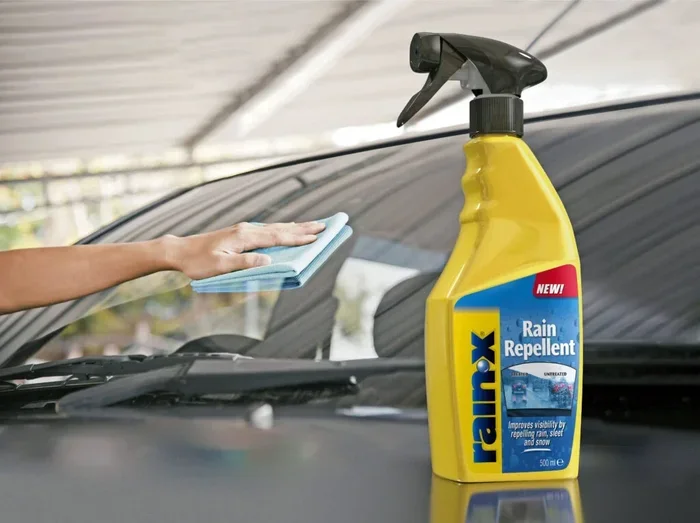
- Clean the Glass Thoroughly: Wash your windshield with glass cleaner. Remove all dirt, oil, and grime. Any residue left behind will prevent the repellent from bonding properly. Use a microfiber cloth to avoid leaving lint.
- Dry the Surface Completely: Make sure the glass is bone dry before you start. Even a few drops of water can interfere with the bonding process. Use a clean, dry towel or let it air dry.
- Apply a Small Amount: Put a few drops or a thin spray of the product onto the glass. Do not use too much. Less is more with rain repellent. A thin, even layer works best.
- Spread It Evenly: Use a clean microfiber cloth to spread the product across the glass. Work in circular motions. Cover the entire windshield, including the corners and edges.
- Let It Cure: Wait for the product to dry. Most treatments need five to ten minutes. Check the instructions on your specific product. Some need longer curing times.
- Buff Off the Residue: Use a dry part of the cloth to buff the glass until it is crystal clear. Remove any hazy film that remains. The glass should feel smooth and slick.
- Let It Set: Avoid driving for at least one hour after application. This gives the coating time to fully bond with the glass surface.
Quick Tips for Best Results
- Apply the treatment on a cool, shady day. Direct sunlight can cause the product to dry too fast.
- Reapply the treatment every three to four months for consistent performance.
- Do not use ammonia-based glass cleaners after application. They can break down the hydrophobic layer.
- Clean your windshield with a glass prep wipe before applying for stronger bonding.
- Apply the treatment to side mirrors and rear windows too. This improves overall visibility in rain.
Common Mistakes to Avoid
Even the best rain repellent will fail if you make these common errors. Avoid them to get the most out of your treatment.
Skipping the Cleaning Step: This is the most common mistake. If your glass is not perfectly clean, the repellent will not bond. You will see uneven water beading and blurry spots. Always wash and dry the glass first.
Using Too Much Product: More does not mean better. A thick layer will leave a hazy residue that is hard to remove. Use a small amount and spread it thin.
Applying in Direct Sunlight: Heat causes the product to evaporate before it can bond with the glass. Find a shaded spot or work in a garage for the best results.
Not Letting It Cure Long Enough: Driving too soon after application can ruin the bond. Wait at least one hour, and longer if the instructions say so.
Using the Wrong Cloth: Paper towels or rough fabrics can leave tiny scratches on the glass. Always use a soft microfiber cloth. This also prevents lint from getting stuck in the coating.
Neglecting Reapplication: Rain repellent does not last forever. Over time, the hydrophobic layer wears away. If you notice water no longer beading properly, it is time to reapply. Regular maintenance keeps your glass performing at its best.
Expert Insights on Hydrophobic Glass Treatment
Automotive experts agree that rain repellent for windshield use is one of the most underrated safety upgrades. According to car care professionals, the key is consistency. Treating your glass at the start of every rainy season ensures you are always prepared. Many experienced drivers also recommend combining rain repellent with a quality set of wiper blades. Together, these two simple upgrades transform your visibility in wet conditions.
Experts also stress the importance of choosing a product that matches your climate. If you live in a rainy area with heavy downpours, a long-lasting ceramic coating is the best choice. For those in milder climates, a basic spray repellent works perfectly fine. The goal is to find a balance between performance and convenience that fits your driving habits.
How Long Does Rain Repellent Last on Glass?
The lifespan of a hydrophobic coating for cars depends on several factors. The type of product you use is the biggest factor. Basic sprays typically last one to three months. Mid-range treatments can last three to six months. Premium ceramic coatings can protect your glass for six months to a full year.
Your driving habits also play a role. If you drive on dusty or gravel roads often, the coating wears off faster. Frequent car washes, especially those with high-pressure jets, can also shorten the lifespan. Parking your car outside in harsh sun and rain exposes the coating to more wear.
Here is a simple way to test if your treatment is still working. Sprinkle a few drops of water on your windshield. If the water beads up into tight round balls and rolls off easily, the coating is still active. If the water spreads out flat and stays on the glass, it is time to reapply.
Keeping track of when you last treated your glass helps you stay ahead. Mark your calendar or set a phone reminder. A quick reapplication takes only minutes and keeps your wet weather driving experience safe and stress-free.
Can You Use Rain Repellent on Other Car Glass?
Yes! While the windshield is the most important surface to treat, you can also use rain repellent on other glass areas. Side mirrors benefit greatly from a hydrophobic coating. When rain hits your mirrors, treated glass sheds water faster. This gives you a clearer view of traffic behind you without needing to constantly wipe the mirrors.
Some drivers also treat their rear windows and even headlight covers. Water beading on glass improves the look of your car and helps lights stay clear during storms. Just make sure the product you use is safe for all types of automotive glass. Check the label before applying to any surface.
Is Rain Repellent Safe for Tinted Windows?
Most rain repellent products are safe for tinted windows. However, you should always check the product description first. Some aggressive coatings can affect the adhesive used in window tinting. To be safe, test a small hidden area first. Wait 24 hours and check for any discoloration or peeling. If the tint looks fine, you can proceed with treating the full window.
Why Wet Driving Safety Matters
Rain is one of the most common causes of car accidents. Reduced visibility is a major factor in these crashes. When you cannot see the road clearly, reaction time drops. A car glass rain repellent gives you an edge. It keeps your windshield clearer for longer stretches of time. This means you spend less time squinting through streaks and more time watching the road ahead.
Combine rain repellent with other smart driving habits. Turn on your headlights in rain. Keep a safe following distance. Slow down on wet roads. These small actions add up to a much safer driving experience. The goal is not just comfort. It is about protecting yourself and others on the road.
Many drivers underestimate how much a simple glass treatment improves their confidence in the rain. Once you experience the difference between treated and untreated glass, you will wonder why you did not try it sooner. The feeling of watching rainwater glide off your windshield while you drive calmly through a storm is truly remarkable. It transforms a stressful situation into a manageable one.
Final Thoughts
A car glass rain repellent is one of the most practical and affordable upgrades you can make to your vehicle. It improves visibility, reduces wiper wear, and makes driving in rain less stressful. The application process is simple, and the results are immediate. Whether you choose a basic spray or a premium ceramic coating, the benefits are clear. You will see the difference the very first time it rains after treatment.
Take a few minutes today to treat your windshield. Pick a product that fits your needs and budget. Follow the application steps carefully. And remember to reapply every few months to keep the protection strong. Once you start using rain repellent, you will never go back to driving in the rain without it. Stay safe, stay visible, and enjoy the peace of mind that comes with clear glass in any weather.
Frequently Asked Questions
How long does car glass rain repellent last?
Most basic rain repellent sprays last one to three months. Premium ceramic coatings can last six months to a year. The exact duration depends on your driving conditions, how often you wash your car, and the quality of the product you use.
Can I apply rain repellent on a wet windshield?
No. Always apply rain repellent to a clean, dry glass surface. Water on the windshield prevents the hydrophobic coating from bonding properly. This leads to uneven results and poor water repelling performance.
Is rain repellent safe for all car glass?
Most products are safe for standard glass surfaces including windshields, mirrors, and rear windows. If your car has tinted windows, check the product label first. Always test on a small hidden area before treating the full surface.
Will rain repellent affect my windshield wipers?
No. Rain repellent does not harm wiper blades. In fact, it can extend their life because you rely on them less often. The repellent handles light rain, so your wipers only need to work harder during heavy downpours.
How often should I reapply rain repellent?
Reapply every three to four months for standard sprays. Ceramic coatings may only need reapplication once or twice a year. A simple water bead test can tell you when it is time to reapply.
Can rain repellent help with night driving in the rain?
Yes. Rain repellent reduces glare from oncoming headlights by preventing water from forming a flat reflective sheet on the glass. The water beads up and rolls off, which means less light scattering and less eye strain while driving at night in wet conditions.
=== CONCLUSION ===
A car glass rain repellent is a simple yet powerful tool for any driver. It makes wet driving easier, safer, and less stressful. The treatment works by creating a hydrophobic glass surface that causes rain to bead and slide away. With the right product and proper application, you can enjoy clearer visibility for months. Remember to avoid common mistakes, reapply regularly, and combine the treatment with safe driving habits. Once you try it, you will wonder how you ever drove in the rain without it. Take action today and transform your rainy day driving experience for the better.