Complete Car Parking Design Guide for Home in India
Planning the perfect car parking design for home in India? This guide covers everything you need. You will learn about parking types, standard dimensions, design ideas, costs, and common mistakes. Whether you have a small apartment or a large villa, you will find practical tips to create a safe, functional, and attractive parking space for your family.
Planning a car parking design for home in India can feel overwhelming. You might wonder about sizes, costs, materials, and rules. But here is the good news. With the right guidance, you can create a parking space that is safe, stylish, and practical. This guide walks you through every step. From choosing the right type to picking the best materials, we have you covered. Let us build something great together.
Every Indian home is different. A compact apartment in Mumbai needs a different solution than a spacious villa in Bangalore. Your family size, budget, and available space all matter. A well-designed parking area does more than just protect your car. It adds value to your home. It keeps your vehicle safe from weather and theft. And it makes your daily life much more convenient.
In this guide, we will explore all the popular options. We will share real-world examples and practical tips. You will learn about dimensions, design ideas, costs, and common mistakes. By the end, you will feel confident about planning your own car parking design for home in India. Let us dive in.
Key Takeaways
- Choose the Right Type: Understand covered, open, semi-covered, and basement parking options for Indian homes.
- Know the Dimensions: Standard parking size in India is 2.5m x 5m per car. Follow local building codes.
- Plan for the Future: Design for 2-3 cars if space allows. Think about EV charging and storage needs.
- Use Smart Design Ideas: Brick pillar, RCC slab, carport, and floating slab designs each have unique benefits.
- Avoid Costly Mistakes: Don’t ignore drainage, ventilation, gate placement, or local regulations.
- Budget Wisely: Parking costs in India range from Rs. 50,000 to Rs. 5 lakhs depending on design and materials.
- Prioritize Safety: Good lighting, anti-slip flooring, and proper ventilation make your parking secure and long-lasting.
📑 Table of Contents
- Why Car Parking Design Matters for Indian Homes
- Types of Car Parking for Indian Homes
- Standard Car Parking Dimensions in India
- Popular Car Parking Design Ideas for Homes
- Step-by-Step Guide to Planning Your Parking
- Common Mistakes to Avoid in Home Parking Design
- Cost of Building a Car Parking Space in India
- Expert Tips for the Best Parking Design
- Conclusion
Why Car Parking Design Matters for Indian Homes
You might think parking is just a place to leave your car. But it is much more than that. A well-planned parking area protects your vehicle from harsh Indian weather. Think about the scorching summer sun or heavy monsoon rains. Without proper cover, your car takes a beating over time.
Good parking design also improves your home’s curb appeal. A clean, organized parking space makes a strong first impression. Guests notice it. And if you ever decide to sell, a dedicated parking spot adds significant value to your property.
Protection from Weather and Damage
India experiences extreme weather in many regions. The UV rays in summer can fade your car’s paint. Heavy rain and flooding can damage the engine and interior. A proper covered parking design shields your vehicle from all of this. It keeps your car looking new for longer.
Security and Safety
Car theft is a real concern in Indian cities. A well-designed parking area with proper lighting and secure gates reduces risks. You can also add cameras and alarms for extra protection. Your family’s safety matters, and a thoughtful parking layout supports that.
Adding Property Value
Real estate experts agree. Homes with dedicated parking spaces sell faster and at higher prices. A residential parking design that looks good and functions well is a smart long-term investment. Even a simple covered car shed can boost your home’s market value significantly.
Types of Car Parking for Indian Homes
Not all parking is the same. Depending on your home, budget, and space, you have several options. Let us look at the most popular types of car parking design for home in India that homeowners choose.
Open Parking
Open parking is the simplest and most affordable option. It is just a leveled area in your compound where you park your car. There is no roof or cover. This works well in areas with mild weather. It costs the least to build. But it offers the least protection from sun, rain, and dust.
Covered Parking (RCC Slab)
A reinforced cement concrete (RCC) slab cover is one of the most common choices in India. It is a solid roof built over the parking area. This type of covered car parking design offers excellent protection. It is durable and long-lasting. Many new homes in India come with RCC slab parking built into the ground floor.
Carport Design
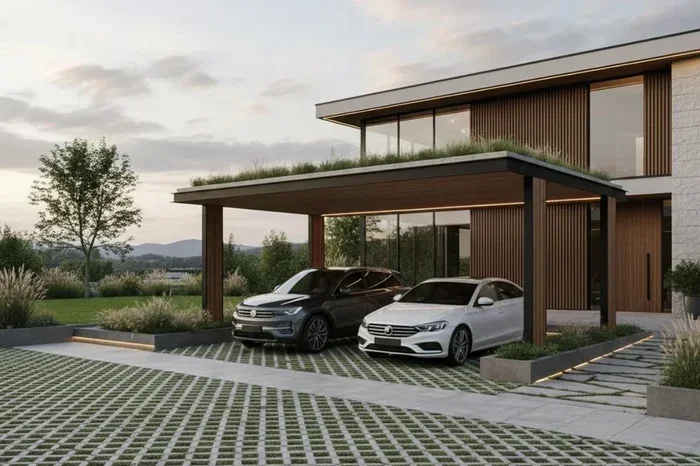
A carport is a roof supported by pillars or walls on one side. It is open on at least one side. Carports are popular because they are affordable and easy to build. They provide good shade and rain protection. A carport parking design works great for smaller homes and apartments where space is limited.
Brick Pillar Parking
This traditional design uses brick pillars to support a roof. It is very common in Indian homes. Brick pillar parking is strong, affordable, and easy to construct. The pillars also add a decorative touch to your home’s exterior. Many families love the classic look of brick pillar car parking design.
Basement Parking
For multi-story homes and high-rise apartments, basement parking is ideal. It saves ground-level space for gardens, play areas, or parking more cars. Basement parking requires proper waterproofing and ventilation. It costs more to build but offers excellent protection and maximizes space usage.
Standard Car Parking Dimensions in India
Getting the dimensions right is crucial for any car parking design for home in India. If the space is too small, your car will not fit comfortably. If it is too large, you waste valuable space. Here are the standard measurements you should follow.
Single Car Parking Size
The standard size for one car parking space in India is:
- Width: 2.5 meters (minimum) to 3 meters (comfortable)
- Length: 5 meters (minimum) to 6 meters (for SUVs and larger vehicles)
- Clear Height: At least 2.4 meters from floor to roof
These dimensions follow the National Building Code of India and local municipal rules. Always check with your local authority before finalizing your design.
Two Car Parking Size
If you plan for two cars, you need at least:
- Width: 5.5 meters to 6 meters (for two cars side by side)
- Length: 5 to 6 meters
- Clear Height: 2.4 meters minimum
Some homeowners prefer a tandem layout where cars park one behind the other. This saves width but requires more length. A side-by-side layout is more convenient for daily use.
Parking for SUVs and Larger Vehicles
SUVs and larger vehicles need extra space. If you own a bigger car or plan to buy one in the future, add at least 0.5 meters to both width and length. A comfortable parking space for SUVs in India should be at least 3 meters wide and 6 meters long.
Driveway and Turning Radius
Do not forget the driveway! A single car driveway should be at least 3 meters wide. For two-way traffic, the width should be 5.5 meters minimum. The turning radius for a standard car is about 5 to 5.5 meters. Make sure your layout allows smooth entry and exit without awkward maneuvering.
Popular Car Parking Design Ideas for Homes
Now let us talk about the fun part. Design ideas! There are many creative ways to design your parking space. The best choice depends on your budget, available space, and personal style. Here are some of the most popular car parking design ideas for homes in India.
RCC Slab Parking with Garden
This design combines a solid RCC roof parking area with a small garden around it. The roof of the parking doubles as a terrace or garden space. It is a smart use of space and looks beautiful. Many modern Indian homes use this RCC parking design for home to maximize their compound area.
Modern Carport with LED Lighting
A sleek carport with LED strip lighting gives your home a contemporary look. Use metal or polycarbonate roofing for a lightweight feel. Add motion-sensor lights for security. This design is affordable, easy to build, and works well for both standalone homes and apartments.
Traditional Brick Pillar with Sliding Gate
The classic brick pillar design with a sliding or rolling gate never goes out of style. It is strong, secure, and blends well with Indian home architecture. You can paint the pillars in contrasting colors for a stylish look. Add a small storage room beside the parking for tools and equipment.
Floating Slab Parking
Floating slab parking uses a concrete slab that “floats” on the ground with a gap below. This design provides natural ventilation and prevents waterlogging during monsoons. It is a popular choice in areas prone to flooding. The gap can also be used for storage or as a drainage channel.
Multi-Level Parking for Small Plots
If you have a small plot, think vertically! A multi-level parking design with two or three levels can fit multiple cars in a compact footprint. This is common in urban areas where space is at a premium. It requires strong structural support but offers excellent space efficiency.
Integrated Parking with Home Entrance
For a seamless look, integrate the parking area with your home entrance. A covered walkway connects the parking to your front door. This design provides direct access and keeps you dry during rain. It also enhances the overall aesthetic of your home’s facade.
Step-by-Step Guide to Planning Your Parking
Planning a car parking design for home in India does not have to be complicated. Follow these simple steps to get it right.
Step 1: Measure Your Available Space
Start by measuring the area where you want to build the parking. Include the driveway and any turning space. Sketch a rough layout on paper or use a free online tool. Knowing your exact dimensions helps you choose the right design and avoid costly mistakes.
Step 2: Check Local Building Regulations
Every municipality in India has its own building rules. Some areas require a minimum parking space per household. Others have rules about setback distances and height limits. Contact your local municipal corporation or building authority. Getting the right approvals early saves time and money.
Step 3: Decide on the Parking Type
Based on your space and budget, choose the parking type. Do you need open or covered parking? How many cars will it serve? Make a list of priorities. This decision shapes everything else in your design.
Step 4: Choose Materials and Finishes
Pick materials that suit your climate and budget. RCC slabs are strong and durable. Brick pillars are affordable and traditional. Metal roofing is lightweight and modern. For flooring, use anti-slip tiles or epoxy-coated concrete. These choices affect both the look and longevity of your parking.
Step 5: Add Safety and Convenience Features
Think about what makes your parking experience better. Good lighting is essential. Install bright LED lights for visibility and security. A drainage system prevents waterlogging. A gate or barrier adds security. Consider adding a small storage area for cleaning supplies and tools.
Step 6: Hire a Professional or DIY
Simple designs like open parking or basic carports can be done yourself with proper guidance. But for RCC slab parking or basement parking, hire a structural engineer. They ensure the design is safe and meets building codes. A small investment in professional advice pays off in the long run.
Common Mistakes to Avoid in Home Parking Design
Even with the best intentions, homeowners make mistakes when designing their parking. Here are the most common ones and how to avoid them.
Ignoring Drainage
Many Indian homes face waterlogging during monsoons. If your parking does not have proper slope and drainage, rainwater will collect and damage your car. Always design a slight slope (1-2%) towards a drainage point. Use permeable paving materials if possible.
Making the Parking Too Small
It is tempting to save space by making the parking tight. But a cramped parking area makes it hard to open doors and move around. Always use the recommended dimensions. A little extra space goes a long way in comfort and convenience.
Forgetting Ventilation
Covered parking without ventilation can trap moisture and fumes. This leads to rust, mold, and unpleasant odors. Make sure your covered parking has openings or vents for airflow. A well-ventilated parking keeps your car fresh and dry.
Neglecting Lighting
A dark parking area is a security risk. Many homeowners skimp on lighting to save costs. But good lighting deters thieves and makes it safe to park at night. Use energy-efficient LED lights and place them strategically for full coverage.
Not Planning for Future Needs
Your family might grow. You might buy a second car or an electric vehicle. Design your parking with future needs in mind. A slightly larger space today saves you from costly redesigns tomorrow.
Cost of Building a Car Parking Space in India
Cost is an important factor in any car parking design for home in India. The price varies widely based on type, materials, and location. Here is a rough cost breakdown to help you budget.
| Parking Type | Estimated Cost (Rs.) | Best For |
|---|---|---|
| Open Parking (Leveled Area) | 10,000 – 30,000 | Budget-conscious homeowners |
| Carport (Pillar + Roof) | 30,000 – 80,000 | Small to medium homes |
| Brick Pillar Parking | 50,000 – 1,50,000 | Traditional homes with compound |
| RCC Slab Covered Parking | 1,00,000 – 3,00,000 | Modern homes and multi-car needs |
| Basement Parking | 3,00,000 – 5,00,000+ | Multi-story homes and apartments |
These costs include materials and basic labor. They do not include interior finishing, lighting, or security features. Always get quotes from at least three contractors before starting your project. Prices vary by city and material quality.
Tips to Save Money on Parking Construction
- Use locally available materials to reduce transport costs.
- Keep the design simple. Complex shapes cost more.
- Do some work yourself if you have the skills (like painting or tiling).
- Plan everything in advance to avoid costly changes during construction.
Expert Tips for the Best Parking Design
We asked experienced architects and designers for their top tips. Here is what they recommend for the best car parking design for home in India.
Tip 1: Think About the Direction of Your Main Road. Place your parking entrance so that you can drive out easily. Backing out of a tight driveway is frustrating and unsafe.
Tip 2: Use Reflective Paint on Interior Walls. This makes the parking brighter without using extra lights. It is a simple trick that makes a big difference.
Tip 3: Install a Rubber Mat or Epoxy Flooring. These surfaces are easy to clean, anti-slip, and protect your car from oil stains. They make your parking look polished and professional.
Tip 4: Add a Small Bench or Tool Shelf. A tiny seating area or storage shelf inside the parking adds convenience. You can check tire pressure, clean your car, or store essentials right where you need them.
Tip 5: Consider EV Charging Points. Electric vehicles are becoming popular in India. If you plan to buy an EV in the future, install a charging point during construction. It is much cheaper to add wiring now than to retrofit later.
Conclusion
Designing the perfect car parking design for home in India is easier than you think. Start by understanding your space, budget, and family needs. Choose the right type of parking from open, covered, carport, or basement options. Follow standard dimensions and building regulations. Pick a design that matches your home’s style and your personal taste.
Avoid common mistakes like ignoring drainage, skimping on lighting, or making the space too small. Plan for the future and think about what your needs might be in five or ten years. A well-designed parking area protects your car, adds value to your home, and makes daily life more convenient.
We hope this guide has given you the confidence and knowledge to start your own parking project. Take your time, plan carefully, and enjoy the process of creating something truly useful for your home. Your perfect parking space is just a plan away.
Frequently Asked Questions
What is the standard size for a car parking space in India?
The standard size for a single car parking space in India is 2.5 meters wide and 5 meters long. For SUVs or larger vehicles, you should aim for 3 meters wide and 6 meters long. Always check your local municipal rules for specific requirements.
Which type of car parking is best for small homes in India?
For small homes, a carport or brick pillar parking design works best. These options are affordable, easy to build, and take up minimal space. A carport provides good coverage while keeping the design open and airy.
How much does it cost to build a covered car parking at home in India?
The cost depends on the type and materials. A basic carport costs around Rs. 30,000 to Rs. 80,000. An RCC slab covered parking ranges from Rs. 1,00,000 to Rs. 3,00,000. Basement parking can cost Rs. 3,00,000 or more. Always get multiple quotes before starting.
Do I need permission to build a car parking at home in India?
Yes, in most cases you need permission from your local municipal corporation or housing society. Building regulations vary by city and state. Some areas require structural approvals for covered parking. Always check with your local authority before starting construction.
Can I convert my open parking into a covered parking later?
Yes, you can convert open parking into covered parking at any time. You can add a carport, RCC slab, or brick pillar roof. However, it is always cheaper and easier to plan for coverage during the initial design. Retrofitting later may require additional structural work.
How can I make my home parking more secure?
Install bright LED lights, a sturdy gate or barrier, and a security camera. Use anti-slip flooring for safety. Consider adding a lockable gate and motion-sensor lights. A well-lit, secure parking area deters theft and keeps your car safe.