Do Tesla Chargers Need GFCI Protection for Safe Charging
Do Tesla Chargers Need GFCI Protection? The answer depends on the charger type and installation setup. Tesla Wall Connectors typically do not require a GFCI breaker when hardwired, but the Mobile Connector needs GFCI protection when plugged into a NEMA outlet. Understanding GFCI requirements for Tesla chargers keeps your home charging setup safe, legal, and up to code.
If you own a Tesla or are thinking about buying one, you have probably wondered about the safety of your home charging setup. One question comes up a lot: Do Tesla Chargers Need GFCI Protection? It is a smart question, and the answer matters for both your safety and your wallet.
GFCI stands for Ground Fault Circuit Interrupter. These devices save lives by cutting power the moment they detect an electrical leak. But do you actually need one for your Tesla charger? The short answer is: it depends on which charger you use and how it is installed. Let us break it all down so you know exactly what is required and what is not.
Whether you are installing a Tesla Wall Connector in your garage or using the Tesla Mobile Connector with an outdoor outlet, understanding GFCI rules is essential. This guide covers everything from NEC electrical code requirements to practical installation tips. By the end, you will feel confident about your charging setup and the safety measures in place.
Key Takeaways
- Tesla Wall Connector (hardwired): Does not need a GFCI breaker per Tesla’s manual and NEC guidelines.
- Tesla Mobile Connector: Requires GFCI protection when connected to a NEMA 14-50 or 5-15 outlet.
- NEC Article 210.8: Mandates GFCI protection for outlets in wet locations, garages, and outdoors.
- GFCI breakers detect ground faults and shut off power in milliseconds to prevent electrocution.
- Always hire a licensed electrician for charger installation to ensure code compliance.
- Regular testing of GFCI outlets and breakers keeps your Tesla charging setup safe.
📑 Table of Contents
- What Is GFCI Protection and Why Does It Matter?
- How Tesla Chargers Work and What They Require
- Do Tesla Chargers Actually Need GFCI Protection?
- Common Mistakes When Installing Tesla Chargers
- Expert Tips for a Safe Tesla Charging Setup
- Quick Tips for Tesla Charger Safety
- The Role of Your Electrician in Charger Safety
- Key Takeaways
- Conclusion
What Is GFCI Protection and Why Does It Matter?
How GFCI Devices Work
A GFCI device monitors the electrical current flowing through a circuit. It compares the current going out on the hot wire with the current returning on the neutral wire. If there is even a tiny imbalance — say, because electricity is leaking through your body to the ground — the GFCI trips and cuts power in less than 1/40th of a second.
That speed is what makes GFCIs so important. A standard circuit breaker takes much longer to respond, and by then, a harmful shock could already have occurred. Ground fault protection is specifically designed to prevent electrocution, not just fires.
Where GFCI Protection Is Required by Code
The National Electrical Code (NEC) requires GFCI protection in areas where water and electricity could come into contact. These areas include:
- Garages — where most Tesla home chargers are installed
- Outdoor locations — for temporary or portable charging
- Bathrooms and kitchens — near sinks and water sources
- Basements and crawl spaces — especially unfinished ones
- Pool areas and hot tubs — anywhere with standing water nearby
Since most Tesla chargers are installed in garages or used outdoors, GFCI protection becomes very relevant for EV owners. This is where the question of whether your Tesla charger needs it really comes into play.
How Tesla Chargers Work and What They Require
Tesla offers two main charging options for home use. Each has different electrical requirements, and the GFCI rules differ between them. Let us look at both.
Tesla Wall Connector
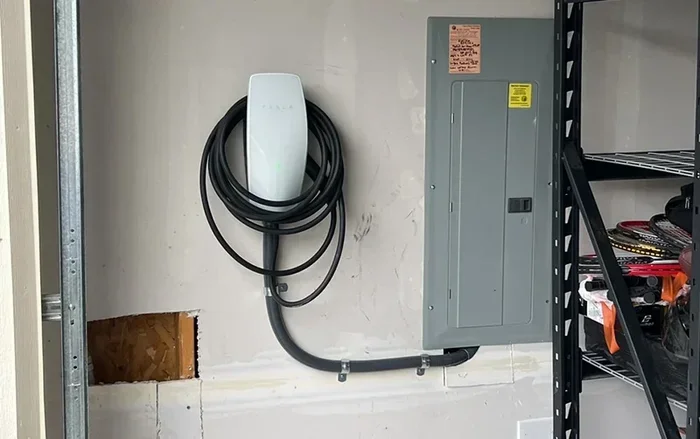
The Tesla Wall Connector is a hardwired charging station. It plugs directly into your home’s electrical system and is not meant to be unplugged once installed. It delivers up to 48 amps of power (depending on the model) and charges your Tesla much faster than a standard outlet.
Because the Wall Connector is hardwired, it connects directly to your electrical panel through a dedicated circuit. There is no plug involved, which changes the GFCI requirements significantly.
Tesla Mobile Connector
The Tesla Mobile Connector is a portable charging cable that plugs into a standard NEMA outlet. It is the more flexible option and is great for people who rent homes or travel. You can plug it into a NEMA 5-15 outlet (standard 120V), a NEMA 14-50 outlet (240V), or even a Tesla destination charger.
Because the Mobile Connector uses a plug and outlet, it falls under different electrical safety standards than the hardwired Wall Connector. This is where GFCI protection becomes mandatory in most cases.
Do Tesla Chargers Actually Need GFCI Protection?
This is the big question, and the answer is not a simple yes or no. It depends entirely on the charger type and how it is connected.
Wall Connector: Hardwired Installation
When a Tesla Wall Connector is hardwired, it does not require a GFCI breaker. Tesla’s own installation manual states this clearly. The Wall Connector is designed with built-in safety features, including ground fault detection, overcurrent protection, and thermal monitoring.
Here is why this works:
- Hardwired connections are permanent and not subject to the same wear and tear as plug-in connections
- The Wall Connector itself has internal safety mechanisms that detect ground faults
- NEC Article 210.8 does not require GFCI protection for dedicated hardwired charging equipment in certain configurations
That said, the circuit feeding the Wall Connector must still comply with local electrical codes. A licensed electrician can confirm what is needed in your area.
Mobile Connector: Plug-In Installation
The Tesla Mobile Connector is a different story entirely. Because it plugs into a wall outlet, it is subject to the GFCI requirements of that outlet. If the outlet is in a garage, outdoors, or any location covered by NEC Article 210.8, GFCI protection is required.
This means:
- A NEMA 14-50 outlet used for the Mobile Connector must be protected by a GFCI breaker or GFCI receptacle
- A standard 5-15 outlet in a garage must also have GFCI protection
- Using the Mobile Connector outdoors without GFCI protection is a safety hazard and likely a code violation
The Mobile Connector does have some internal safety features, but it does not replace the need for external GFCI protection at the outlet or breaker level.
Comparison Table: GFCI Requirements for Tesla Chargers
| Charger Type | Installation Method | GFCI Required? | Reason |
|---|---|---|---|
| Tesla Wall Connector | Hardwired | No | Built-in safety features; direct panel connection |
| Tesla Mobile Connector | Plug-in (NEMA outlet) | Yes | NEC code requires GFCI for plug-in devices in wet/damp locations |
| Mobile Connector (outdoor use) | Plug-in | Yes | Outdoor locations always require GFCI per NEC |
| Wall Connector (with outlet adapter) | Plug-in via adapter | Yes | Plug-in connection triggers GFCI requirement |
Common Mistakes When Installing Tesla Chargers
Even the best intentions can lead to mistakes during charger installation. Here are some common errors EV owners make when setting up their Tesla charging equipment.
Skipping the Licensed Electrician
One of the biggest mistakes is trying to DIY the installation. Electrical work is dangerous, and a single mistake can cause fires, electrocution, or code violations. Always hire a licensed electrician who has experience with EV charger installations. They know the local codes and will make sure everything is done right.
Using the Wrong Circuit Breaker
Some people install a standard breaker instead of the correct size for their Tesla charger. The Wall Connector needs a dedicated 50-amp or 60-amp circuit depending on the model. Using an undersized breaker can cause the breaker to trip constantly or, worse, create a fire hazard.
Ignoring GFCI Requirements for Plug-In Setups
If you are using the Mobile Connector, do not skip the GFCI protection. Some homeowners think the charger’s internal safety features are enough. They are not. GFCI protection at the outlet or breaker level adds a critical extra layer of safety that the charger alone cannot provide.
Not Testing GFCI Devices Regularly
GFCI breakers and receptacles have a test button for a reason. You should test them monthly to make sure they still work. A GFCI that has not been tested in years might not trip when you need it most. This is a simple step that many people overlook.
Forgetting About Surge Protection
While not directly related to GFCI, surge protection is another important consideration. Lightning strikes and power surges can damage your Tesla charger and your vehicle. A surge protector on the charging circuit adds valuable protection, especially for outdoor installations.
Expert Tips for a Safe Tesla Charging Setup
Get a Dedicated Circuit
Your Tesla charger should always be on its own dedicated circuit. Sharing a circuit with other appliances can cause overloads, tripped breakers, and potential safety issues. A licensed electrician can install a dedicated circuit from your electrical panel directly to the charger location.
Choose the Right NEMA Outlet for Mobile Connector Use
If you are using the Mobile Connector, the NEMA outlet matters. A NEMA 14-50 outlet provides 240V and charges your Tesla much faster than a standard 120V outlet. But remember, that NEMA 14-50 outlet must have GFCI protection if it is in a garage or outdoor location.
Consider the Tesla Wall Connector for Permanent Installations
If you plan to charge at home every day, the Wall Connector is the better long-term choice. It is faster, safer (no plug connection to worry about), and does not require GFCI protection when hardwired. The upfront cost is higher, but the convenience and safety benefits are worth it.
Check Local Code Requirements
NEC provides a national baseline, but local jurisdictions may have additional requirements. Some cities require GFCI protection for all garage circuits regardless of the charger type. Always check with your local building department or ask your electrician about local electrical code requirements before starting the installation.
Keep the Charging Area Dry and Clear
Water and electricity are a dangerous combination. Keep your charging station and cables away from standing water, leaking roofs, and areas prone to flooding. Even with GFCI protection, keeping the area dry is one of the best safety practices you can follow.
Quick Tips for Tesla Charger Safety
- Test your GFCI breaker monthly by pressing the test button
- Label your electrical panel so anyone knows which breaker controls the charger
- Use a dedicated 50-amp or 60-amp circuit for the Wall Connector
- Never use an extension cord with the Mobile Connector
- Inspect cables regularly for fraying, damage, or wear
- Install a surge protector on the charging circuit for added protection
- Keep the charging area well-ventilated to prevent heat buildup
The Role of Your Electrician in Charger Safety
A licensed electrician plays a crucial role in making sure your Tesla charger is installed safely and legally. They will assess your electrical panel capacity, install the correct breaker, ensure proper grounding, and confirm that all GFCI requirements are met.
Do not try to save money by doing the electrical work yourself. A professional installation might cost more upfront, but it gives you peace of mind knowing that your home and family are safe. Plus, many charger warranties require professional installation to remain valid.
When hiring an electrician, ask if they have experience with EV charger installations specifically. Not all electricians are familiar with the unique requirements of Tesla chargers, and you want someone who knows the ins and outs of Tesla charger installation best practices.
Key Takeaways
- Tesla Wall Connector (hardwired): Does not need a GFCI breaker per Tesla’s manual and NEC guidelines.
- Tesla Mobile Connector: Requires GFCI protection when connected to a NEMA outlet.
- NEC Article 210.8: Mandates GFCI protection for outlets in wet locations, garages, and outdoors.
- GFCI breakers detect ground faults and shut off power in milliseconds to prevent electrocution.
- Always hire a licensed electrician for charger installation to ensure code compliance.
- Regular testing of GFCI outlets and breakers keeps your Tesla charging setup safe.
Conclusion
So, do Tesla chargers need GFCI protection? The answer comes down to which charger you are using and how it is installed. The Tesla Wall Connector, when hardwired, does not require external GFCI protection thanks to its built-in safety features. But the Tesla Mobile Connector, being a plug-in device, absolutely needs GFCI protection at the outlet or breaker level, especially in garages and outdoor locations.
Understanding these differences keeps you safe, keeps you compliant with electrical code, and protects your investment. Whether you are a current Tesla owner or planning to become one, taking the time to get the electrical setup right is one of the best decisions you can make.
Always work with a licensed electrician, test your GFCI devices regularly, and stay informed about your local code requirements. A safe charging setup means you can enjoy your Tesla with complete confidence, knowing that every precaution has been taken.
Take action today. If you are unsure about your current setup, schedule an inspection with a qualified electrician. It is one of the simplest and most important steps you can take for the safety of your home and your family.
Frequently Asked Questions
Can I install a Tesla Wall Connector without GFCI protection?
Yes, if the Wall Connector is hardwired directly to your electrical panel. Tesla’s installation manual and NEC guidelines do not require a GFCI breaker for hardwired Wall Connector installations. However, the circuit must still meet all other electrical code requirements, and a licensed electrician should handle the installation.
What happens if I use the Tesla Mobile Connector without GFCI protection?
Using the Mobile Connector without GFCI protection in a garage or outdoor location violates NEC code and creates a serious safety risk. A ground fault could go undetected, leading to electrocution or fire. Always ensure that plug-in charging setups have proper GFCI protection at the outlet or breaker level.
How often should I test my GFCI breaker?
You should test your GFCI breaker at least once a month. Simply press the test button on the breaker or receptacle. It should trip immediately. If it does not trip, replace it right away. This simple habit can prevent electrical accidents and keep your Tesla charging setup safe.
Does a NEMA 14-50 outlet need GFCI protection for a Tesla Mobile Connector?
Yes. If the NEMA 14-50 outlet is located in a garage or outdoors, NEC Article 210.8 requires GFCI protection. This can be provided by either a GFCI breaker in the electrical panel or a GFCI receptacle at the outlet location. Always confirm local code requirements with your electrician.
Can I use an extension cord with the Tesla Mobile Connector?
No. Tesla explicitly advises against using extension cords with the Mobile Connector. Extension cords can overheat, cause voltage drops, and create fire hazards. Always plug the Mobile Connector directly into a properly rated NEMA outlet with GFCI protection.
What is the difference between a GFCI breaker and a GFCI receptacle?
A GFCI breaker is installed in your electrical panel and protects the entire circuit. A GFCI receptacle is installed at the outlet location and protects that specific outlet and any outlets downstream on the same circuit. Both provide effective ground fault protection, but a GFCI breaker is often preferred for EV charger circuits because it protects the entire dedicated circuit.