Does Push Starting a Car Work in Emergency Situations
Does push starting a car work in emergency situations? Yes, it can — but only under the right conditions. Push starting a car, also called bump starting, is a tried-and-true method that uses momentum and your vehicle’s transmission to crank the engine when the battery is dead. However, it’s not a one-size-fits-all fix. You need a manual transmission, enough help to push, and a basic understanding of how your ignition system works. In this guide, we cover everything you need to know about push starting a car, including step-by-step instructions, risks, and smarter alternatives for emergency driving situations.
Key Takeaways
- Push starting a car works best on vehicles with a manual transmission and a dead battery.
- You need at least two people to push the car and enough speed to crank the engine.
- Automatic vehicles are generally not safe to push start and can suffer transmission damage.
- Car battery depletion is the most common reason drivers attempt a push start.
- Risks include damaged starter motors, fuel pump issues, and loss of power steering.
- Better alternatives include jump-start cables, portable jump starters, and roadside assistance.
- Knowing how to push start a car is still a valuable survival skill for emergencies.
📑 Table of Contents
- What Is Push Starting a Car?
- When Does Push Starting a Car Actually Work?
- How to Push Start a Car Step by Step
- Push Starting a Car with an Automatic Transmission
- Risks and Potential Damage from Push Starting
- Better Alternatives to Push Starting in Emergencies
- Expert Insights on Push Starting
- Key Takeaways
- Conclusion
What Is Push Starting a Car?
So, does push starting a car work, and what exactly does it mean? Push starting a car is a method where you use outside force — usually people pushing or a downhill slope — to get the wheels turning. Once the wheels spin fast enough, the transmission transfers that motion to the engine. The engine then fires up on its own without needing the battery.
This technique is also called a bump start or clutch starting. It has been around for decades. Older cars relied on it all the time because batteries were weak and starter motors were unreliable. Today, it’s mostly a last-resort option. But it still works when done right.
The idea is simple. You turn the ignition to the “on” position. Someone pushes the car to about 5–10 mph. You release the clutch quickly. The engine catches the spinning wheels and starts. That’s the basics. But the details matter a lot.
When Does Push Starting a Car Actually Work?
Not every car can be push started. Does push starting a car work in every situation? No. It depends on your vehicle, the problem, and the conditions. Let’s break down when this method actually makes sense.
Manual Transmission Vehicles
Push starting a car works best with a manual transmission. These vehicles have a clutch that connects the wheels to the engine. When the wheels spin, the clutch transfers that energy directly. This makes bump starting reliable and straightforward. Most manual cars can be push started with just a few people and a flat road.
Dead Battery Situations
The most common reason people try push starting a car is car battery depletion. Your battery powers the starter motor, which cranks the engine. When the battery dies, the starter just clicks or does nothing. Push starting bypasses the battery entirely. The engine runs on fuel and air, not electricity. So a dead battery is the perfect scenario for this method.
When You Have Help
You need momentum. That means people or a hill. If you’re alone on a flat street, push starting a car becomes very difficult. You need at least two strong people pushing, or a gentle downhill slope. The car needs to reach about 5–10 mph before you release the clutch. Without enough speed, the engine won’t catch.
Vehicles That Won’t Start for Other Reasons
Push starting a car won’t help if the problem isn’t the battery. If your fuel pump is broken, the ignition system is faulty, or the engine has mechanical issues, pushing won’t fix it. The method only works when the engine itself is fine but the electrical system can’t crank it. Think of it as a workaround for vehicle breakdown caused by a dead battery — not a cure-all.
How to Push Start a Car Step by Step
Now let’s get practical. Here’s exactly how to push start a car safely. Follow these steps carefully to avoid damage or injury.
Step 1: Check the Conditions
First, make sure you have a manual transmission. Confirm the battery is at least partially alive — you need lights or a radio to prove the ignition system works. Find a safe, flat area with enough room for people to push. Turn on your hazard lights. Get at least two people ready to push.
Step 2: Prepare the Car
Sit in the driver’s seat. Turn the key to the “on” position. Do not start the engine yet. Press the clutch pedal all the way down. Put the car in second gear. Second gear is the sweet spot. First gear is too aggressive. Third gear may need too much speed.
Step 3: Get Pushing
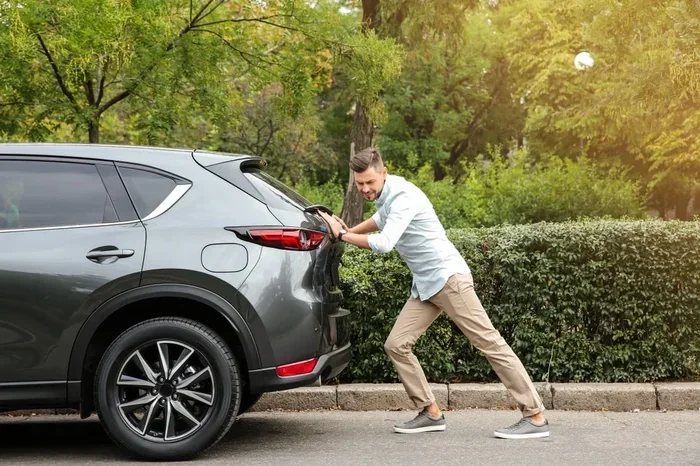
Signal your helpers. Have them push from behind. You need them to build up speed steadily. Aim for about 5–10 mph. Tell them to slow down once you’re at speed. Do not let them push from the front — it’s dangerous and hard to control.
Step 4: Release the Clutch
Once you’re moving at a good pace, quickly release the clutch pedal. This connects the spinning wheels to the engine. The engine should catch and start running. If it doesn’t catch on the first try, don’t panic. Pump the clutch slightly and try again. But don’t hold the clutch half-down for too long. That can burn out the clutch.
Step 5: Rev and Stabilize
Once the engine starts, press the clutch again. Give the engine a little gas with the accelerator. Let the car roll for a few minutes. This gives the alternator time to recharge the car battery. Drive to a safe location or a mechanic as soon as possible.
Quick Tips for a Successful Push Start
- Always use second gear. It gives the best balance of speed and torque.
- Keep the clutch fully pressed until the moment you release it.
- Don’t push on a steep hill. It’s hard to control speed and dangerous.
- Wear your seatbelt. Even during a push start, safety first.
- Communicate with your helpers. Use hand signals or clear verbal cues.
- Try during daylight. Visibility helps everyone stay safe.
Push Starting a Car with an Automatic Transmission
Can you push start a car with an automatic transmission? The short answer is: usually no, and you should never try. Automatic vehicles use a torque converter instead of a clutch. The torque converter relies on hydraulic fluid and the starter motor to spin the engine. Pushing the car sends wheel power through the transmission in the wrong direction.
Attempting to push start an automatic can cause serious transmission damage. The internal clutches and bands aren’t designed to be spun by wheel force. You could warp the torque converter, burn up transmission bands, or cause expensive fluid leaks. Repair costs can reach hundreds or even thousands of dollars.
Some newer automatic cars with push-button start systems have a different setup. But even those are not designed for bump starting. The car’s computer manages the entire process. Forcing it through wheel momentum can damage electronic components. So if your car is automatic, skip the push start idea entirely. Go straight to alternatives.
Why the Clutch Method Fails on Automatics
In a manual car, the clutch acts like a bridge between the wheels and the engine. You control it. In an automatic, there’s no driver-controlled clutch. The starter motor and ignition system handle everything. Without the starter, the engine doesn’t get the initial spin it needs. Pushing just spins the wheels, not the engine. The fuel pump also needs electrical power to deliver fuel. If the battery is dead, the fuel pump won’t work anyway — making push starting pointless on automatics.
Risks and Potential Damage from Push Starting
Does push starting a car work without any downside? Not exactly. While it’s a useful emergency jump start method, it carries risks. Let’s look at the most common ones.
Clutch Wear and Damage
Every time you push start, you stress the clutch. Releasing it too fast or holding it partially can cause slipping. Over time, the clutch plates wear out faster. If you already have a weak clutch, one bad push start could finish it off. Clutch replacement is expensive and labor-intensive.
Starter Motor Stress
When the engine catches after a push start, the starter motor engages suddenly. If the battery depletion has weakened the starter, this sudden engagement can damage it. The starter might grind or fail to disengage properly. That leads to costly repairs you didn’t plan for.
Loss of Power Steering and Brakes
Your alternator powers the power steering pump and brake vacuum booster. During a push start, these systems run on whatever little charge the battery has. You might lose power steering assist. Brakes could feel stiff. Both make the car hard to control right after starting. Drive carefully and slowly until the engine fully charges the battery.
Fuel Pump Problems
Many modern fuel pumps are electric. They run on battery power. If the battery is very low, the fuel pump might not deliver enough fuel to the engine. Even if push starting works, the engine might stall again immediately. You need to keep revving and driving to let the alternator bring the battery up to speed. But that’s not guaranteed.
Common Mistakes to Avoid
- Don’t try to push start at low speed. You need real momentum. 5 mph minimum.
- Don’t leave the clutch partially engaged. Full release is key. Half-clutch burns it out.
- Don’t push from the front. It’s dangerous and gives no control.
- Don’t attempt on busy roads. Find a parking lot or quiet street first.
- Don’t ignore warning lights. If the dashboard shows engine trouble, stop.
- Don’t force it repeatedly. Multiple failed tries damage the clutch fast.
Better Alternatives to Push Starting in Emergencies
While knowing how to push start a car is a great skill, there are safer and easier options. Let’s explore what you should try first before resorting to bump starting.
Jump-Start with Cables
The most common emergency driving fix is a traditional jump start. You need a set of jumper cables and another vehicle with a working battery. Connect the red cable to the positive terminals. Connect the black cable to the negative terminal on the dead battery and a grounded metal surface on the working car. Start the working car. Wait a minute. Then try starting the dead one. This method is fast, reliable, and much safer than push starting.
Portable Jump Starters
If you don’t have another car nearby, a portable jump starter is a lifesaver. These compact devices fit in your trunk and can crank your engine on their own. Some models also charge phones and power USB ports. They’re inexpensive and incredibly useful. Every driver should own one. They eliminate the need for roadside assistance in most battery-related situations.
Roadside Assistance Services
Membership programs like AAA or insurance-based roadside help are great. One phone call and a tow truck arrives. They carry jump starters, fuel, and tire equipment. If you’re in a remote area or feel unsafe pushing a car, this is the best option. Car troubleshooting is best left to professionals when conditions are risky.
Battery Replacement
If your battery keeps dying, it might be time for a new one. Battery depletion from old age is normal. Most car batteries last 3–5 years. If yours is older, replace it before it fails at the worst moment. A fresh battery solves the root problem and makes push starting completely unnecessary.
Comparison: Push Start vs. Alternatives
| Method | Works With | Cost | Risk Level | Best For |
|---|---|---|---|---|
| Push Starting | Manual transmission only | Free | Medium | Dead battery, no tools |
| Jump-Start Cables | All vehicles | Low (if you own cables) | Low | Dead battery with another car nearby |
| Portable Jump Starter | All vehicles | Moderate ($50–$200) | Low | Solo drivers, remote areas |
| Roadside Assistance | All vehicles | Membership fee | Very Low | Any emergency, any location |
| Battery Replacement | All vehicles | Moderate–High ($100–$300) | Very Low | Old or failing batteries |
Expert Insights on Push Starting
What do automotive professionals say about does push starting a car work in modern times? Most mechanics agree it’s a viable last resort but not a preferred method.
“Push starting is fine if you’re stuck on a deserted road with a manual car and a dead battery,” says one experienced mechanic. “But I always tell people to keep jumper cables or a portable jump starter in the trunk. It’s safer and doesn’t risk clutch damage.”
Another professional adds, “I’ve seen dozens of cars come in with burnt clutches from repeated push starts. People think it’s free and easy, but the wear adds up. The starter motor also takes a hit. If you can avoid it, avoid it.”
The consensus is clear. Push starting a car works, but it’s a tool of necessity, not routine. Use it once in an emergency. Then invest in better solutions for the future.
Key Takeaways
Does push starting a car work in an emergency? Yes — but only with a manual transmission, enough speed, and the right technique. The method bypasses a dead battery and uses wheel momentum to crank the engine. However, it carries real risks like clutch damage and starter motor stress. Always consider safer alternatives first, like jump-start cables or a portable jump starter. Keep these essentials in mind:
- Push starting a car is a last-resort method for manual vehicles with a dead battery.
- You need at least 5 mph of speed and two or more people to push.
- Automatic vehicles should never be push started — it causes transmission damage.
- Always try jump-start cables or a portable jump starter before attempting a push start.
- Clutch damage and starter motor stress are the biggest risks of bump starting.
- Keep emergency tools in your car at all times for vehicle breakdown situations.
- Regular battery maintenance prevents most situations where push starting becomes necessary.
Conclusion
So, does push starting a car work in emergency situations? The answer is yes — with caveats. Push starting a car is a proven technique that can get you rolling when your battery dies. It works by using momentum and your manual transmission to crank the engine without electricity. But it’s not without risks. Clutch damage, starter stress, and loss of power assistance are real concerns. And it simply doesn’t work on automatic cars.
The smartest approach is prevention. Keep jumper cables, a portable jump starter, and roadside assistance contacts ready. Check your car battery regularly. Replace it before it fails. These small steps save you from ever needing to push start on a dark, lonely road.
But if you find yourself in a pinch, you now know exactly what to do. Use the step-by-step method, stay calm, and get that engine running. Then drive straight to a mechanic. Emergency driving situations are stressful enough — let your knowledge handle the rest.
Frequently Asked Questions
Does push starting a car work if the battery is completely dead?
Yes, push starting can work even with a fully dead battery. The method bypasses the battery entirely by using wheel momentum to spin the engine. However, your ignition system still needs a small amount of charge to create a spark. If the battery is completely zero, the ignition may not fire. Try jump-starting first if possible.
Can push starting a car damage the transmission?
It can, especially on automatic vehicles. Push starting an automatic car can seriously damage the torque converter and internal transmission components. On manual cars, the risk is lower but still present. Repeated or improper push starts can wear out the clutch. Always use the correct technique and only do it in genuine emergencies.
How fast does a car need to be pushed to start it?
You need to reach about 5 to 10 mph before releasing the clutch. This speed gives the engine enough spinning force to catch and start running. Slower than 5 mph usually won’t generate enough momentum. Use a flat road and coordinate with your helpers to build speed steadily and safely.
Is push starting a car safe for the starter motor?
Not entirely. When the engine catches during a push start, the starter motor engages suddenly. If the battery depletion has weakened the starter, this sudden engagement can cause grinding or mechanical failure. It’s best to have the starter motor inspected after a push start to avoid further issues down the road.
What type of car is easiest to push start?
A manual transmission car is the easiest to push start. These vehicles have a clutch that lets you connect the wheels directly to the engine. Older manual cars with simple ignition systems are even easier. Sports cars and compact cars with manual gearboxes also respond well to bump starting. Automatics and modern push-button cars are very difficult or impossible to push start.
Should I call roadside assistance or try push starting first?
It depends on your situation. If you’re alone, on a busy road, or driving an automatic, call roadside assistance immediately. If you have a manual car, people to help, and a safe location, push starting can work as a quick fix. However, safer options like jump-start cables or a portable jump starter should always come first when available.