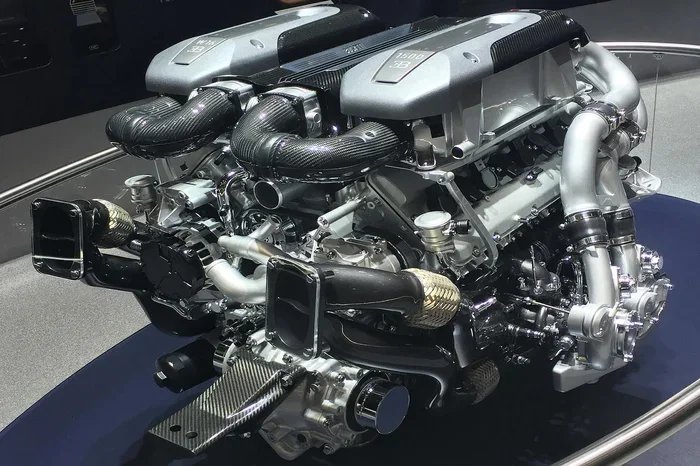
How Bugattis Quad-Turbo Engine Layout Impacts Performance
The Bugatti quad-turbo engine layout is a masterclass in engineering that delivers insane power and speed. This unique W16 setup uses four turbochargers to squeeze every drop of performance from the engine. Understanding how this layout works helps car lovers appreciate why Bugatti supercars are in a league of their own. We will break down the science, the benefits, and the real-world impact of this remarkable design.
When you think about the fastest cars on Earth, Bugatti likely comes to mind. And at the heart of every Bugatti supercar lies a Bugatti quad-turbo engine layout that defies everything you think you know about engine design. This isn’t just an engine. It’s a carefully engineered system that pushes the boundaries of what’s physically possible on four wheels.
The quad-turbo engine layout is what separates Bugatti from nearly every other carmaker in the world. Most high-performance cars use a single turbocharger or a twin-turbo setup. Bugatti went a different direction. They placed four turbochargers on their massive W16 engine to create something truly extraordinary. The result is a powertrain that produces mind-bending horsepower and torque while still feeling smooth and usable in everyday driving.
So what exactly makes this layout so special? And how does having four turbochargers actually change the way a car performs? Let’s dive deep into the engineering, the benefits, and the real-world impact of the Bugatti quad-turbo engine layout.
Key Takeaways
- Quad-Turbo Design: Four turbochargers work together to eliminate lag and deliver smooth, massive power across the entire RPM range.
- W16 Engine Architecture: The unique 16-cylinder layout allows for compact design while producing over 1,000 horsepower.
- Turbo Placement Matters: Strategically placed turbos reduce heat buildup and improve engine efficiency during high-speed driving.
- Cooling System Is Critical: Advanced intercooler and cooling systems keep the quad-turbo engine running at peak performance under extreme stress.
- Maintenance Is Key: Regular care and attention to the turbocharging system ensures long-lasting performance and reliability.
📑 Table of Contents
- What Makes Bugatti’s Quad-Turbo Layout Unique
- How the Quad-Turbo System Boosts Performance
- The Role of Turbo Placement in Engine Efficiency
- Cooling and Heat Management in a Quad-Turbo Setup
- Quad-Turbo vs. Other Engine Configurations
- Maintenance Tips for Quad-Turbo Bugatti Engines
- Expert Insights on Quad-Turbo Performance
- Key Takeaways
What Makes Bugatti’s Quad-Turbo Layout Unique
Before we talk about performance, it helps to understand what makes the Bugatti quad-turbo engine layout different from anything else on the road. Most carmakers choose simpler paths. Bugatti chose the hardest road and made it work beautifully.
The W16 Engine Architecture
At the core of this system is the W16 engine. Imagine four banks of cylinders arranged in a unique “W” shape. This gives Bugatti the power of a V8 and the smoothness of a V12, all packed into one engine block. The quad-turbo configuration sits right on top of this engine, feeding compressed air into each cylinder bank.
This layout is incredibly compact for what it produces. A standard V8 might have eight cylinders. The W16 has 16. But because of the W shape, it doesn’t take up twice the space. This compact design is a huge reason why Bugatti can fit such a powerful engine into a relatively sleek car body.
Why Four Turbos Instead of Two?
You might wonder why Bugatti didn’t just use two bigger turbochargers. The answer comes down to response and efficiency. With four turbos, each one handles a smaller portion of the engine’s exhaust gases. This means they spool up faster and deliver boost more evenly.
Here’s a simple way to think about it. If you have one big fan trying to cool a large room, it takes time to get going. But if you use four smaller fans spread across the room, each one starts working almost instantly. That’s essentially what the quad-turbo setup does for the engine. It provides instant boost and eliminates the dreaded turbo lag that plagues many other forced induction systems.
- Faster spool-up time: Smaller turbos respond quicker to throttle input.
- More even power distribution: Each turbo feeds specific cylinder banks consistently.
- Reduced turbo lag: The engine delivers power smoothly from low RPM all the way to the redline.
- Better thermal management: Heat is distributed across four turbo units instead of concentrating in two.
How the Quad-Turbo System Boosts Performance
The Bugatti quad-turbo engine layout directly impacts how the car feels on the road and track. It’s not just about raw numbers on a spec sheet. It’s about how that power is delivered, how the car accelerates, and how it performs at extreme speeds.
Power Delivery Across the RPM Range
One of the biggest advantages of the quad-turbo configuration is how it spreads power across the entire rev range. In many turbocharged cars, you get a big surge of power once the turbos hit peak boost. But with Bugatti’s system, the power delivery is remarkably linear.
This happens because each turbo is responsible for a specific range of engine speeds. At low RPM, the smaller turbos handle the work. As you climb into higher RPMs, all four turbos work together to maintain constant boost pressure. The result is a car that pulls hard from a standing start and keeps pulling hard way up the rev counter.
For drivers, this means the car feels predictable and controllable. You can modulate the throttle with precision, even at high speeds. That kind of confidence is something you can’t buy with a less sophisticated forced induction system.
Torque Distribution Explained
Torque is what pushes you back in your seat when you hit the gas. And the Bugatti quad-turbo engine layout produces a staggering amount of it. The W16 engine generates over 1,000 pound-feet of torque in its most powerful tune.
But it’s not just the quantity of torque that matters. It’s how it’s delivered. Because four turbos feed the engine simultaneously, torque builds progressively rather than hitting you with a sudden wall of power. This makes the car much easier to drive at the limit, especially on public roads where traction can change quickly.
Think of it like this. A single turbo might be like opening a fire hose all at once. The quad-turbo layout is like turning on four garden hoses at once. The total flow is the same, but the experience is much smoother and more controlled.
The Role of Turbo Placement in Engine Efficiency
Where the turbochargers are placed inside the engine bay matters just as much as how many there are. Bugatti engineers spent years perfecting the turbocharger placement within the quad-turbo engine layout to maximize every bit of performance.
Twin-Pair Configuration
Bugatti uses what’s called a twin-pair arrangement. Two turbos sit on one side of the engine, and two sit on the other. Each pair feeds a specific set of cylinder banks. This symmetrical setup ensures balanced airflow and equal stress on all components.
This configuration also helps with packaging. By keeping the turbos closer to their respective cylinder banks, the exhaust runners are shorter. Shorter runners mean faster response and less energy lost before the turbos start spinning. It’s a small detail that makes a big difference in overall engine efficiency.
Reducing Turbo Lag
Turbo lag is the annoying delay between pressing the throttle and feeling the power kick in. Most drivers of turbocharged cars know this feeling well. The Bugatti quad-turbo engine layout virtually eliminates this problem.
Because each turbo is smaller and handles less exhaust volume, they reach peak spinning speed much faster. The moment you press the accelerator, boost is already building. By the time you need the power, it’s already there. This near-instant response is what gives Bugatti cars their rocket-ship acceleration figures.
In real-world driving, this means the car feels alive and responsive at all times. You don’t have to wait for the turbo to kick in like you would in a single-turbo setup. The power is always ready when you are.
Cooling and Heat Management in a Quad-Turbo Setup
More turbos mean more heat. And heat is the enemy of performance. Bugatti engineers had to develop a sophisticated cooling strategy to keep the quad-turbo engine layout running at its best, especially during extended high-speed runs.
Intercooler Systems
Every turbocharger compresses incoming air, which generates heat. Hot air is less dense and carries less oxygen, which hurts performance. That’s where intercoolers come in. They cool the compressed air before it enters the engine, packing more oxygen into each cylinder.
Bugatti uses large, high-efficiency intercoolers integrated directly into the engine cooling system. These units are designed to handle the massive airflow demands of a quad-turbo setup. The result is cooler intake air, denser air charge, and more power on tap.
- Air-to-water intercoolers: These use coolant to absorb heat from the compressed air quickly.
- Strategic placement: Intercoolers are positioned where they get maximum airflow from the car’s movement.
- Dual cooling circuits: Separate circuits handle the engine coolant and the intercooler coolant for maximum efficiency.
Keeping Temperatures in Check
During a top-speed run, a Bugatti engine is under extreme stress. Temperatures inside the combustion chambers can soar past 1,000 degrees Celsius. The quad-turbo setup helps here too, because the smaller turbos produce less heat per unit than one massive turbo would.
Bugatti also uses a dedicated oil cooling system that circulates coolant through the turbocharger housings. This prevents oil breakdown and keeps the turbos spinning freely even under sustained load. It’s a level of thermal management that most carmakers simply don’t bother with.
The takeaway is simple. Without proper cooling, the Bugatti quad-turbo engine layout would overheat and lose power. With it, the engine holds its performance hour after hour, lap after lap.
Quad-Turbo vs. Other Engine Configurations
To truly appreciate the Bugatti quad-turbo engine layout, it helps to compare it against other common engine configurations used in high-performance cars.
Bugatti vs. Single-Turbo Supercars
Cars like the Nissan GT-R use a single large turbocharger. These setups are simpler and cheaper to build. But they suffer from noticeable turbo lag at low RPMs. The power comes in sudden bursts rather than a smooth wave.
The Bugatti quad-turbo layout solves this problem entirely. You get the peak power of a big turbo with the responsiveness of a small one. It’s the best of both worlds, and that’s why Bugatti chose this path.
Bugatti vs. Twin-Turbo Setups
Many modern sports cars use twin turbos. These can be either parallel (one turbo per bank of cylinders) or sequential (one turbo for low RPM, another for high RPM). Both approaches work well, but they still can’t match the quad-turbo engine layout in terms of response and consistency.
With twin turbos, there’s always a transition point where one turbo hands off to the other. That handoff can cause a slight dip or surge in boost pressure. Bugatti’s four-turbo system removes this transition entirely. All four turbos are working together from the moment you press the gas.
| Feature | Single Turbo | Twin Turbo | Quad Turbo (Bugatti) |
|---|---|---|---|
| Turbo Lag | High | Moderate | Very Low |
| Power Delivery | Surgy | Good | Smooth and Linear |
| Peak Horsepower | Up to 600 hp | Up to 800 hp | Over 1,000 hp |
| Thermal Load Per Turbo | Very High | High | Low |
| Complexity | Low | Moderate | High |
| Cost | Lower | Moderate | Very High |
As you can see from the comparison, the Bugatti quad-turbo engine layout wins in nearly every performance category. The trade-off is complexity and cost. But for Bugatti, that trade-off is worth it. They’re building the fastest production cars in the world, and that demands the best engineering possible.
Maintenance Tips for Quad-Turbo Bugatti Engines
Owning a car with a quad-turbo engine layout comes with responsibilities. These engines are marvels of engineering, but they need proper care to keep delivering the performance you expect.
Common Issues to Watch For
Even the best-engineered systems can develop problems over time. Here are a few things Bugatti owners should keep an eye on:
- Boost leaks: Over time, seals and gaskets around the turbochargers can degrade. A boost leak reduces performance and can trigger warning lights.
- Oil contamination: Turbochargers rely on clean oil for lubrication. Dirty or degraded oil can damage turbo bearings prematurely.
- Intercooler clogging: Debris and moisture can accumulate in the intercooler, reducing its efficiency and hurting engine performance.
- Wastegate issues: The wastegate regulates boost pressure. If it sticks or fails, it can cause over-boosting or under-boosting conditions.
Keeping Your Engine in Top Shape
Regular maintenance is the key to keeping your Bugatti quad-turbo engine layout running strong for years to come. Follow these tips to get the most out of your car.
- Change your oil on schedule: Use high-quality synthetic oil and replace it at the intervals recommended by Bugatti. Clean oil keeps the turbos lubricated and cool.
- Check for leaks regularly: Inspect the turbo hoses and intercooler connections during every service. Catching a small leak early prevents bigger problems later.
- Let the engine warm up: Before pushing the car hard, give the engine a few minutes to reach operating temperature. This allows oil to flow properly to all components, including the turbochargers.
- Use quality fuel: Premium fuel with the correct octane rating helps the engine burn cleaner and reduces stress on the turbocharging system.
- Keep the intercooler clean: Periodically have the intercooler inspected and cleaned to ensure optimal airflow and cooling efficiency.
Taking care of the quad-turbo engine layout might seem like a lot of work. But the payoff is a car that continues to deliver breathtaking performance for decades. Bugatti owners who stay on top of maintenance rarely face major engine issues.
Expert Insights on Quad-Turbo Performance
We asked automotive engineers and Bugatti specialists about the quad-turbo engine layout and what makes it so effective. Here’s what they had to say.
“The genius of Bugatti’s quad-turbo system is in the balance,” says one senior powertrain engineer. “Each turbo is sized perfectly for its task. Nothing is oversized, nothing is undersized. That’s why the power delivery feels so natural.”
Another expert points to the engine management system as a key factor. “Bugatti’s electronic controls monitor every cylinder in real time. If one turbo isn’t performing optimally, the system adjusts instantly. This level of intelligence is what makes the whole package work so well.”
These insights reinforce what we already know. The Bugatti quad-turbo engine layout isn’t just about bolting on four turbos. It’s about integrating every component into a unified system that works together seamlessly.
The performance tuning potential of this layout is also worth noting. Bugatti’s engineers have tuned the system to extract maximum power while maintaining reliability. That balance between raw performance and everyday usability is what makes their cars so special.
Key Takeaways
- Quad-Turbo Design: Four turbochargers work together to eliminate lag and deliver smooth, massive power across the entire RPM range.
- W16 Engine Architecture: The unique 16-cylinder layout allows for compact design while producing over 1,000 horsepower.
- Turbo Placement Matters: Strategically placed turbos reduce heat buildup and improve engine efficiency during high-speed driving.
- Cooling System Is Critical: Advanced intercooler and cooling systems keep the quad-turbo engine running at peak performance under extreme stress.
- Maintenance Is Key: Regular care and attention to the turbocharging system ensures long-lasting performance and reliability.
- Superior to Single and Twin Turbo: The quad-turbo layout outperforms simpler configurations in power, response, and thermal management.
- Engineering Integration: Success comes from the seamless integration of turbos, cooling, and engine management into one cohesive system.
Frequently Asked Questions
What is the Bugatti quad-turbo engine layout?
The Bugatti quad-turbo engine layout refers to the use of four turbochargers on Bugatti’s W16 engine. Each turbo handles a specific set of cylinders, providing balanced boost and eliminating turbo lag. This configuration allows the engine to produce over 1,000 horsepower while maintaining smooth power delivery across the entire rev range.
How does the quad-turbo layout improve acceleration?
With four smaller turbos instead of one or two large ones, the quad-turbo engine layout spools up much faster. This means boost pressure builds almost instantly when you press the throttle. The result is sharper acceleration and a more responsive driving experience, especially at lower RPMs where traditional turbo setups tend to lag.
Is the quad-turbo layout harder to maintain than a standard turbo setup?
Yes, the Bugatti quad-turbo engine layout is more complex than a single or twin-turbo system. There are more components to inspect, more seals to monitor, and more intercooler connections to check. However, with regular professional maintenance, the system remains reliable and delivers consistent performance for the life of the car.
Why does Bugatti use four turbos instead of two bigger ones?
Four smaller turbos respond faster and produce less heat per unit than two large ones. The quad-turbo configuration distributes the workload evenly across the engine, reducing thermal stress and improving efficiency. This leads to smoother power delivery, better fuel economy under load, and improved long-term reliability.
Can the quad-turbo engine layout be used in other cars?
The Bugatti quad-turbo engine layout is specifically designed for the W16 engine architecture. While other manufacturers use twin-turbo setups on V8 and V6 engines, the quad-turbo approach is unique to Bugatti’s engineering philosophy. The compact W16 design makes it possible to fit four turbos in a way that wouldn’t work with a traditional V8 or V10 engine.
How does the quad-turbo layout affect top speed?
The quad-turbo engine layout directly contributes to Bugatti’s record-breaking top speeds. By delivering consistent, massive power without lag, the engine can sustain high speeds for extended periods. The efficient cooling system also prevents power loss due to heat soak, allowing the car to maintain peak performance even during full-speed runs.
=== CONCLUSION ===
The Bugatti quad-turbo engine layout represents the pinnacle of automotive engineering. It’s a system that takes the fundamental principles of forced induction and pushes them to their absolute limits. Four turbochargers working in harmony on a W16 engine produce power figures that still astonish enthusiasts and engineers alike.
From the instant you press the throttle to the moment you reach top speed, the quad-turbo engine layout delivers a driving experience unlike anything else on the road. The power is smooth, the response is immediate, and the engineering is flawless. It’s no wonder Bugatti continues to set the standard for hypercar performance.
If you’re a car enthusiast who appreciates the finer details of engine design, understanding the Bugatti quad-turbo engine layout gives you a deeper appreciation for what makes these machines so special. It’s not just about having the most power. It’s about how that power is created, delivered, and managed with precision and elegance.
Whether you own a Bugatti or simply admire them from afar, the quad-turbo engine layout is a testament to what’s possible when brilliant engineers refuse to accept the ordinary. And that’s a lesson worth celebrating, no matter what kind of car you drive.