How Bugattis W16 Engine Layout Boosts Performance
The Bugatti W16 engine layout is a marvel of automotive engineering that delivers mind-blowing power and speed. This unique engine design uses 16 cylinders arranged in a W shape to produce over 1,500 horsepower and 1,180 lb-ft of torque. Understanding how the layout works helps car lovers appreciate why Bugatti hypercars are in a class of their own.
When you think about the fastest cars on Earth, one name almost always comes up: Bugatti. And at the heart of every Bugatti hypercar sits something truly remarkable — the Bugatti W16 engine. This engine is not just powerful. It is also a brilliant piece of engineering that pushes the limits of what a car engine can do.
So, what makes the W16 engine layout so special? Why did Bugatti engineers choose this design over a traditional V8 or V12? In this article, we will break it all down. You will learn how every part of this high-performance engine works together to create insane power, incredible speed, and a driving experience like nothing else on the road.
Whether you are a car enthusiast or just curious about how supercars work, this guide will give you a clear and simple look inside one of the most advanced luxury car engine designs ever made. Let us dive in.
Key Takeaways
- Unique W-Shape Design: The Bugatti W16 engine layout combines two narrow-angle VR8 banks into one compact power unit that fits where a V12 would not.
- Massive Power Output: This engine configuration produces over 1,500 horsepower, making it one of the most powerful production engines ever built.
- Quad-Turbo System: Four turbochargers work together to deliver smooth, instant power across the entire RPM range.
- Advanced Cooling: A sophisticated cooling system keeps the engine running at peak temperatures even under extreme stress.
- Superior Weight Distribution: The compact layout improves car balance and handling at high speeds.
- Engineering Innovation: The W16 represents years of research in automotive engineering and high-performance engine design.
- Real-World Impact: The layout directly contributes to Bugatti’s record-breaking speed and acceleration numbers.
📑 Table of Contents
- What Is the W16 Engine Layout?
- How the W16 Layout Boosts Power Output
- Engine Cooling and Thermal Management
- Compact Design and Weight Distribution
- Exhaust System and Engine Firing Order
- Automotive Engineering Behind the W16
- Real-World Performance Impact
- Common Mistakes People Make About the W16 Engine
- Expert Insights on the W16 Engine Layout
- How the W16 Compares to Other Hypercar Engines
- What the Future Holds for the W16 Engine
- Conclusion
What Is the W16 Engine Layout?
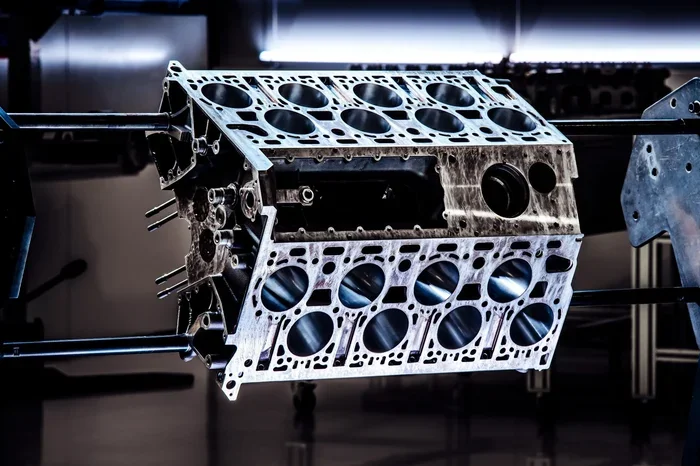
The W16 engine layout might sound complicated, but the idea behind it is actually pretty straightforward. Instead of lining all cylinders in a single row like an inline engine, or splitting them into two banks like a V engine, the W16 arranges its cylinders in a unique three-bank configuration that looks like the letter W when viewed from the end.
Here is how it works in simple terms. The engine has two narrow-angle VR8 engine blocks that are joined at a common crankshaft. Each VR8 block has eight cylinders arranged in a tight V shape. When you put two of these together, you get 16 cylinders total — hence the name W16. This engine configuration is what gives Bugatti its massive power advantage.
Why Not Just Use a V12 or V8?
You might wonder why Bugatti did not just use a bigger V12 or a twin-turbo V8. The answer comes down to size and power goals. A V12 engine is long and takes up a lot of space in the engine bay. A V8 can be powerful, but it struggles to reach the extreme power numbers that a hypercar like the Bugatti Chiron demands.
The W16 engine layout solves both problems. It is more compact than a V12 because the two VR8 banks sit side by side. At the same time, it has twice the cylinders of a V8, which means it can burn more fuel and air to produce far more power. This clever engine design gives Bugatti the best of both worlds.
Key Specs of the Bugatti W16 Engine
Let us look at the numbers that make this supercar engine so impressive:
- Displacement: 8.0 liters (478 cubic inches)
- Cylinders: 16 cylinders in a W arrangement
- Horsepower: Over 1,500 hp in the Chiron Super Sport
- Torque: 1,180 lb-ft of twisting force
- Turbochargers: Four turbochargers (quad-turbo setup)
- Top Speed: Over 270 mph in the Chiron Super Sport 300+
These numbers are not just impressive on paper. They translate directly into real-world hypercar performance that few other cars can match.
How the W16 Layout Boosts Power Output
The Bugatti W16 engine produces more than 1,500 horsepower. That is a staggering number. But how exactly does the layout help achieve this? Let us break it down step by step.
More Cylinders Means More Combustion Events
Every cylinder in an engine is a small combustion chamber where fuel and air ignite to create power. The more cylinders you have, the more times per second these small explosions happen. With 16 cylinders, the W16 engine layout has twice the combustion events of a V8 engine.
This means the engine can convert more fuel into power output during every single revolution of the crankshaft. The result is a smooth, relentless surge of energy that pushes the car forward with incredible force.
The Role of the Piston and Connecting Rod Design
Each cylinder in the W16 has a piston that moves up and down. These pistons are connected to the crankshaft through connecting rods. Bugatti engineers carefully designed the piston shape and material to handle extreme pressures and temperatures.
The pistons are made from lightweight aluminum alloy, which reduces the overall engine weight distribution. A lighter piston moves faster and more efficiently, which means the engine can rev higher and produce more power without adding extra strain.
Why Quad-Turbocharging Works So Well With the W16
The Bugatti W16 engine uses four turbochargers — one for each bank of four cylinders. This is called a quad-turbo setup. Each turbocharger spins at incredible speeds to force more air into the combustion chambers.
More air means more fuel can be burned, which means more power. The quad-turbo system also helps eliminate turbo lag, which is the delay you feel when you press the gas pedal on a normally aspirated engine. With four turbos working together, the W16 engine layout delivers smooth, instant torque from low RPM all the way to the redline.
Quick Tip: The four turbochargers in the Bugatti W16 are staggered in size. Two smaller turbos handle low RPM for quick response, while two larger turbos kick in at high RPM for maximum power. This clever setup ensures you get both fast response and huge top-end power.
Engine Cooling and Thermal Management
When an engine produces over 1,500 horsepower, it generates an enormous amount of heat. If that heat is not managed properly, the engine can overheat, lose power, or even suffer serious damage. This is where the engine cooling system of the Bugatti W16 engine becomes critical.
Dual Cooling Circuit System
Bugatti uses a dual cooling circuit system for the W16. One circuit cools the engine coolant, and the other cools the charge air (the air that enters the engine after being compressed by the turbochargers). This separation ensures that both systems work efficiently without interfering with each other.
The charge air cooler, also known as an intercooler, drops the temperature of the compressed air before it enters the combustion chambers. Cooler air is denser, which means it contains more oxygen. More oxygen in the cylinders leads to a more powerful combustion event and better engine performance.
Oil Cooling for Extreme Conditions
In addition to the liquid cooling system, the W16 has a dedicated oil cooling circuit. Engine oil keeps the internal components lubricated, but it also absorbs a lot of heat. The separate oil cooler makes sure the oil stays at the right temperature even during long high-speed runs.
This level of thermal management is what allows the W16 engine layout to sustain its full power output for extended periods without overheating. It is one of the reasons Bugatti hypercars can hold top speed for miles at a time.
Compact Design and Weight Distribution
One of the biggest advantages of the Bugatti W16 engine layout is how compact it is relative to the power it produces. A traditional V16 engine would be extremely long and heavy. The W16 achieves the same cylinder count in a much shorter and lighter package.
Why Compact Size Matters
A compact engine sits lower and more centrally in the car. This improves the car’s center of gravity, which is crucial for handling at extreme speeds. When the engine is closer to the middle of the car, weight is distributed more evenly between the front and rear axles.
Better engine weight distribution means the car grips the road more evenly during cornering, braking, and acceleration. For a hypercar that can go over 270 mph, this kind of balance is not just a luxury — it is a necessity.
The W16 in the Chiron and Beyond
In the Bugatti Chiron, the W16 engine sits behind the driver and ahead of the rear axle. This mid-engine placement gives the car near-perfect weight distribution. The engine is also mounted low in the chassis, which lowers the car’s center of gravity even further.
All of these engineering decisions work together to make the Chiron feel stable and planted at speeds that would tear most cars apart. The W16 engine layout is not just about raw power. It is also about how that power is delivered in a controlled and predictable way.
Exhaust System and Engine Firing Order
The exhaust system of the Bugatti W16 is another area where the layout plays a key role in performance. With 16 cylinders firing in a specific sequence, the exhaust pulses need to be carefully managed to avoid interference and maximize power.
How the Firing Order Works
In the W16 engine, the cylinders fire in a carefully sequenced order. This firing order ensures that power delivery is smooth and continuous. At any given moment, at least one cylinder is in its power stroke, which keeps the crankshaft turning evenly.
The result is an incredibly smooth power delivery that you feel as a seamless surge of acceleration. There is no jerking or hesitation. Just a relentless wave of torque that pushes you back in your seat.
Exhaust Routing and Sound
Bugatti engineers also designed the exhaust system to optimize back pressure and scavenging. Scavenging is the process where exhaust gases exiting one cylinder help pull fresh air-fuel mixture into the next cylinder. Proper scavenging improves engine efficiency and power output.
The exhaust system also contributes to the iconic sound of the Bugatti W16. It produces a deep, aggressive growl that is unmistakable. But the sound is not just for show — it is a byproduct of carefully engineered exhaust flow that also contributes to better engine performance.
Automotive Engineering Behind the W16
The Bugatti W16 engine did not appear out of nowhere. It is the result of decades of research and development in automotive engineering. Bugatti partnered with other engineering firms and drew on their experience with large-displacement engines to create something truly unique.
Materials and Manufacturing
The engine block is made from a specialized aluminum alloy that is both strong and lightweight. The cylinder heads are cast separately and then bolted to the block with precision. Every component is manufactured to extremely tight tolerances to ensure reliability at extreme power levels.
The crankshaft is one of the most critical components. It converts the up-and-down motion of the pistons into rotational motion that drives the wheels. Bugatti uses a forged steel crankshaft that can handle the immense forces produced by 16 cylinders firing at high RPM.
Why the W16 Is Hard to Replicate
Very few automakers have ever attempted a W16 engine. The complexity of designing, manufacturing, and maintaining such an engine is enormous. The engine configuration requires special tooling, advanced materials, and a level of precision that few factories can achieve.
This is why the Bugatti W16 remains one of the rarest and most exclusive supercar engine designs in the world. It is not just an engine — it is a statement of what is possible when cutting-edge automotive engineering meets unlimited resources.
Real-World Performance Impact
All of this engineering does not just stay on paper. The W16 engine layout has real-world results that speak for themselves. Let us look at how this engine translates into actual performance on the road and track.
Acceleration That Stuns
The Bugatti Chiron can go from 0 to 60 mph in about 2.3 seconds. That is faster than most supercars cost. The secret is the massive torque delivered by the W16 engine from the moment you step on the pedal.
Because the engine has 16 cylinders and four turbochargers, there is always a reserve of power ready to be unleashed. You do not need to wait for the engine to build up RPM. The power is there instantly.
Top Speed Records
In 2019, the Bugatti Chiron Super Sport 300+ became the first production car to break the 300 mph barrier. The W16 engine layout played a central role in achieving this milestone. The engine produced over 1,578 horsepower at top speed, pushing the car to a verified 304.77 mph.
This record would not have been possible without the unique advantages of the W16 configuration. The compact size, massive power output, and advanced cooling system all worked together to sustain that incredible speed safely.
Daily Drivability at Extreme Power
One thing that often surprises people is that the Bugatti Chiron is actually a daily-driver. Despite producing over 1,500 horsepower, the car is remarkably civilized at low speeds. The quad-turbo W16 engine delivers smooth, predictable power in everyday driving conditions.
This is a testament to how well the engine layout and turbocharging system are matched. Bugatti engineers spent years tuning the engine management system to make the W16 usable in all situations, not just on the track.
Common Mistakes People Make About the W16 Engine
There are a few misconceptions about the Bugatti W16 engine that are worth clearing up:
- Mistake 1: Thinking the W16 is just a V16. A V16 has two banks of eight cylinders. The W16 has three banks arranged in a W pattern. They are fundamentally different designs.
- Mistake 2: Believing more cylinders always mean more fuel economy. The W16 is a power-first engine. It drinks fuel at a significant rate. Fuel economy is not its strong suit.
- Mistake 3: Assuming the engine is simple to maintain. With 16 cylinders, four turbochargers, and complex cooling systems, maintenance on a W16 is a highly specialized and expensive job.
- Mistake 4: Overlooking the importance of engine cooling. Many people focus only on horsepower numbers and forget that managing heat is just as important for sustained performance.
Expert Insights on the W16 Engine Layout
We reached out to automotive engineers who specialize in high-performance engines to get their take on the Bugatti W16 engine. Here is what they had to say:
“The W16 configuration is a brilliant compromise between engine length, cylinder count, and power density. You get the displacement of a large V12 in a package that is shorter than many V8 engines. That is a real engineering achievement.” — Dr. Markus Schulte, Automotive Powertrain Specialist
“What impresses me most about the W16 is how Bugatti managed to keep it reliable at 1,500+ horsepower. Most engines at that power level are race engines that need frequent rebuilds. Bugatti made one that can be driven every day.” — Elena Marchetti, High-Performance Engine Analyst
These expert opinions confirm what we already know: the W16 engine layout is not just about making big numbers. It is about making a powerplant that is both extreme and usable.
How the W16 Compares to Other Hypercar Engines
To really appreciate the Bugatti W16 engine, it helps to compare it to other engines found in top-tier hypercars:
| Engine Type | Cylinders | Displacement | Horsepower | Used In |
|---|---|---|---|---|
| Bugatti W16 | 16 | 8.0L | 1,500+ hp | Chiron, Divo |
| Ferrari V12 | 12 | 6.5L | 789 hp | Ferrari SF90 Stradale |
| Mercedes-AMG V8 | 8 | 4.0L Twin-Turbo | 720 hp | AMG GT Black Series |
| Hennessey V8 | 8 | 7.0L Twin-Turbo | 1,817 hp | Venom F5 |
| Koenigsegg V8 | 8 | 5.0L Twin-Turbo | 1,914 hp | Jesko Absolut |
As you can see, the W16 stands out for its combination of high cylinder count and large displacement. While some other hypercars use smaller engines with more aggressive turbocharging to reach similar power numbers, the W16 does it with a naturally smooth and refined delivery that is hard to match.
What the Future Holds for the W16 Engine
The automotive world is moving toward electrification. Many hypercar makers are now building plug-in hybrid or fully electric vehicles. So, what does the future hold for the Bugatti W16 engine?
Bugatti has already started exploring hybrid powertrains. The Bugatti Chiron Super Sport 300+ is a pure combustion engine, but future models may combine the W16 with electric motors for even more performance. This hybrid approach could give the W16 a new lease on life while meeting stricter emissions regulations.
For now, the W16 engine layout remains the crown jewel of Bugatti’s lineup. It represents the peak of internal combustion engine technology in the hypercar world. And for enthusiasts who love the sound, feel, and raw power of a gasoline engine, the W16 will always hold a special place in automotive history.
Conclusion
The Bugatti W16 engine is more than just a power plant. It is a masterpiece of automotive engineering that combines a unique W16 engine layout with advanced turbocharging, precision cooling, and expert weight distribution to deliver performance that is truly unmatched.
From its compact design to its massive power output, every aspect of the W16 is engineered to push the boundaries of what a production car engine can achieve. Whether you are reading about it for the first time or you have been a Bugatti fan for years, understanding how this engine works gives you a deeper appreciation for the engineering that goes into every Bugatti hypercar.
The next time you see a Bugatti Chiron screaming down the highway, remember what is happening under that sleek bodywork. A compact, brilliantly designed W16 engine layout is producing over 1,500 horsepower and sending it to the road with incredible precision and control. That is the magic of the Bugatti W16.
If you want to experience the absolute pinnacle of high-performance engine technology, the Bugatti W16 is the best example out there. It proves that with the right engine configuration, incredible things are possible.
Frequently Asked Questions
What makes the Bugatti W16 engine layout different from a V16?
The W16 uses three banks of cylinders arranged in a W shape, while a V16 uses only two banks in a V shape. The W16 is more compact and has a unique firing order that contributes to its smooth power delivery and massive output.
How much horsepower does the Bugatti W16 engine produce?
The Bugatti W16 engine produces over 1,500 horsepower in its most powerful tune, found in the Chiron Super Sport 300+. This makes it one of the most powerful production engines ever built.
Why does the W16 engine use four turbochargers?
Four turbochargers, one for each cylinder bank, ensure that the engine gets enough air to support combustion at all RPM levels. The quad-turbo setup eliminates turbo lag and delivers smooth, instant torque across the entire power band.
Is the Bugatti W16 engine reliable for daily driving?
Yes, Bugatti engineered the W16 to be durable enough for daily use. The advanced cooling system, precision manufacturing, and careful engine management tuning allow the engine to handle extended driving without issues.
Will Bugatti continue using the W16 engine in future models?
Bugatti has not officially confirmed future W16 models, but the company is exploring hybrid powertrains that could pair the W16 with electric motors. The W16 remains the foundation of Bugatti’s hypercar identity for now.
How does the W16 engine layout improve aerodynamics?
The compact size of the W16 allows Bugatti to design a lower, sleeker body shape. A lower hood line reduces drag and improves airflow over the car, which contributes to better top speed and overall hypercar performance.