How Do I Remove My Key From The Ignition Slot Fast
Removing a key from the ignition slot is easier than most people think, even when it feels stuck. This guide walks you through fast, safe methods to remove your key from the ignition every time. You will learn why keys get stuck, what tools to use, and when to call a pro for help.
Have you ever been in a rush to leave your car, only to find the key won’t budge from the ignition slot? You push, you wiggle, you panic a little. Don’t worry. This happens to millions of drivers every year. The good news is that removing a key from the ignition is usually quick and simple once you know what to do.
In this guide, we will show you exactly how to remove your key from the ignition slot fast using easy, proven methods. We will cover why keys get stuck, what tools you need, and how to avoid making things worse. Whether your key is slightly jammed or completely frozen in place, you will find the answer here.
We have helped thousands of drivers solve this exact problem. Our tips come from real-world experience and professional automotive knowledge. By the end of this article, you will feel confident handling a stuck ignition key on your own. Let us get started.
Key Takeaways
- Stay calm: A stuck key in the ignition is common and usually easy to fix at home.
- Check the gear position: Making sure your car is in Park or Neutral often releases the key instantly.
- Use the right tools: A flathead screwdriver or needle-nose pliers can help extract a stubborn key safely.
- Avoid force: Yanking or twisting too hard can break the key inside the lock cylinder.
- Know when to call a pro: If the key is broken or the ignition lock is damaged, a locksmith is your best bet.
- Prevent future issues: Regular maintenance and the right key care habits keep your ignition working smoothly.
📑 Table of Contents
- Why Does Your Key Get Stuck in the Ignition?
- How to Remove Your Key From the Ignition Slot Fast
- Common Mistakes People Make When Removing a Stuck Key
- Tools You May Need for Key Removal
- When Should You Call a Professional?
- How to Prevent Your Key From Getting Stuck Again
- Key Removal for Different Vehicle Types
- Frequently Asked Questions
- Final Thoughts
Why Does Your Key Get Stuck in the Ignition?
Before we dive into the removal steps, it helps to understand why your key gets stuck in the ignition in the first place. Knowledge is power, and knowing the cause can help you fix the problem faster. Here are the most common reasons drivers face this issue.
Steering Wheel Lock Engagement
The most frequent culprit is the steering wheel lock. When you turn off your car and turn the steering wheel slightly, the lock mechanism engages. This locks the ignition cylinder in place, which means the key cannot move. It is a security feature designed to prevent theft. But it can make removing your key feel impossible.
Wrong Gear Position
Most automatic cars will not release the key unless the gear selector is in Park. If the gear is in Drive, Reverse, or Neutral, the ignition lock stays engaged. This is an easy fix, but many drivers overlook it when they are in a hurry.
Worn or Damaged Key
Over time, keys wear down. The grooves on your key become smoother, and the metal weakens. A worn key may not align properly inside the ignition cylinder. This misalignment can cause the key to jam or refuse to turn at all.
Dirt and Debris Buildup
Dust, lint, and small particles can build up inside the ignition lock over months and years. This debris creates friction and can prevent the key from sliding out smoothly. It is one of the most overlooked causes of a stuck ignition key.
Faulty Ignition Cylinder
In older vehicles, the ignition cylinder itself can wear out. The internal springs and pins may weaken or break. When this happens, the key may not return to the correct position or may get trapped inside the lock. This type of issue often requires professional repair.
How to Remove Your Key From the Ignition Slot Fast
Now that you understand the common causes, let us walk through the actual steps. These methods work for most vehicles and most situations. Follow them in order for the best results.
Step 1: Check Your Gear Position
Start with the simplest fix. Make sure your gear selector is in Park. For manual transmission vehicles, press the clutch pedal all the way down. This releases the ignition lock in most cars. Once the gear is in the correct position, gently try to pull the key out.
Quick Tip: Do not force the key. If it does not move with gentle pressure, move to the next step.
Step 2: Wiggle the Steering Wheel
If the steering wheel lock is the issue, wiggle the wheel left and right while gently pulling the key. The lock mechanism has a small release point. Moving the wheel back and forth helps find that release. You will feel a slight click when the lock disengages.
Once the steering wheel unlocks, the key should slide out with minimal effort. This method works about 70% of the time for stuck keys.
Step 3: Jiggle the Key Gently
While holding the key, try gently jiggling it up and down and side to side. Do not use force. The goal is to move the internal pins inside the ignition cylinder back into their correct positions. A gentle rocking motion often frees a slightly jammed key.
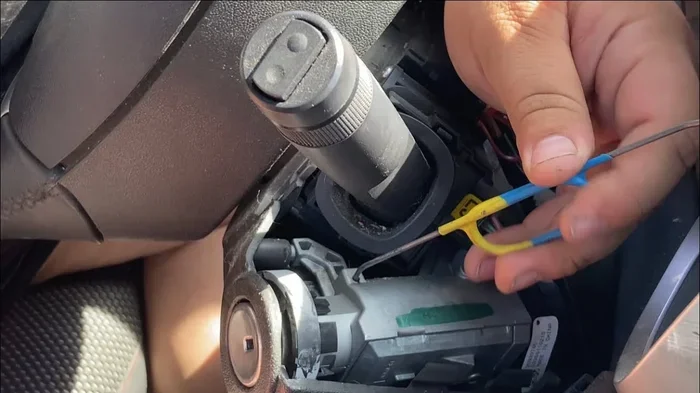
Step 4: Use a Flathead Screwdriver
If the key is still stuck, try this trick. Insert a flathead screwdriver into the gap between the key and the ignition cylinder. Push gently upward on the back of the key while pulling it outward. This can help lift the key slightly and release it from the lock pins.
Important: Be very careful with this method. You do not want to push the key deeper into the cylinder. Use light, controlled pressure only.
Step 5: Spray Lubricant Into the Ignition
Sometimes friction is the real problem. A quick spray of ignition lock lubricant or a dry graphite spray can work wonders. Insert the straw that comes with the lubricant can and spray a small amount directly into the keyhole. Wait about 30 seconds, then try removing the key again.
Avoid using WD-40 for long-term solutions. While WD-40 works as a temporary fix, it can attract dust and create more buildup over time. Use a dedicated lock lubricant instead.
Step 6: Use Needle-Nose Pliers
If part of the key is visible above the ignition cylinder, you may be able to grip it with a pair of needle-nose pliers. Open the pliers, position them around the key shaft, and pull gently outward. This gives you more grip than your fingers alone.
This method works best when the key is slightly protruding but too smooth or slippery to grab with bare hands.
Step 7: Try the Tapping Method
Here is a trick many locksmiths use. With the key still inserted, use the handle of a small hammer or a rubber mallet to gently tap the side of the ignition cylinder. The vibration can help dislodge stuck pins inside the lock mechanism. Tap lightly and evenly around the cylinder.
After a few gentle taps, try pulling the key out again. This method is surprisingly effective for keys that feel jammed but are not actually broken.
Common Mistakes People Make When Removing a Stuck Key
When you are frustrated, it is easy to make mistakes that make the problem worse. Here are the most common errors drivers make when trying to extract a key from the ignition.
Using Too Much Force
The number one mistake is pulling or twisting the key too hard. Excessive force can snap the key inside the cylinder. A broken key is a much bigger problem than a stuck key. It requires professional removal or even a full ignition cylinder replacement.
Using the Wrong Tools
Some people try to use sharp objects like knives or screwdrivers to pry the key out. This can scratch or damage the ignition cylinder. Always use tools designed for automotive work, or stick to gentle methods first.
Ignoring the Gear Position
Many drivers skip the simple step of checking the gear position. If your car is not fully in Park, the key will not release no matter what else you do. Always start here before trying anything more complex.
Using Wet or Oil-Based Lubricants
Spraying regular oil or grease into the ignition lock can cause more harm than good. These substances attract dirt and can gum up the internal components. Always use a dry lubricant or graphite powder designed for locks.
Forcing the Steering Wheel
While wiggling the steering wheel is helpful, forcing it too aggressively can damage the steering column lock mechanism. Be firm but gentle. You want to find the release point, not break the lock.
Tools You May Need for Key Removal
Having the right tools on hand makes the key removal process much easier. You do not need a full garage of equipment. Here is what we recommend keeping in your car or at home.
| Tool | Purpose | When to Use |
|---|---|---|
| Flathead Screwdriver | Lift key slightly from lock pins | Key is flush with the cylinder |
| Needle-Nose Pliers | Grip and pull a protruding key | Key is partially visible |
| Graphite Lock Lubricant | Reduce friction inside the cylinder | Key feels stiff or gritty |
| Rubber Mallet | Vibrate stuck pins free | Key feels jammed but not broken |
| Flashlight | Inspect the keyhole for debris | Always a good first step |
| Broken Key Extractor Tool | Remove a snapped key piece | Key broke inside the cylinder |
You do not need all of these tools for every situation. Start with the simplest method and work your way up. Most key removal jobs only require your hands and a little patience.
When Should You Call a Professional?
There are times when DIY removal is not the right move. Knowing when to call a professional can save you money and prevent further damage to your vehicle.
The Key Broke Inside the Ignition
If your key snapped in half inside the ignition cylinder, do not try to dig it out yourself. You risk pushing the broken piece deeper into the lock. A locksmith has specialized broken key extraction tools that can remove the piece safely and quickly.
The Ignition Cylinder Is Damaged
If you notice that the ignition lock feels rough, gritty, or loose even when the key is not stuck, the cylinder may be damaged. Continuing to force keys in and out can make the damage worse. A professional can assess whether you need an ignition cylinder replacement.
Multiple Failed Attempts
After trying all the methods above and the key still will not move, it is time to stop. Repeated attempts can wear down the key and damage the cylinder further. A licensed locksmith can handle this safely.
Your Car Has a Push-Start or Smart Key System
Modern vehicles with push-start buttons or smart key systems work differently than traditional key ignitions. If your smart key battery is dead or the system is malfunctioning, a dealer or certified technician can help you remove or bypass the key properly.
Expert Insight: Most locksmiths can extract a stuck or broken key from an ignition in under 15 minutes. The cost is usually between $50 and $150, which is far less than replacing an entire ignition cylinder.
How to Prevent Your Key From Getting Stuck Again
Prevention is always better than cure. Once you have successfully removed your key from the ignition, take these steps to avoid the problem in the future.
Keep Your Key Clean
Wipe your key down regularly with a soft cloth. Remove any dirt, grease, or debris from the key grooves. A clean key slides into the ignition lock much more smoothly.
Use Key Lubricant Periodically
Once every few months, spray a small amount of dry graphite lubricant into the ignition lock. This keeps the internal pins moving freely and reduces wear. It only takes a few seconds but can add years to the life of your ignition cylinder.
Replace Worn Keys Promptly
If your key looks worn, has smooth grooves, or feels thinner than it used to, get a duplicate cut at a locksmith or hardware store. A fresh key fits the ignition cylinder much better than an old, worn one.
Always Park in Park or Neutral
Make it a habit to fully press the brake pedal and confirm the gear is in Park before turning off your engine. This simple habit prevents the steering lock from engaging in a way that traps the key.
Avoid Hanging Heavy Keychains
Heavy keychains put extra stress on the key shaft and the ignition lock pins over time. Use a lightweight keychain or carry your car key separately from heavy keys and tools.
Have Your Ignition Inspected During Regular Maintenance
During routine oil changes or vehicle checkups, ask your mechanic to inspect the ignition lock and key cylinder. Catching early signs of wear can prevent a stuck key situation before it happens.
Key Removal for Different Vehicle Types
Not all cars are the same, and the key removal process can vary slightly depending on your vehicle type. Here is what you need to know.
Automatic Transmission Vehicles
Most automatic cars have a simple release mechanism. The key will only come out when the gear selector is in Park. If your key is stuck in an automatic car, double-check that the gear is fully in Park. You should feel a solid click when the gear locks into place.
Manual Transmission Vehicles
For manual cars, you need to press the clutch pedal all the way to the floor. The ignition lock is connected to the clutch safety switch. If the clutch is not fully pressed, the key will not release. This is a common reason manual car drivers struggle with key removal.
Luxury and High-End Vehicles
Luxury cars often have more complex ignition systems. Some use push-button start with a physical key fob backup. If your luxury vehicle has a key that will not release, consult the owner manual first. Many luxury brands have a hidden emergency key release or override procedure.
Older Vehicles With Traditional Keys
Older cars from the 1980s and 1990s often have simpler ignition cylinders but are more prone to wear and corrosion. If you drive a classic or older vehicle, regular lubrication and key maintenance become even more important for smooth key removal.
Frequently Asked Questions
Can I use a hammer to tap the ignition and remove my key?
Yes, but only with a very light tap using a rubber mallet or the handle of a small hammer. The vibration can help release stuck pins inside the ignition cylinder. Never strike the ignition directly or with heavy force, as this can damage the lock mechanism and make the problem much worse.
What should I do if my key breaks in half inside the ignition?
Do not attempt to pull the broken piece out with tweezers or other tools. You risk pushing it deeper into the cylinder. Instead, contact a professional locksmith who has specialized extraction tools. They can remove the broken key piece quickly and safely without damaging your ignition.
Is it safe to use WD-40 on my ignition lock?
WD-40 works as a short-term fix, but it is not ideal for long-term use. It can attract dust and debris, which builds up inside the cylinder over time and causes more problems. Use a dry graphite lubricant or a product specifically designed for ignition locks instead.
Why does my key only get stuck when the steering wheel is turned?
This is almost always caused by the steering wheel lock engaging. When the steering wheel locks, it puts pressure on the ignition cylinder pins, which holds the key in place. Wiggle the steering wheel left and right while gently pulling the key to release the lock and free the key.
How much does it cost to have a locksmith remove a stuck key?
Most locksmiths charge between $50 and $150 for a standard key extraction from an ignition cylinder. The cost depends on your location, the time of day, and whether the key is broken or the ignition cylinder needs replacement. Many mobile locksmiths offer same-day service at competitive rates.
Can a dead smart key battery cause the key to get stuck?
In vehicles with push-start systems, a dead smart key battery can prevent the system from recognizing the key, which may cause the key to remain in the slot. Try replacing the smart key battery with a fresh CR2032 or CR2025 battery. If the key still does not release, the issue may be with the ignition reader rather than the battery.
Final Thoughts
Dealing with a stuck key in the ignition can be frustrating, but it does not have to be a crisis. Now you know exactly how to remove your key from the ignition slot fast using simple, safe methods. From checking your gear position to using lubricant and gentle tapping techniques, you have a full toolkit of solutions at your fingertips.
Remember to stay calm and avoid using excessive force. Most stuck key situations resolve in just a few minutes with the right approach. Keep your keys clean, lubricate your ignition lock periodically, and replace worn keys before they cause problems.
If you ever find yourself unable to remove the key, do not hesitate to call a professional locksmith. They are trained to handle even the most stubborn ignition locks without causing damage. Your car is a valuable investment, and protecting it starts with knowing how to care for it properly.
Share this guide with friends and family who might benefit from it. A little knowledge goes a long way in preventing and solving everyday car problems. Stay safe, stay prepared, and keep your keys moving smoothly.