How Many Cars Does Tesla Make a Year in 2024 and Beyond
Tesla produced around 1.8 million vehicles in 2023, with 2024 targets aiming even higher. The company operates multiple Gigafactories worldwide to meet growing demand for Tesla electric vehicles. Understanding Tesla’s annual output helps buyers, investors, and car enthusiasts track the future of EV manufacturing.
Tesla has become one of the most talked-about names in the auto industry. People everywhere want to know how many cars Tesla makes a year. The answer is not simple. It changes every year. It depends on factories, demand, and new model launches. In this article, we break down Tesla’s annual production numbers in detail. We look at 2024 figures and what lies ahead. Whether you are a car buyer, an investor, or just curious, this guide has you covered.
Tesla started as a small startup with big dreams. Today, it is one of the world’s largest electric vehicle manufacturers. The company builds cars at scale. It runs massive factories called Gigafactories. Each factory plays a key role in meeting global demand. Let us dive into the numbers and see what makes Tesla tick.
Key Takeaways
- Tesla’s 2023 Production: Tesla manufactured roughly 1.8 million vehicles globally last year, marking steady growth from previous years.
- Multiple Gigafactories: Tesla operates factories in the US, China, Germany, and Mexico to boost annual output capacity.
- Model 3 and Model Y Dominate: These two models account for the vast majority of Tesla’s yearly production numbers.
- 2024 Targets: Tesla aims to produce over 2 million vehicles annually, pushing for significant year-over-year growth.
- EV Market Leader: Tesla remains the top pure EV manufacturer by volume, outpacing most traditional automakers in electric output.
- Future Growth Plans: New factories and updated models are expected to drive even higher production numbers in the coming years.
📑 Table of Contents
- How Many Cars Does Tesla Make a Year?
- Tesla’s Key Factories and Production Sites
- Tesla Model Breakdown by Production Numbers
- How Tesla Compares to Other Automakers
- What’s Next for Tesla Production?
- Quick Tips for Tracking Tesla Production Numbers
- Common Mistakes People Make About Tesla Production
- Expert Insights on Tesla Manufacturing
- Key Takeaways
- Conclusion
How Many Cars Does Tesla Make a Year?
Tesla produced approximately 1.8 million vehicles in 2023. This was a big jump from 1.3 million in 2022. The company has shown consistent growth over the past five years. Each year, Tesla pushes its production targets higher. The goal is to make EVs accessible to more people worldwide.
In 2024, Tesla set its sights on producing over 2 million vehicles. This is a bold target. The company has been working hard to hit it. New factory upgrades and streamlined processes help drive output. But challenges like supply chain issues and factory slowdowns can affect numbers.
Year-by-Year Production Growth
Tesla’s production has grown fast. Here is a quick look at the numbers:
- 2020: Around 500,000 vehicles produced globally
- 2021: Roughly 936,000 vehicles delivered
- 2022: About 1.3 million vehicles delivered
- 2023: Approximately 1.8 million vehicles produced
- 2024 Target: Over 2 million vehicles planned
These numbers show Tesla’s rapid expansion. The company doubles its output roughly every two to three years. This growth rate is impressive for any automaker, let alone one focused solely on electric cars.
Tesla’s Key Factories and Production Sites
Tesla does not rely on just one factory. The company has built a global network of production sites. Each factory contributes to the total annual output. Let us look at the main Tesla Gigafactory locations.
Fremont Factory (California, USA)
The Fremont factory is Tesla’s original production site. It was once a General Motors and Toyota plant. Tesla bought it and transformed it into a cutting-edge EV factory. This site produces the Model S, Model X, and previously the Model 3. It is one of the largest car manufacturing plants in the US.
Shanghai Gigafactory (China)
Tesla’s Shanghai factory is a powerhouse. It is the company’s biggest production site by volume. The factory mainly builds the Model 3 and Model Y. It supplies cars to both the Chinese market and export markets. Shanghai alone can produce over 750,000 vehicles per year. This makes it a critical part of Tesla’s global output strategy.
Berlin-Brandenburg Gigafactory (Germany)
Tesla opened its European factory in 2022. The Berlin-Brandenburg site builds the Model Y for European customers. It also serves markets in the UK and other parts of Europe. The factory has faced some startup challenges. But it is steadily ramping up production. It plays a key role in Tesla’s global production plan.
Austin Gigafactory (Texas, USA)
Tesla’s Texas factory produces the Model Y and the new Cybertruck. It is one of the newest additions to Tesla’s factory network. Austin is expected to play a big role in future production growth. The site also houses Tesla’s AI and engineering teams.
Mexico Factory (Upcoming)
Tesla has announced plans for a new factory in Mexico. This site is expected to start production in the coming years. It will focus on building more affordable Tesla models. The Mexico factory could significantly boost annual output once it is fully operational.
Tesla Model Breakdown by Production Numbers
Not all Tesla models are produced equally. Some models make up a huge share of annual output. Others are produced in smaller numbers. Let us break down the numbers by model.
| Model | Share of Total Production | Key Market |
|---|---|---|
| Model 3 | ~40% | Global (affordable sedan) |
| Model Y | ~45% | Global (best-selling SUV) |
| Model S | ~8% | Premium sedan market |
| Model X | ~7% | Premium SUV market |
The Model 3 and Model Y together account for over 85% of Tesla’s total output. These two models are the backbone of Tesla’s production. They are more affordable than the Model S and Model X. This makes them popular with a wider range of buyers.
When you compare Tesla’s lineup to 7 seater cars for sale in the traditional market, Tesla offers fewer seating options. However, the Model X does seat up to seven passengers. For families looking for a large electric SUV, this is a great option. If you want to explore more seating choices, you can check out options for 7 seater cars in india below 10 lakhs as well.
Why Model 3 and Model Y Dominate
These two models hit a sweet spot. They offer good range, strong performance, and a reasonable price. The Model Y is currently Tesla’s best-selling vehicle worldwide. It competes with popular SUVs and crossovers. The Model 3 competes with sedans in the same price range. Together, they drive the bulk of Tesla’s annual production.
In markets like India, many buyers still prefer traditional engine types. For those exploring options, 4 cylinder hatchback cars in india remain very popular. Tesla’s approach is different. It focuses entirely on electric powertrains. This is a key reason why Tesla’s production numbers are so unique in the industry.
How Tesla Compares to Other Automakers
Tesla’s annual production is impressive. But how does it stack up against traditional automakers? Let us put things in perspective.
Toyota, the world’s largest automaker, produced about 11.2 million vehicles in 2023. Volkswagen produced around 9.2 million. These numbers dwarf Tesla’s output. However, Tesla is a pure electric vehicle maker. Toyota and Volkswagen produce millions of gasoline and diesel cars too.
Among pure EV manufacturers, Tesla leads by a wide margin. Companies like BYD, Rivian, and Lucid produce far fewer vehicles. BYD is closing the gap fast. It produced over 1.8 million NEVs (New Energy Vehicles) in 2023. But Tesla still holds the crown for global EV production scale.
Tesla’s production numbers also compare well to 2000cc cars in india, which are popular in the Indian market. Tesla does not currently sell many cars in India. But its global output is massive by any standard. The company’s focus on EV manufacturing sets it apart from legacy automakers.
Production Rate and Speed
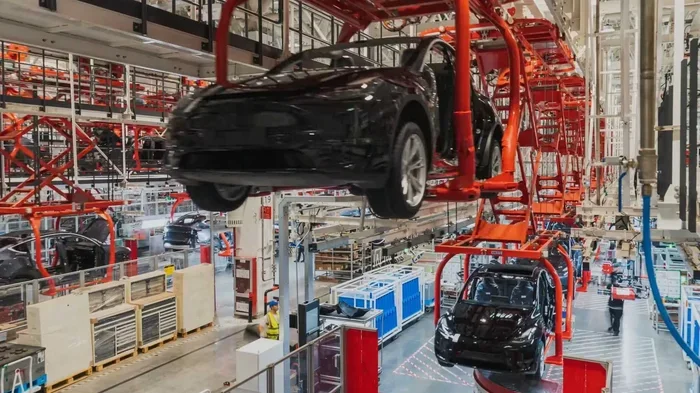
Tesla is known for its fast production speed. At peak times, Tesla can build a vehicle every few minutes on the assembly line. The company uses advanced robotics and automation. This helps keep production costs low. It also helps meet high demand quickly.
Tesla’s approach to manufacturing is different from traditional automakers. Legacy brands often rely on complex supply chains with many tiers of suppliers. Tesla tries to make more parts in-house. This vertical integration gives Tesla more control over its production rate and quality.
What’s Next for Tesla Production?
Tesla has big plans for the future. The company wants to keep growing its annual output. Here are some key developments to watch.
New Models and Platforms
Tesla is working on new models. The next-generation platform promises lower production costs. This could make Tesla vehicles more affordable. A more affordable Tesla model could drive demand even higher. The company has hinted at a compact car for global markets.
Factory Expansions
Tesla is expanding existing factories. The Shanghai Gigafactory is getting upgrades. The Berlin and Austin sites are also ramping up. New factories in Mexico and potential sites in other countries are in the pipeline. Each new factory adds to Tesla’s total annual capacity.
Cybertruck Production Ramp
The Cybertruck is Tesla’s newest addition. Production started in late 2023. It is still in early stages. Cybertruck output is growing but remains a small part of total production. Over time, it could become a significant contributor to annual numbers.
Supply Chain and Challenges
Tesla faces challenges like every automaker. Battery supply is a key concern. The company needs enough lithium, nickel, and cobalt. Factory slowdowns can also impact output. Tesla works hard to address these issues. But they can affect delivery timelines and production targets.
For buyers interested in used options, you might want to explore 2nd hand cars under 3 lakhs as an alternative. Tesla vehicles hold their value well, but pre-owned Teslas can be harder to find at lower price points.
Quick Tips for Tracking Tesla Production Numbers
Want to stay updated on Tesla’s output? Here are some quick tips:
- Check Tesla’s Quarterly Earnings Reports: These reports include detailed production and delivery numbers.
- Follow Tesla’s Investor Relations Page: Tesla posts official updates and guidance regularly.
- Watch Industry Analysts: EV analysts often break down Tesla’s output trends.
- Use Trusted Automotive Websites: Sites like Tesla’s own delivery tracker and industry publications provide reliable data.
- Look at Delivery vs. Production Numbers: Delivery numbers are often reported first and give a good estimate of production.
Tracking these numbers helps you understand Tesla’s growth trajectory. It also gives insight into the broader electric vehicle market. As demand for EVs grows, Tesla’s role as a leader becomes even more important.
Common Mistakes People Make About Tesla Production
There are some misconceptions about Tesla’s output. Let us clear a few up.
- Mistake 1: Confusing Production with Deliveries: Production is the number of cars built. Deliveries are the number of cars sent to customers. These numbers differ each quarter.
- Mistake 2: Assuming Tesla Produces All Models Equally: The Model 3 and Model Y make up most of Tesla’s output. The Model S and Model X are produced in smaller numbers.
- Mistake 3: Ignoring Regional Factory Output: Tesla’s Shanghai factory alone produces more than many traditional automakers. Understanding regional output gives a clearer picture.
- Mistake 4: Overestimating 2024 Targets: Tesla sets ambitious goals. Not all targets are hit on time. Realistic expectations are important.
Avoiding these mistakes helps you understand Tesla’s true production story. It gives you a clearer view of the company’s capabilities and limitations.
Expert Insights on Tesla Manufacturing
Industry experts often highlight Tesla’s manufacturing innovation. Tesla has rethought how cars are built. The company uses fewer parts in many components. This simplifies the assembly process. It also reduces production time and cost.
Tesla’s gigacasting technology is a game-changer. It replaces dozens of smaller parts with one large cast piece. This speeds up production and improves structural rigidity. Other automakers are now adopting similar approaches. Tesla’s influence on car manufacturing goes beyond just making vehicles.
Experts also point to Tesla’s software-driven approach. Unlike traditional automakers, Tesla treats its cars more like tech products. Over-the-air updates improve vehicles after purchase. This model supports Tesla’s high production volumes. It also creates a loyal customer base that drives demand for new units.
When comparing Tesla’s approach to traditional automakers, the difference is stark. A company focused on 3 cylinder cars in india or 1400 cc cars in india follows a very different path. Those manufacturers serve specific regional markets with specific engine preferences. Tesla serves a global market with a single powertrain type: electric.
Key Takeaways
- Tesla’s Annual Output Is Growing Fast: From 500,000 in 2020 to nearly 1.8 million in 2023, Tesla’s production numbers show remarkable growth.
- Multiple Gigafactories Drive Scale: Fremont, Shanghai, Berlin, Austin, and soon Mexico all contribute to Tesla’s global manufacturing footprint.
- Model 3 and Model Y Lead Production: These two models account for over 85% of Tesla’s total output each year.
- 2024 Targets Aim Above 2 Million: Tesla is pushing hard to exceed 2 million vehicles produced this year.
- EV Market Leadership: Tesla remains the top pure electric vehicle manufacturer by volume worldwide.
- Innovation Drives Efficiency: Technologies like gigacasting and vertical integration keep Tesla’s production costs competitive.
- Future Growth Looks Bright: New models, factories, and platforms suggest Tesla’s output will keep rising in the years ahead.
Conclusion
So, how many cars does Tesla make a year? The answer is evolving. In 2023, Tesla produced around 1.8 million vehicles. In 2024, the company aims for over 2 million. Tesla’s growth story is far from over. With new factories, new models, and innovative manufacturing techniques, Tesla is positioned for even bigger numbers ahead.
Tesla’s success is not just about numbers. It is about changing how the world thinks about cars. The company proved that electric vehicles can be built at scale. It showed that EVs can be desirable, efficient, and affordable. As Tesla continues to expand its production capacity, the impact on the global auto industry will only grow.
Whether you are watching Tesla as an investor, considering a purchase, or simply fascinated by EV manufacturing, the story is compelling. Tesla is rewriting the rules of car production. And the numbers tell the story clearly. Each year, Tesla builds more cars than the year before. The journey is just getting started.
Frequently Asked Questions
How many cars did Tesla produce in 2023?
Tesla produced approximately 1.8 million vehicles in 2023. This included all models across its global factory network. The number represented a significant increase from 1.3 million in 2022.
What is Tesla’s production target for 2024?
Tesla aimed to produce over 2 million vehicles in 2024. The company has been working to ramp up output at all its factories. However, hitting this target depends on supply chain stability and factory performance.
Which Tesla model is produced the most?
The Model Y is currently Tesla’s best-selling and most-produced vehicle. The Model 3 is also produced in very high numbers. Together, these two models make up the majority of Tesla’s annual output.
How many Gigafactories does Tesla have?
Tesla currently operates four major Gigafactories. These are located in Fremont (California), Shanghai (China), Berlin-Brandenburg (Germany), and Austin (Texas). A fifth factory in Mexico is planned for the near future.
Does Tesla produce cars in India?
Tesla does not currently manufacture cars in India. However, the company has explored setting up a factory in the country. For now, Tesla vehicles are imported to India from other production sites.
How does Tesla’s production compare to traditional automakers?
Tesla produces fewer vehicles than giants like Toyota or Volkswagen. But among pure electric vehicle makers, Tesla leads by a wide margin. Its focus on a single powertrain type helps streamline production and scale quickly.