How Many Catalytic Converters Does a Cadillac CTS Have
The Cadillac CTS typically has two or three catalytic converters, depending on the model year and engine configuration. Understanding your vehicle’s converter setup helps with maintenance, replacement planning, and protecting against theft. This guide covers every generation of the Cadillac CTS and what you need to know about its emissions system.
Have you ever wondered how many catalytic converters your Cadillac CTS actually has? It is a question that many car owners ask, especially when they hear about rising converter theft or expensive replacement bills. The answer might surprise you.
A Cadillac CTS can have two or three catalytic converters depending on the model year, engine type, and trim level. The catalytic converter is one of the most important parts of your vehicle’s exhaust system. It helps reduce harmful exhaust fumes and keeps your car running smoothly while meeting emissions standards.
In this article, we will break down exactly how many converters your Cadillac CTS has. We will also cover why they matter, what happens when they fail, and how much it costs to replace them. Whether you drive a first-generation model or the latest third-gen CTS, this guide has you covered.
Key Takeaways
- Most Cadillac CTS models have two catalytic converters: one in the front and one in the rear exhaust section.
- The exact count depends on the generation and engine type: V6 and V8 engines may differ slightly.
- Catalytic converters are essential for reducing harmful exhaust emissions: they transform toxic gases into less harmful output.
- Replacement costs can range from $1,000 to $3,500: depending on the model year and converter type.
- Converter theft is a growing concern: taking proactive steps can protect your Cadillac CTS.
- Early detection of converter problems saves money: watch for warning signs like check engine lights and reduced performance.
📑 Table of Contents
- Understanding the Cadillac CTS and Its Engine Options
- How Many Catalytic Converters Does a Cadillac CTS Have?
- The Role of Catalytic Converters in Your Cadillac CTS
- Signs Your Cadillac CTS Catalytic Converter Is Failing
- Catalytic Converter Replacement Cost
- Protecting Your Cadillac CTS from Converter Theft
- Maintaining Your Cadillac CTS Catalytic Converter
- Conclusion
Understanding the Cadillac CTS and Its Engine Options
The Cadillac CTS has been around since 2003. Over the years, it has gone through three major generations. Each generation brought new engine configurations, trim levels, and emissions technology. The number of catalytic converters can vary based on these factors.
The CTS started as a sporty sedan competing with the BMW 3 Series and the Mercedes C-Class. It offered a blend of luxury, performance, and everyday drivability. General Motors built it with both V6 and V8 engine options across its lifespan.
First Generation (2003-2007)
The first-generation Cadillac CTS came with either a 2.6-liter V6 or a 3.2-liter V6 engine. Later models offered a powerful 4.6-liter Northstar V8. The exhaust system on these early models was relatively straightforward. Most first-gen CTS vehicles have two catalytic converters — one near the exhaust manifold and one further back in the system.
The 2.6-liter and 3.2-liter V6 engines use a single front converter and a single rear converter. The V8 version follows a similar setup. The oxygen sensor monitors the converter’s efficiency and sends data to the engine computer.
Second Generation (2008-2011)
The second-generation CTS saw some significant changes. It offered a 2.8-liter V6, a 3.0-liter V6, a 3.6-liter V6, and a 6.2-liter V8. The engine performance improved across the board, and so did the emissions control technology.
Most second-generation CTS models still use two catalytic converters. However, some higher-performance trims and the V8 variants may include additional components in the exhaust pipe system. The tailpipe emissions standards became stricter during this period, which influenced how GM designed the exhaust layout.
It is worth noting that the weight of a Cadillac CTS, especially with the V8 engine, can approach 000 lbs heavy for a car in certain configurations. This added mass affects the entire vehicle, including how the exhaust system is engineered and how the converters handle heat and flow.
Third Generation (2014-2019)
The third-generation Cadillac CTS brought a complete redesign. It featured a lighter platform, more advanced engine management systems, and improved emissions control. Engine options included a 2.0-liter turbocharged I4, a 3.6-liter V6, and a 3.6-liter twin-turbo V6 in the high-performance V-Sport variant.
The third-gen CTS typically has two catalytic converters as well. The twin-turbo V6 models may have a slightly different exhaust manifold setup, but the converter count remains consistent. GM continued to refine the catalytic converter design to improve durability and efficiency.
Later model years also introduced direct injection technology and variable valve timing, which helped the engine run cleaner. This reduced the strain on the converters and extended their lifespan in many cases.
How Many Catalytic Converters Does a Cadillac CTS Have?
Now let us get to the core question. The answer depends on several factors, but here is a general breakdown.
Converter Count by Generation
For most Cadillac CTS models across all three generations, the standard count is two catalytic converters. Here is a quick look at what to expect:
- First Generation (2003-2007): Two converters for both V6 and V8 engines.
- Second Generation (2008-2011): Two converters for most trims, with some V8 variants having minor variations.
- Third Generation (2014-2019): Two converters across all engine options.
In rare cases, certain performance models or special editions may have a different configuration. But for the vast majority of Cadillac CTS owners, two converters is the standard setup.
Why Multiple Converters?
You might wonder why a car needs more than one converter. The answer lies in how the exhaust system is designed. Most modern vehicles split the exhaust flow into two banks, especially in V-shaped engines like the V6 and V8.
Each bank of cylinders produces its own set of exhaust fumes. A separate converter handles each bank to ensure thorough emissions control. This setup allows the oxygen sensor to monitor each side independently, which leads to better engine performance and cleaner tailpipe emissions.
Having multiple converters also helps the vehicle reach optimal emissions standards faster. The front converter works harder during cold starts, while the rear converter handles the final stage of cleaning the exhaust gases before they exit through the tailpipe.
The Role of Catalytic Converters in Your Cadillac CTS
The catalytic converter is often called the silent hero of your car’s exhaust system. It does a job that most drivers never think about — until something goes wrong.
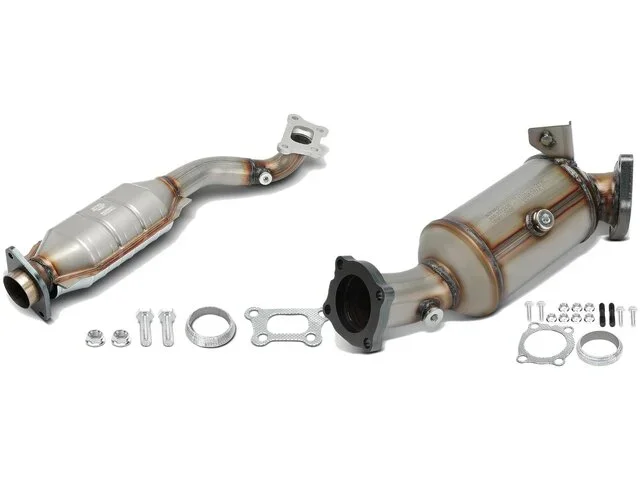
Inside the converter, a precious metals catalyst (usually platinum, palladium, and rhodium) triggers a chemical reaction. This reaction transforms harmful gases like carbon monoxide, nitrogen oxides, and hydrocarbons into less dangerous substances like carbon dioxide and nitrogen.
Without a functioning converter, your Cadillac CTS would release significantly more pollutants into the air. It would also likely fail any emissions testing required in many states and regions.
The converter also plays a role in backpressure management. It creates a small amount of resistance in the exhaust flow, which helps the engine run at peak efficiency. When a converter becomes clogged or damaged, this balance is disrupted, and you will notice a drop in engine performance.
How the Converter Works With Other Components
The catalytic converter does not work alone. It is part of a larger emissions control system that includes the oxygen sensor, the exhaust manifold, the muffler, and the tailpipe. All of these components work together to manage exhaust gases effectively.
The oxygen sensor measures the amount of oxygen in the exhaust before and after the converter. If the sensor detects that the converter is not working properly, it triggers the check engine light on your dashboard. This early warning system helps you catch problems before they become expensive repairs.
Signs Your Cadillac CTS Catalytic Converter Is Failing
Knowing the warning signs of a failing converter can save you a lot of money and hassle. Here are the most common symptoms to watch for:
- Check Engine Light: This is the most common indicator. A failing converter often triggers error codes related to emissions control.
- Reduced Engine Performance: A clogged converter creates excess backpressure, which can make your car feel sluggish or weak.
- Dark Exhaust Smoke: If you see dark or black smoke coming from your tailpipe, the converter may not be functioning correctly.
- Rotten Egg Smell: A sulfur or rotten egg odor from the exhaust pipe is a strong sign of converter failure.
- Increased Fuel Consumption: A damaged converter can cause your engine to work harder, leading to lower fuel economy.
- Failed Emissions Test: If your Cadillac CTS fails an emissions test, the converter is often the culprit.
If you notice any of these signs, it is important to get your vehicle inspected as soon as possible. Ignoring converter problems can lead to more serious engine damage over time.
Common Diagnostic Codes
When you take your Cadillac CTS to a mechanic, they will often hook up an OBD-II scanner to read diagnostic codes. Common codes related to converter issues include P0420 (catalyst system efficiency below threshold) and P0430 (bank 2 catalyst efficiency below threshold). These codes point directly to converter problems and help the mechanic confirm the diagnosis quickly.
Catalytic Converter Replacement Cost
The cost of replacing a catalytic converter on a Cadillac CTS can vary widely. Several factors influence the final price, including the model year, engine type, and whether you choose an OEM or aftermarket part.
On average, expect to pay between $1,000 and $3,500 for a complete replacement. Here is a rough breakdown:
- Parts Cost: $600 to $2,500 depending on the converter type.
- Labor Cost: $200 to $1,000 depending on the shop and location.
- Premium or Performance Models: Higher-end V6 and V8 models may cost more due to the complexity of the exhaust system.
The catalytic converter price has risen significantly in recent years. This is largely due to the precious metals inside the converter — platinum, palladium, and rhodium. These metals are expensive and in high demand, which drives up the cost of replacement parts.
OEM vs Aftermarket Converters
When it is time for a replacement, you have two main choices. OEM (Original Equipment Manufacturer) converters are built to the exact specifications of your Cadillac CTS. They tend to last longer and fit perfectly. Aftermarket converters are more affordable but may not meet the same quality standards.
For the best long-term results, most experts recommend going with an OEM converter. It may cost more upfront, but it can save you money on repairs and emissions testing issues down the road.
Protecting Your Cadillac CTS from Converter Theft
Catalytic converter theft has become a serious problem across North America. The precious metals inside the converter make it an attractive target for thieves. A stolen converter can be sold for hundreds of dollars on the black market, and replacing it can cost thousands.
The Cadillac CTS is not immune to this crime. In fact, vehicles with higher ground clearance and easily accessible exhaust systems are often targeted. Here are some steps you can take to protect your investment:
- Install a Converter Anti-Theft Device: These devices secure the converter to the vehicle frame, making it much harder to remove.
- Park in Well-Lit Areas: Thieves prefer to work in dark, secluded spots. Parking in a garage or well-lit area reduces risk.
- Use an Alarm System: A motion-sensitive alarm can deter thieves and alert you if someone approaches your vehicle.
- Engrave Your VIN on the Converter: This makes it harder for thieves to sell a stolen converter and helps police recover it.
- Consider Insurance Coverage: Check with your insurance provider to see if converter theft is covered under your policy.
Taking these precautions can significantly reduce the risk of becoming a victim of converter theft. It is a small investment that can save you a lot of money and headaches.
Why the Cadillac CTS Is a Target
The Cadillac CTS sits at a height that makes it easy for thieves to crawl underneath. The exhaust system is also relatively accessible, especially on models with a 2000 lbs heavy for a car frame that does not include extra protective shielding around the converter. This accessibility, combined with the value of the precious metals inside, makes the CTS a potential target.
Maintaining Your Cadillac CTS Catalytic Converter
Proper maintenance can extend the life of your catalytic converter and help you avoid costly replacements. Here are some practical tips:
- Use High-Quality Fuel: Poor-quality fuel can leave deposits that damage the converter over time.
- Address Engine Problems Promptly: Issues like misfires or rich fuel mixtures can cause unburned fuel to enter the exhaust system and damage the converter.
- Keep Up with Regular Maintenance: Routine oil changes, spark plug replacements, and air filter changes all contribute to a healthier exhaust system.
- Avoid Short Trips When Possible: Short trips prevent the converter from reaching optimal operating temperature, which can lead to moisture buildup and premature failure.
- Monitor the Check Engine Light: Never ignore a lit check engine light. Early intervention can prevent minor issues from becoming major converter problems.
By following these simple steps, you can keep your Cadillac CTS running smoothly and its emissions control system working as it should for many years.
Conclusion
So, how many catalytic converters does a Cadillac CTS have? The answer is two catalytic converters for most models across all three generations. Whether you drive a first-gen, second-gen, or third-gen CTS, understanding your vehicle’s exhaust system and emissions control setup is essential for proper maintenance and long-term reliability.
The catalytic converter plays a vital role in reducing harmful exhaust fumes, passing emissions testing, and keeping your engine performance at its best. By staying alert to warning signs, budgeting for potential replacements, and taking steps to prevent theft, you can protect one of the most important — and most expensive — components of your Cadillac CTS.
Take care of your converter, and it will take care of your car for years to come. Regular maintenance, quality fuel, and prompt attention to warning signs are the best ways to ensure your exhaust system keeps running smoothly.
Frequently Asked Questions
Can a Cadillac CTS run without a catalytic converter?
Technically, yes, but it is not recommended. Driving without a converter will cause your vehicle to fail emissions testing and release harmful pollutants. It can also trigger the check engine light and reduce engine performance over time.
How long does a Cadillac CTS catalytic converter last?
A well-maintained converter can last between 100,000 and 150,000 miles. However, factors like driving habits, fuel quality, and engine health can significantly affect its lifespan.
Why are catalytic converters so expensive to replace?
The high cost comes from the precious metals inside the converter, including platinum, palladium, and rhodium. These metals are expensive and increasingly scarce, which drives up the price of replacement parts.
Can I clean my catalytic converter instead of replacing it?
In some cases, a minor clog can be addressed with a catalytic converter cleaner additive. However, this is only effective for early-stage issues. A severely damaged converter will need to be replaced entirely.
Is catalytic converter theft covered by car insurance?
Many comprehensive insurance policies cover converter theft, but coverage varies by provider and policy. It is best to check with your insurance company to confirm your specific coverage details.
What is the difference between a standard converter and a high-flow converter?
A high-flow converter is designed to reduce backpressure and improve exhaust gas flow. It allows the engine to breathe more freely, which can boost engine performance. However, it must still meet emissions standards to be legal for road use.