When I Turn the Key Nothing Happens and There Is No Click
When I Turn the Key Nothing Happens and There Is No Click is a frustrating car problem that can stem from a dead battery, bad starter, or faulty ignition switch. This guide walks you through every possible cause and gives you clear, step-by-step fixes you can try at home. Understanding the root cause saves you time, money, and a lot of stress on a busy morning.
You slide into the driver’s seat, put the key in the ignition, and turn it. But nothing happens. There is no click. No hum. No engine cranking. Just dead silence. This is one of the most common car problems drivers face, and it can happen to anyone at any time.
When I Turn the Key Nothing Happens and There Is No Click, it usually points to an electrical issue. The good news is that many causes are simple and inexpensive to fix. In this article, we will walk you through every possible reason your car won’t start. We will also give you practical steps to diagnose and fix the problem yourself.
Whether you are a beginner or a seasoned driver, this guide will help you understand what is going on under the hood. Let us dive in and get your car running again.
Key Takeaways
- A dead or weak battery is the #1 reason when you turn the key nothing happens and there is no click.
- Corroded battery terminals can block electrical current and prevent your car from starting.
- A faulty starter motor or solenoid may cause total silence when you turn the ignition key.
- A bad ignition switch or relay cuts power to the starter and stops the engine from cranking.
- Simple checks like wiggle the steering wheel or check gear position can solve the problem fast.
- Regular maintenance of battery cables and terminals helps prevent no-start issues.
- Knowing when to call a mechanic saves you from costly mistakes and unnecessary part replacements.
📑 Table of Contents
What Does It Mean When Nothing Happens and There Is No Click?
When you turn the key and hear nothing at all, your car is not completing the starting circuit. A healthy ignition system should produce at least a single click. That click comes from the starter solenoid engaging the starter motor. If there is no click, power is not reaching the starter at all.
This is different from a rapid clicking sound, which usually means a weak battery. A single click followed by silence might point to a bad starter. But total silence with no click at all is often a power supply problem or a broken ignition component.
Why the Starter Solenoid Matters
The starter solenoid is a small but important part of your car’s ignition system. When you turn the key, it sends an electrical signal to the starter motor. That motor then turns the engine over. If the solenoid fails, the entire process stops before it begins.
Think of the solenoid as a bridge between the battery and the starter motor. If that bridge is broken, no electricity can cross. The result is the dreaded silence when you turn the key.
The Most Common Causes of No-Start with No Click
There are several reasons why your car might not start and there is no click. Let us look at each one in detail.
Dead or Weak Battery
A dead battery is the number one cause of a no-start situation. Batteries have a limited lifespan, usually three to five years. Cold weather, leaving lights on, or a faulty alternator can drain the battery faster than normal.
When the battery has no charge, it cannot send power to the starter. This means no click and no engine turnover. You might also notice dim headlights or a dashboard that stays dark when you turn the key.
To check your battery, use a multimeter. A healthy battery should read 12.6 volts or higher. Anything below 12.0 volts usually means the battery is too weak to start the car.
Corroded or Loose Battery Terminals
Even if your battery is fully charged, corroded terminals can block the electrical connection. White or blue-green powdery buildup on the battery posts is a clear sign of corrosion. This buildup acts like an insulator and prevents current from flowing.
Loose battery cables can cause the same problem. If the cable is not making firm contact, power cannot reach the starter motor. This is one of the easiest fixes on our list. A simple cleaning and tightening can often solve the issue.
Faulty Ignition Switch
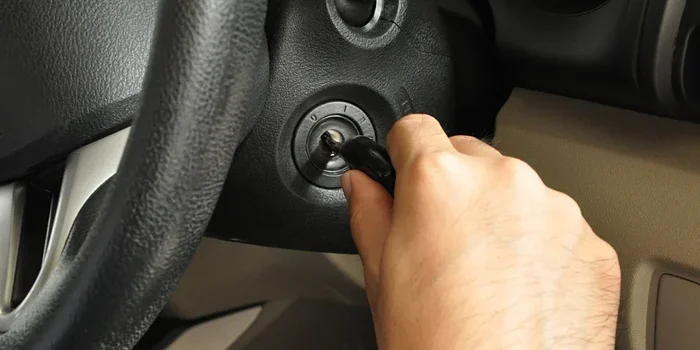
The ignition switch is the part your key actually touches when you insert it. Over time, the internal contacts can wear out. When this happens, the switch may fail to send the signal needed to engage the starter.
A bad ignition switch can also cause other electrical problems. You might notice flickering dashboard lights or issues with your accessories. If the switch fails completely, turning the key will produce no sound at all.
Broken Starter Motor or Solenoid
The starter motor is responsible for cranking the engine. The solenoid acts as its switch. If either one fails, you will get no click when you turn the key.
Starter motors can wear out over time, especially in older vehicles. Internal components like the brushes or armature can break down. A bad solenoid might have a stuck plunger or burned contacts. In either case, replacement is usually required.
Bad Ignition Relay or Fuse
Your car has an ignition relay that controls power to the starter circuit. If this relay fails, the starter receives no signal. There is also a fusible link or a specific fuse that protects the starter circuit. If that fuse blows, power stops flowing and nothing happens when you turn the key.
Checking fuses and relays is a quick and easy task. Most fuse boxes are located under the dashboard or in the engine bay. Your owner’s manual will show you the exact location of the ignition relay and starter fuse.
Steering Wheel Lock
This one is simple but often overlooked. When you turn off your car, the steering wheel lock can engage and prevent the key from turning fully in the ignition. If the lock is partially engaged, the key might not reach the start position.
To fix this, gently wiggle the steering wheel left and right while trying to turn the key. You should feel the lock release. Once it releases, the key should turn normally and your car should start.
Neutral Safety Switch Problems
Cars with automatic transmissions have a neutral safety switch. This switch prevents the car from starting unless the gear selector is in Park or Neutral. If the switch is faulty, the starter circuit stays open and nothing happens when you turn the key.
Try shifting the gear selector to Neutral and then attempt to start the car. If it starts in Neutral but not in Park, the neutral safety switch is likely the problem. This is a relatively inexpensive and easy repair.
Immobilizer or Key Fob Issues
Modern cars have immobilizer systems that prevent the engine from starting unless the correct key is recognized. If your key fob battery is dead or the transponder chip is damaged, the car may not start at all. Some vehicles show no sign of life when the immobilizer is active.
Try replacing the key fob battery first. If that does not work, hold the fob directly against the start button or ignition cylinder. This can sometimes bypass the weak signal and allow the car to start.
How to Diagnose the Problem Step by Step
Diagnosing a no-start with no click situation does not require advanced mechanical skills. Follow these steps to narrow down the cause.
Step 1: Check the Battery Voltage
Grab a multimeter and test the battery. Set it to DC voltage and touch the probes to the positive and negative terminals. A reading of 12.6 volts or above means the battery has a good charge. Below 12.0 volts means the battery is weak or dead.
If the battery is low, try jump-starting the car. If the car starts with a jump, your battery is the problem. If it still does not start, move to the next step.
Step 2: Inspect the Battery Terminals and Cables
Look at the battery terminals for any signs of corrosion or buildup. Check that the cables are tight and secure. Use a wire brush or a battery terminal cleaner to remove any corrosion. Make sure the connections are snug and free of any green or white residue.
Also inspect the cables for any fraying or damage. A damaged cable can break the circuit even if the terminals are clean. Replace any cables that look worn or corroded.
Step 3: Test the Starter Relay and Fuse
Locate your fuse box and find the ignition relay and starter fuse. Use a multimeter to check if the relay is working. You can also swap the relay with another identical one to test it. If the fuse is blown, replace it with one of the same amperage.
After replacing the fuse or relay, try starting the car again. If it still does not start, continue to the next step.
Step 4: Check the Ignition Switch
Turn the key to the ON position without starting the engine. Check if the dashboard lights up and if the fuel pump hums for a few seconds. If nothing happens in the ON position, the ignition switch might be faulty.
You can test the ignition switch with a multimeter by checking for continuity at the switch connector. If there is no continuity, the switch needs replacement.
Step 5: Test the Starter Motor and Solenoid
If all the above checks pass, the problem might be the starter motor or solenoid. Have someone turn the key while you tap the starter motor with a rubber mallet. If the car starts after tapping, the starter motor has a stuck component and needs replacement.
You can also test the solenoid by bridging the solenoid terminal with a screwdriver. This should send power directly to the starter motor. If the starter spins, the solenoid is bad. If it does not spin, the entire starter unit may need replacement.
Step 6: Check the Neutral Safety Switch
Shift the gear selector to Neutral and try starting the car. If it starts in Neutral, the neutral safety switch is the problem. You can adjust or replace the switch depending on your vehicle model.
This is a simple fix that often saves drivers a lot of frustration. Always check this before replacing more expensive parts.
Fixing the Most Common Culprits
Once you have identified the cause, here is how to fix each problem.
Dead battery: Jump-start the car using jumper cables or a portable jump starter. Drive the car for at least 30 minutes to recharge the battery. If the battery is old, replace it with a new one that matches your vehicle’s specifications.
Corroded terminals: Clean the terminals with a baking soda and water solution. Use a wire brush to scrub away the corrosion. Apply dielectric grease after cleaning to prevent future buildup. Tighten all connections securely.
Bad ignition switch: Replacement involves removing the steering column covers and disconnecting the old switch. Install the new switch and reconnect the wiring. This repair usually takes about 30 minutes for most vehicles.
Faulty starter: Replacing a starter motor requires lifting the vehicle and accessing the starter from underneath. Disconnect the wiring, remove the mounting bolts, and swap in the new unit. If you are not comfortable with this repair, have a professional handle it.
Blown fuse or bad relay: Replace the fuse with the correct amperage rating. For a bad relay, find an identical relay from another circuit and swap them. Test the car after the replacement.
Steering wheel lock: Simply wiggle the steering wheel while turning the key. This releases the lock and allows the key to turn fully.
Neutral safety switch: Adjust the switch position or replace it entirely. Refer to your vehicle’s repair manual for specific instructions.
When to Call a Professional Mechanic
Not every car problem is a DIY fix. There are times when calling a professional is the smartest move. If you have checked the battery, terminals, fuses, and relays, and the car still will not start, it is time to seek expert help.
A professional mechanic has diagnostic tools that can pinpoint electrical problems quickly. They can test the starter motor, ignition switch, and neutral safety switch with precision equipment. This saves you time and prevents you from replacing the wrong parts.
Also, if you are uncomfortable working under the vehicle or dealing with electrical systems, do not hesitate to call for help. Safety should always come first. A qualified mechanic can fix the problem correctly the first time.
Here are some signs that you should call a mechanic immediately:
- You have tried jump-starting the car multiple times and it still will not start.
- You smell burning or see smoke under the hood.
- The dashboard warning lights are flashing or behaving erratically.
- You hear grinding or unusual noises when you turn the key.
- You are not confident in your diagnosis or repair skills.
Ignoring these warning signs can lead to more serious damage and higher repair costs. It is always better to be safe than sorry.
Preventing This Problem in the Future
The best way to deal with a no-start problem is to prevent it from happening in the first place. Here are some simple tips to keep your car starting reliably.
- Replace your battery every three to five years. Do not wait for it to die completely. A proactive replacement saves you from unexpected breakdowns.
- Clean your battery terminals regularly. Every six months, inspect the terminals for corrosion and clean them if needed.
- Check your battery cables for wear. Replace any cables that show signs of fraying or damage.
- Turn off all accessories before shutting off the engine. This includes lights, radio, and air conditioning. It reduces the load on the battery when you restart the car.
- Keep a portable jump starter in your trunk. This can save you in an emergency and give you enough power to get to a repair shop.
- Have your electrical system inspected annually. A mechanic can spot weak connections, failing relays, and other issues before they become serious problems.
Following these simple maintenance tips will keep your car running smoothly and help you avoid the frustrating situation of turning the key and hearing nothing at all.
Key Takeaways
When I Turn the Key Nothing Happens and There Is No Click, the root cause is almost always electrical. Whether it is a dead battery, corroded terminals, a bad ignition switch, or a failed starter motor, the problem is fixable. Start with the simplest checks first, like the battery voltage and terminal connections. Work your way through the diagnostic steps until you find the cause. And remember, there is no shame in calling a professional when the problem is beyond your comfort level.
Keeping up with regular maintenance goes a long way in preventing no-start issues. A little care and attention can save you hours of frustration and a lot of money in repair bills.
Frequently Asked Questions
Why is there no click when I turn the key?
A complete absence of a click usually means the starter is not receiving any power at all. This is most often caused by a dead battery, corroded terminals, a blown fuse, or a faulty ignition switch. Start by checking your battery voltage and terminal connections before moving on to more complex diagnostics.
Can a bad key fob cause no click when starting?
Yes, in vehicles with push-button start or keyless ignition, a dead key fob battery can prevent the car from recognizing the key. This may result in no response at all when you press the start button or turn the ignition. Try replacing the fob battery or holding the fob directly against the start button.
How much does it cost to replace a starter motor?
The cost varies depending on your vehicle make and model. On average, you can expect to pay between $200 and $500 for parts and labor. Some vehicles have starters that are harder to access, which can increase the labor cost. Always get a quote from a trusted mechanic before proceeding with the replacement.
Is it safe to tap the starter motor to get it working?
Tapping the starter with a rubber mallet is a common troubleshooting trick, but it should only be done as a temporary diagnostic step. It can help free up a stuck starter component. However, this is not a permanent fix. If the starter works after tapping, plan to replace it soon before it fails completely.
What should I do if my car has no power at all when I turn the key?
If there is absolutely no power, check the battery first. A fully dead battery will not power any electrical components. Inspect the battery terminals for corrosion and make sure the cables are tight. If the battery is good, check the main fuses and the ignition relay in the fuse box.
How do I know if my ignition switch is bad?
Signs of a bad ignition switch include no response when you turn the key, flickering dashboard lights, and accessories that stop working intermittently. You can test the switch with a multimeter for continuity. If there is no continuity in the ON or START positions, the switch needs to be replaced.
=== CONCLUSION ===
When I Turn the Key Nothing Happens and There Is No Click, it can feel like your whole day is ruined. But as we have covered in this guide, most causes are simple and fixable. A dead battery, corroded terminals, a bad ignition switch, or a faulty starter motor are all common culprits. By following the diagnostic steps in this article, you can identify the problem and often fix it yourself.
Start with the basics. Check the battery. Clean the terminals. Test the fuses and relays. Work your way up to more complex checks if needed. And always prioritize your safety. If something does not feel right, call a professional mechanic.
Regular maintenance is your best defense against no-start problems. Keep your battery fresh, your terminals clean, and your electrical system in good shape. With a little knowledge and the right tools, you can handle this common car problem with confidence. Now go out there and get your car started.